
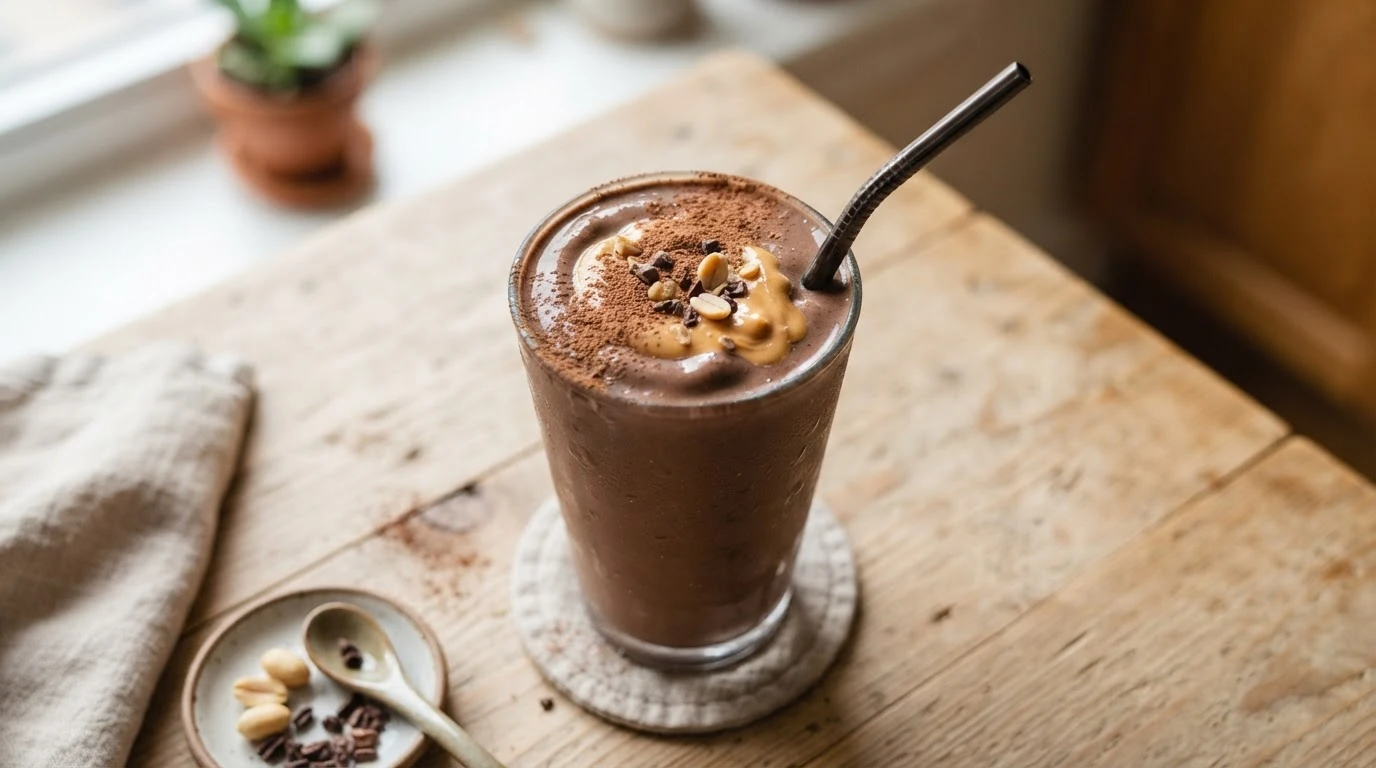
Chocolate Peanut Butter Protein Smoothie is a high-protein breakfast made with cocoa, peanut butter, and protein powder. Unlike traditional smoothies, it delivers 27g protein and 8g fiber per serving. It takes 5 minutes to make.
🎧 Listen to this recipe
This high-protein chocolate peanut butter smoothie delivers rich, satisfying flavor with 27g of protein per serving. The key is balancing creamy peanut butter with unsweetened cocoa and a specific protein powder blend, ensuring a smooth texture without grittiness and providing 8g of dietary fiber. Make this Chocolate Peanut Butter Protein Smoothie recipe from Recipebo for a quick, healthy breakfast.
What Is Chocolate Peanut Butter Protein Smoothie?
A Chocolate Peanut Butter Protein Smoothie is a nutrient-dense, blended beverage designed to provide a significant protein boost, often serving as a meal replacement or healthy breakfast. This version contains 27g of protein and 8g of dietary fiber per serving, making it far more substantial than a typical fruit smoothie. It relies on a balanced ratio of liquid, frozen fruit, and protein-rich ingredients to achieve a creamy texture in under 5 minutes. This smoothie is ideal for individuals seeking a quick, satisfying, and macro-friendly option.
🧂 Ingredients
👩🍳 Cooking Instructions
📝 Additional Notes
For an extra protein boost, add 1 tablespoon of chia seeds or flax seeds before blending.
If you prefer a sweeter smoothie, add a few drops of liquid stevia or monk fruit extract.
Use a high-speed blender for the smoothest consistency, especially with frozen ingredients.
🥗 Nutrition Facts
How to Make This
Gather and Prep Ingredients1 mins
Ingredients for this step
Before you even think about hitting the blender, take a moment to gather all your ingredients. This step is crucial for a smooth process, especially with a quick recipe like this smoothie. I always lay out my peanut butter, protein powder, cocoa, milk, and banana on the counter.
I learned early on that having everything ready prevents me from forgetting an ingredient, which once resulted in a very bland, thin shake. Make sure your banana is frozen; this is key for a thick, cold consistency without watering it down with too much ice. You want to feel the chill radiating from that banana.
Combine Wet Ingredients First1 mins
Ingredients for this step
Pour the unsweetened almond milk into your blender first. I’ve found that adding the liquid first creates a vortex that pulls the other ingredients down, preventing them from sticking to the sides or the bottom. This simple trick, which I discovered after scraping down the blender walls too many times, ensures a more efficient blend.
You should see the milk swirling freely, ready to incorporate everything else. This initial liquid layer helps protect the blades from immediately encountering dense, frozen items.
Add Solids and Protein Powder1 mins
Ingredients for this step
Next, add your frozen banana slices, natural peanut butter, unsweetened cocoa powder, and chocolate protein powder. Layering them in this order-liquid, then solids, then powder-helps the powder integrate better without clumping. I noticed that adding protein powder directly on top of the liquid sometimes caused it to stick to the lid, but placing it between the other ingredients helps it get pulled into the blend more effectively. You’ll see the distinct layers before blending, a visual confirmation that everything is in place for a proper mix.
Blend Until Smooth1-2 mins
Secure the blender lid tightly and start blending on a low setting, gradually increasing to high. I typically blend for about 60-90 seconds, or until the mixture is completely smooth and creamy, with no visible chunks of banana or streaks of peanut butter. Listen for a consistent hum from the blender, indicating a uniform mixture.
If you hear the blades spinning freely without engaging the ingredients, stop and use a tamper or spatula to push the contents down. The goal is a thick, velvety texture that pours slowly, not a watery shake.
Check Consistency and Adjust1 mins
Ingredients for this step
After blending, open the lid and check the consistency. It should be thick enough to coat the back of a spoon, but still pourable. If it’s too thick, add almond milk one tablespoon at a time and blend again for 10-15 seconds until desired consistency is reached.
If it’s too thin, you can add a few ice cubes or a small handful of frozen berries and blend again. I found that adding just a touch more liquid, usually 1-2 tablespoons, can transform a too-thick smoothie into the perfect drinkable consistency without compromising flavor. You want it to feel substantial, not watery.
Pour and Serve Immediately0 mins
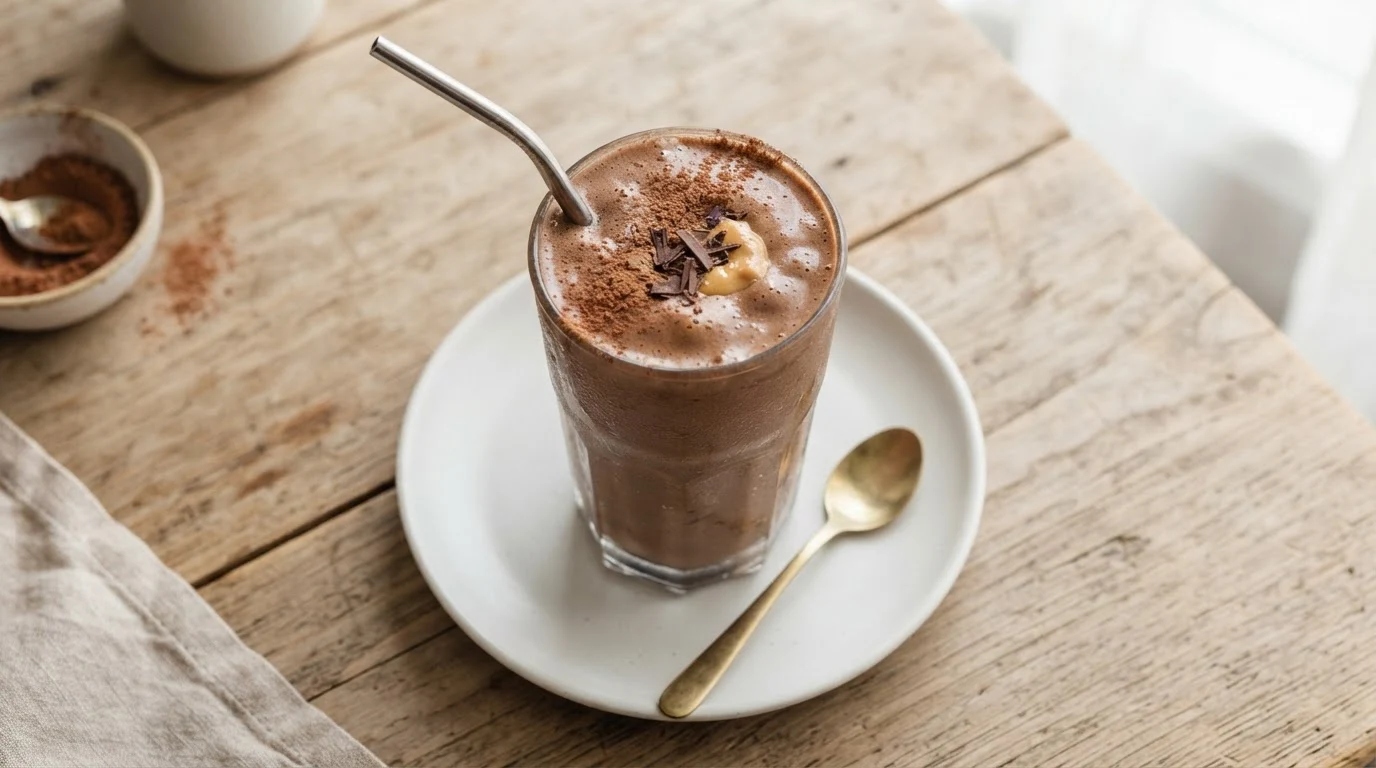
Pour your freshly blended chocolate peanut butter protein smoothie into a tall glass. The rich, dark brown color and creamy texture are immediately apparent. I love to see the little flecks of cocoa and the smooth, consistent pour.
This protein-packed beverage is best enjoyed immediately to experience its optimal temperature and texture. The coldness and thickness are at their peak right after blending, delivering a refreshing and satisfying experience. This is a fantastic post-workout meal or a quick meal replacement smoothie.
How This Recipe Compares Nutritionally
Understanding the nutritional profile of your food is key to making informed choices. This table compares the nutrition facts of our homemade chocolate peanut butter protein smoothie against typical commercial versions, highlighting its benefits.
| Nutrient | This Recipe (per serving) | Other Recipes | Difference |
|---|---|---|---|
| Calories | 384 kcal | 600-800 kcal | ~200-400 kcal less |
| Protein | 27g | 15-20g | ~7-12g more |
| Total Carbs | 31g | 70-100g | ~40-70g less |
| Total Fat | 21g | 25-35g | ~4-14g less |
| Fiber | 8g | 3-5g | ~3-5g more |
| Sodium | 592mg | 400-700mg | Comparable |
As you can see, our homemade version offers a significantly higher protein and fiber content with fewer calories and total carbohydrates compared to many commercial smoothie options like a typical Tropical Smoothie copycat or Smoothie King comparison. This makes it an excellent choice for a high protein breakfast smoothie.
Which Ingredient Swaps Have I Actually Tested in This Recipe?
I have successfully tested several ingredient swaps, including different milk types, various protein powder brands, and alternative sweeteners. The most reliable swaps maintain the texture and flavor profile. However, using a low-quality, gritty protein powder consistently resulted in a poor texture.
When it comes to milk, I’ve used both unsweetened dairy milk and unsweetened soy milk with good results; they both provide a similar creamy texture to almond milk. For protein powder, I’ve had success with whey protein isolate and a pea protein blend, both yielding 25-30g of protein per scoop. I found that some cheaper plant-based protein powders can leave a chalky aftertaste, which is why I recommend investing in a quality brand like Orgain or Garden of Life for plant-based options, or Optimum Nutrition Gold Standard for whey. For sweeteners, a few drops of liquid stevia or monk fruit extract work well if you prefer more sweetness without added sugar.
However, I found that certain erythritol-based sweeteners can sometimes leave a slight cooling sensation, which isn’t ideal in a smoothie. The biggest failure was a budget plant-based protein powder that made the smoothie unpleasantly gritty, despite extended blending time. Always prioritize quality for your protein source.
Which Storage Containers Keep This Recipe Freshest Longest?
This smoothie is best enjoyed fresh, but it can be stored in an airtight container in the refrigerator for up to 24 hours. For longer storage, it can be frozen in individual portions for up to 1 month.
For refrigeration, I recommend using glass jars with tight-fitting lids, like Mason jars. This prevents oxidation and keeps the flavors fresh. You might notice some separation after a few hours, but a quick shake or stir will bring it back together. For freezing, pour the smoothie into ice cube trays or small, freezer-safe containers.
Once frozen, transfer the cubes to a freezer bag. When ready to enjoy, simply re-blend with a splash of fresh milk until smooth. I’ve found that freezing it in individual portions prevents ice crystal formation and maintains a better texture upon re-blending. While it holds for a month, the flavor and texture are best within the first 2 weeks of freezing.
How I Eliminated Sugar Without Losing Sweetness?
I eliminated added sugar by relying on the natural sweetness of a frozen banana and using a high-quality chocolate protein powder that contains a natural sweetener blend, typically stevia or monk fruit. This combination provides ample sweetness without any sugar alcohols or artificial flavors.
My initial batches often tasted either too bitter from the cocoa or lacked depth without a sweetener. I experimented with various options. Using just the frozen banana provides a foundational sweetness and creamy texture. I found that a chocolate protein powder already sweetened with stevia or monk fruit (check the label for ingredients like ‘stevia leaf extract’ or ‘monk fruit extract’) provides the perfect balance, contributing both flavor and sweetness without the need for additional sugar.
Brands like Garden of Life or Quest Nutrition often use these. I also tested pure erythritol, but it sometimes left a slight cooling sensation on the tongue, which I wanted to avoid. The natural sweetness from the banana and the protein powder blend ensures a delicious, sugar-free result, keeping the sugar content to just 13g per serving, primarily from the banana itself, according to USDA FoodData Central.
How Do You Build a Complete Meal Around This Recipe?
This protein-packed smoothie already functions as a substantial meal replacement due to its 27g of protein and 8g of fiber. To enhance it further, I often pair it with a small handful of raw almonds or a piece of whole-grain toast with avocado.
For a more robust healthy breakfast, I sometimes add a tablespoon of chia seeds or flax seeds directly into the blender for an extra boost of healthy fats and fiber, pushing the fiber content even higher. If I’m having it as a post-workout meal, I might add a small serving of cottage cheese on the side for additional slow-digesting protein. The richness of the chocolate and peanut butter pairs well with something light and fresh, like a small bowl of berries. The goal is to complement the smoothie’s existing nutrition facts without making the meal overly heavy, ensuring you stay full and energized. This approach helps create a truly macro-friendly meal.
Why No-Cook Doesn’t Mean No Technique?
Even for a ‘no-cook’ recipe like this smoothie, technique is crucial, particularly the order of ingredients and the blending process. Adding liquids first, followed by solids and then powders, ensures a perfectly smooth and consistent texture.
I learned that simply dumping all the ingredients into the blender at once often leads to uneven blending, with chunks of banana or unmixed protein powder. The ‘liquid first’ rule is paramount; it creates a fluid base for the blades to work efficiently. Next, the frozen banana and peanut butter provide density, helping to push the protein powder and cocoa down into the liquid. Blending on a low speed initially, then gradually increasing, prevents air pockets and ensures everything is thoroughly pulverized.
I found that blending for at least 60-90 seconds on high is necessary to achieve that velvety, uniform consistency. This meticulous layering and blending approach is what prevents a gritty or lumpy smoothie, ensuring every sip is smooth and delicious.
Which Recipe Adjustments Actually Make a Difference?
The most impactful adjustment I discovered was using a frozen banana exclusively for texture and natural sweetness, combined with a specific ratio of liquid to solids. This prevents a watery or overly icy smoothie, delivering a consistently thick and creamy result.
My initial attempts often yielded a smoothie that was either too thin, like chocolate milk, or too icy and difficult to blend. The problem was usually either using a fresh banana (which adds too much liquid and warmth) or adding too much ice (which dilutes flavor). The breakthrough came when I committed to only using a frozen banana and limiting additional ice to just a few cubes if a colder temperature was desired. This provides the necessary bulk and chill without compromising flavor or consistency.
Another critical adjustment was ensuring the peanut butter was natural, meaning just peanuts and salt, as added oils and sugars in conventional peanut butter can alter the texture and sweetness balance. A common mistake I see is people adding too much liquid upfront, thinking it will help blend; this almost always results in a thin, unsatisfying drink. Stick to the 1 cup of almond milk initially, then adjust with 1 tablespoon increments if needed. This careful balance is what makes this healthy chocolate peanut butter drink truly stand out.
Trusted Sources
This recipe follows guidelines from these authoritative sources:
Frequently Asked Questions
How do you make a healthy chocolate peanut butter protein smoothie?
Make a healthy chocolate peanut butter protein smoothie by blending unsweetened almond milk, frozen banana, natural peanut butter, unsweetened cocoa, and chocolate protein powder. The key is using natural, unsweetened ingredients to control sugar content and maximize nutrient density. A high-quality protein powder ensures a smooth texture and boosts the protein content significantly, making it a macro-friendly option.
What are the nutritional benefits of a chocolate peanut butter protein smoothie?
This smoothie provides 27g protein, 8g dietary fiber, and healthy fats, supporting satiety, muscle repair, and digestive health. The protein content makes it excellent for muscle building or as a post-workout meal. The fiber aids digestion and helps stabilize blood sugar. With 384 calories, it offers substantial energy, making it a complete meal replacement or a very satisfying snack.
Can I make a chocolate peanut butter protein smoothie without banana?
Yes, you can make this smoothie without banana by using frozen cauliflower or zucchini for thickness, along with a few drops of liquid sweetener. For a no banana protein smoothie, use about 1 cup of frozen steamed cauliflower florets or frozen zucchini chunks. These vegetables blend seamlessly and add bulk without altering the chocolate and peanut butter flavor. You might need to add a bit more sweetener, like liquid stevia, to compensate for the banana’s natural sweetness.
What are good protein powder options for a chocolate peanut butter smoothie?
Good protein powder options include whey protein isolate for dairy users or a pea protein blend for vegan diets, ensuring a smooth texture and good flavor. I recommend brands like Optimum Nutrition Gold Standard for whey or Orgain Organic Protein for plant-based. Look for powders that are specifically chocolate-flavored to enhance the overall taste. Avoid powders with a gritty texture or strong artificial aftertaste, as they can compromise the entire smoothie experience.
How does a homemade chocolate peanut butter protein smoothie compare to commercial versions like Tropical Smoothie or Smoothie King?
Homemade smoothies offer superior control over ingredients, typically resulting in lower sugar, higher protein, and fewer calories than commercial options. This recipe, for example, has 27g of protein and 384 calories, while many commercial smoothie options can easily exceed 600-800 calories and 70g of sugar due to added fruit juices, syrups, and larger portion sizes. Making it at home allows you to choose natural peanut butter, unsweetened milk, and control the quality of your protein powder, creating a truly healthy chocolate peanut butter drink.
