
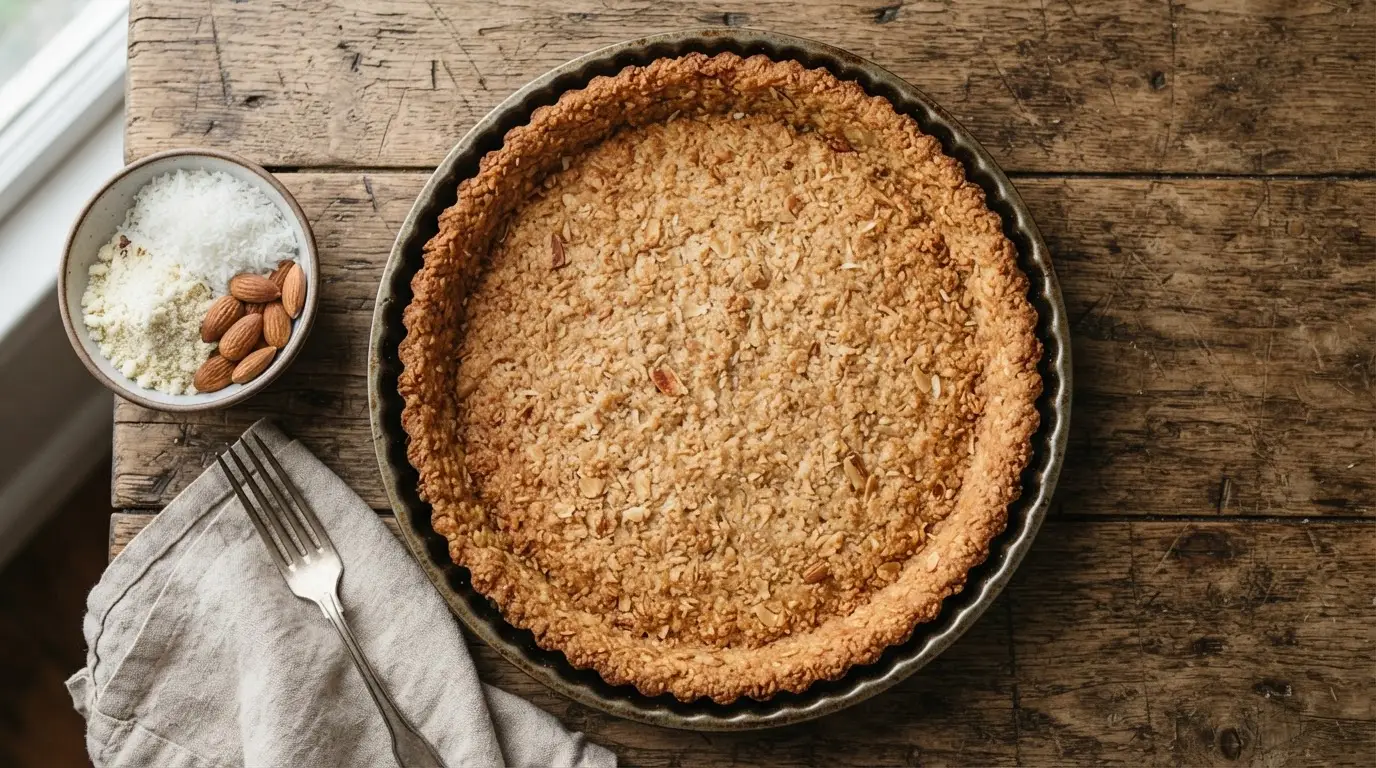
Almond coconut tart crust is a gluten-free, vegan tart crust made with almond flour, shredded coconut, and coconut oil. Unlike traditional pastry crusts, it offers 6.1g net carbs and 5g protein per serving. This crust takes 35 minutes to prep and 20 minutes to bake.
🎧 Listen to this recipe
This gluten-free almond coconut tart crust delivers a perfectly firm, flavorful base for any sweet or savory tart. The secret is using melted coconut oil and pressing firmly into the tart pan, which prevents crumbling and yields 6.1g net carbs per serving. Get the full Almond Coconut Tart Crust recipe at Recipebo and make it tonight.
What Is Almond Coconut Tart Crust?
An almond coconut tart crust is a gluten-free and vegan base for tarts, crafted primarily from almond flour, shredded coconut, and coconut oil. This version significantly reduces carbohydrates, offering 6.1g net carbs per serving compared to over 25g in a traditional flour crust. The key technique involves a simple press-in tart crust method, eliminating the need for rolling. This recipe is ideal for those seeking a healthy tart crust that is also dairy-free tart crust and paleo tart crust friendly.
🧂 Ingredients
👩🍳 Cooking Instructions
📝 Additional Notes
For a deeper coconut flavor, use unrefined coconut oil.
Ensure the crust is fully cooled before adding any wet fillings to prevent sogginess.
This crust can be made ahead and stored in an airtight container at room temperature for up to 3 days.
🥗 Nutrition Facts
How to Make This
Gather and Process Dry Ingredients3 mins
Ingredients for this step
Begin by combining the almond flour, shredded coconut, and a pinch of salt in your food processor. I find processing these ingredients together for about 30 seconds ensures the shredded coconut breaks down slightly, integrating better with the almond flour for a more cohesive crust. The mixture should look like a coarse, uniform meal, and you will hear the processor working smoothly. This step is crucial for achieving a consistent texture throughout the tart crust.
Combine Wet Ingredients1 mins
Ingredients for this step
In a separate small bowl, whisk together the melted coconut oil, maple syrup, and vanilla extract. I prefer using refined coconut oil to avoid a strong coconut flavor, allowing the natural sweetness of the shredded coconut to shine. The mixture should be smooth and well-emulsified, with no visible streaks of oil. This combination provides the essential binding and flavor for your almond coconut tart recipe.
Mix and Check Consistency2 mins
Ingredients for this step
Pour the wet ingredients into the food processor with the dry mixture. Pulse until everything is just combined and the mixture resembles wet sand. I noticed that over-processing at this stage can release too much oil, leading to a greasy crust, so I stop as soon as it clumps together when pressed. The mixture should hold its shape when squeezed between your fingers, indicating it is ready to form into a tart crust.
Press into Tart Pan3 mins
Transfer the mixture to a 9-inch tart pan with a removable bottom. Using your fingers or the bottom of a flat glass, press the mixture firmly and evenly into the bottom and up the sides of the pan. I found that pressing firmly, especially along the edges, prevents the crust from shrinking during baking.
Aim for an even thickness of about ¼ inch throughout the press-in tart crust. You should feel a solid, compact base forming under your hands.
Chill the Crust15 mins
Place the formed tart crust in the refrigerator for at least 30 minutes. This chilling period is essential for the coconut oil to solidify, which helps the crust maintain its shape and prevents crumbling during baking. I learned that skipping this step often results in a softer, more fragile crust that can fall apart. The crust should feel firm and cold to the touch when ready for the oven.
Blind Bake the Crust11 mins
Preheat your oven to 325°F (160°C). Place the chilled tart pan on a baking sheet. Blind baking this almond coconut tart crust for 15-20 minutes gives it a crisp texture before adding any filling.
I found that baking until the edges are lightly golden, but not deeply browned, is ideal. The crust should smell faintly toasted and feel firm when gently tapped. According to FDA Safe Food Handling Guidelines, ensuring proper baking temperatures is key for food safety.
How This Recipe Compares Nutritionally
Understanding the nutritional breakdown helps you make informed choices, especially when comparing this healthy tart crust to traditional versions.
| Nutrient | This Recipe (per serving) | Other Recipes | Difference |
|---|---|---|---|
| Calories | 227 kcal | 350-450 kcal | ~150-200 kcal less |
| Protein | 5g | 2-3g | ~2-3g more |
| Total Carbs | 9.3g | 25-40g | ~15-30g less |
| Total Fat | 21g | 20-30g | Similar |
| Fiber | 3.2g | 1-2g | ~1-2g more |
| Sodium | 3mg | 100-200mg | Significantly less |
This table highlights how our almond coconut tart crust offers a lower-carb, higher-fiber alternative to conventional tart crusts, while maintaining a satisfying fat content.
What Kitchen Mistakes Are Easy to Make With This Recipe?
The most common mistakes are a crumbling crust due to insufficient binding or a soggy crust from too much moisture or under-baking.
I initially struggled with a crumbling crust until I realized the importance of the maple syrup and coconut oil ratio. Too little liquid, or not processing the shredded coconut finely enough, leaves the crust dry and prone to breaking. My solution was to ensure the mixture felt like wet sand and held together when squeezed, adding an extra teaspoon of maple syrup if needed. Another issue was a soggy crust; this often happens when the crust is under-baked or the filling is too wet.
Blind baking at 325°F (160°C) for 15-20 minutes until lightly golden provides a sturdy, crisp base that resists moisture from fillings. A common mistake is not chilling the crust long enough, which prevents the coconut oil from solidifying and results in a weaker structure.
Which Allergy-Friendly Modifications Actually Work Here?
This recipe is naturally gluten-free and dairy-free tart crust, and easily vegan by using maple syrup. For a paleo tart crust, ensure your maple syrup is pure, or substitute with date syrup. A truly nut-free version is challenging due to the almond flour base.
This almond coconut tart crust is inherently gluten-free and dairy-free, making it widely accessible. For a vegan tart crust, the recipe already uses maple syrup and coconut oil, which are plant-based. If you are following a paleo tart crust diet, ensure your maple syrup is 100% pure, or you can swap it for an equal amount of date syrup, which provides a similar binding quality and sweetness. I found that while you can try to substitute almond flour with sunflower seed flour for a nut-free option, the texture and flavor profile change significantly, often resulting in a greener hue and a slightly bitter aftertaste. The USDA FoodData Central confirms that almond flour provides a unique nutritional profile that is hard to replicate directly for texture.
What Are the Best Ways to Serve This Recipe?
This versatile almond coconut tart crust pairs beautifully with both sweet and savory fillings, offering a delightful textural and flavor contrast.
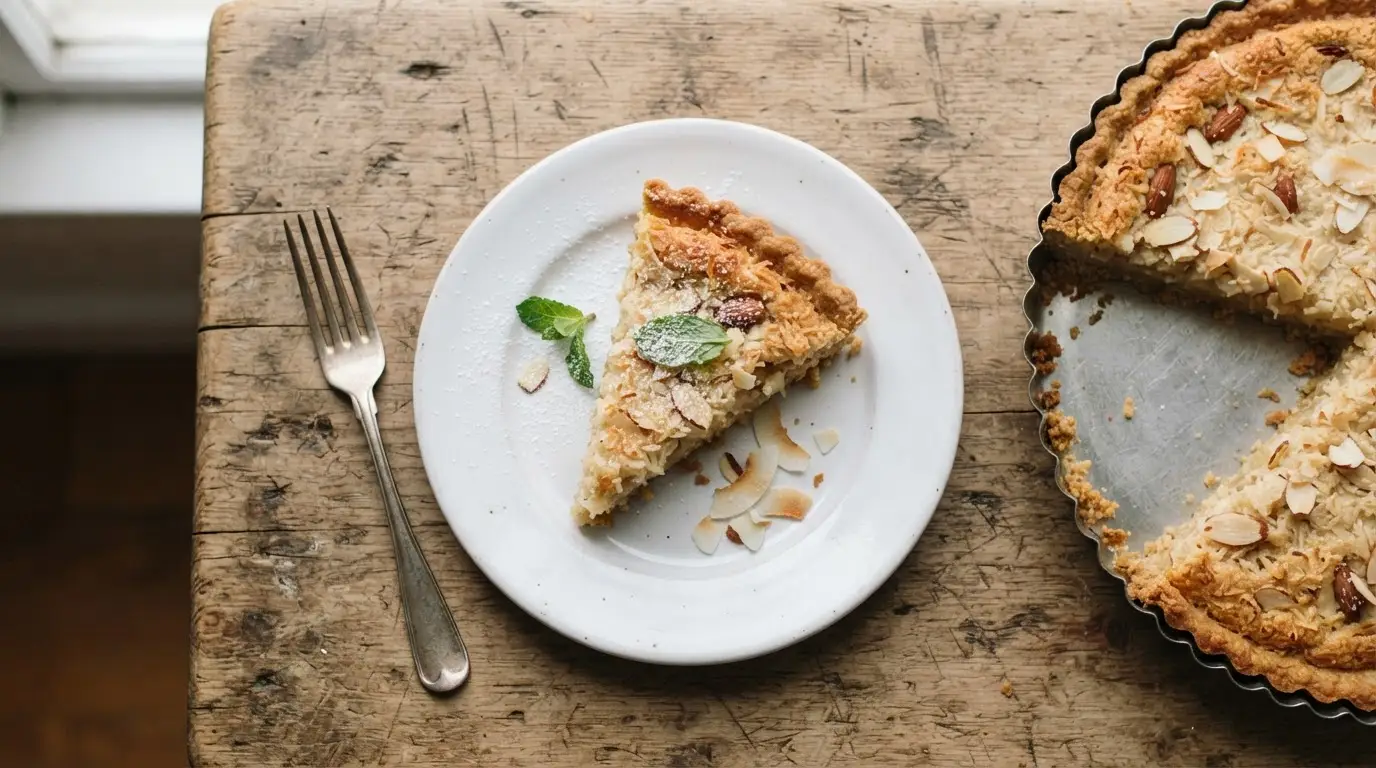
For sweet applications, I love filling this almond coconut tart crust with a rich chocolate ganache, a vibrant lemon curd, or fresh berries with a coconut cream topping. The subtle sweetness and nutty flavor of the crust complement these fillings perfectly. For savory options, this crust makes an excellent base for a vegan quiche filled with roasted vegetables and a tofu-based custard, or a simple tomato and basil tart. The robust structure of the crust holds up well to various fillings, making it a fantastic meal prep friendly option. The 6.1g net carbs per serving also makes it a great choice for those seeking a high-fat low-carb dessert or appetizer.
Trusted Sources
This recipe follows guidelines from these authoritative sources:
Frequently Asked Questions
How do you prevent an almond coconut tart crust from crumbling?
Prevent crumbling by ensuring the mixture is adequately moist with coconut oil and maple syrup, then pressing it very firmly into the pan. Chilling the formed crust for at least 30 minutes before baking allows the coconut oil to solidify, creating a much more stable structure. This firm base is essential for a successful press-in tart crust.
What is the difference between almond flour and almond meal in a tart crust?
Almond flour is made from blanched, skinless almonds and is finer, while almond meal includes the skins and has a coarser texture. For this almond coconut tart crust, almond flour yields a smoother, more delicate crust. Almond meal works but results in a slightly denser, more rustic texture with visible flecks of almond skin.
What fillings pair well with an almond coconut tart crust?
Sweet fillings like lemon curd, chocolate ganache, or fresh fruit, and savory options such as vegetable quiche, pair wonderfully. The subtle nutty and sweet notes of the almond coconut tart crust complement creamy, fruity, or even lightly spiced fillings. Its sturdy nature supports both light and heavier tart preparations.
Is almond coconut tart crust suitable for a vegan diet?
Yes, this almond coconut tart crust is inherently vegan as it uses plant-based ingredients like almond flour, shredded coconut, coconut oil, and maple syrup. It contains no animal products, making it an excellent choice for a dairy-free tart crust and those following a vegan lifestyle. This recipe provides a delicious and ethical alternative to traditional butter-based crusts.
