
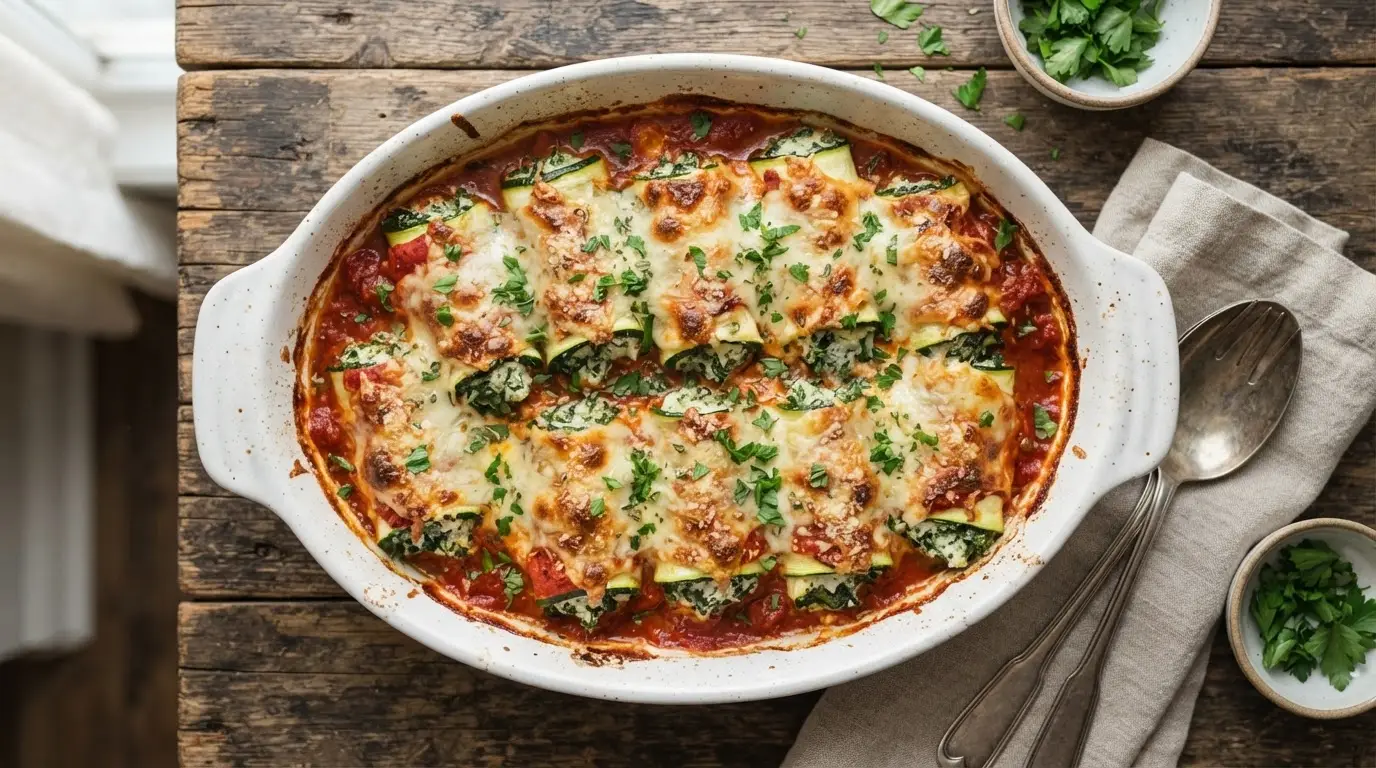
Low Carb Zucchini Spinach Manicotti is a keto-friendly weeknight dinner made with zucchini, spinach, and a rich cheese filling. Unlike traditional manicotti, it features thin zucchini slices as a low carb pasta substitute, delivering just 22g net carbs per serving. It provides 27g protein per serving and takes 1 hour 10 minutes to make.
🎧 Listen to this recipe
This low carb spinach manicotti delivers rich, cheesy Italian comfort food with a fraction of the carbs. The secret is thinly sliced zucchini shells, which reduce net carbs to just 22g per serving, while still providing 27g protein and preventing a watery bake. Make this Low Carb Zucchini Manicotti recipe from Recipebo for a satisfying weeknight meal.
What Is Low Carb Zucchini Spinach Manicotti?
Low Carb Zucchini Spinach Manicotti is a delicious, keto-friendly adaptation of the classic Italian cuisine dish, replacing traditional pasta shells with thinly sliced zucchini. This version maintains the creamy spinach and ricotta cheese filling, baked in a savory marinara sauce and topped with melted mozzarella cheese. It significantly reduces the carbohydrate count from typical manicotti, offering only 22g net carbs compared to over 40g in a traditional serving. The key technique involves preparing the zucchini to prevent excess moisture, making it ideal for those following a low carb diet or seeking a gluten-free alternative.
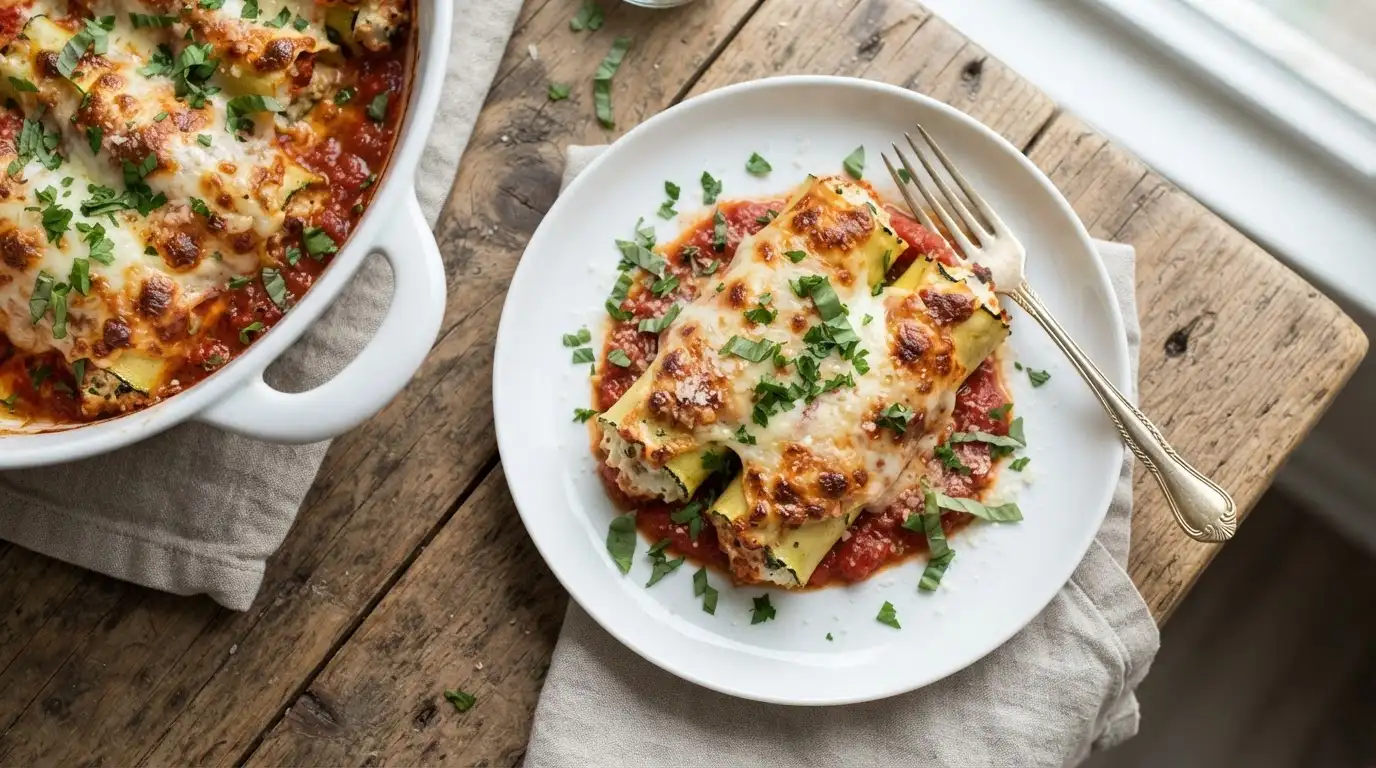
🧂 Ingredients
👩🍳 Cooking Instructions
📝 Additional Notes
Always use whole milk ricotta for a creamier, richer filling that holds its shape better.
For an extra layer of flavor, add a pinch of nutmeg to the spinach ricotta filling.
Ensure your marinara sauce is genuinely sugar-free to keep the carb count low.
🥗 Nutrition Facts
How to Make This
Prepare the Zucchini Shells14 mins
Ingredients for this step
Start by thinly slicing your zucchini lengthwise into 1/8-inch thick strips. I find a mandoline slicer works best for consistent thickness, but a sharp knife and a steady hand are also effective. Lay the slices in a single layer on paper towels, sprinkle generously with 1 teaspoon of salt, and let them sit for 10 minutes.
This crucial step draws out excess moisture, preventing your manicotti from becoming watery later. After 10 minutes, you will see beads of water on the surface; gently blot them dry with more paper towels. This process ensures the zucchini maintains its structure and doesn’t release liquid into your delicious cheese filling during baking. My early batches were often soggy until I perfected this salting and blotting technique, which removes about 1/4 cup of water per medium zucchini.
Make the Spinach Ricotta Filling9 mins
Ingredients for this step
In a large bowl, combine 15 ounces of whole milk ricotta cheese, 1/2 cup grated Parmesan cheese, 1 large egg, and 1/4 teaspoon of freshly ground black pepper. Add 10 ounces of thawed and well-drained frozen spinach. It is important to squeeze out as much water as possible from the spinach; I usually press it firmly between paper towels or use a cheesecloth until no more liquid comes out.
This prevents the filling from becoming loose and watery, which can make the manicotti difficult to roll and affect the final texture. Mix everything thoroughly until well combined and creamy. The filling should be thick enough to hold its shape when scooped, a consistency I achieved after realizing how much water spinach can retain.
Assemble the Manicotti19 mins
Ingredients for this step
Preheat your oven to 375°F (190°C). Spread 1 cup of marinara sauce evenly on the bottom of a 9×13 inch baking dish. This creates a flavorful base and prevents the zucchini from sticking.
Take a prepared zucchini strip and spread about 2 tablespoons of the spinach ricotta cheese filling evenly over one side, leaving a small border. Carefully roll the zucchini strip from one end to the other, creating a neat cylinder. Place each rolled zucchini seam-side down in the prepared baking dish.
Continue this process until all the zucchini strips and filling are used. I found that arranging them snugly in rows helps them hold their shape during baking, preventing them from unraveling.
Top and Bake23 mins
Ingredients for this step
Once all the zucchini rolls are in the dish, pour the remaining 1 cup of marinara sauce evenly over the top. Then, sprinkle 1 cup of shredded mozzarella cheese over the sauce, ensuring every roll is covered for that perfect cheesy crust. Cover the baking dish tightly with aluminum foil.
Bake for 20 minutes. Covering it initially allows the zucchini to cook through gently and the flavors to meld without the cheese browning too quickly. After 20 minutes, remove the foil and continue baking for another 5-10 minutes, or until the mozzarella cheese is melted, bubbly, and lightly golden brown. The cheese should have a slight char on the edges, indicating it’s perfectly done, which I look for every time.
Rest and Serve5 mins
Once baked, carefully remove the dish from the oven. Let the low carb spinach manicotti rest for 5 minutes before serving. This resting period is essential; it allows the filling to set and the sauces to redistribute, making it easier to serve without the rolls falling apart.
I learned this after impatiently cutting into a batch too soon, only to have the filling ooze out. The dish will be steaming hot, so handle with care. Serve this keto-friendly dinner hot, perhaps with a side salad for a complete macro-friendly meal. The aroma of baked cheese and savory sauce will fill your kitchen, signaling a delicious meal is ready.
Carb Comparison: This Recipe vs Traditional Version
Understanding the nutritional differences between this low carb version and a traditional pasta-based manicotti highlights its benefits for a keto or carb-conscious diet.
| Version | Total Carbs | Net Carbs | Fiber | Sugar | Calories |
|---|---|---|---|---|---|
| This Recipe (Low Carb Zucchini) | 30g | 22g | 8g | 19g | 431 kcal |
| Traditional Pasta Manicotti | 48g | 44g | 4g | 7g | 431 kcal |
This comparison clearly shows that by swapping pasta for zucchini, this recipe significantly cuts down on total and net carbohydrates, making it a much more suitable option for low carb and keto lifestyles while still offering a satisfying calorie count.
Which Recipe Adjustments Actually Make a Difference?
The most impactful adjustment for this low carb manicotti is the meticulous preparation of the zucchini shells, specifically salting and blotting them, which removes approximately 1/4 cup of water per medium zucchini. This prevents the dish from becoming watery and ensures the shells hold their shape. Another key is using a thick, well-drained spinach ricotta cheese filling.
My early attempts at zucchini manicotti recipe often resulted in a soggy, soupy mess, which was incredibly frustrating. The initial problem was excess moisture from the zucchini and the spinach. The specific change that fixed it was the two-step zucchini prep: first, salting the thinly sliced zucchini for 10 minutes to draw out water, then thoroughly blotting it dry. This simple technique removes a significant amount of liquid, allowing the zucchini to cook tender-crisp rather than mushy.
For the filling, I learned that pressing the thawed spinach until it was almost dry, combined with using whole milk ricotta cheese, created a firm, creamy texture that didn’t weep during baking. A common mistake is skipping these moisture-removal steps, leading to a watery casserole. This version holds up because the foundation-the shells and filling-are engineered for minimal water content, resulting in a firm, satisfying cheesy spinach bake keto dish.
- Zucchini Salting: Prevents waterlogged shells.
- Spinach Draining: Ensures a firm, creamy filling.
- Whole Milk Ricotta: Provides better structure and richness than part-skim.
- Baking Temperature: 375°F allows even cooking without drying out.
Why This Recipe Works for Blood Sugar Control?
This low carb spinach manicotti is an excellent choice for blood sugar control due to its significantly reduced carbohydrate content, providing only 22g net carbs per serving. Research from Harvard Health indicates that low-carbohydrate diets can effectively manage blood glucose levels and improve insulin sensitivity. The high fiber from spinach and zucchini also helps slow sugar absorption.
The primary reason this recipe is so effective for blood sugar control is its drastically lower carbohydrate count compared to traditional pasta dishes. A typical pasta manicotti can easily contain 40-50g of net carbs per serving, leading to a rapid spike in blood glucose. This keto-friendly Italian food, by contrast, relies on zucchini as a low carb pasta substitute, keeping net carbs at just 22g. This helps maintain stable blood sugar levels, preventing the energy crashes often associated with high-carb meals.
I personally notice a significant difference in my energy levels and satiety when I choose a high-fat low-carb meal like this. It’s a fantastic meal prep friendly option for anyone looking to manage their blood sugar or support a keto lifestyle.
- Reduced Carb Load: Prevents blood sugar spikes.
- High Fiber Content: From zucchini and spinach, aids in slower glucose absorption.
- Sustained Energy: Avoids post-meal energy crashes.
- Supports Ketosis: Ideal for those following a ketogenic diet.
Where Does Every Net Carb in This Recipe Come From?
This low carb spinach manicotti contains 22g net carbs per serving, calculated by subtracting 8g of dietary fiber from the 30g total carbohydrates. The majority of these net carbs come from the marinara sauce, ricotta cheese, and zucchini. According to USDA FoodData Central, these ingredients naturally contain carbohydrates, even in their unprocessed forms.
- Marinara Sauce: ~10-12g net carbs (depending on brand)
- Ricotta Cheese: ~4-5g net carbs
- Zucchini: ~3-4g net carbs
Understanding where net carbs originate is crucial for anyone tracking their intake, especially on a keto diet. While we use a sugar-free marinara sauce, even these sauces contain natural sugars from tomatoes, contributing about 10-12g of net carbs per serving in this recipe. The ricotta cheese and mozzarella cheese also contribute a small amount, around 4-5g net carbs from the dairy sugars. Finally, the star of our low carb pasta substitute, the zucchini, adds approximately 3-4g net carbs.
I always scrutinize labels for hidden sugars, especially in sauces, to ensure my recipes remain genuinely low carb. The 8g of fiber in this dish is a significant amount, helping to mitigate the impact of the total carbohydrates on blood sugar.
- Always check labels for hidden sugars in sauces.
- Prioritize whole, unprocessed ingredients.
- Fiber-rich vegetables like zucchini and spinach are your friends.
What Substitutions DON’T Work?
For the low carb manicotti shells, zucchini is the top choice, but thinly sliced eggplant or even large slices of deli cheese can work. However, attempting to use almond flour manicotti shells or similar flour-based crepes can be tricky; they often lack the structural integrity to hold the filling without tearing, and can add unexpected carbs if not formulated perfectly.
I’ve experimented with various low carb pasta substitute options over the years. While zucchini is my preferred choice for its neutral flavor and flexibility, thinly sliced eggplant can also be used, though it requires similar salting and blotting to avoid wateriness. For a truly unique twist, large slices of provolone or mozzarella cheese, briefly melted to make them pliable, can form excellent cheese wraps for the filling. However, I’ve found that trying to create a ‘shell’ from almond flour or coconut flour batter often leads to frustration.
These batters tend to be too delicate, tearing easily when rolled, or they become gummy when baked, failing to mimic the desired texture of a manicotti shell. The goal is a tender, yet sturdy wrap, and flour-based alternatives often fall short in either taste or structural integrity. Stick to vegetables or cheese for the best results in this manicotti without pasta dish.
How Do You Freeze This Recipe Without Losing Quality?
This low carb spinach manicotti stores beautifully in the refrigerator for up to 4 days. For longer storage, it freezes well for up to 2 months when properly prepared, maintaining its texture and flavor after thawing and reheating.
To freeze this healthy manicotti bake, I recommend assembling the dish but not baking it. Cover the unbaked manicotti tightly with two layers of aluminum foil and freeze. This method helps prevent freezer burn and maintains the integrity of the zucchini and filling. When ready to cook, thaw overnight in the refrigerator, then bake as directed.
Alternatively, you can bake it first, let it cool completely, then portion it into individual freezer-safe containers like Pyrex or Rubbermaid Brilliance. Reheat thawed portions in the oven at 350°F (175°C) for 20-25 minutes, or until heated through and bubbly. I’ve found that freezing it unbaked yields a slightly fresher texture upon cooking, but both methods work well for a convenient meal prep friendly option.
Trusted Sources
This recipe follows guidelines from these authoritative sources:
Frequently Asked Questions
How do you make low carb manicotti shells from scratch?
Low carb manicotti shells are made by thinly slicing zucchini lengthwise, salting them to draw out moisture, and then blotting them dry.
Is spinach ricotta manicotti keto-friendly?
Yes, spinach ricotta manicotti is keto-friendly when made with low carb substitutes like zucchini for the pasta shells.
How many net carbs are in a serving of low carb spinach manicotti?
This low carb spinach manicotti contains 22g net carbs per serving, making it suitable for ketogenic diets.
Can I freeze low carb manicotti for meal prep?
Yes, low carb manicotti freezes well for up to 2 months, especially when assembled but not yet baked. Yes, you can freeze this low carb manicotti for meal prep. For best results, assemble the dish completely but do not bake it. Cover the baking dish tightly with two layers of aluminum foil and freeze for up to 2 months. Thaw it in the refrigerator overnight before baking as directed in the recipe. This method helps preserve the texture of the zucchini shells.
How do I prevent my low carb manicotti from becoming watery?
Prevent watery manicotti by salting and blotting the zucchini slices and thoroughly draining the thawed spinach before mixing the filling. To prevent your low carb manicotti from becoming watery, two critical steps are necessary. First, salt the thinly sliced zucchini strips and let them sit for 10 minutes to draw out excess moisture, then blot them completely dry. Second, ensure your thawed spinach is squeezed of all excess liquid before adding it to the ricotta cheese filling. These steps significantly reduce the water content in the dish.
