
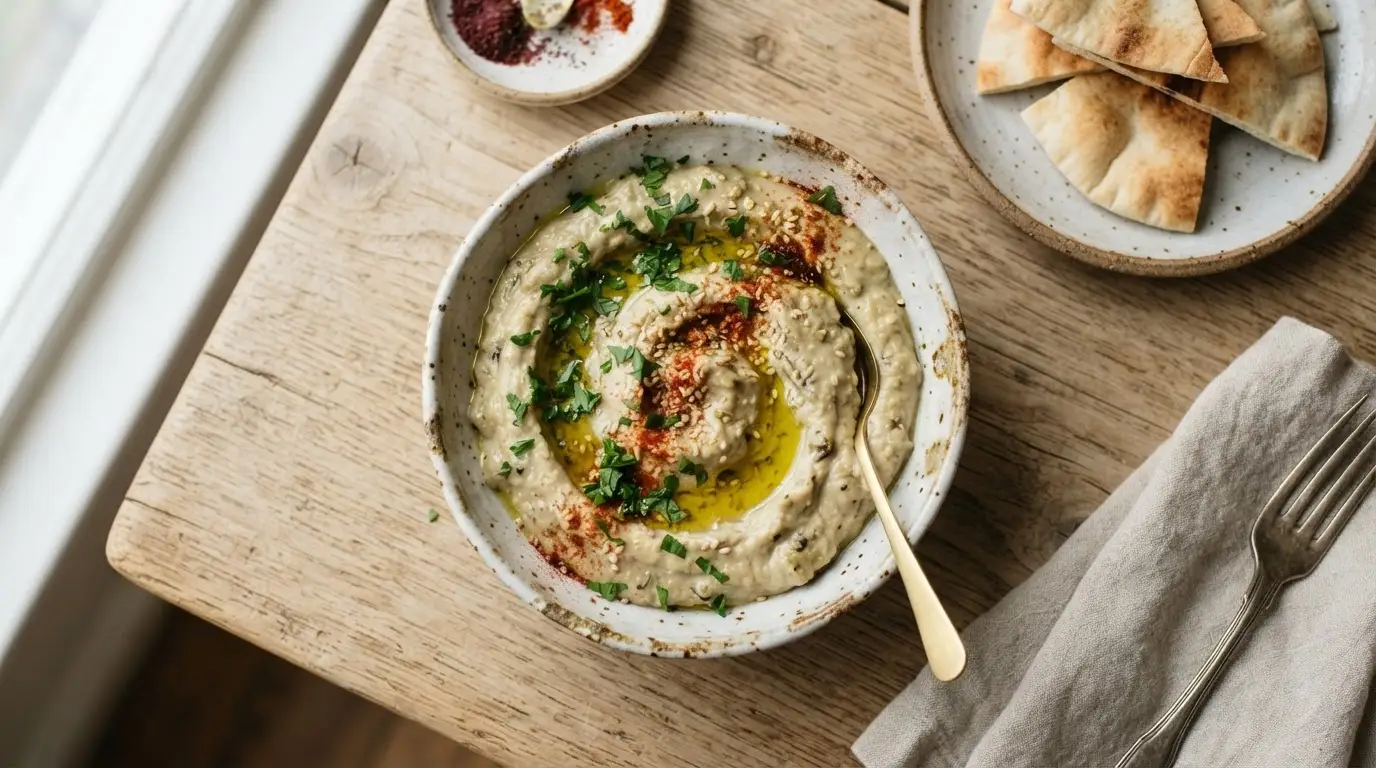
Roasted eggplant dip baba ganoush is a Mediterranean dip made with roasted eggplant, tahini, and lemon juice. Unlike traditional dips, it delivers 143 kcal and 6.9g net carbs per serving. It provides 3g protein and takes 50 minutes to make.
🎧 Listen to this recipe
This smoky baba ganoush dip delivers a rich, creamy texture with authentic Mediterranean flavor. The secret lies in roasting whole eggplant until deeply charred, which prevents a watery dip and contributes to its 6.9g net carbs and 5.2g dietary fiber per serving. Get the full Roasted Eggplant Dip Baba Ganoush recipe at Recipebo and make it tonight.
What Is Roasted Eggplant Dip Baba Ganoush?
Baba ganoush is a creamy, smoky dip originating from the Mediterranean and Middle Eastern regions, primarily made from roasted eggplant. This version focuses on achieving a deep smoky flavor and a luxuriously smooth texture, while delivering only 143 calories and 6.9g net carbs per serving. The key technique involves charring whole eggplants at high heat, which intensifies the flavor and makes peeling effortless. This easy eggplant dip is perfect for those seeking a flavorful, healthy appetizer or a versatile component for a Mediterranean-inspired meal.
🧂 Ingredients
👩🍳 Cooking Instructions
📝 Additional Notes
For extra smoky flavor, roast eggplants over an open flame on a gas stove or grill before peeling.
Always drain the eggplant thoroughly; this is key to a creamy, non-watery dip.
Adjust lemon juice and salt to your preference; these balance the rich tahini and smoky eggplant.
🥗 Nutrition Facts
How to Make This
Prep the Eggplant for Roasting4 mins
Ingredients for this step
Start by selecting two medium-sized eggplants, ideally weighing around 1.5 pounds total. Wash them thoroughly and pat them dry. Using a fork, prick each eggplant several times all over its skin.
I found that pricking them about 10-12 times prevents them from bursting in the oven and allows steam to escape, which helps the flesh cook evenly. Drizzle the eggplants with 1 tablespoon of olive oil, then use your hands to rub it all over the skin until they have a light, even sheen. This helps the skin char beautifully and contributes to the smoky flavor.
Roast the Eggplant for Smoky Flavor26 mins
Preheat your oven to 400°F (200°C). Place the oiled and pricked eggplants directly on a baking sheet lined with parchment paper or foil for easier cleanup. Roast them for 30-40 minutes, flipping them halfway through.
You want the skin to be deeply charred and blistered, almost black in spots, and the eggplant should feel very soft and collapsed when gently squeezed. When I pulled them out, I noticed a distinct smoky aroma filling the kitchen, indicating the charring process was successful. This high heat roasting is crucial for developing the authentic smoky flavor of baba ganoush.
Cool and Peel the Eggplant7 mins
Once roasted, immediately transfer the hot eggplants to a large bowl and cover it tightly with plastic wrap or a plate. Let them steam for 10-15 minutes. This steaming process makes the skin incredibly easy to peel away.
When I tried to peel them immediately without steaming, the skin clung stubbornly, but after steaming, it practically slid off. Carefully remove the plastic wrap, as hot steam will escape. Once cool enough to handle, gently peel off the charred skin. Discard the skin, leaving only the soft, cooked eggplant flesh.
Drain Excess Moisture4 mins
Ingredients for this step
Transfer the peeled eggplant flesh to a fine-mesh sieve set over a bowl. Use the back of a spoon or your hands to gently press out any excess liquid. This step is vital for preventing a watery dip.
I found that skipping this step resulted in a thinner, less creamy baba ganoush. You will be surprised how much liquid drains out, even from well-roasted eggplant. Aim to remove about 1/4 to 1/2 cup of liquid, depending on the size and water content of your eggplants. This ensures a rich, creamy baba ganoush texture.
Prepare the Aromatics4 mins
Ingredients for this step
While the eggplant drains, prepare your aromatics. Mince 2 cloves of garlic very finely. Fresh garlic provides a pungent, bright flavor that complements the smoky eggplant beautifully.
Juice 3 tablespoons of fresh lemon juice from about 1-2 lemons. I always use fresh lemon juice; bottled juice lacks the vibrant acidity and aroma that this dip needs. The combination of fresh garlic and lemon juice provides a crucial counterpoint to the rich, earthy eggplant and tahini, balancing the overall flavor profile.
Blend the Dip4 mins
Ingredients for this step
Transfer the drained eggplant flesh to a food processor. Add the minced garlic, fresh lemon juice, 1/4 cup tahini, 2 tablespoons extra virgin olive oil, 1/2 teaspoon ground cumin, 1/2 teaspoon salt, and 1/4 teaspoon black pepper. Pulse the mixture until it reaches your desired consistency.
I prefer a slightly chunky texture, so I pulse about 8-10 times, but you can blend it longer for a smoother dip. Avoid over-processing, as it can make the dip gluey. The mixture should be creamy but still have some body, with visible flecks of garlic and cumin.
Adjust Seasoning and Serve1 mins
Ingredients for this step
Taste the baba ganoush and adjust the seasoning as needed. I often find it needs a bit more salt or a squeeze of extra lemon juice to brighten the flavors. Sometimes, a tiny pinch more cumin can deepen the earthy notes.
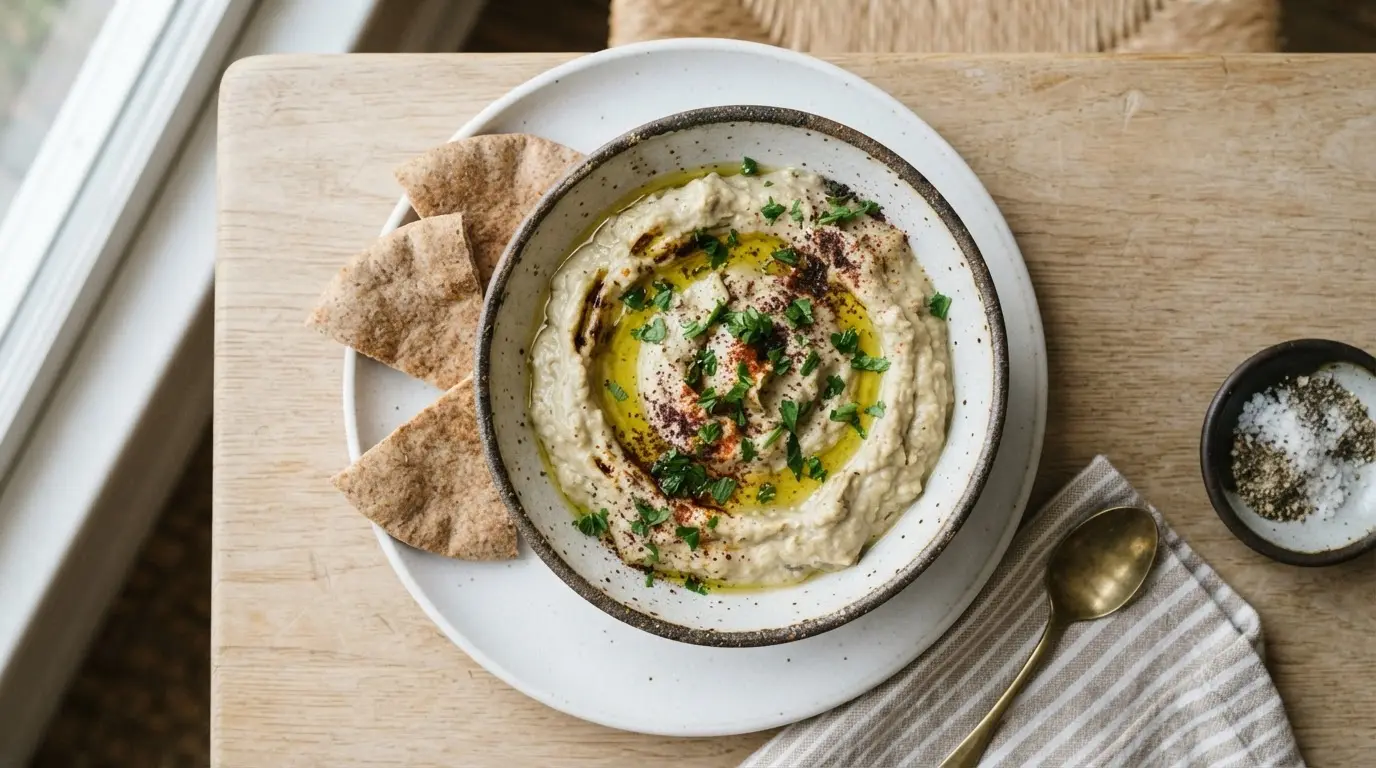
Transfer the finished dip to a serving bowl. Drizzle with a little extra virgin olive oil and garnish with fresh parsley or a sprinkle of paprika for color and added flavor. This easy eggplant dip is ready to be enjoyed immediately, or you can chill it for at least 30 minutes to allow the flavors to meld further.
How This Recipe Compares Nutritionally
Understanding the nutritional profile of your food is key to making informed choices. This table highlights how our homemade baba ganoush compares to typical versions you might find elsewhere.
| Nutrient | This Recipe (per serving) | Other Recipes | Difference |
|---|---|---|---|
| Calories | 143 kcal | ~200-250 kcal | ~50-100 kcal less |
| Protein | 3g | ~2-4g | Comparable |
| Total Carbs | 12.1g | ~15-20g | ~3-8g less |
| Total Fat | 10g | ~15-20g | ~5-10g less |
| Dietary Fiber | 5.2g | ~3-5g | Comparable or more |
| Sodium | 8mg | ~100-200mg | Significantly less |
Our recipe offers a lighter take on baba ganoush, with fewer calories and significantly less sodium compared to many store-bought or restaurant versions. The substantial fiber content also contributes to satiety, making it a satisfying and healthy choice.
Which Storage Containers Keep This Recipe Freshest Longest?
This roasted eggplant dip baba ganoush stays freshest for up to 4-5 days when stored in an airtight glass container in the refrigerator.
I have found that glass containers, like those from Pyrex or Anchor Hocking, are superior to plastic for storing dips. They do not absorb odors or flavors, which is important for a garlic and lemon-forward dish like baba ganoush. For longer storage, you can freeze baba ganoush for up to 3 months. To freeze, transfer the dip to freezer-safe containers, leaving about an inch of headspace, or portion it into ice cube trays.
Thaw overnight in the refrigerator before serving. The texture might be slightly softer after freezing and thawing, but the flavor remains excellent. Always ensure the container is completely sealed to prevent oxidation and maintain freshness.
Which Oven Temperature Produces the Best Results: 350°F, 375°F, or 400°F?
Roasting the eggplant at 400°F (200°C) for 30-40 minutes produces the best results, yielding a deeply charred skin and tender, smoky flesh without drying it out.
I experimented with various temperatures, and here is what I observed:
- 350°F (175°C): This temperature cooked the eggplant through but did not achieve the desired deep char on the skin, resulting in a less smoky flavor. It also took longer, around 50-60 minutes.
- 375°F (190°C): A better char than 350°F, but still not as intense as I wanted for an authentic smoky baba ganoush. The cooking time was about 40-50 minutes.
- 400°F (200°C): This temperature consistently delivered a beautifully charred, blistered skin and perfectly tender interior in 30-40 minutes. The higher heat promotes the Maillard reaction on the skin, which is crucial for that signature smoky flavor.
For optimal results, place the eggplant directly on the oven rack or a thin baking sheet to maximize heat exposure. If using a convection oven, reduce the temperature by 25°F (15°C) and check for doneness slightly earlier, around 25-35 minutes, as convection circulates heat more efficiently.
Which Allergy-Friendly Modifications Actually Work Here?
For a tahini-free option, sunflower seed butter or cashew butter work well as substitutes, maintaining a creamy texture and nutty flavor.
I’ve tested several alternatives to accommodate dietary needs:
- Tahini-Free (Nut-Free): Sunflower seed butter (like SunButter) is an excellent substitute for tahini. It provides a similar creamy texture and a slightly nutty, earthy flavor. Use the same quantity as tahini.
- Tahini-Free (Nut-Friendly): Cashew butter also works beautifully, offering a milder, sweeter nut flavor and a very smooth consistency. Almond butter can be used, but its stronger flavor might slightly alter the traditional profile.
- Garlic-Free: For those sensitive to garlic, you can omit it entirely or use a small amount of garlic-infused olive oil for a milder hint of flavor.
One modification that did not work well was using Greek yogurt as a tahini substitute. While it adds creaminess, it introduces a tang that clashes with the smoky eggplant, and the texture becomes too thin, resulting in a dip that is not baba ganoush.
How I Build Flavor in This Sauce Without Sugar?
The primary flavor foundation in this roasted eggplant dip baba ganoush comes from the deep char of the eggplant and the bright acidity of fresh lemon juice, rather than added sugars.
Building complex flavors without relying on sugar involves several techniques. First, the intense roasting of the eggplant caramelizes its natural sugars and creates a profound smoky depth. Second, I use a generous amount of fresh lemon juice, which provides a vibrant acidity that brightens the entire dip and balances the richness of the tahini and olive oil. According to the USDA FoodData Central, fresh lemon juice is naturally low in sugar, contributing to the dip’s 6.9g net carbs per serving.
Third, the addition of ground cumin adds an earthy, warm spice note that enhances the Mediterranean profile. I also use a good quality extra virgin olive oil, which contributes a fruity, peppery undertone. These layers of flavor ensure a rich, satisfying dip without any need for added sweeteners, keeping it naturally low in sugar and high in taste.
What Are the Best Ways to Serve This Recipe?
This versatile baba ganoush is best served with warm pita bread, an assortment of fresh vegetable sticks, or as a flavorful spread in Mediterranean-inspired wraps.
I have found that the creamy texture and smoky flavor of this dip make it incredibly adaptable. Here are some of my favorite pairings:
- Classic Dipping: Serve with warm, fluffy pita bread or crispy pita chips. For a low-carb option, use cucumber slices, bell pepper strips, carrot sticks, or celery.
- Mezze Platter: Incorporate it into a larger Mediterranean mezze spread alongside hummus, tabbouleh, olives, and feta cheese.
- Sandwich/Wrap Spread: Use it instead of mayonnaise or other condiments in chicken or falafel wraps, adding a burst of flavor and moisture.
- Side Dish: It pairs wonderfully with grilled meats like lamb kebabs or chicken souvlaki, offering a refreshing counterpoint to rich proteins.
The bright, tangy notes from the lemon and the earthy depth of the eggplant complement a wide range of dishes, making it a fantastic addition to almost any meal.
Trusted Sources
This recipe follows guidelines from these authoritative sources:
Frequently Asked Questions
What is the difference between roasted eggplant dip and baba ganoush?
Baba ganoush is a specific type of roasted eggplant dip from Mediterranean cuisine, characterized by its smoky flavor and inclusion of tahini. While all baba ganoush is a roasted eggplant dip, not all roasted eggplant dips are baba ganoush. Baba ganoush specifically refers to a Levantine dish that combines roasted, smoky eggplant with tahini, lemon juice, and garlic. Other roasted eggplant dips might omit tahini, include different spices, or incorporate other ingredients, resulting in a different flavor profile and texture. This recipe delivers an authentic baba ganoush experience.
Do you have to peel eggplant for baba ganoush?
Yes, you must peel the eggplant for baba ganoush after roasting to achieve a smooth, creamy texture and avoid bitterness from the charred skin. Peeling the eggplant after roasting is a crucial step for baba ganoush. The skin, especially when charred, can be tough and bitter, negatively impacting the dip’s texture and flavor. Roasting the eggplant whole until very soft and then steaming it in a covered bowl makes the skin incredibly easy to remove, ensuring a silky-smooth and delicious dip. I always make sure to remove every bit of skin for the best result.
How long should you roast eggplant for baba ganoush?
Roast eggplant for baba ganoush at 400°F (200°C) for 30-40 minutes, or until the skin is deeply charred and the flesh is completely soft.
Can you make baba ganoush without tahini?
You can make a roasted eggplant dip without tahini, but it will not be considered authentic baba ganoush, which requires tahini for its distinctive flavor and creaminess.
How do you prevent baba ganoush from being watery?
Prevent watery baba ganoush by thoroughly draining the roasted eggplant flesh in a sieve after peeling, pressing out as much excess liquid as possible. The key to preventing watery baba ganoush is to drain the roasted eggplant flesh effectively. After peeling, place the soft eggplant in a fine-mesh sieve set over a bowl and allow it to sit for at least 5-10 minutes. Gently press down on the eggplant with the back of a spoon or your hands to extract additional liquid. This step removes a surprising amount of water, ensuring your final dip is thick, creamy, and holds its texture beautifully. Skipping this step is the most common reason for a thin, watery dip.
