
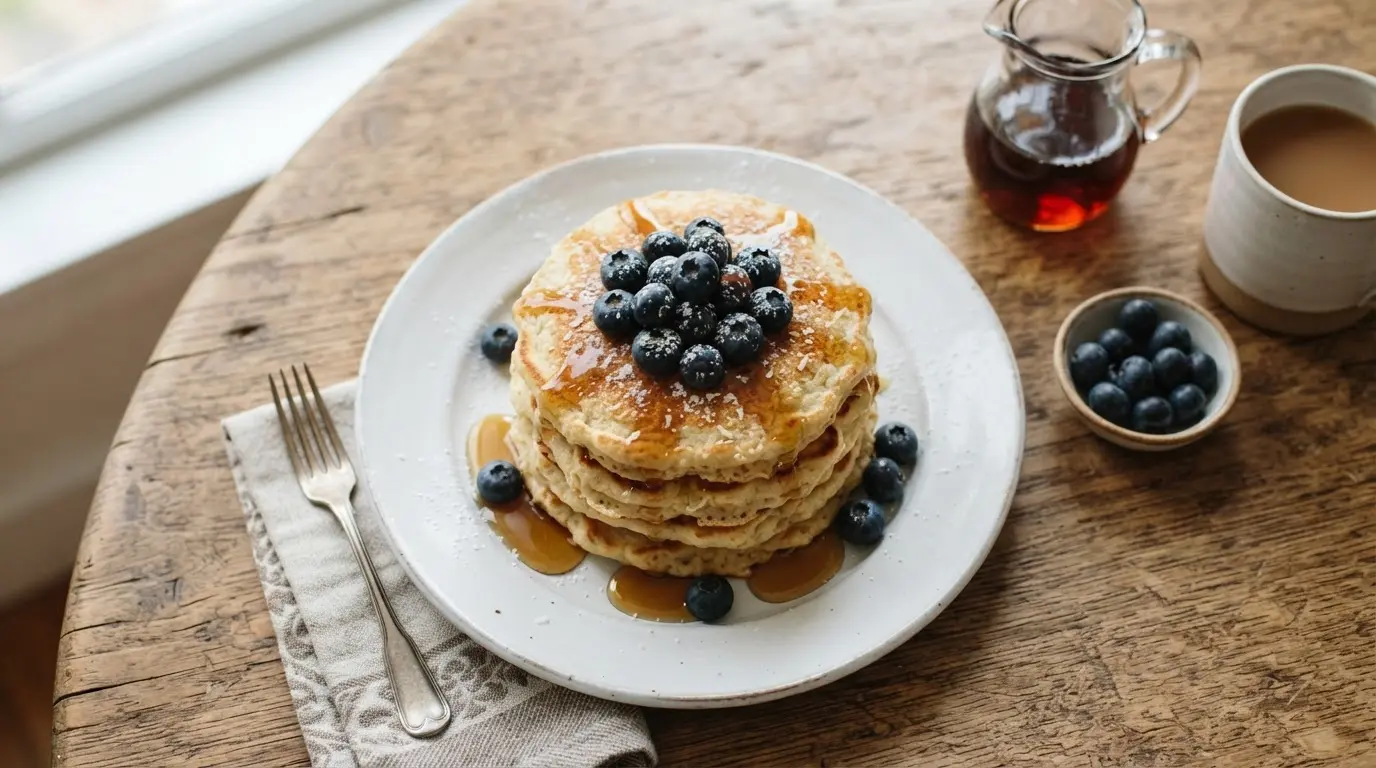
Coconut flour pancakes are a gluten-free, low-carb breakfast made with coconut flour, eggs, and milk. Unlike traditional pancakes, this recipe delivers 12.0g net carbs and 18g protein per serving. It takes 35 minutes to make.
🎧 Listen to this recipe
These coconut flour pancakes deliver a delicious, satisfying breakfast that fits perfectly into a low-carb lifestyle. The secret is balancing the highly absorbent coconut flour with enough liquid and eggs, preventing the dry, crumbly texture often associated with this ingredient. This recipe provides 18g protein and 12.0g net carbs per serving, ensuring a truly satisfying start to your day. Get the full Coconut Flour Pancakes recipe at Recipebo and make it tonight.
What Is Coconut Flour Pancakes?
Coconut flour pancakes are a popular gluten-free and low-carb breakfast option, utilizing finely ground dried coconut meat instead of traditional wheat flour. This recipe specifically crafts a batter that yields a fluffy texture, a common challenge with coconut flour’s high absorbency. It stands apart from conventional pancakes by offering significantly fewer carbohydrates, with just 12.0g net carbs per serving, making it ideal for those following a keto diet or simply seeking a healthier alternative. The unique properties of coconut flour require a higher liquid-to-flour ratio and more eggs to achieve structure, resulting in a nutrient-dense meal.
🧂 Ingredients
👩🍳 Cooking Instructions
📝 Additional Notes
For fluffier pancakes, ensure your baking powder is fresh and active.
Adjust milk quantity slightly if batter is too thick or thin after resting.
These pancakes are great for meal prep; store in an airtight container for up to 3 days.
🥗 Nutrition Facts
How to Make This
Prepare the Dry Ingredients3 mins
Ingredients for this step
Begin by whisking together the dry ingredients in a large bowl. I combine coconut flour, baking powder, and a pinch of salt. When I first started working with coconut flour, I noticed that simply stirring it in often left small clumps, which resulted in an uneven texture in the finished pancake.
Whisking vigorously for at least 30 seconds ensures that the baking powder is evenly distributed, which is crucial for achieving a light, airy lift. You want to see a uniform, fine powder with no visible lumps, indicating everything is well-aerated and ready to absorb the wet ingredients.
Combine Wet Ingredients5 mins
Ingredients for this step
In a separate medium bowl, whisk the wet ingredients: eggs, milk, melted coconut oil, and vanilla extract. I found that using room-temperature eggs makes a significant difference; cold eggs can cause the melted coconut oil to seize up, creating small, hard bits in the batter. Whisk until the mixture is completely smooth and pale yellow, about 1 minute.
The goal is a homogenous liquid, ready to be incorporated into the dry ingredients without any separation, ensuring a consistent texture in every pancake. You should see a slightly frothy surface from the whisking.
Mix the Batter2 mins
Pour the wet ingredients into the bowl with the dry ingredients. Stir gently with a whisk or spatula until just combined. Overmixing coconut flour batter can lead to tough pancakes because it develops gluten-like structures, even though it’s gluten-free.
I stop mixing as soon as no dry streaks of flour remain, which usually takes about 30-45 seconds. The batter will be quite thick, almost like a soft dough, but it should still be pourable. You will notice the coconut flour rapidly absorbing the liquid, thickening the mixture considerably.
Rest the Batter5 mins
Allow the batter to rest for at least 5 minutes. This step is non-negotiable for coconut flour pancakes. When I skipped this step in earlier attempts, the pancakes were crumbly and difficult to flip.
The resting period gives the coconut flour time to fully absorb the liquid, hydrating completely and preventing a dry, gritty texture. After resting, the batter will be even thicker, resembling a thick cake batter. This hydration is key to achieving a moist, cohesive pancake that holds together beautifully on the griddle.
Cook the Pancakes15 mins
Ingredients for this step
Heat a non-stick skillet or griddle over medium-low heat. Lightly grease with a little more coconut oil or butter. I use about 1/4 cup of batter per pancake, gently spreading it into a 4-inch circle with the back of a spoon, as the batter is too thick to spread on its own.
Cook for 3-4 minutes per side, or until golden brown and cooked through. You’ll see small bubbles forming on the surface and the edges setting before flipping. The internal temperature should reach 165°F (74°C), as recommended by the FDA Safe Food Handling Guidelines for egg-containing products. The pancakes will feel firm to the touch when ready.
Serve Immediately5 mins
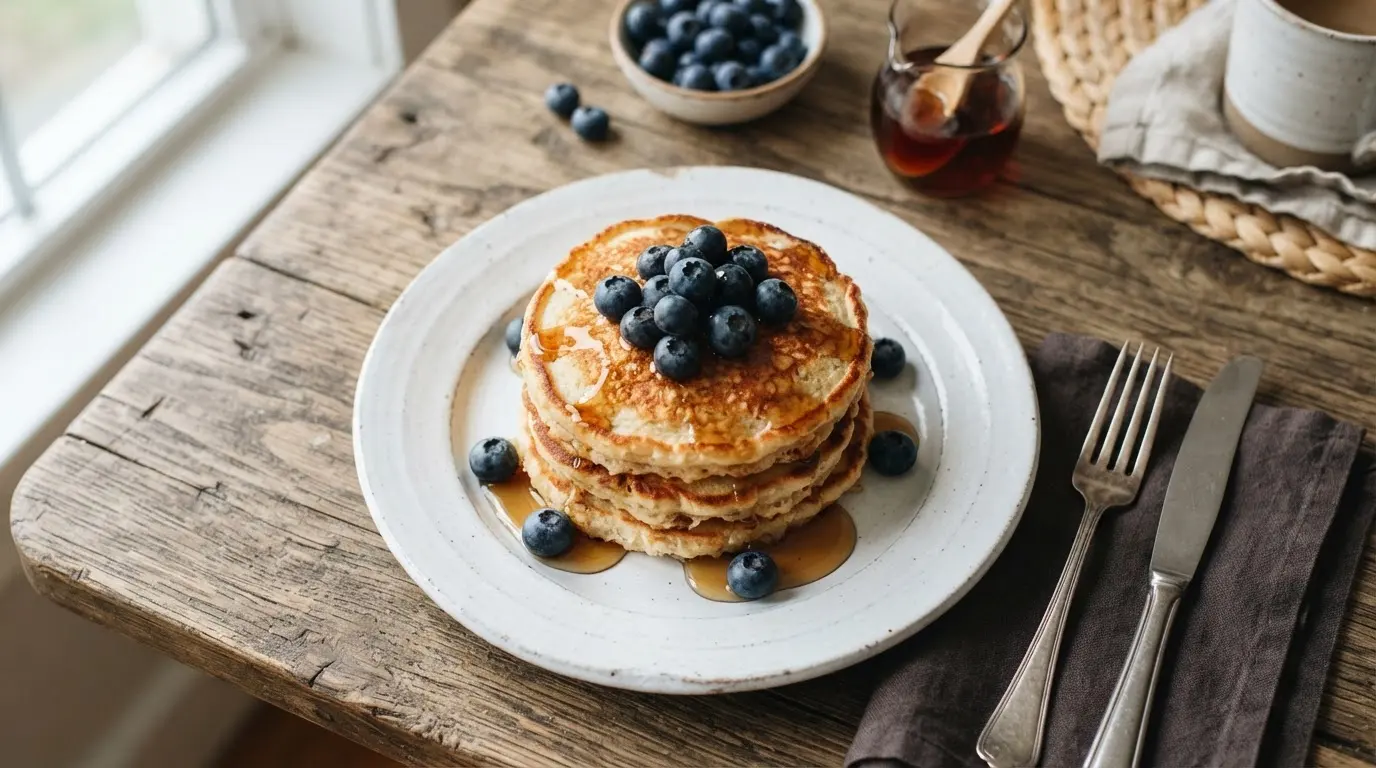
Transfer the cooked pancakes to a plate. Serve them warm with your favorite toppings. I find that a pat of butter and a drizzle of sugar-free maple syrup are classic, but fresh berries or a dollop of whipped cream also work wonderfully.
These pancakes are best enjoyed fresh off the griddle, as their texture is at its peak. While they can be stored, the warmth enhances their natural sweetness and soft interior. The aroma of toasted coconut and vanilla will fill your kitchen, signaling a delicious breakfast is ready.
Cooking Method Comparison
While stovetop is the classic method, understanding how different cooking approaches affect your coconut flour pancakes can help you achieve desired results.
| Method | Temp | Time | Result Quality | Calories | Best For |
|---|---|---|---|---|---|
| Stovetop (Skillet) | Medium-Low | 3-4 min/side | Golden, fluffy, slightly crisp edges | 380 kcal | Classic texture, quick batches |
| Oven (Sheet Pan) | 350°F (175°C) | 15-20 mins | Evenly cooked, softer texture | 380 kcal | Hands-off, meal prep, larger batches |
| Waffle Maker | Medium-High | 4-6 mins | Crispy exterior, soft interior | 380 kcal | Crispy texture, fun shape |
The calorie count remains consistent across methods as it’s based on ingredients. The ‘Best For’ column highlights the primary advantage of each cooking technique for these pancakes.
Does Erythritol, Monk Fruit, or Stevia Work Best in This Recipe?
For these coconut flour pancakes, I recommend using a granulated erythritol-based sweetener blend, such as Swerve or Lakanto Monk Fruit Sweetener, in a 1:1 ratio with sugar. This provides a clean sweetness without the cooling effect or bitterness sometimes associated with other options.
I’ve experimented with various sweeteners, and while pure stevia can work, it often leaves a slight aftertaste that some find unappealing. Liquid stevia drops are difficult to measure precisely for consistent results in a dry batter. Erythritol, especially when blended with monk fruit, offers the best balance of taste and texture. It doesn’t cause the browning issues that some sugar alcohols can, nor does it affect the moisture content negatively.
I typically use about 2 tablespoons of a 1:1 sugar substitute blend in the batter, which contributes less than 1g net carb per serving from the sweetener itself. You can find these blends easily online or in most grocery stores’ baking aisles, often at a better price than specialty health food stores. Blending sweeteners, like erythritol and monk fruit, often mitigates individual off-notes, creating a more sugar-like profile.
How Do You Time Stovetop Cooking for Perfect Results?
For the best coconut flour pancakes, a heavy-bottomed non-stick skillet or a cast iron griddle is ideal, heated to a consistent medium-low. This ensures even cooking and prevents burning before the interior is set.
I’ve tested these on various surfaces, and a well-seasoned cast iron skillet consistently provides the best heat retention and even browning. Stainless steel pans can work, but require more diligent oiling to prevent sticking. The key is patience; coconut flour batters are denser and take longer to cook through than wheat-based ones. I aim for a temperature that allows the pancake to cook for 3-4 minutes per side without burning.
You’ll know it’s ready to flip when the edges look set and dry, and small bubbles appear on the surface. The pancake should release easily from the pan with a gentle nudge. If it sticks, the pan isn’t hot enough or needs more oil. I use about 1 tablespoon of coconut oil for the entire batch, adding a small amount between each pancake to maintain a non-stick surface. Listen for a gentle sizzle when the batter hits the pan; a loud sizzle means it’s too hot.
What to Serve Alongside?
These coconut flour pancakes pair beautifully with fresh berries and a drizzle of sugar-free maple syrup. For a more substantial meal, consider adding a side of bacon or sausage to complement the flavors.
I’ve found that the slightly nutty flavor of the coconut flour is wonderfully enhanced by the tartness of fresh berries like blueberries, raspberries, or sliced strawberries. A dollop of unsweetened whipped cream or coconut cream also adds a lovely richness without extra sugar. For those following a keto diet, a side of crispy bacon or a savory breakfast sausage provides additional fat and protein, making it a truly macro-friendly meal. A glass of unsweetened almond milk or a hot cup of coffee rounds out the breakfast.
For a unique twist, try a sprinkle of toasted coconut flakes or a spoonful of sugar-free fruit compote. The USDA FoodData Central confirms that adding protein-rich sides helps create a more balanced meal, contributing to satiety and sustained energy.
Trusted Sources
This recipe follows guidelines from these authoritative sources:
Frequently Asked Questions
How do you make coconut flour pancakes without eggs?
To make coconut flour pancakes without eggs, use flax eggs (1 tbsp ground flaxseed + 3 tbsp water per egg) or a commercial egg replacer.
Are coconut flour pancakes suitable for a keto diet?
Yes, these coconut flour pancakes are highly suitable for a keto diet, providing 12.0g net carbs and 18g protein per serving. This recipe is designed to be keto-friendly, utilizing coconut flour which is naturally low in carbohydrates. The high fat content from coconut oil and eggs, combined with the significant protein, makes them an excellent choice for a high-fat low-carb eating plan. They help maintain satiety and support a fat-adapted metabolism, making them a great option for a weeknight meal or weekend breakfast.
Can coconut flour pancakes be made vegan?
Yes, you can make coconut flour pancakes vegan by using flax eggs as an egg substitute and plant-based milk.
Why are my coconut flour pancakes dry or crumbly?
Coconut flour pancakes become dry or crumbly from insufficient liquid, not enough eggs, or skipping the crucial batter resting time. The most common reasons for dry or crumbly coconut flour pancakes are inadequate liquid, too few eggs, or failing to let the batter rest. Coconut flour is extremely absorbent, requiring more liquid than traditional flours. Eggs provide essential moisture and binding. Allowing the batter to rest for at least 5 minutes ensures the flour fully hydrates, preventing a gritty, dry texture. If your batter still seems too thick after resting, add an extra tablespoon of milk until it reaches a thick but pourable consistency.
Are coconut flour pancakes good for babies?
Coconut flour pancakes can be good for babies, offering a gluten-free and nutrient-dense option, but ensure they are soft and cut appropriately. These pancakes can be a great baby food option due to their soft texture and nutritional profile, including fiber and healthy fats. Ensure they are cooked until very soft and cut into small, manageable pieces to prevent choking hazards. You can omit the sweetener entirely for babies. Always consult with a pediatrician before introducing new foods, especially for infants. I often make a batch without sweetener for my little ones.
