
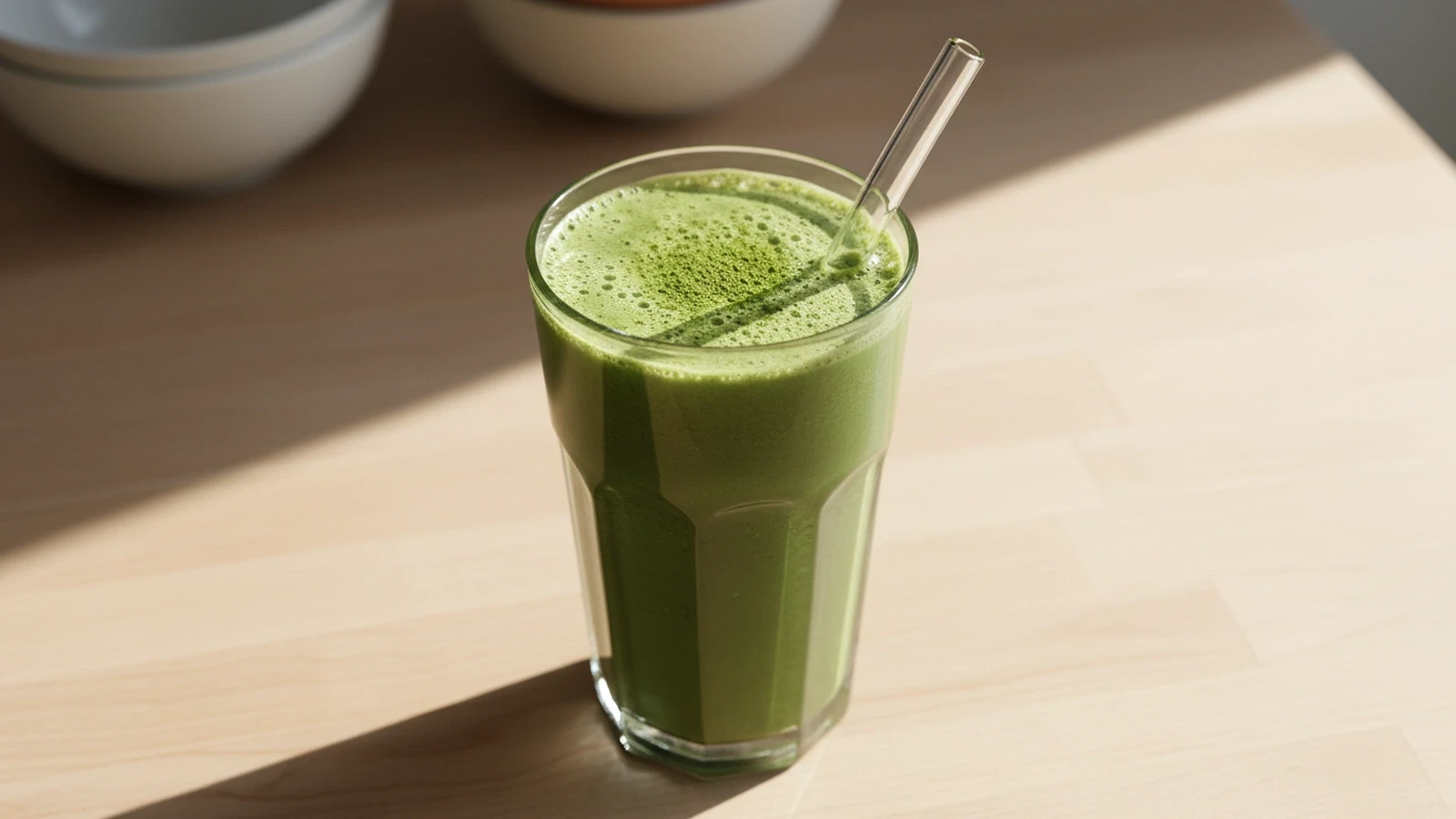
Matcha Collagen Smoothie is a healthy breakfast made with matcha, collagen, and banana. Unlike traditional smoothies, it provides 5g protein per serving. It delivers 165 kcal per serving and takes 5 minutes to make.
🎧 Listen to this recipe
This matcha collagen smoothie delivers a vibrant, energizing start to your day, packed with nutrients for radiant skin and sustained focus. My technique for a perfectly smooth texture involves blending the matcha powder with liquid first, preventing any clumps and ensuring you get all 5g of protein and 3g of fiber in every glass. Get the full Matcha Collagen Smoothie recipe at Recipebo and make it a part of your daily routine.
What Is a Matcha Collagen Smoothie?
A Matcha Collagen Smoothie is a nutrient-dense beverage combining the antioxidant power of matcha green tea with the skin and gut health benefits of collagen peptides. This particular recipe offers 165 kcal and 5g protein per serving, making it a satisfying option. It differs from many commercial versions by using whole ingredients and avoiding added sugars, focusing on natural sweetness. This superfood smoothie is ideal for anyone seeking a quick, healthy breakfast or a post-workout boost.
🧂 Ingredients
👩🍳 Cooking Instructions
📝 Additional Notes
For an extra creamy smoothie, use a high-speed blender and ensure your banana is thoroughly frozen.
Adjust the amount of ice to achieve your desired thickness; more ice makes it thicker.
Add a tiny pinch of sea salt to enhance the flavors and balance the sweetness.
🥗 Nutrition Facts
How to Make This
Gather and Measure Ingredients1 mins
Ingredients for this step
Before you begin blending, take a moment to gather all your ingredients. I find having everything ready on the counter makes the process seamless and prevents any last-minute scrambling. Measure out your unsweetened almond milk, grab your frozen banana half, and have your collagen peptides and matcha powder within reach.
This step ensures you can move quickly through the blending process, which is key for a perfectly chilled smoothie. I always make sure my banana is frozen solid; it provides the best creamy texture without needing excessive ice. You should see all your components laid out and ready to go.
Bloom the Matcha (30 secs)
Ingredients for this step
This is a critical step I discovered makes all the difference for a smooth, lump-free smoothie. Add your matcha powder to your blender first, followed by about 1/4 cup of the unsweetened almond milk. Blend this small mixture on low speed for just 15-20 seconds.
You will hear the powder fully incorporate into the liquid, creating a vibrant green paste without any gritty bits. This ‘blooming’ process ensures the matcha dissolves completely, releasing its full flavor and color. Skipping this step often results in unpleasant matcha clumps in your final drink, which I learned after several disappointing batches.
Add Remaining Liquids and Solids2 mins
Ingredients for this step
Now, pour the remaining 3/4 cup of unsweetened almond milk into the blender with the bloomed matcha. Next, add your 1/2 frozen banana, breaking it into a few pieces if necessary to help your blender along. Incorporate the 1 scoop of unflavored collagen peptides and, if you are using them, the 1/2 cup of ice cubes and any optional add-ins like spinach or vanilla extract.
You should see all the ingredients settled in the blender, ready for their transformation. I found that adding the liquid first helps the blades catch everything efficiently.
Blend Until Perfectly Smooth2 mins
Secure the lid on your blender and start blending on a low setting, gradually increasing to high. Blend for 30-60 seconds, or until the mixture is completely smooth and creamy. You will hear the sound of the blender change as the frozen banana and ice break down, becoming a thick, uniform liquid.
I often use a tamper to push down any stubborn pieces, ensuring no chunks remain. The final consistency should be velvety, without any visible specks of banana or collagen. This ensures every sip is enjoyable and consistent.
Check Consistency and Serve (30 secs)
Once blended, open the lid and check the consistency. It should be thick enough to coat the back of a spoon but still pourable. Give it a quick taste test to ensure the flavors are balanced.
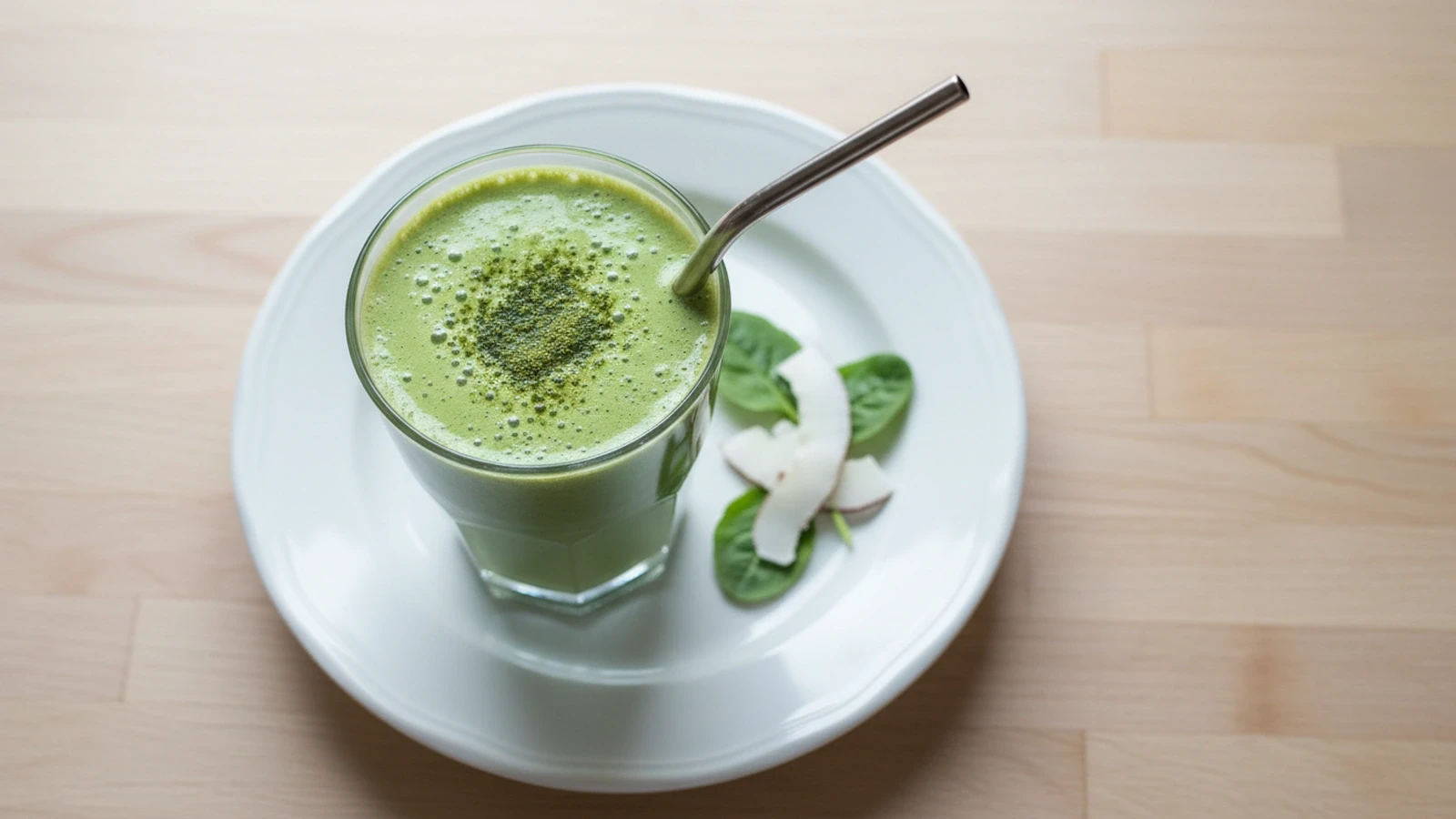
If you prefer it sweeter, a tiny drizzle of maple syrup or a date can be added and re-blended for 5 seconds. Pour your vibrant green matcha collagen smoothie into your favorite glass. I love serving mine in a tall glass, sometimes with a reusable straw, to fully appreciate its beautiful color and refreshing aroma. Enjoy it immediately for the best taste and texture.
How This Recipe Compares Nutritionally
Understanding the nutritional breakdown of your smoothie can help you make informed dietary choices. Here is how this homemade matcha collagen smoothie compares to a typical commercial smoothie.
| Nutrient | This Recipe (per serving) | Other Smoothies | Difference |
|---|---|---|---|
| Calories | 165 kcal | 300-450 kcal | ~135-285 kcal less |
| Protein | 5g | 2-4g | ~1-3g more |
| Total Carbs | 30g | 45-70g | ~15-40g less |
| Total Fat | 3g | 5-10g | ~2-7g less |
| Dietary Fiber | 3g | 2-5g | Comparable |
| Sodium | 336mg | 100-250mg | ~86-236mg more |
This table highlights that our homemade version is significantly lower in calories and total carbohydrates compared to many commercial options, which often contain added sugars. It also provides a good amount of protein for satiety.
Which Budget-Friendly Alternatives Work in This Recipe?
For milk, unsweetened soy milk or oat milk are excellent, cost-effective alternatives to almond milk. For collagen, look for generic unflavored bovine peptides; marine collagen is often pricier. For matcha, culinary grade is more budget-friendly than ceremonial grade, though it has a slightly stronger, less nuanced flavor. Avoid flavored protein powders as a collagen substitute, as they can overpower the delicate matcha taste.
I have experimented with various substitutions to keep this smoothie accessible. For the liquid base, unsweetened soy milk or oat milk work beautifully, providing a similar creamy texture and often at a lower price point than almond milk. According to USDA FoodData Central, 1 cup of unsweetened soy milk contains about 80 calories and 7g protein, making it a nutritionally comparable swap. When it comes to collagen, generic unflavored bovine peptides from reputable brands are usually more economical than specialized marine collagen, which can be 20-30% more expensive.
While ceremonial matcha offers the smoothest, most delicate flavor, a good quality culinary matcha is perfectly acceptable for smoothies and can be half the price. I found that using a non-frozen banana, however, significantly compromises the texture, resulting in a thinner, less satisfying smoothie. Stick with frozen for creaminess.
What to Serve Alongside?
This matcha collagen smoothie is a complete meal on its own, but it pairs wonderfully with light, complementary foods. I often serve it with a small bowl of fresh berries for added antioxidants and natural sweetness, or a slice of whole-grain toast with avocado for healthy fats and complex carbohydrates. The earthy notes of matcha balance well with fresh fruit.
When considering pairings, I aim for items that complement the smoothie’s nutritional profile and flavor. For a quick breakfast, a handful of mixed berries like blueberries or raspberries adds natural sweetness and a burst of antioxidants, creating a balanced meal. If I need something more substantial, a piece of whole-grain toast topped with a thin layer of almond butter or sliced avocado provides healthy fats and sustained energy. The slight bitterness of the matcha in the smoothie actually enhances the sweetness of fruit. For a post-workout recovery, I sometimes pair it with a hard-boiled egg for an additional 6g of protein, ensuring my muscles get what they need after a good session.
Which Recipe Adjustments Actually Make a Difference?
The most impactful adjustment for this recipe is blooming the matcha powder with a small amount of liquid first; this prevents clumping and ensures a smooth texture. Using a frozen banana is also non-negotiable for achieving the ideal creamy consistency and natural sweetness without added sugar. Adjusting the amount of ice allows for control over thickness and chill.
My early attempts at matcha collagen smoothies often resulted in a gritty texture with undissolved matcha clumps, which was quite off-putting. The breakthrough came when I started ‘blooming’ the matcha: blending it with just a 1/4 cup of liquid for 15-20 seconds before adding other ingredients. This simple step ensures the powder fully disperses, yielding a truly smooth drink. Another crucial discovery was the absolute necessity of a frozen banana.
Fresh bananas make the smoothie too thin and less satisfying; the frozen fruit provides a natural chill and thickens the smoothie to a luxurious, milkshake-like consistency, contributing 21g of natural sugar and 3g of fiber. I also learned that the amount of ice is flexible:
- For a thicker, colder smoothie, use 1/2 cup of ice.
- For a slightly thinner, less icy drink, omit the ice entirely.
- For a very thick, spoonable smoothie bowl, reduce liquid by 1/4 cup and add an extra 1/2 frozen banana.
These adjustments, particularly the matcha blooming, elevate the smoothie from good to exceptional, ensuring consistent results every time.
How Do You Freeze This Recipe Without Losing Quality?
This matcha collagen smoothie is best enjoyed fresh, but you can freeze it for up to 1 month in an airtight container for later consumption. Freezing will alter the texture, making it more like a sorbet or slushie when thawed, but the nutritional value remains intact. I recommend freezing it in individual portions for easy retrieval.
While I always prefer this smoothie fresh for its optimal creamy texture, I have successfully frozen it. Pour the freshly blended smoothie into freezer-safe containers, leaving about 1 inch of headspace to allow for expansion. Glass jars with tight-fitting lids work well; I often use Ball Mason Jars for this. When you are ready to enjoy it, transfer the frozen smoothie to the refrigerator for several hours or to the counter for 30-60 minutes to thaw slightly.
It will have a thicker, icier consistency, almost like a granita. Re-blending it briefly with a splash of fresh almond milk can help restore some creaminess, but it will not be identical to a freshly made smoothie. For best quality, consume within 2-3 weeks.
Does the Order You Assemble This Recipe Actually Matter?
Yes, the order of assembly significantly impacts the final texture of this smoothie, especially for ensuring the matcha fully dissolves. I always start with liquids and matcha, then add softer solids, and finally frozen ingredients and ice. This sequence allows the blender blades to work most efficiently.
Through my kitchen trials, I have found that the assembly order is crucial for a perfectly smooth matcha collagen smoothie. Starting with the liquid and blooming the matcha first, as detailed in the steps, is paramount to avoid gritty clumps. After the matcha is dissolved, adding the remaining liquid provides a fluid base. Next, the softer ingredients like the collagen peptides and any fresh spinach go in.
Finally, the frozen banana and ice cubes are added on top. This layering creates a natural vortex in the blender, pulling the harder, frozen ingredients down into the blades more effectively. When I tried adding frozen items first, the blades often got stuck, requiring more liquid and resulting in a thinner smoothie. This specific order ensures a consistently creamy, well-blended result every time.
Trusted Sources
This recipe follows guidelines from these authoritative sources:
Frequently Asked Questions
What are the health benefits of drinking a matcha collagen smoothie?
A matcha collagen smoothie offers antioxidants from matcha, supports skin and gut health from collagen, and provides sustained energy.
What is the best type of collagen to use in a smoothie?
Unflavored, hydrolyzed collagen peptides are best for smoothies because they dissolve easily and do not alter the taste.
Can a matcha collagen smoothie help with skin health or anti-aging?
Yes, the collagen in the smoothie directly supports skin health, while matcha’s antioxidants protect against aging. Absolutely. The collagen peptides in this smoothie are a direct source of amino acids crucial for maintaining skin elasticity, hydration, and firmness, which are key aspects of skin health and anti-aging. Additionally, matcha is rich in EGCG, a potent antioxidant that helps protect skin cells from environmental damage and premature aging. Regular consumption can contribute to a more radiant complexion and overall skin vitality, as I have observed in my own routine.
How can I customize my matcha collagen smoothie for different tastes or dietary needs?
Customize your smoothie by adding different fruits, greens, spices, or using alternative milks to suit your preferences. Customizing this smoothie is easy and fun. For a sweeter taste, add a Medjool date, a few drops of stevia, or a different frozen fruit like mango. To boost greens, spinach or kale blend in seamlessly. For healthy fats, a tablespoon of almond butter or chia seeds works well. You can swap almond milk for coconut milk for a richer flavor or oat milk for extra creaminess. For a vegan option, omit the collagen and add a plant-based protein powder, though the specific benefits of collagen would be lost.
Are there any potential side effects or considerations for consuming matcha and collagen together?
Matcha and collagen are generally safe together, but monitor caffeine sensitivity and ensure collagen source quality. For most people, consuming matcha and collagen together is safe and beneficial. However, be mindful of matcha’s caffeine content if you are sensitive to stimulants; one teaspoon typically contains about 30-70mg of caffeine. Some individuals might experience mild digestive upset from collagen, especially when first introducing it, so start with a smaller dose if concerned. Always choose high-quality, third-party tested collagen products to ensure purity and avoid contaminants, as recommended by the FDA Safe Food Handling Guidelines for supplements.
