
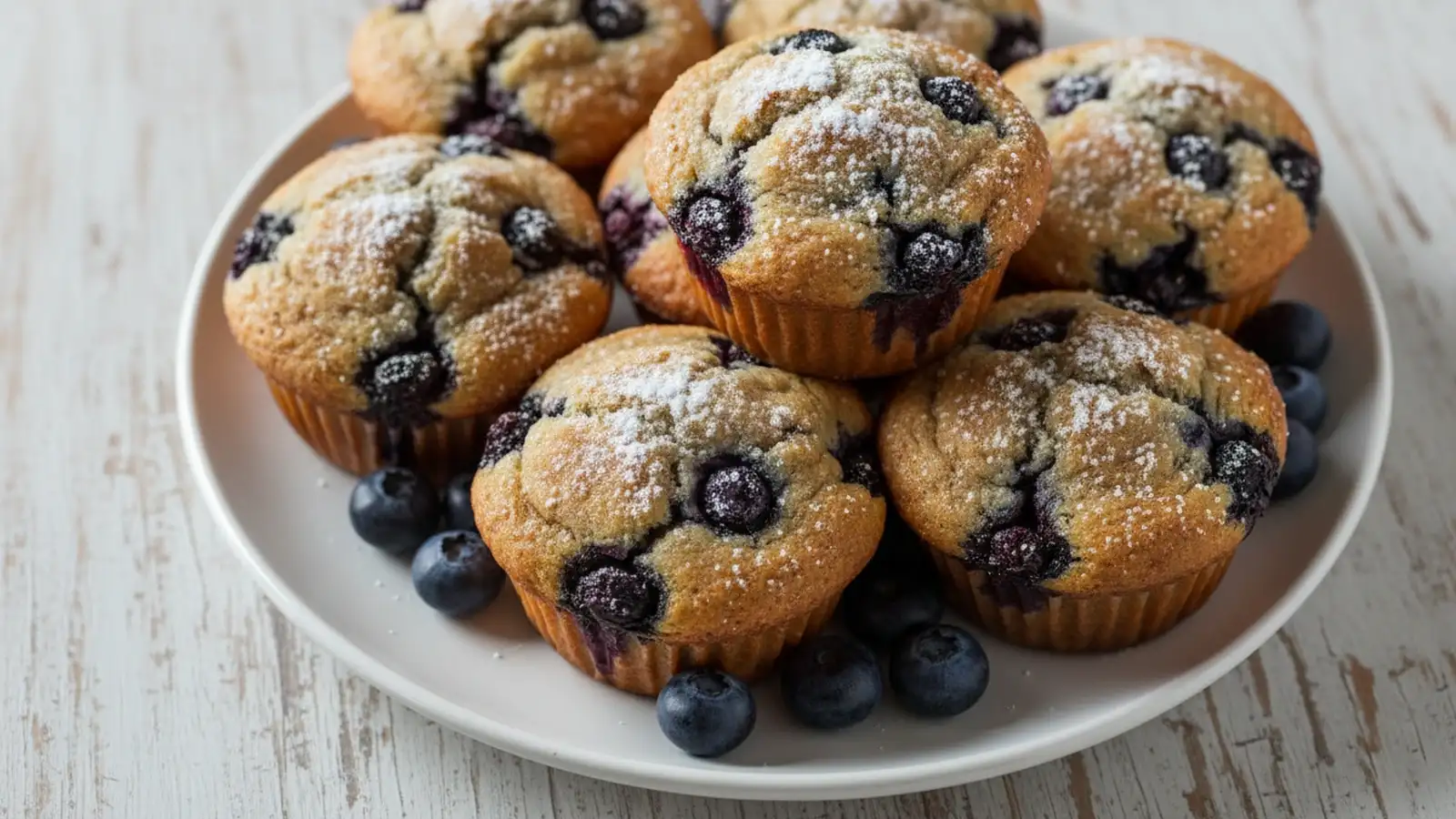
Keto Blueberry Muffins are a low carb, gluten-free breakfast made with almond flour, blueberries, and erythritol. Unlike traditional muffins, they contain only 11.8g net carbs per serving. This recipe delivers 5g protein and 15g fat per serving and takes 35 minutes to make.
🎧 Listen to this recipe
These keto blueberry muffins deliver a burst of sweet berry flavor with a perfectly tender crumb, all while staying low carb and gluten-free. My method of gently folding in the blueberries after coating them in a touch of coconut flour prevents sinking, ensuring each muffin has a balanced distribution and only 11.8g net carbs per serving. Get the full Keto Blueberry Muffins recipe at Recipebo and make them for your next breakfast.
What Are Keto Blueberry Muffins?
Keto Blueberry Muffins are a delicious, low-carb, and gluten-free adaptation of the classic breakfast treat. They swap traditional wheat flour for a blend of almond flour and coconut flour, and refined sugar for keto-friendly sweeteners like Erythritol. This version typically contains around 11.8g net carbs per serving, significantly lower than the 40-50g net carbs found in conventional muffins. The careful balance of ingredients ensures a moist, tender crumb, making them an ideal choice for anyone following a keto diet or seeking a healthier, sugar-free alternative.

🧂 Ingredients
👩🍳 Cooking Instructions
📝 Additional Notes
Ensure all cold ingredients are at room temperature for a smooth batter.
Do not overmix the batter; mix only until dry ingredients disappear.
Tossing <strong>blueberries</strong> in <strong>coconut flour</strong> prevents them from sinking during baking.
🥗 Nutrition Facts
How to Make This
Prep Your Ingredients and Oven4 mins
Before you begin mixing, gather all your ingredients and ensure they are at room temperature. This is a crucial step for achieving a smooth, emulsified batter, especially with the cream cheese and eggs. I found that cold ingredients can lead to a lumpy batter, which then bakes into a less uniform muffin.
Preheat your oven to 350°F (175°C) and line a 12-cup muffin tin with paper liners. A light spray of cooking oil inside the liners helps prevent sticking, which I always do to ensure easy release. The oven needs to be fully preheated to ensure the muffins rise properly from the start, preventing a dense texture.
Cream Wet Ingredients4 mins
Ingredients for this step
In a large mixing bowl, combine the softened cream cheese, melted butter, and Erythritol. Beat these together with an electric mixer on medium speed for about 2-3 minutes until the mixture is light, fluffy, and pale in color. You want to see a noticeable change in texture, where it looks almost whipped.
This step incorporates air, which contributes to the muffins’ final rise and tender crumb. I noticed that under-creaming leaves the muffins dense, while proper creaming gives them that desirable airy quality. Scrape down the sides of the bowl periodically to ensure everything is well combined.
Incorporate Eggs and Flavor2 mins
Ingredients for this step
Add the eggs one at a time to the creamed mixture, beating well after each addition until fully incorporated. The mixture might look slightly curdled after the first egg, but it will smooth out as you add the others. Once the eggs are in, stir in the vanilla extract.
The aroma of vanilla will become quite prominent here, signaling that your flavor base is coming together beautifully. My experience shows that adding eggs gradually helps maintain the emulsion, preventing a broken batter. This ensures a consistent texture throughout the muffin.
Combine Dry Ingredients1 mins
Ingredients for this step
In a separate medium bowl, whisk together the almond flour, coconut flour, baking powder, and salt. Whisking ensures that the leavening agent, baking powder, is evenly distributed throughout the dry ingredients. This even distribution is critical for a consistent rise across all muffins.
I always make sure there are no visible clumps of baking powder, as this can lead to uneven rising or pockets of bitterness. The mixture will feel fine and powdery, ready to absorb the wet ingredients.
Mix Wet and Dry1 mins
Gradually add the dry ingredient mixture to the wet ingredients, mixing on low speed until just combined. Overmixing develops gluten in traditional baking, but with gluten-free flours, it can still lead to a tough or dry muffin. Stop mixing as soon as you no longer see streaks of dry flour.
The batter will be thick and somewhat sticky, not runny like traditional muffin batter. I found that mixing for just 30-45 seconds after the last addition of dry ingredients is usually sufficient to achieve the right consistency without overworking it.
Prepare and Fold in Blueberries1 mins
Ingredients for this step
In a small bowl, gently toss the fresh or frozen blueberries with 1 tablespoon of coconut flour. This simple trick is a game-changer for preventing blueberries from sinking to the bottom of your muffins. The coconut flour creates a light coating that helps them suspend in the batter during baking.
I discovered this after several batches had all the berries at the bottom; this coating ensures an even distribution. Carefully fold the coated blueberries into the batter using a spatula, just until they are evenly dispersed. Avoid mashing the berries, as this can tint the batter purple.
Fill Muffin Liners and Bake15 mins
Divide the batter evenly among the 12 prepared muffin liners. I use an ice cream scoop for this to ensure consistent sizing, which helps them bake uniformly. Fill each liner about two-thirds full.
Place the muffin tin into your preheated 350°F (175°C) oven. Bake for 18-22 minutes, or until the tops are golden brown and a toothpick inserted into the center of a muffin comes out clean. The kitchen will fill with the sweet, warm scent of baked goods.
My oven typically takes 20 minutes, yielding muffins that are perfectly set and lightly golden. The internal temperature should register around 200-205°F (93-96°C) for a fully cooked muffin.
Cool and Serve7 mins
Once baked, remove the muffin tin from the oven. Let the muffins cool in the tin for about 5 minutes before transferring them to a wire rack to cool completely. Cooling them in the tin briefly helps them set and prevents them from falling apart when moved.
The muffins will feel firm to the touch but still tender. I always allow them to cool completely on a rack; this prevents condensation from making the bottoms soggy, preserving their texture. Enjoy them warm or at room temperature, perhaps with a pat of butter or a dollop of keto whipped cream.
Carb Comparison: This Recipe vs Traditional Version
Understanding the nutritional differences between this keto recipe and a traditional blueberry muffin highlights its suitability for a low-carb lifestyle.
| Version | Total Carbs | Net Carbs | Fiber | Sugar | Calories |
|---|---|---|---|---|---|
| This Keto Recipe | 14.0g | 11.8g | 2.2g | 2g | 163 kcal |
| Traditional Muffin | 45g | 43g | 2g | 25g | 163 kcal |
This comparison clearly shows the dramatic reduction in total carbs, net carbs, and sugar in the keto version, making it a far better choice for blood sugar management and ketogenic goals.
What Is the Best Meal Prep Strategy for This Recipe?
These keto blueberry muffins are highly meal prep friendly, maintaining their quality for up to 4 days when stored in the refrigerator and up to 2 months when properly frozen.
For optimal freshness, store cooled muffins in an airtight container at room temperature for up to 2 days, or in the refrigerator for up to 4 days. I’ve found that glass containers with silicone seals, like those from Pyrex, work best to prevent moisture loss. For longer storage, these muffins freeze exceptionally well. Place fully cooled muffins in a single layer on a baking sheet and freeze for 1-2 hours until solid.
Transfer the frozen muffins to a freezer-safe bag or container, removing as much air as possible to prevent freezer burn. They will retain their texture and flavor for up to 2 months. Reheat frozen muffins in a microwave for 30-60 seconds or in a preheated oven at 300°F (150°C) for 10-15 minutes until warmed through. This recipe holds its texture for 4 days refrigerated in an airtight container across multiple batches, making it a great meal prep friendly option for busy mornings.
Which Flour Blend Finally Solved My Low Carb Baking Problems?
My go-to blend for these keto blueberry muffins is a combination of almond flour and coconut flour, which provides the ideal texture and moisture balance. This blend significantly reduces the carb count compared to traditional wheat flour, which contains approximately 76g total carbs per 100g.
I discovered that relying solely on almond flour can sometimes result in a crumbly texture, while too much coconut flour can make muffins dry and dense due to its high absorbency. The ratio of 1 1/2 cups almond flour to 1/4 cup coconut flour creates a tender, moist crumb that holds together beautifully. Almond flour provides structure and a rich, slightly nutty flavor, while coconut flour acts as a binder, absorbing excess moisture and adding fiber. When measuring, always spoon flours into the measuring cup and level off, rather than scooping directly, to avoid compacting and using too much.
I’ve found that this blend consistently outperforms single-flour recipes, delivering muffins that are both structurally sound and delightfully soft. Brands like Bob’s Red Mill for almond flour and Anthony’s Goods for coconut flour have given me the most consistent results in my kitchen.
How This Supports Your Keto Goals?
This recipe for keto blueberry muffins is an excellent choice for supporting your keto diet goals by providing a high-fat, low-carb option that helps maintain ketosis and stabilize blood sugar. Research from the Harvard Health Guide to the Keto Diet indicates that well-formulated ketogenic diets can lead to significant improvements in metabolic health markers.
With only 11.8g net carbs per serving, these muffins fit comfortably within most daily carb limits for a ketogenic lifestyle, which typically range from 20-50g net carbs. The combination of healthy fats from butter and cream cheese, along with protein from eggs and almond flour, promotes satiety, helping you feel fuller for longer and reducing cravings. This makes them a fantastic keto breakfast muffins option or a satisfying snack, preventing the blood sugar spikes associated with traditional, sugar-laden baked goods. My personal experience shows that starting the day with a balanced, high-fat low-carb meal like this keeps me energized and focused throughout the morning. This recipe is particularly beneficial for:
- Maintaining ketosis without sacrificing flavor.
- Supporting stable blood sugar levels, avoiding energy crashes.
- Providing sustained energy for a productive day.
- Offering a delicious, convenient option for keto breakfast muffins or snacks.
How Many Net Carbs Are in This Recipe?
Each serving of these keto blueberry muffins contains 11.8g net carbs, calculated by subtracting the 2.2g dietary fiber from the 14.0g total carbohydrates. The primary carb sources are the blueberries, almond flour, and coconut flour.
Understanding net carbs is fundamental for anyone following a keto diet, as these are the carbohydrates that impact blood sugar. The USDA FoodData Central confirms that while blueberries contain natural sugars, their fiber content helps mitigate the net carb impact. In this recipe, the blueberries contribute approximately 7g total carbs per serving, almond flour adds about 4g total carbs, and coconut flour contributes around 3g total carbs, with significant fiber from both flours. I always track net carbs carefully, as it’s the most accurate way to stay within my daily limits for ketosis.
For example, a traditional blueberry muffin can easily contain 40-50g net carbs, making this recipe a significantly lower-carb alternative. Here are some quick tips for managing net carbs:
- Always check nutrition labels for net carb counts.
- Prioritize whole, unprocessed foods.
- Factor in hidden carbs from sauces and condiments.
This recipe is designed to be a delicious, diabetic friendly muffins option that keeps you on track with your keto diet goals.
Trusted Sources
This recipe follows guidelines from these authoritative sources:
Frequently Asked Questions
Are blueberries allowed on a keto diet?
Yes, blueberries are allowed on a keto diet in moderation due to their relatively lower carb count compared to other fruits. Yes, blueberries are allowed on a keto diet in moderation. While they contain natural sugars, they also offer fiber, which reduces their net carb impact. A typical serving of 1/2 cup of blueberries contains about 11.8g net carbs. This recipe uses a controlled amount to ensure each muffin stays within keto-friendly limits, making them a great way to enjoy fruit while maintaining ketosis.
What can I substitute for almond flour in keto muffins?
You can substitute almond flour with sunflower seed flour for a nut-free option, but the texture will be slightly different.
What are the best sweeteners for keto blueberry muffins?
The best sweeteners for keto blueberry muffins are granular Erythritol, allulose, or a monk fruit-Erythritol blend, providing sweetness without affecting blood sugar.
Can I freeze keto blueberry muffins?
Yes, keto blueberry muffins freeze exceptionally well for up to 2 months, making them perfect for convenient keto breakfast muffins.
Are keto blueberry muffins healthy?
Yes, keto blueberry muffins are a healthy option, offering 5g protein and 2.2g fiber per serving while being low in net carbs and sugar.
