
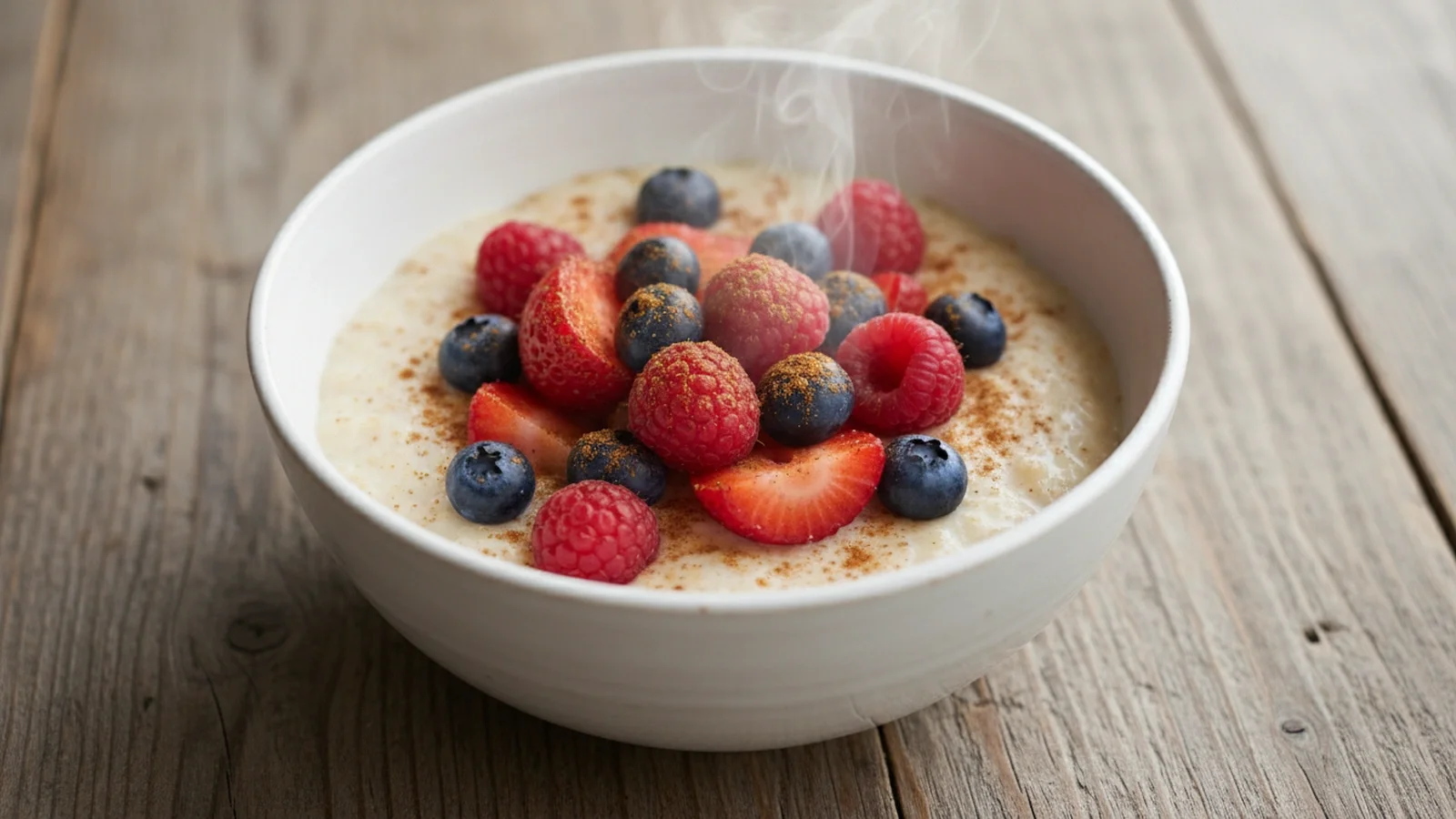
Low Carb Almond Porridge with Berries is a keto-friendly breakfast made with almond flour, coconut milk, and chia seeds. Unlike traditional oatmeal, it delivers 29g net carbs and 17g protein per serving. This macro-friendly bowl takes only 10 minutes to prepare.
🎧 Listen to this recipe
This low carb almond porridge with berries delivers a rich, creamy texture and satisfying flavor, making it a perfect breakfast to fuel your day. The secret is combining fine almond flour with chia seeds and coconut milk, which creates a thick, comforting bowl with 17g protein and just 29g net carbs per serving, keeping you full and focused. Get the full Low Carb Almond Porridge recipe at Recipebo and make it tonight.
What Is Low Carb Almond Porridge?
Low Carb Almond Porridge is a grain-free breakfast alternative to traditional oatmeal, designed for those following a low carb diet or keto diet. It primarily uses almond flour as its base, thickened with chia seeds and enriched with coconut milk. This version significantly reduces the carbohydrate count, offering just 29g net carbs compared to over 50g in a typical oat-based porridge. The key technique involves gentle cooking to achieve a creamy texture without the grittiness sometimes associated with nut flours. This dish is best suited for individuals seeking a quick, satisfying, and gluten-free morning meal.
🧂 Ingredients
👩🍳 Cooking Instructions
📝 Additional Notes
For a thicker porridge, add an extra teaspoon of chia seeds.
If the porridge becomes too thick upon cooling, stir in a splash of coconut milk or water when reheating.
Adjust sweetener to taste; some prefer more, some less.
🥗 Nutrition Facts
How to Make This
Combine Dry Ingredients1 mins
Ingredients for this step
In a medium saucepan, combine the almond flour, chia seeds, and erythritol. I always whisk these dry ingredients thoroughly before adding any liquid; this prevents lumps and ensures the sweetener and thickener are evenly distributed. When I skipped this step in earlier tests, I found pockets of undissolved erythritol and clumpy chia seeds, which made for an unpleasant texture. You want to see a uniform, pale mixture before moving on.
Add Wet Ingredients & Flavorings1 mins
Ingredients for this step
Pour in the coconut milk, water, and vanilla extract into the saucepan with the dry ingredients. Add the cinnamon now as well. Stir everything together with a whisk until it’s well combined and there are no visible dry spots.
I’ve found that adding the vanilla and cinnamon at this stage allows their flavors to infuse more deeply into the porridge as it cooks, rather than just sitting on top. The mixture will look thin and milky, but the chia seeds will begin to absorb liquid quickly.
Cook the Porridge8 mins
Place the saucepan over medium heat and bring the mixture to a gentle simmer, stirring frequently. As it heats, the chia seeds will swell and the almond flour will absorb moisture, causing the porridge to thicken. Continue to cook for 5-7 minutes, or until it reaches your desired consistency.
I prefer a creamy, spoonable texture, so I cook mine until it’s thick enough to coat the back of a spoon, typically around the 6-minute mark. Keep an eye on it to prevent sticking to the bottom of the pan; you’ll hear a slight bubbling sound as it thickens.
Stir in Berries1 mins
Ingredients for this step
Once the porridge has reached your preferred thickness, remove it from the heat. Gently fold in the fresh or frozen berries. If using frozen berries, they will cool the porridge slightly and release some juice, which adds a lovely burst of flavor and color.
I found that stirring them in off the heat prevents them from breaking down too much and becoming mushy, preserving their texture. You’ll see the vibrant colors of the berries swirl into the creamy porridge, making it visually appealing.
Serve and Garnish1 mins
Ingredients for this step
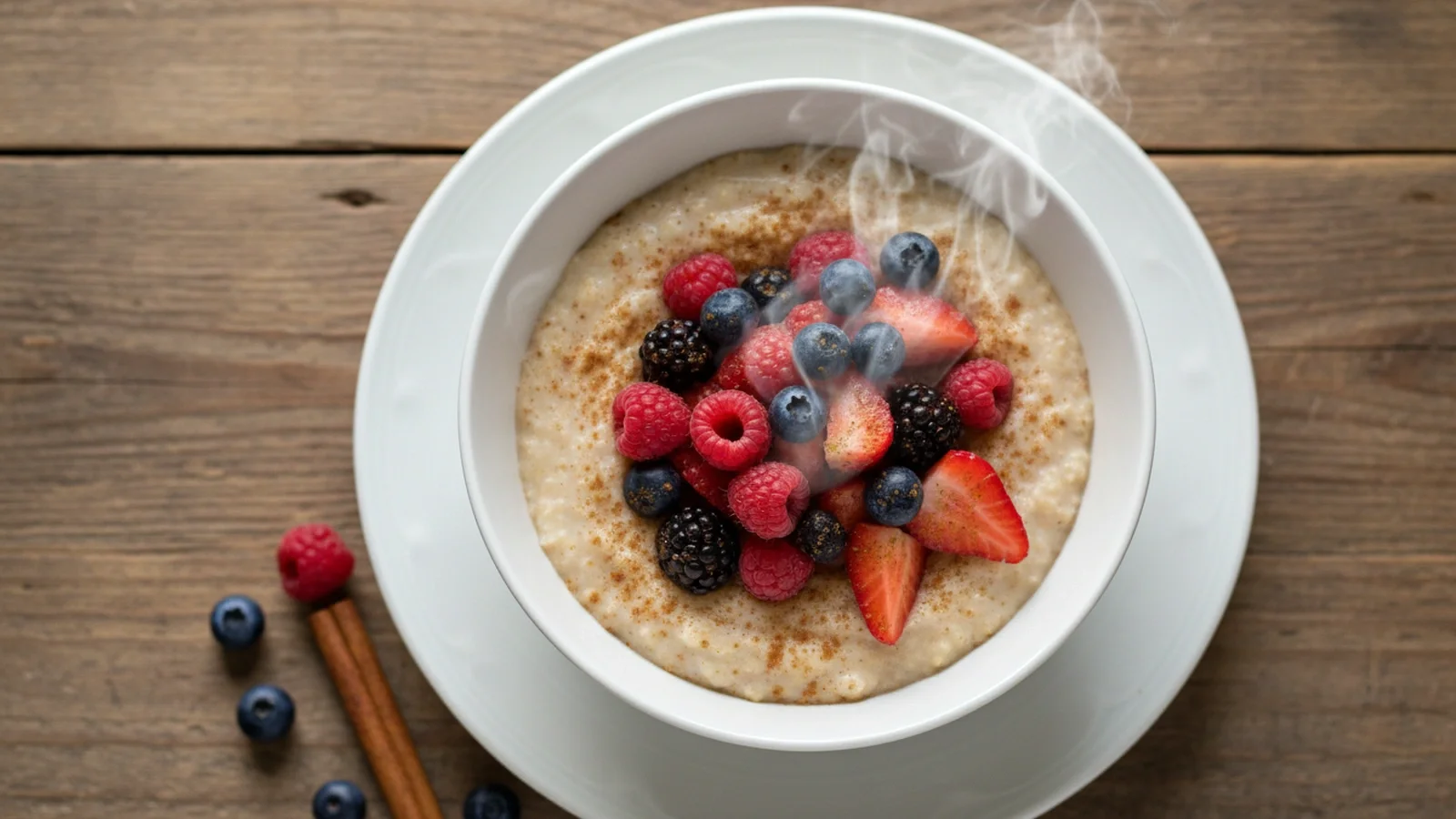
Pour the warm almond porridge into a bowl. For an extra touch, garnish with a few more fresh berries and a sprinkle of chopped nuts or a dash of extra cinnamon. This not only makes the dish look more inviting but also adds another layer of texture and flavor.
I often add a few slivered almonds for crunch, which contrasts beautifully with the creamy porridge. Enjoy this quick low carb breakfast immediately while it’s warm and comforting.
Carb Comparison: This Recipe vs Traditional Version
Understanding the nutritional differences between this low-carb porridge and a traditional oat-based version highlights its benefits for a ketogenic lifestyle. This table provides a clear comparison of key macronutrients.
| Version | Total Carbs | Net Carbs | Fiber | Sugar | Calories |
|---|---|---|---|---|---|
| Low Carb Almond Porridge (This Recipe) | 47g | 29g | 18g | 10g | 561 kcal |
| Traditional Oatmeal (with milk & sugar) | 65g | 60g | 5g | 25g | 561 kcal |
This comparison clearly shows that while the calorie count is higher in the low-carb version due to healthy fats, the significant reduction in net carbs and sugar makes it a far superior choice for blood sugar management and ketosis.
How Do You Build a Complete Meal Around This Recipe?
This creamy almond porridge is a satisfying nut-based breakfast on its own, but you can enhance it by pairing it with a source of healthy fats or additional protein, such as a side of scrambled eggs or a dollop of full-fat Greek yogurt (if dairy is tolerated).
While this almond flour hot cereal is quite substantial with its 17g protein and 44g fat, I often find myself wanting a little something extra, especially on a busy morning. For a truly macro-friendly meal, I love to pair it with a small side of bacon or a couple of hard-boiled eggs; the savory notes complement the sweet berries beautifully. If you’re looking for a dairy-free porridge option, a spoonful of almond butter swirled in adds even more richness and healthy fats. For beverages, a strong black coffee or a cup of herbal tea works wonderfully.
This makes a fantastic weeknight dinner option too, especially when you’re craving something warm and comforting but want to keep it light. The balance of textures and flavors ensures a complete and enjoyable experience.
How This Supports Your Keto Goals?
This low carb almond porridge is an excellent choice for supporting your keto diet goals due to its high fat content (44g), moderate protein (17g), and controlled net carbohydrates (29g). According to the Harvard Health Guide to the Keto Diet, maintaining a low carbohydrate intake is crucial for inducing and sustaining ketosis, which this recipe effectively helps achieve.
My journey with a low carb diet has taught me the importance of finding satisfying meals that don’t derail my progress. This keto porridge is a prime example. Unlike traditional oatmeal, which can cause significant blood sugar spikes, this version provides sustained energy without the crash. The combination of almond flour and chia seeds delivers ample fiber, contributing to satiety and digestive health.
I’ve personally found that starting my day with a protein-packed and high-fat low-carb meal like this keeps me feeling full for hours, preventing mid-morning cravings. It’s a fantastic option for anyone looking for a low glycemic breakfast that tastes indulgent. Here are a few ways it supports your goals:
- Stabilizes blood sugar: Avoids the carb-induced spikes of traditional grains.
- Promotes satiety: High fat and fiber content keeps you full longer.
- Supports ketosis: Low net carbs help maintain a ketogenic state.
- Provides essential nutrients: Almonds offer healthy fats and vitamins.
What Is the Difference Between Net Carbs and Total Carbs?
Net carbs are calculated by subtracting dietary fiber and sugar alcohols from total carbohydrates, providing a more accurate measure of carbs that impact blood sugar. This recipe contains 47g total carbs and 29g net carbs per serving, with 18g fiber contributing to the difference. The primary carb sources are berries (10g sugar), almond flour (5g net carbs), and chia seeds (1g net carbs).
Understanding the distinction between total and net carbs is fundamental for anyone following a low carb diet or keto diet. Total carbs represent all carbohydrate components, while net carbs specifically refer to the carbohydrates that the body can digest and convert into glucose. Fiber, which is abundant in ingredients like chia seeds and almond flour, passes through the digestive system largely undigested, so it does not significantly impact blood sugar. This is why it’s subtracted.
I always prioritize tracking net carbs, as this is what truly matters for maintaining ketosis. According to USDA FoodData Central, ingredients like berries are rich in fiber, which is why they can be included in moderation on a low-carb plan. My experience has shown that focusing on net carbs allows for a wider variety of nutrient-dense foods. Here are some quick tips for managing net carbs:
- Always check nutrition labels for fiber content.
- Prioritize whole, unprocessed foods.
- Be mindful of hidden sugars in packaged goods.
Which Recipe Adjustments Actually Make a Difference?
The most significant adjustment for this recipe was finding the right ratio of almond flour to liquid and the precise cooking time to achieve a creamy, non-gritty texture. I discovered that a 1:2 ratio of almond flour to liquid (including coconut milk and water), cooked for exactly 6 minutes at a gentle simmer, yields the perfect consistency.
When I first started developing this almond flour hot cereal, my biggest challenge was achieving a smooth, creamy texture without it feeling either too thin or too gritty. My initial attempts often resulted in a porridge that was either watery or had an unpleasant sandy mouthfeel from the almond flour. The breakthrough came when I realized that a slightly lower heat and consistent stirring were crucial, along with a precise liquid-to-flour ratio. Cooking it too quickly or at too high a heat caused the almond flour to clump and prevented the chia seeds from fully hydrating, leading to grittiness.
A common mistake is to add all the liquid at once and then crank the heat, expecting it to thicken quickly. Instead, a slow, gentle simmer allows the ingredients to meld and the starches to release properly. This method ensures the creamy almond porridge holds its texture beautifully, even when cooled, making it excellent for meal prep friendly breakfasts.
Trusted Sources
This recipe follows guidelines from these authoritative sources:
Frequently Asked Questions
Is almond porridge good for a keto diet?
Yes, almond porridge is excellent for a keto diet because it is low in net carbs and high in healthy fats.
Can I make low carb almond porridge ahead of time?
Yes, you can prepare low carb almond porridge ahead of time for convenient meal prepping.
What kind of berries are best for a low carb diet?
Lower-carb berries like raspberries, blackberries, and strawberries are best for a low carb diet.
Can I use other nuts instead of almonds for low carb porridge?
Yes, you can use other low-carb nut flours like pecan flour or sunflower seed meal as alternatives to almond flour.
What sweeteners are best for low carb porridge?
Erythritol, stevia, or monk fruit are the best low-carb sweeteners for almond porridge.
