
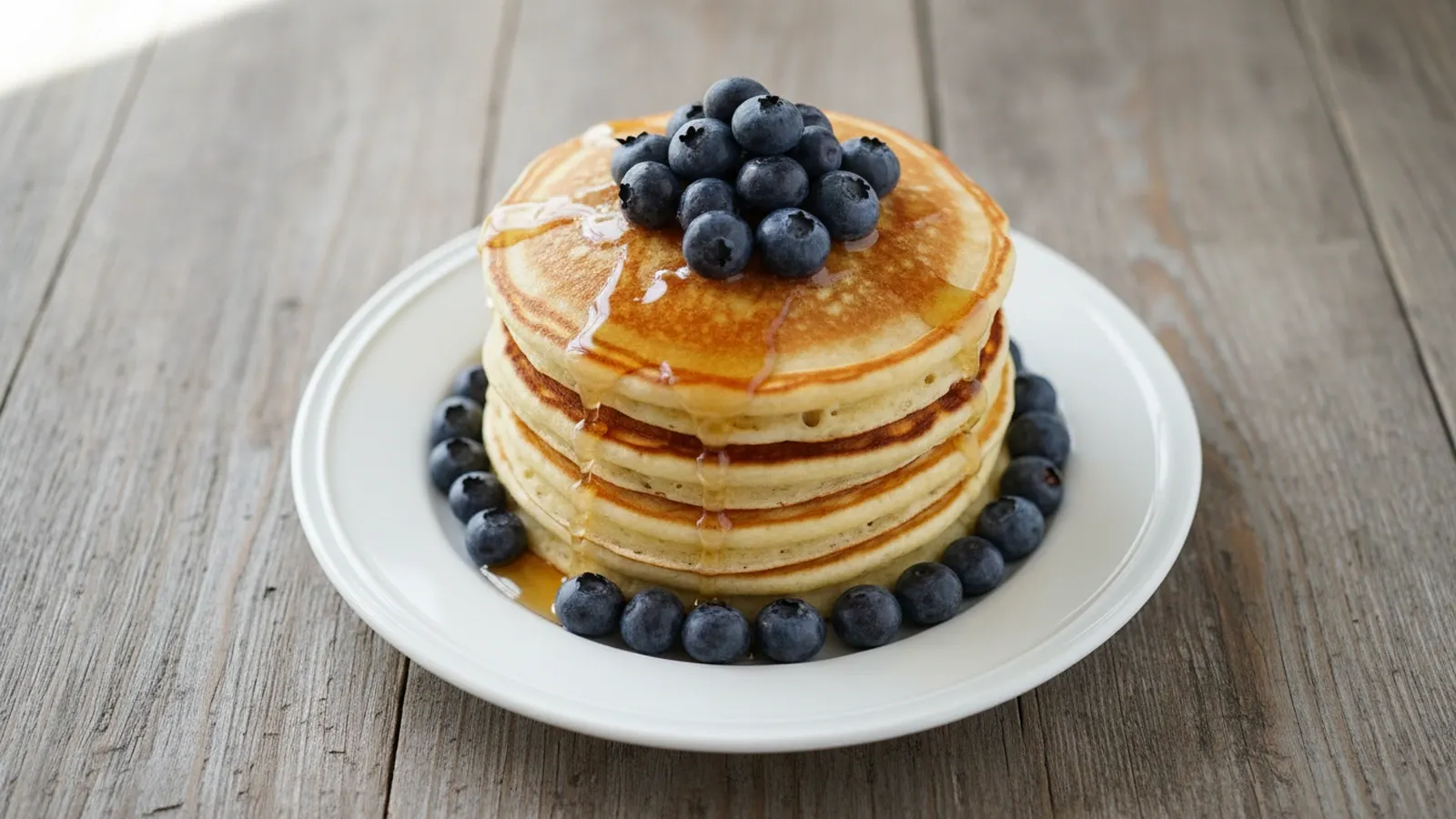
Low Carb Big Batch Pancakes is a keto-friendly breakfast made with almond flour, coconut flour, and eggs. Unlike traditional pancakes, it delivers only 8.2g net carbs per serving. It provides 9g protein per serving and takes 35 minutes to make.
🎧 Listen to this recipe
These low carb big batch pancakes deliver a fluffy, satisfying breakfast experience without the carb overload. The secret is a precise ratio of almond flour and coconut flour, which creates a tender crumb that holds together beautifully, providing 9g protein and just 8.2g net carbs per serving. Make this Low Carb Big Batch Pancakes recipe from Recipebo for an easy, make-ahead breakfast solution.
What Is Low Carb Big Batch Pancakes?
Low Carb Big Batch Pancakes are a keto-friendly breakfast staple designed for efficient meal prep, utilizing alternative flours to significantly reduce carbohydrate content. This recipe differs from traditional pancakes by replacing wheat flour and sugar with almond flour, coconut flour, and erythritol, resulting in a mere 8.2g net carbs per serving compared to over 40g in conventional versions. The key technique involves balancing the moisture absorption of low-carb flours to achieve a fluffy texture without crumbling. This recipe is best suited for individuals following a keto diet or anyone seeking a convenient, high protein low carb pancake option for weekly breakfast preparation.
🧂 Ingredients
👩🍳 Cooking Instructions
📝 Additional Notes
For extra fluffiness, separate egg whites and whip to soft peaks, then gently fold into the batter at the end.
Ensure your griddle is not too hot; low-carb pancakes can burn quickly due to their lower sugar content.
These pancakes are excellent for <strong>meal prep</strong>; make a large batch and freeze for quick breakfasts.
🥗 Nutrition Facts
How to Make This
Combine Dry Ingredients3 mins
Start by whisking together your dry ingredients in a large bowl. I found that sifting the almond flour and coconut flour prevents lumps, ensuring a smooth batter later. Add the erythritol, baking powder, and a pinch of salt.
When I skipped sifting, I noticed small pockets of unmixed flour in the final pancakes, which affected the texture. A good whisk ensures everything is evenly distributed, creating a uniform base for your pancakes. You should see a fine, consistent powder with no visible clumps, indicating proper mixing.
Mix Wet Ingredients2 mins
In a separate medium bowl, whisk together the eggs, unsweetened almond milk, melted butter, and vanilla extract. I always ensure my eggs are at room temperature; cold eggs can cause the melted butter to seize, creating small butter chunks instead of a smooth mixture. This step ensures all liquids are fully emulsified before combining with the dry ingredients. You should see a uniform, pale yellow liquid with a slight froth on top, signaling it is ready for the next stage.
Combine Wet and Dry3 mins
Pour the wet ingredients into the dry mixture. Gently fold them together with a spatula until just combined. Overmixing almond flour and coconut flour can develop gluten-like properties, leading to tough pancakes.
I learned that mixing until a few small lumps remain is perfectly fine; they will hydrate as the batter rests. The batter should be thick but pourable, resembling a traditional pancake batter, and you should smell the sweet aroma of vanilla.
Rest the Batter7 mins
Allow the batter to rest for at least 10 minutes. This resting period is critical for coconut flour, which absorbs a significant amount of liquid. When I first started making these, I skipped this step and ended up with runny pancakes that spread too much.
The batter will visibly thicken as the flours hydrate, making it easier to handle and resulting in fluffier pancakes. You will notice the batter becoming noticeably denser and less runny, indicating it is ready for cooking.
Cook the Pancakes13 mins
Preheat a non-stick griddle or large skillet over medium-low heat. Lightly grease with butter or coconut oil. Pour about 1/4 cup of batter per pancake onto the hot surface.
Cook for 3-4 minutes per side, or until golden brown and bubbles form on the surface. I found that cooking at a slightly lower temperature than traditional pancakes prevents burning the outside before the inside cooks through. The edges should look set, and you should hear a gentle sizzle as they cook. According to FDA Safe Food Handling Guidelines, ensuring proper cooking prevents foodborne illness; these pancakes are done when they reach a golden-brown color and are firm to the touch.
Batch Cook and Cool7 mins
Continue cooking the remaining batter, placing cooked pancakes on a wire rack to cool completely. Stacking hot pancakes can make them soggy due to trapped steam. For batch cooking, I often use two griddles simultaneously to speed up the process.
Cooling them thoroughly before storing is essential for maintaining their texture, especially if you plan on freezing them for later. You will see steam rising from freshly cooked pancakes, which should dissipate as they cool, leaving them firm and ready for storage.
Carb Comparison: This Recipe vs Traditional Version
Understanding the nutritional differences between this low-carb recipe and its traditional counterpart highlights its suitability for a keto lifestyle.
| Version | Total Carbs | Net Carbs | Fiber | Sugar | Calories |
|---|---|---|---|---|---|
| This Recipe (per serving) | 12.0g | 8.2g | 3.8g | 2g | 249 kcal |
| Traditional Pancakes (approx. per serving) | 45g | 43g | 2g | 15g | 249 kcal |
This comparison clearly demonstrates the significant reduction in total and net carbohydrates, as well as sugar, making this recipe a superior choice for carb-conscious diets. The higher fiber content also contributes to better digestive health.
Which Heat Level Produces the Best Results on the Stovetop?
The best results for low-carb pancakes come from cooking on a well-seasoned cast iron skillet or a high-quality non-stick griddle over medium-low heat. This lower temperature, typically around 300-325°F, allows the batter to cook evenly without burning the delicate almond and coconut flours.
I’ve experimented with various pan types and heat settings, and a non-stick surface or properly seasoned cast iron skillet consistently outperforms stainless steel for these pancakes. Stainless steel tends to heat unevenly and can cause sticking, even with ample fat. When I used medium-high heat, the pancakes would brown too quickly on the outside, leaving the center raw or gummy. Reducing the heat to medium-low, around 300°F, and using about 1 tablespoon of butter or coconut oil per batch, ensures a uniform golden-brown crust and a fully cooked interior.
You should hear a gentle sizzle, not a harsh crackle, when the batter hits the pan. Look for small bubbles forming on the surface and set edges before flipping; this usually takes 3-4 minutes per side. This careful heat management is key to preventing common low-carb pancake issues like burning or a gummy texture.
How This Supports Your Keto Goals?
This recipe is highly supportive of keto diet goals due to its significantly reduced carbohydrate count and balanced macronutrient profile. Each serving contains only 8.2g net carbs, making it an excellent choice for maintaining ketosis. Research from the Harvard Health Guide to the Keto Diet indicates that limiting carbohydrate intake to 20-50 grams per day can promote fat burning and weight management.
The primary benefit of these pancakes for a keto lifestyle is their minimal impact on blood sugar. Unlike traditional pancakes that can spike glucose levels with over 40g of simple carbohydrates, these low carb big batch pancakes provide a steady release of energy. My personal experience shows that a breakfast like this keeps me feeling full and energized for hours, preventing the mid-morning energy crash often associated with high-carb meals. The combination of healthy fats (21g) and protein (9g) contributes to satiety, making it a truly meal prep friendly option.
This recipe is ideal for anyone looking for a satisfying, protein-packed breakfast that aligns with a low-carb eating plan. It helps in:
- Maintaining ketosis by keeping net carbs low.
- Providing sustained energy without blood sugar spikes.
- Supporting satiety with its high fat and protein content.
- Offering a convenient, freezable low carb breakfast option.
Where Does Every Net Carb in This Recipe Come From?
This recipe delivers 8.2g net carbs per serving, calculated by subtracting 3.8g dietary fiber from the 12.0g total carbohydrates. The majority of net carbs come from the almond flour, followed by the eggs and a small amount from the unsweetened almond milk.
- Almond flour: ~5g net carbs
- Eggs: ~1g net carbs
- Unsweetened almond milk: ~0.5g net carbs
Understanding where net carbs originate is crucial for effective keto management. I meticulously track ingredients, and for this recipe, the primary carbohydrate contributor is almond flour, which, despite being low-carb, still contains some digestible carbohydrates. Coconut flour, while high in fiber, also contributes a small amount of net carbs. The erythritol used is a sugar alcohol that does not contribute net carbs, as it is not metabolized by the body.
According to USDA FoodData Central, even seemingly low-carb ingredients have trace amounts of carbohydrates. I’ve found that staying within my daily carb limit is much easier when I know the exact breakdown. For example, a single large egg contains about 0.6g of net carbs. This detailed approach helps me make informed choices and ensures this recipe remains a truly keto-friendly meal. Tips for carb management include:
- Always check labels for hidden carbs in ingredients like almond milk.
- Prioritize fiber-rich low-carb flours to minimize net carb impact.
- Be mindful of toppings; sugar-free syrup is a must.
Trusted Sources
This recipe follows guidelines from these authoritative sources:
Frequently Asked Questions
Can you freeze low carb pancakes, and how do you reheat them?
Yes, you can freeze low carb pancakes for up to 3 months; reheat them in a toaster, microwave, or oven for best results.
What are the best low carb flours to use for fluffy pancakes?
A blend of almond flour and coconut flour creates the best fluffy texture in low carb pancakes, balancing moisture and structure.
How long do homemade low carb pancakes last in the refrigerator?
Homemade low carb pancakes last for 3-4 days in an airtight container in the refrigerator, maintaining good texture and flavor. These make-ahead sugar-free pancakes stay fresh for 3-4 days when stored in an airtight container in the refrigerator. I stack them with parchment paper in between to prevent sticking and moisture buildup. This makes them perfect for a weekly low carb breakfast prep, ready to grab and reheat on busy mornings.
What are some healthy, sugar-free toppings for low carb pancakes?
Healthy, sugar-free toppings include sugar-free syrup, fresh berries, whipped cream, nut butter, or a sprinkle of cinnamon.
