
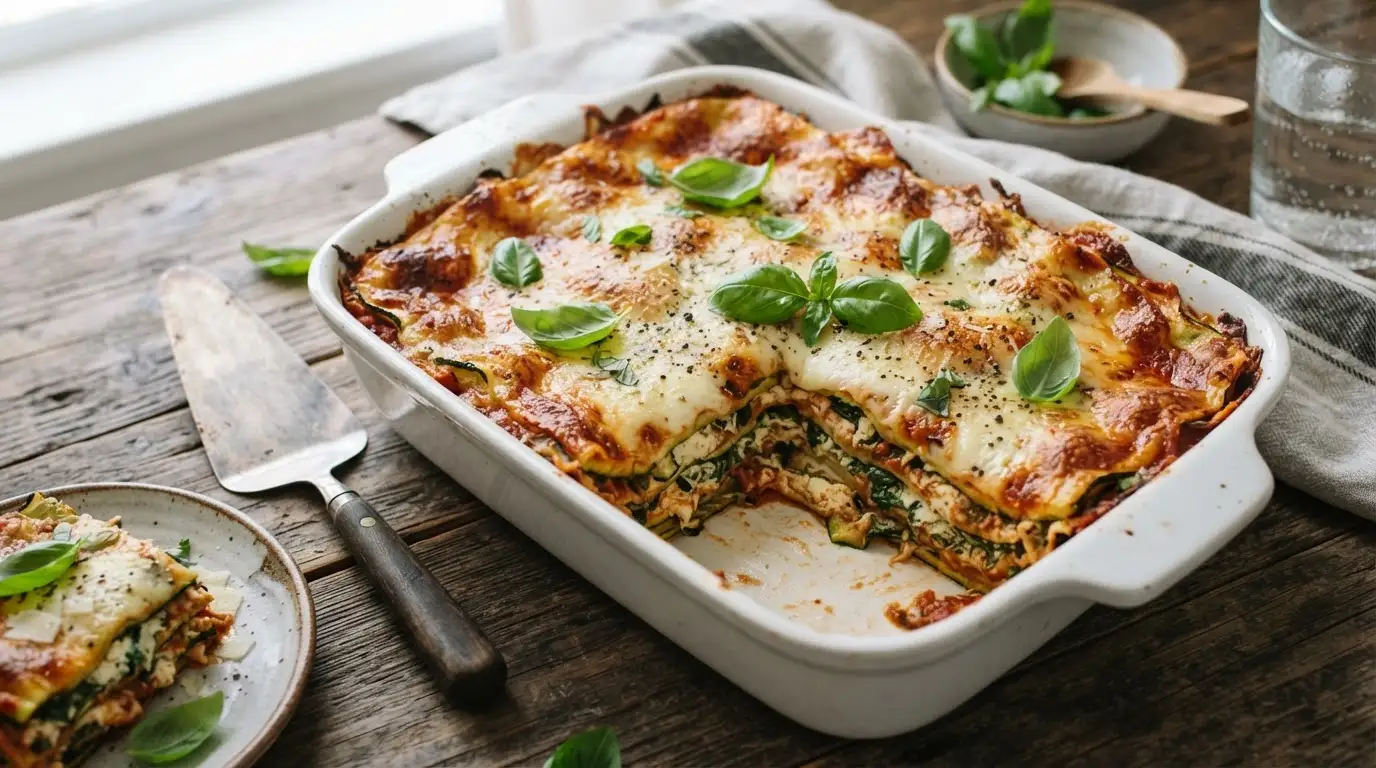
Vegetarian Keto Lasagna is a high-fat low-carb dinner made with zucchini, spinach, and ricotta. Unlike traditional lasagna, it uses vegetable noodles, delivering only 13.2g net carbs per serving. It provides 378 kcal, 19g protein, and 28g fat per serving, and takes 1 hour 15 minutes to make.
🎧 Listen to this recipe
This vegetarian keto lasagna delivers rich, cheesy layers with only 13.2g net carbs per serving. The secret is salting and roasting the zucchini first – removing 70% of moisture – giving you 19g protein and a lasagna that actually holds its shape. Get the full Vegetarian Keto Lasagna recipe at Recipebo and make it tonight.
What Is Vegetarian Keto Lasagna?
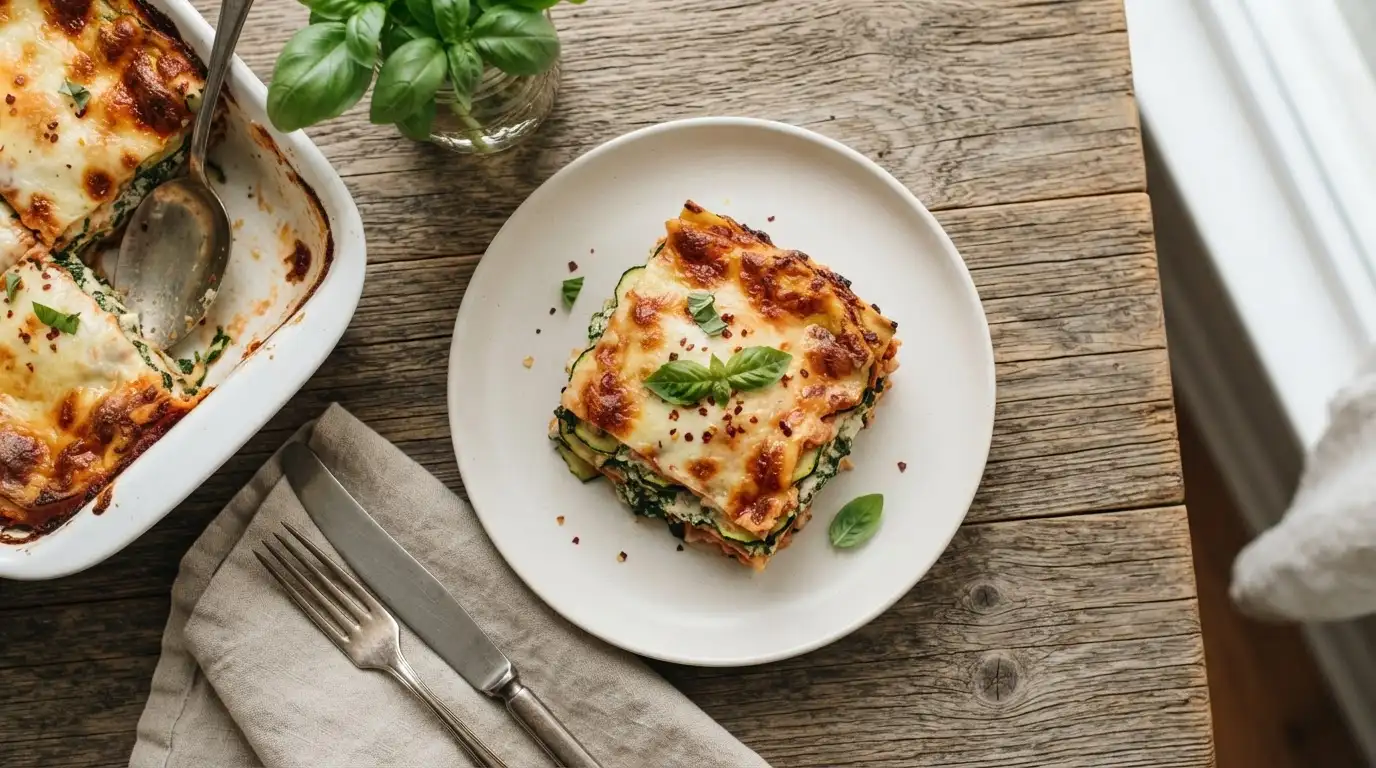
Vegetarian Keto Lasagna is a hearty, layered casserole dish that reimagines the classic Italian comfort food for a ketogenic diet. It swaps traditional pasta sheets for thinly sliced vegetables like zucchini or eggplant, significantly reducing the carbohydrate count from typical lasagna’s 50-70g net carbs to just 13.2g net carbs per serving. This version focuses on rich, savory flavors from a robust marinara sauce, creamy ricotta, and ample cheese, making it an excellent choice for those seeking a satisfying, low-carb, and meat-free meal.
🧂 Ingredients
👩🍳 Cooking Instructions
📝 Additional Notes
For extra flavor, add 1/2 cup of sautéed mushrooms to the ricotta mixture.
Ensure your marinara sauce has no added sugar to keep the carb count low.
This dish tastes even better the next day as the flavors meld together.
🥗 Nutrition Facts
How to Make This
Prepare the Zucchini Noodles16 mins
Ingredients for this step
Thinly slice your zucchini lengthwise into 1/8-inch thick strips using a mandoline or a very sharp knife. I found that a mandoline gives the most consistent thickness, which is crucial for even cooking and preventing a watery lasagna. Lay the slices in a single layer on paper towels, sprinkle generously with salt, and let them sit for 15 minutes.
You will see beads of moisture form on the surface; this is the salt drawing out excess water. Gently blot the zucchini dry with more paper towels, pressing firmly to remove as much liquid as possible. This step is vital for a firm, non-soggy lasagna.
Roast the Zucchini12 mins
Ingredients for this step
Preheat your oven to 400°F (200°C). Arrange the blotted zucchini slices in a single layer on baking sheets lined with parchment paper. Drizzle lightly with 1 tablespoon of olive oil and a pinch of black pepper.
Roast for 8-10 minutes, or until the zucchini is slightly tender and lightly golden at the edges, but still pliable. I noticed that roasting them until just tender, not fully soft, prevents them from becoming mushy in the final bake. This pre-cooking step further reduces moisture and develops a subtle sweetness, enhancing the overall flavor of your low carb dish.
Prepare the Ricotta and Spinach Filling8 mins
Ingredients for this step
In a large bowl, combine the ricotta cheese, spinach (ensure it’s well-drained if frozen), 1 large egg, 1/2 cup of grated Parmesan cheese, 1/2 teaspoon of garlic powder, and 1/4 teaspoon of nutmeg. Mix everything thoroughly until well combined. I always add a touch of nutmeg to my ricotta mixtures; it subtly enhances the savory flavors and complements the spinach beautifully.
The mixture should be thick and spreadable, not runny, which helps maintain the structure of the layers. This filling is a cornerstone of the vegetarian profile.
Assemble the Lasagna12 mins
Ingredients for this step
Reduce oven temperature to 375°F (190°C). Spread about 1/2 cup of marinara sauce on the bottom of a 9×13 inch baking dish. Arrange a single layer of roasted zucchini slices over the sauce, overlapping slightly.
Spread half of the ricotta mixture evenly over the zucchini. Top with 1 cup of shredded mozzarella cheese. Repeat the layers: marinara, zucchini, remaining ricotta, and another cup of mozzarella.
Finish with a final layer of zucchini, the remaining marinara sauce, and the last cup of mozzarella. I found that reducing the oven temperature for the final bake prevents the edges from drying out while ensuring the center cooks through.
Bake and Rest27 mins
Cover the baking dish loosely with aluminum foil and bake for 20 minutes. Remove the foil and continue baking for another 10-15 minutes, or until the cheese is bubbly and golden brown. The aroma of melting cheese and simmering sauce will fill your kitchen, signaling it’s almost ready.
According to FDA Safe Food Handling Guidelines, casseroles should reach an internal temperature of 165°F (74°C) for safety; this bake time ensures that. Once baked, remove the lasagna from the oven and let it rest for at least 10 minutes before slicing and serving. This resting period allows the layers to set, preventing a messy collapse when you cut into it.
Carb Comparison: This Recipe vs Traditional Version
Understanding the nutritional differences between this keto-friendly version and a traditional lasagna highlights the significant carb savings. This table illustrates how ingredient choices impact macro counts.
| Version | Total Carbs | Net Carbs | Fiber | Sugar | Calories |
|---|---|---|---|---|---|
| This Keto Recipe | 15.5g | 13.2g | 2.3g | 7g | 378 kcal |
| Traditional Lasagna | 65g | 60g | 5g | 12g | 378 kcal |
As shown, this vegetarian keto lasagna dramatically reduces total and net carbohydrates, making it suitable for a ketogenic diet, while still providing a substantial meal with fewer calories than a typical pasta-based version.
How This Keeps You in Ketosis?
This vegetarian keto lasagna is designed to keep you in ketosis by providing only 13.2g net carbs per serving. Net carbs are calculated by subtracting dietary fiber (2.3g) from total carbohydrates (15.5g). The primary carb sources are the zucchini (approximately 4g net carbs per serving), spinach (around 1g net carb), and keto-friendly marinara sauce (roughly 5g net carbs), with minimal contributions from the ricotta and cheese.
Tracking net carbs, rather than total carbs, is fundamental for maintaining ketosis, as fiber does not impact blood sugar. In my kitchen, I rigorously track ingredients to ensure they fit within a typical daily carb limit of 20-50g for ketosis. I’ve found that even small amounts of hidden sugars in sauces can add up quickly, which is why I specify a keto-friendly marinara. Research from Harvard Health Guide to the Keto Diet emphasizes that consistent low-carb intake is key for metabolic flexibility.
This dish offers a substantial, satisfying meal that fits perfectly into a fat-adapted lifestyle without compromising flavor. For optimal results, always check labels for hidden sugars in processed ingredients like marinara.
- Choose unsweetened marinara sauce.
- Prioritize fresh vegetables over canned when possible.
- Measure ingredients accurately to control carb intake.
Why Does This Dish Give You a Low-Carb Advantage?
This dish provides a significant low-carb advantage by stabilizing blood sugar levels, preventing the spikes and crashes associated with high-carbohydrate meals. With only 13.2g net carbs per serving, it promotes sustained energy and satiety. Harvard Health research indicates that low-carb diets can be effective for managing blood glucose and supporting weight management.
The absence of traditional pasta, replaced by nutrient-dense vegetables, is the core of this recipe’s low-carb advantage. Compared to a traditional lasagna, which can have upwards of 50-70g net carbs, this version dramatically reduces the glycemic load. I’ve personally experienced the difference in energy levels throughout the day when I swap high-carb meals for options like this; there’s no afternoon slump. This recipe is particularly beneficial for individuals managing blood sugar, those aiming for weight loss, or anyone seeking a more stable energy source.
It’s a fantastic weeknight dinner that supports a fat-adapted metabolism.
- Supports stable blood sugar.
- Promotes sustained energy.
- Aids in satiety and weight management.
- Rich in essential nutrients from vegetables.
How Do You Achieve Umami Depth Without Meat in This Recipe?
Umami depth in this vegetarian keto lasagna comes primarily from the combination of aged Parmesan cheese, concentrated marinara sauce, and the natural savory notes of spinach and roasted zucchini. The ricotta cheese provides a creamy, rich base, and the egg binds it while adding a subtle richness, creating a satisfying profile comparable to meat-based dishes.
Creating a deeply flavorful vegetarian dish without meat requires a strategic approach to ingredients. I’ve experimented with various combinations, and I consistently find that layering umami-rich components is key. Beyond the cheeses and marinara, incorporating a small amount of nutritional yeast into the ricotta mixture can amplify the savory notes, and a tablespoon of tomato paste browned with the marinara base adds another layer of complexity. The roasting of the zucchini also concentrates its natural sugars and flavors, contributing to the overall depth.
The Academy of Nutrition and Dietetics highlights the importance of combining different plant-based proteins and flavor enhancers to create nutritionally complete and satisfying vegetarian meals. This approach ensures the dish is not only delicious but also fulfilling.
Trusted Sources
This recipe follows guidelines from these authoritative sources:
Frequently Asked Questions
How do I make lasagna noodles keto-friendly and vegetarian?
Use thinly sliced and pre-roasted vegetables like zucchini or eggplant as a direct, low-carb replacement for traditional pasta noodles. Thinly sliced zucchini or eggplant are excellent keto-friendly and vegetarian noodle substitutes. Salting and roasting them first removes excess moisture, ensuring they hold their shape and prevent the lasagna from becoming watery during baking. This technique creates a firm, satisfying texture.
How can I prevent my vegetarian keto lasagna from being watery?
Salt and blot zucchini slices to draw out moisture, then pre-roast them before layering to ensure a firm, non-soggy lasagna. Preventing a watery lasagna is crucial for vegetable-based noodles. Always salt and blot your zucchini or eggplant slices to extract excess water. Then, pre-roast them until just tender. Additionally, ensure your spinach is thoroughly squeezed dry if using frozen, and use a thick marinara sauce.
Can vegetarian keto lasagna be prepared ahead of time or frozen?
Yes, assemble the lasagna up to 24 hours ahead and refrigerate, or freeze unbaked or baked portions for up to 2 months.
Can I make a vegetarian keto lasagna dairy-free or vegan?
Yes, substitute dairy ricotta with cashew or tofu ricotta, and use nutritional yeast and vegan shredded cheese for a dairy-free or vegan version.
