
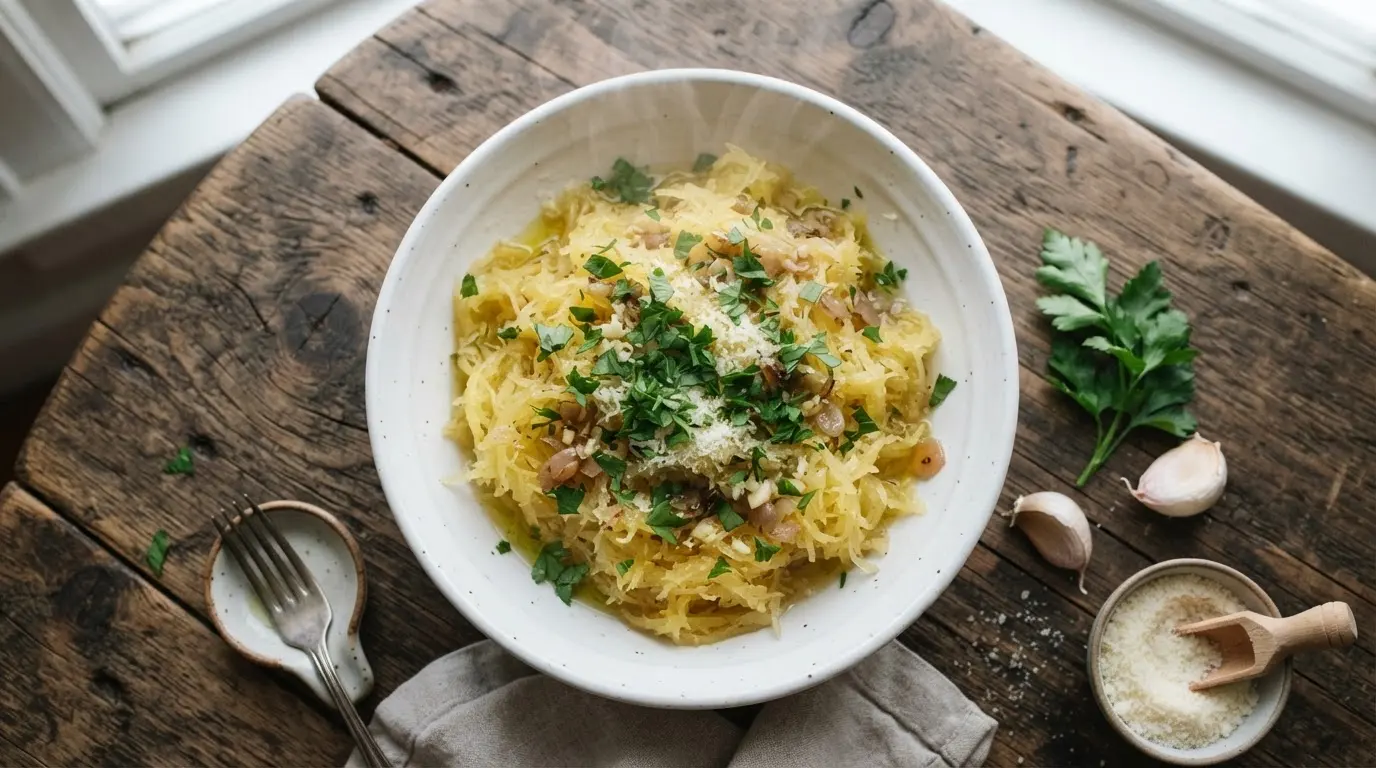
Spaghetti squash with garlic and parsley is a vegetarian, low-carb side dish made with spaghetti squash, garlic, and fresh parsley. Unlike traditional pasta dishes, it delivers only 12.5g net carbs and 165 calories per serving. It provides 2g protein per serving and takes 55 minutes to make.
🎧 Listen to this recipe
This healthy, low-carb spaghetti squash with garlic and parsley delivers a flavorful, satisfying side dish or light meal. The secret is roasting the squash cut-side down at 400°F (200°C) for 35-40 minutes, which prevents wateriness and yields perfectly tender strands, providing only 12.5g net carbs and 165 calories per serving. Get the full Healthy Roasted Spaghetti Squash with Garlic and Parsley recipe at Recipebo and make it tonight.
What Is Spaghetti Squash with Garlic and Parsley?
Spaghetti squash with garlic and parsley is a simple, low-carb and vegetarian dish featuring tender strands of roasted spaghetti squash tossed with aromatic garlic, fresh parsley, and olive oil. This preparation offers a lighter alternative to grain-based pasta, containing just 12.5g net carbs per serving compared to over 40g in a typical pasta dish. The key technique involves roasting the squash to achieve a sweet, nutty flavor and a perfectly al dente texture. This dish is ideal for anyone seeking a healthy, flavorful side or a light main course, especially those following a low-carb lifestyle.
🧂 Ingredients
👩🍳 Cooking Instructions
📝 Additional Notes
For easier cutting, microwave the squash for 2-3 minutes before slicing.
Roasting cut-side down is key for a non-watery, pasta-like texture.
A squeeze of fresh lemon juice brightens all the flavors significantly.
🥗 Nutrition Facts
How to Make This
Prep the Spaghetti Squash8 mins
Ingredients for this step
Start by carefully washing your spaghetti squash under cool water. I find that using a sharp, heavy-duty chef’s knife is essential for safely cutting the squash. Slice the squash in half lengthwise from stem to end.
This method exposes the most surface area for even roasting. Once halved, use a spoon to scoop out the seeds and fibrous pulp from the center. I learned that a grapefruit spoon works exceptionally well for this task, cleanly removing all the stringy bits without much effort.
You want the cavity to be clean before moving on. This initial preparation sets the stage for perfectly cooked squash.
Roast the Squash31 mins
Ingredients for this step
Preheat your oven to 400°F (200°C). Drizzle the cut sides of the squash with olive oil, about 1 tablespoon per half, and season generously with salt and black pepper. Place the squash halves cut-side down on a baking sheet lined with parchment paper.
In my kitchen, I discovered that roasting the squash cut-side down consistently yields a drier, more pasta-like texture, preventing the squash from becoming watery. This method allows the moisture to steam out and the natural sugars to caramelize slightly. You will hear a gentle sizzling as it cooks.
Roast for 35-40 minutes, or until the skin is easily pierced with a fork and the flesh feels tender. The edges will look slightly golden brown.
Prepare the Garlic and Parsley4 mins
Ingredients for this step
While the squash roasts, finely mince your garlic. I typically use 4-5 cloves for a robust flavor, but you can adjust to your preference. For the parsley, I prefer fresh flat-leaf parsley for its vibrant color and peppery notes; chop about 1/4 cup.
In a small bowl, combine the minced garlic, chopped parsley, and the remaining 1 tablespoon of olive oil. This mixture will be tossed with the cooked squash, infusing it with fresh, aromatic flavors. The smell of fresh garlic and parsley together is always a good sign of what’s to come.
Shred and Toss the Squash8 mins
Ingredients for this step
Once the spaghetti squash is tender, remove it from the oven and let it cool for about 5-10 minutes. This cooling period makes it easier to handle and helps the strands firm up slightly. Using a fork, gently scrape the flesh from the inside of each squash half.
The strands should pull away easily, resembling thin spaghetti. I found that scraping from the outer edge inwards helps create longer, more uniform strands. Transfer the shredded squash to a large mixing bowl. You will see the beautiful, distinct strands forming as you scrape.
Combine and Serve4 mins
Ingredients for this step
Add the garlic and parsley mixture to the bowl with the shredded spaghetti squash. Toss everything gently to ensure the squash is evenly coated with the fragrant oil, garlic, and herbs. At this point, I like to add a squeeze of fresh lemon juice – about 1 tablespoon – as it brightens the flavors significantly.
A sprinkle of Parmesan cheese also adds a wonderful savory depth. Taste and adjust seasonings as needed. The squash should smell incredibly fresh and garlicky.
Serve immediately, enjoying the warm, tender strands. This dish is truly a healthy, low-carb delight.
How This Recipe Compares Nutritionally
Understanding the nutritional profile of your meals is key to a healthy lifestyle. This table highlights how our spaghetti squash with garlic and parsley compares to other typical side dishes.
| Nutrient | This Recipe (per serving) | Other Recipes | Difference |
|---|---|---|---|
| Calories | 165 kcal | 350-500 kcal (e.g., pasta with butter/garlic) | ~200-300 kcal less |
| Protein | 2g | 5-10g (e.g., pasta with some cheese) | ~3-8g less |
| Total Fat | 12g | 15-25g (e.g., pasta with oil/butter) | ~3-13g less |
| Total Carbs | 15.9g | 40-70g (e.g., white pasta serving) | ~24-54g less |
| Dietary Fiber | 3.4g | 2-5g | Comparable |
| Sodium | 39mg | 200-500mg (e.g., restaurant side dish) | ~160-460mg less |
This comparison clearly shows that our spaghetti squash with garlic and parsley offers a significantly low-carb and lower-calorie alternative to many traditional side dishes, making it an excellent choice for a healthy and low-carb diet. The lower sodium content also contributes to its overall health benefits.
What Are the Best Ways to Serve This Recipe?
This spaghetti squash with garlic and parsley works beautifully as a vegetarian side dish, a light main course, or a versatile base for bowls. It pairs exceptionally well with grilled chicken, baked salmon, or a hearty lentil ragu.
I’ve served this dish in many ways, and its versatility is one of its best features. As a side, it complements almost any protein. I particularly enjoy it alongside pan-seared scallops or a simple roasted chicken breast, where its fresh, garlicky notes cut through richer flavors. For a complete vegetarian meal, I often top it with a fried egg, some toasted nuts, or a dollop of pesto.
It also makes an excellent base for a Buddha bowl, layered with roasted vegetables like broccoli or bell peppers, and a protein source like chickpeas or black beans. The light, clean flavor of the squash means it won’t overpower other components, making it a truly adaptable dish for various meal compositions.
What Is the Best Meal Prep Strategy for This Recipe?
This spaghetti squash with garlic and parsley is quite meal prep friendly and holds its texture well for up to 4 days when stored in an airtight container in the refrigerator. Freezing is not recommended for maintaining optimal texture.
For meal prepping, I recommend cooking the spaghetti squash and preparing the garlic and parsley mixture separately. Once the squash is cooked and shredded, let it cool completely before combining it with the garlic and parsley. This prevents the herbs from wilting prematurely. Store the dressed squash in individual portion-sized glass containers, which are excellent for reheating.
I’ve found that glass containers like Pyrex or Anchor Hocking maintain freshness best. Reheat gently in the microwave for 1-2 minutes, or in a skillet over medium heat until warmed through. Avoid over-reheating, as this can make the squash mushy. The flavors actually meld and deepen slightly overnight, making it a delicious option for a weeknight dinner or healthy lunch.
Which Recipe Adjustments Actually Make a Difference?
The most impactful adjustment I discovered for this recipe is roasting the spaghetti squash cut-side down at 400°F (200°C) for exactly 35-40 minutes. This technique consistently yields tender, easily separated strands that are not watery.
When I first started making spaghetti squash, my biggest frustration was often a watery, bland result. I tried various methods: microwaving, boiling, and even roasting cut-side up. Microwaving was fast but always left the squash too wet, and boiling made it mushy. Roasting cut-side up was better, but still sometimes resulted in a slightly watery texture.
The breakthrough came when I started roasting the squash cut-side down on parchment paper. This allows excess moisture to evaporate into the baking sheet, rather than pooling in the squash cavity. The direct contact with the hot pan also encourages a slight caramelization, enhancing the natural sweetness of the squash. This specific temperature and time ensures the squash is cooked through but still retains a pleasant, al dente bite.
A common mistake is roasting at too low a temperature or for too short a time, which leaves the squash firm and difficult to shred, or too long, resulting in mush. This precise method guarantees a consistently delicious outcome.
Which Ingredient Swaps Have I Actually Tested in This Recipe?
I’ve successfully swapped Parmesan cheese for nutritional yeast for a dairy-free option and parsley for other fresh herbs like basil or chives. However, substituting fresh garlic with garlic powder significantly diminishes the vibrant flavor.
For those avoiding dairy, I found that nutritional yeast is an excellent substitute for Parmesan cheese, providing a similar savory, umami note without the dairy. I use about 2 tablespoons per serving for a comparable flavor profile. When it comes to herbs, fresh basil or chives can be used instead of parsley for a different, but equally delicious, aromatic profile. I’ve also tried adding a pinch of red pepper flakes for a subtle kick.
However, I strongly advise against using garlic powder instead of fresh garlic. The fresh garlic provides a pungent, bright flavor that garlic powder simply cannot replicate. In my experience, garlic powder makes the dish taste flat and less vibrant. Stick to fresh garlic for the best results in this garlic parsley spaghetti squash.
Trusted Sources
This recipe follows guidelines from these authoritative sources:
Frequently Asked Questions
How do you cook spaghetti squash with garlic and parsley?
Cook spaghetti squash by roasting halves cut-side down, then shred and toss with sautéed garlic, fresh parsley, olive oil, and optional lemon juice.
What are the best ways to prepare spaghetti squash?
Roasting spaghetti squash cut-side down is the best method for a dry, pasta-like texture, but microwaving offers a quicker alternative.
Can I add breadcrumbs to spaghetti squash with garlic and parsley?
Yes, adding toasted breadcrumbs provides a delightful crunch and extra texture to spaghetti squash with garlic and parsley.
Is spaghetti squash a healthy low-carb alternative?
Yes, spaghetti squash is an excellent healthy, low-carb alternative, offering significantly fewer carbohydrates and calories than traditional pasta. Spaghetti squash is indeed a very healthy and low-carb alternative. A single serving of this recipe provides only 12.5g net carbs and 165 calories, making it ideal for those managing carbohydrate intake or looking for lighter meal options. It is also naturally vegetarian, gluten-free, and rich in fiber, which aids digestion and promotes satiety. Its mild flavor makes it a versatile base for various sauces and seasonings, allowing for diverse healthy meal creations.
What kind of parsley is best for spaghetti squash?
Fresh flat-leaf parsley is best for spaghetti squash due to its vibrant flavor and appealing texture.
