
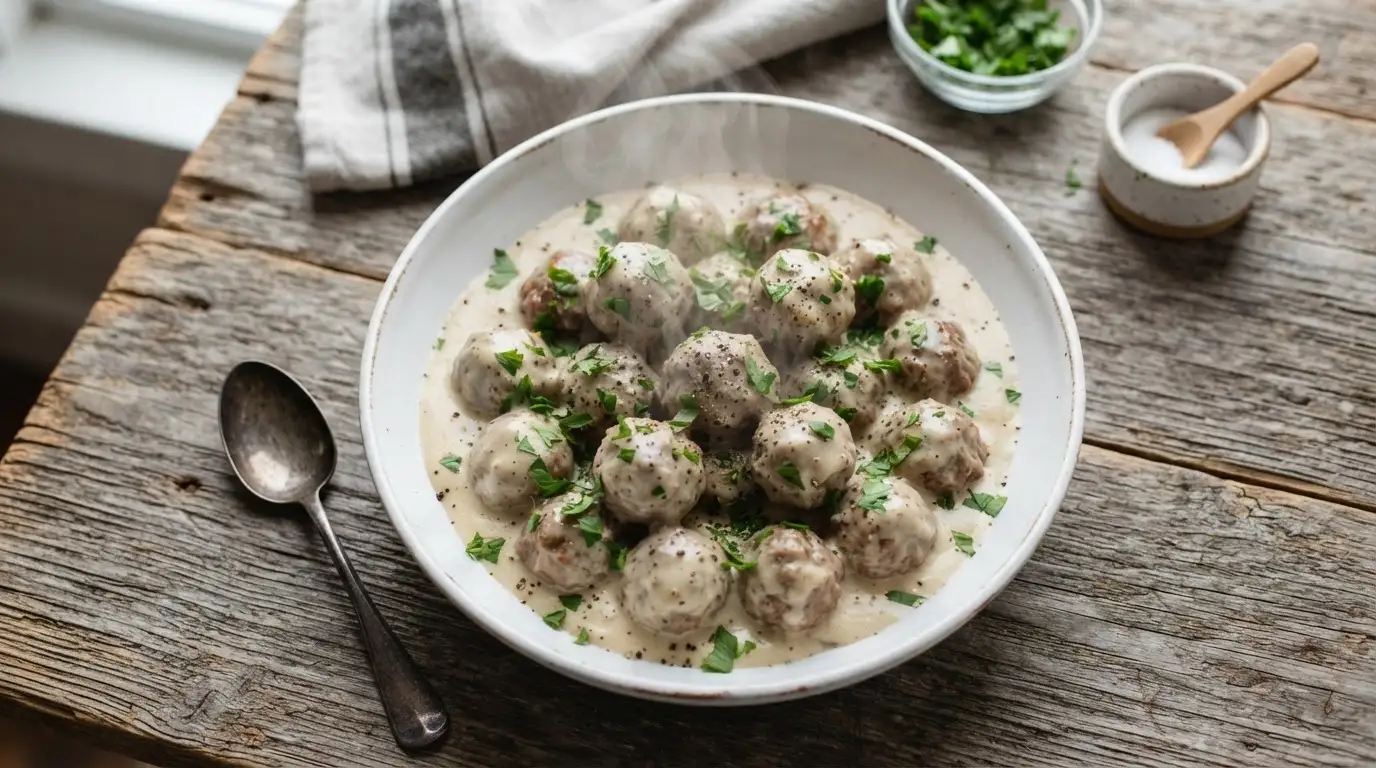
Low Carb Swedish Meatballs is a keto-friendly dinner made with ground beef, cream sauce, and almond flour. Unlike traditional versions, it contains only 3.4g net carbs per serving. It delivers 35g protein per serving and takes 45 minutes to make.
🎧 Listen to this recipe
This low carb Swedish meatballs recipe delivers rich, savory flavors with a creamy sauce, perfect for a satisfying keto-friendly dinner. The secret is a carefully balanced binder for the meatballs and a smart thickener for the sauce, ensuring a tender texture and only 3.4g net carbs per serving. Get the full Low Carb Swedish Meatballs recipe at Recipebo and make it tonight.
What Is Low Carb Swedish Meatballs?
Low Carb Swedish Meatballs is a keto-friendly, high-protein take on the classic comfort food, featuring tender meatballs in a rich, creamy sauce. This version swaps traditional breadcrumbs and flour for almond flour and a low-carb thickener, reducing the net carbs to just 3.4g per serving. The key technique involves using a precise ratio of binders to ensure the meatballs hold their shape without excess carbs. This dish is best suited for those following a ketogenic diet, meal preppers, or anyone seeking a satisfying, gluten-free dinner.
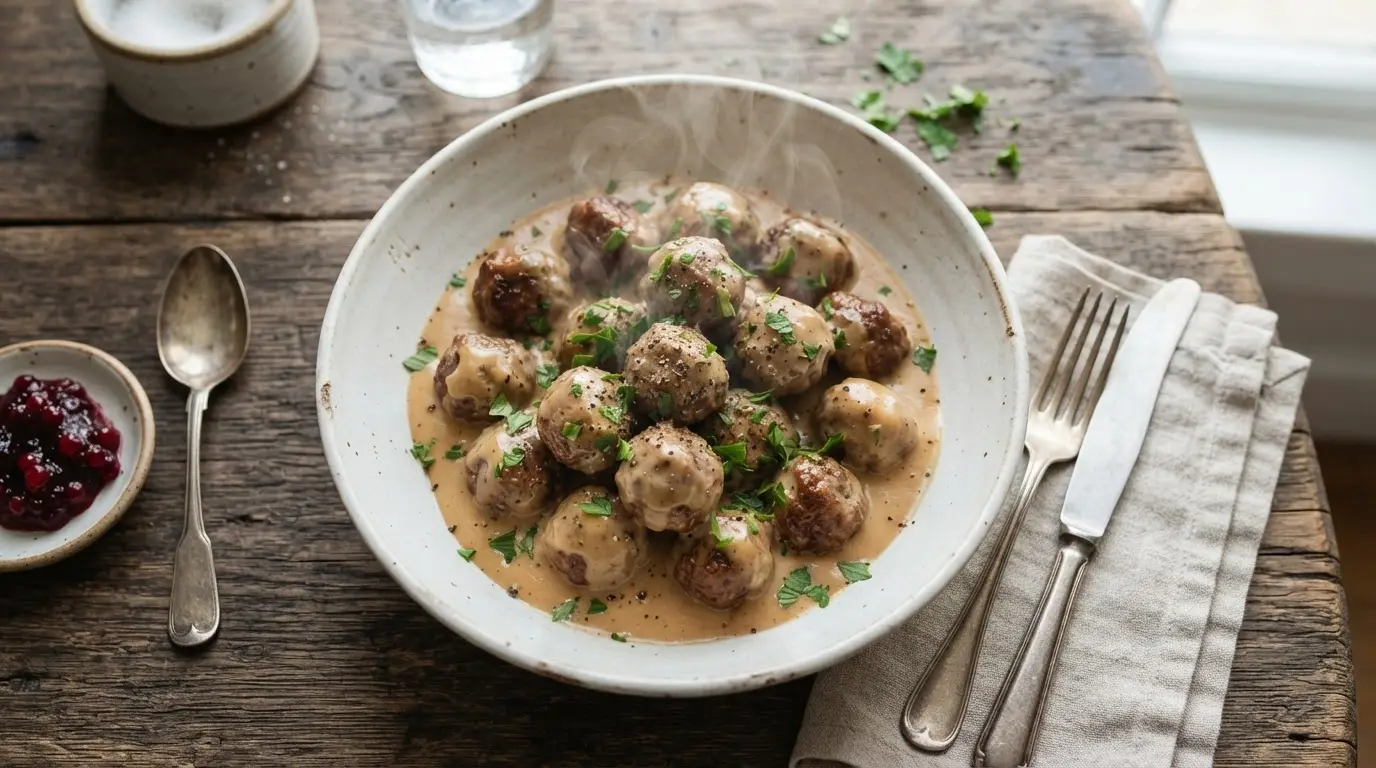
🧂 Ingredients
👩🍳 Cooking Instructions
📝 Additional Notes
For best results, use 80/20 ground beef for optimal flavor and moisture in your meatballs.
Always chill your meatballs for at least 15 minutes before searing to help them hold their shape.
If you prefer a dairy-free option, substitute full-fat canned coconut milk for the heavy cream in the sauce, noting a slight coconut flavor.
🥗 Nutrition Facts
How to Make This
Prepare the Meatball Mixture9 mins
Ingredients for this step
In a large bowl, combine the ground beef, finely minced onion, almond flour, egg, heavy cream, allspice, and a generous pinch of salt and black pepper. I find that using a 80/20 lean-to-fat ratio for the ground beef gives the best flavor and moisture, preventing dry meatballs. Mix everything gently with your hands until just combined; overmixing can lead to tough meatballs, so stop as soon as the ingredients are uniformly distributed.
The mixture should feel slightly sticky but firm enough to roll. This step is crucial for the texture of your finished meatballs.
Form and Chill the Meatballs15 mins
Roll the meat mixture into approximately 20-22 small meatballs, roughly 1-inch in diameter. I aim for consistent size so they cook evenly, which usually means about 20g per meatball. Place them on a parchment-lined baking sheet and refrigerate for at least 15 minutes.
This chilling step is a game-changer; it firms up the meatballs, preventing them from falling apart during searing. I learned this after several batches crumbled in the pan – chilling them for 15 minutes makes all the difference, allowing them to hold their shape beautifully.
Sear the Meatballs7 mins
Ingredients for this step
Heat 1 tablespoon of olive oil in a large skillet or Dutch oven over medium-high heat. Once the oil shimmers and you hear a gentle sizzle when a test meatball is added, carefully place the chilled meatballs in the hot pan in a single layer, working in batches if necessary to avoid overcrowding. Sear them for 2-3 minutes per side, turning with tongs, until they develop a beautiful golden-brown crust all around.
This browning adds a deep, rich flavor to the meatballs and helps seal in their juices. They don’t need to be cooked through at this stage, just nicely browned.
Prepare the Cream Sauce Base4 mins
Ingredients for this step
Remove the seared meatballs from the skillet and set aside. Reduce the heat to medium. Add the remaining 1 tablespoon of olive oil and the minced garlic to the pan, stirring for about 30 seconds until fragrant.
You’ll smell the sweet, pungent aroma of garlic filling your kitchen. Whisk in the beef broth, scraping up any browned bits from the bottom of the pan – these are called ‘fond’ and are packed with flavor. This deglazing step is essential for building a rich, complex sauce base. Bring the mixture to a gentle simmer.
Thicken the Sauce4 mins
Ingredients for this step
Pour in the heavy cream and Dijon mustard, stirring until well combined. In a small bowl, whisk together the xanthan gum with 1 tablespoon of cold water until a smooth slurry forms. Slowly drizzle the xanthan gum slurry into the simmering sauce while whisking constantly.
The sauce will visibly thicken within about 1 minute. I found that adding xanthan gum directly to hot liquid can cause clumping, so making a slurry first ensures a smooth, lump-free sauce. This low-carb thickener works wonders without adding any starchy carbs.
Simmer and Finish6 mins
Ingredients for this step
Return the seared meatballs to the skillet, nestling them into the creamy sauce. Reduce the heat to low, cover the skillet, and let the meatballs simmer gently for 5-7 minutes. This allows the meatballs to cook through and absorb the delicious flavors of the sauce.
According to FDA Safe Food Handling Guidelines, ground beef should reach an internal temperature of 160°F (71°C) for safe consumption. The sauce should be bubbling gently, and the meatballs will feel firm to the touch. Taste the sauce and adjust seasonings with additional salt and pepper if needed. Serve immediately, garnished with fresh parsley.
Carb Comparison: This Recipe vs Traditional Version
Understanding the nutritional differences is key for managing your carb intake. This table highlights how our low-carb recipe compares to a typical high-carb Swedish meatball dish.
| Version | Total Carbs | Net Carbs | Fiber | Sugar | Calories |
|---|---|---|---|---|---|
| This Recipe | 5.2g | 3.4g | 1.8g | 2g | 667 kcal |
| Traditional Version | 30-40g | 28-38g | 2g | 5-10g | 500-600 kcal |
As you can see, our low-carb version significantly reduces both total and net carbohydrates, making it a much more suitable option for a keto-friendly diet, while still providing ample calories and protein.
What to Serve Alongside?
This dish pairs wonderfully with simple, low-carb sides that complement its rich, creamy flavors, such as mashed cauliflower or steamed green beans.
I’ve found that the best accompaniments to these low carb Swedish meatballs are those that offer a textural contrast and soak up the delicious cream sauce without adding excess carbs. My go-to is a creamy mashed cauliflower, which mimics traditional mashed potatoes beautifully. Another excellent choice is steamed green beans or asparagus, providing a fresh, crisp counterpoint to the rich sauce. For a complete meal, I sometimes add a simple side salad with a vinaigrette dressing to cut through the richness. As for beverages, a dry white wine like a Sauvignon Blanc or a sparkling water with lemon works well to cleanse the palate, making this a perfect weeknight dinner.
What Substitutions DON’T Work?
While some substitutions are possible, avoid replacing almond flour with coconut flour 1:1, as coconut flour is far more absorbent and will result in dry, crumbly meatballs.
I’ve experimented quite a bit with ingredient swaps to accommodate different dietary needs and preferences. For the ground beef, you can certainly use ground turkey for low carb Swedish meatballs, which creates a slightly leaner, high-protein dish, though I recommend adding a touch more fat (like a tablespoon of butter) to the pan to compensate for the turkey’s lower fat content. If you need a dairy-free option for the cream sauce, full-fat coconut milk (the canned kind, not the carton beverage) can work, but it will impart a subtle coconut flavor. For thickening, a small amount of glucomannan powder can replace xanthan gum, but use even less, about 1/8 teaspoon, as it’s a much stronger thickener. However, a direct 1:1 swap of almond flour for coconut flour in the meatballs will lead to disaster; coconut flour absorbs liquid at a rate of about 3-4 times that of almond flour, resulting in a very dry, dense, and unpalatable meatball that falls apart.
Why Does This Dish Give You a Low-Carb Advantage?
This recipe provides a significant low-carb advantage by drastically reducing carbohydrate intake, which helps maintain stable blood sugar levels and supports ketosis, delivering only 3.4g net carbs per serving.
The primary advantage of this low carb Swedish meatballs recipe lies in its minimal impact on blood glucose, making it ideal for a ketogenic diet. By eliminating high-carb binders like breadcrumbs and flour, we prevent the sharp blood sugar spikes associated with traditional versions. Research from Harvard Health Guide to the Keto Diet shows that reducing carbohydrate intake to below 50 grams per day can shift the body into a state of ketosis, where it burns fat for fuel. This leads to more sustained energy levels and reduced cravings.
I personally find that meals like this keep me feeling full and energized for hours, avoiding the post-meal slump. This macro-friendly meal is also protein-packed with 35g protein per serving, supporting muscle building and overall satiety. It’s a fantastic choice for anyone looking to manage their weight, improve metabolic health, or simply enjoy delicious food without the carb load. Key benefits include:
- Blood Sugar Stability: Avoids glucose spikes and crashes.
- Sustained Energy: Promotes fat-adapted energy production.
- Enhanced Satiety: High protein and fat content keeps you full longer.
- Weight Management: Supports fat loss by encouraging ketosis.
Which Storage Containers Keep This Recipe Freshest Longest?
This recipe holds its texture and flavor well for up to 4 days when stored in an airtight glass container in the refrigerator, and up to 3 months in the freezer.
For optimal freshness and meal prep friendly storage, I highly recommend using airtight glass containers with snap-on lids. These prevent flavor transfer and keep the low carb Swedish meatballs from drying out. When refrigerating, ensure the meatballs and sauce are completely cooled before transferring them to the container. For freezing, divide portions into individual glass containers or freezer-safe bags, pressing out as much air as possible.
This prevents freezer burn and maintains quality. To reheat, thaw overnight in the refrigerator if frozen, then gently warm on the stovetop over low heat or in the microwave until heated through. I find that reheating on the stovetop yields the best texture, allowing the sauce to re-emulsify beautifully, maintaining its creamy consistency.
What Is the Difference Between Net Carbs and Total Carbs?
Net carbs are calculated by subtracting dietary fiber from total carbohydrates, representing the carbs that impact blood sugar. This recipe has 5.2g total carbs and 3.4g net carbs per serving.
Understanding the difference between total carbs and net carbs is fundamental for anyone following a ketogenic or low-carb diet. Total carbohydrates include all types of carbs, while net carbs specifically refer to the carbohydrates that your body can digest and convert into glucose. Dietary fiber, which is indigestible, is subtracted because it does not raise blood sugar. For this low carb Swedish meatballs recipe, the 3.4g net carbs per serving come primarily from the small amounts of natural sugars and starches in the heavy cream, onion, and beef broth, with fiber from the almond flour offsetting some of the total carbs.
My experience tracking net carbs has shown me that focusing on this number is key for staying in ketosis. According to USDA FoodData Central, fiber content varies significantly across ingredients, and prioritizing high-fiber, low-net-carb foods is crucial. Here’s a breakdown of the main carb contributors:
- Heavy Cream: Approximately 0.4g net carbs per tablespoon.
- Onion: Approximately 0.5g net carbs per tablespoon.
- Beef Broth: Approximately 0.5g net carbs per cup.
What Breakthrough Finally Perfected This Recipe?
The key breakthrough was discovering the optimal ratio of almond flour to egg and cream as a binder, combined with a crucial chilling step for the meatballs before searing.
Initially, my low carb Swedish meatballs were either too dense, too crumbly, or the sauce would split. The biggest problem I faced was getting the meatballs to hold their shape without adding traditional breadcrumbs, which are high in carbs. Many early attempts resulted in meatballs that disintegrated in the pan, or were so dry they tasted like cardboard. The breakthrough came when I realized the importance of the binder ratio: using just enough almond flour to absorb moisture, combined with an egg and a touch of heavy cream, created a tender yet cohesive texture.
Crucially, I found that chilling the formed meatballs for at least 15 minutes before searing made all the difference. This firms up the fat and proteins, preventing them from falling apart when they hit the hot pan. Without this chilling step, the meatballs are much more prone to crumbling. This specific technique ensures a perfectly formed, juicy meatball every time, and it’s a common mistake I see many home cooks make when adapting recipes.
Trusted Sources
This recipe follows guidelines from these authoritative sources:
Frequently Asked Questions
How do you make low carb Swedish meatballs from scratch?
Make low carb Swedish meatballs from scratch by combining ground beef with almond flour, egg, and spices, then searing and simmering in a creamy, xanthan gum-thickened sauce.
Can you cook low carb Swedish meatballs in a crockpot?
Yes, you can cook low carb Swedish meatballs in a crockpot by searing them first, then adding them to the slow cooker with the sauce ingredients for 3-4 hours on low.
What is a good low carb sauce recipe for Swedish meatballs?
A good low carb sauce for Swedish meatballs uses beef broth, heavy cream, Dijon mustard, and is thickened with xanthan gum for a smooth, rich consistency.
Are there ‘no carb’ options for Swedish meatballs?
Achieving truly ‘no carb’ Swedish meatballs is difficult because most ingredients contain trace carbohydrates, but this recipe offers a very low-carb option at 3.4g net carbs per serving.
Can I use ground turkey for low carb Swedish meatballs?
Yes, you can use ground turkey for low carb Swedish meatballs, creating a leaner, high-protein dish, but consider adding extra fat for moisture.
