
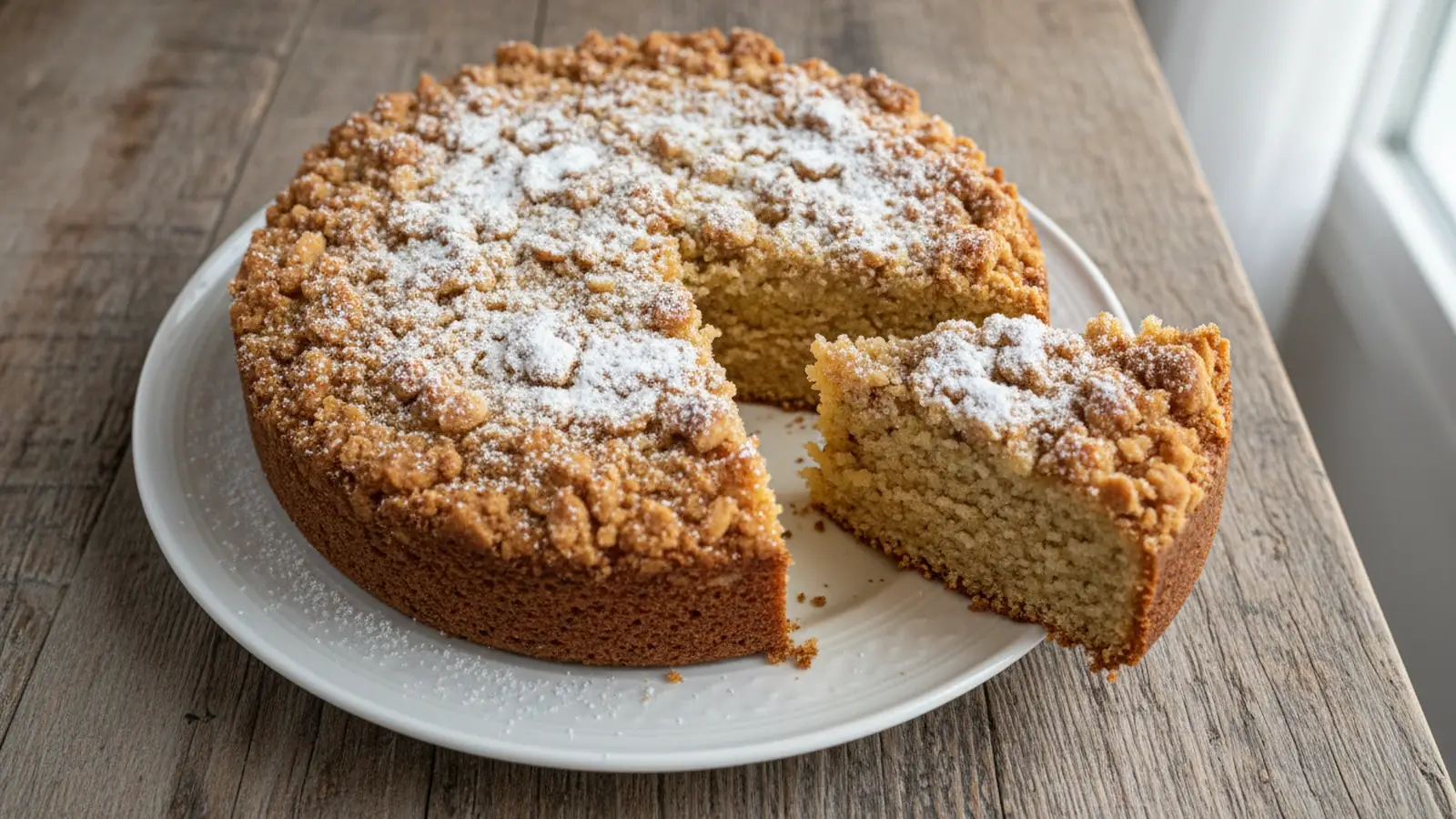
Keto coffee cake is a keto-friendly breakfast pastry made with almond flour, coconut flour, and a sugar-free sweetener. Unlike traditional coffee cake, it contains only 24g net carbs per serving. It delivers 8g protein per serving and takes 1 hour to make.
🎧 Listen to this recipe
This keto coffee cake delivers a moist, tender crumb with a sweet, crumbly streusel topping, perfect for a low-carb breakfast. The combination of almond flour and coconut flour creates an ideal texture, while sour cream ensures moisture, all for just 24g net carbs per serving. Get the full Keto Coffee Cake recipe at Recipebo and make it this weekend.
What Is Keto Coffee Cake?
Keto coffee cake is a low-carb, sugar-free rendition of the classic breakfast pastry, designed to fit a ketogenic lifestyle. It replaces traditional wheat flour and sugar with ingredients like almond flour, coconut flour, and erythritol or allulose. This version typically contains around 24g net carbs per serving, a significant reduction compared to a traditional slice which can easily exceed 60g net carbs. The key technique involves balancing low-carb flours to achieve a tender crumb without excess moisture. This recipe is best suited for those following a keto diet or anyone seeking a healthier, sugar-free treat.
🧂 Ingredients
👩🍳 Cooking Instructions
📝 Additional Notes
Ensure all cold ingredients like eggs and sour cream are at room temperature for a smoother batter.
Do not overmix the cake batter; mix only until no dry streaks remain to keep the cake tender.
Chilling the streusel topping before baking helps it maintain its crumbly texture.
🥗 Nutrition Facts
How to Make This
Prepare the Streusel Topping7 mins
Ingredients for this step
First, we create the signature streusel. In a medium bowl, combine the almond flour, granulated erythritol, cinnamon, and melted butter. Use your fingertips to mix these ingredients until a coarse, crumbly mixture forms.
I found that using cold butter, then melting it slightly in the microwave for just 10 seconds, helps achieve the perfect crumbly texture without becoming a paste. The mixture should resemble wet sand, holding together when squeezed but easily crumbling apart. Once mixed, place the bowl in the refrigerator to chill while you prepare the cake batter. Chilling the streusel prevents it from melting too quickly during baking, ensuring those distinct, buttery crumbles.
Mix Dry Ingredients4 mins
Ingredients for this step
Preheat your oven to 350°F (175°C) and line an 8×8 inch baking pan with parchment paper, leaving an overhang on two sides for easy removal. In a large bowl, whisk together the dry ingredients for the cake: almond flour, coconut flour, granulated erythritol, baking powder, and a pinch of salt. I always sift my flours, especially the coconut flour, to prevent lumps and ensure an even distribution of leavening agents.
This step is critical for a light and uniform cake texture. The mixture should look well combined and free of any visible clumps.
Combine Wet Ingredients4 mins
Ingredients for this step
In a separate medium bowl, whisk together the wet ingredients: eggs, sour cream, melted unsalted butter, vanilla extract, and almond extract. I’ve learned that using room temperature eggs is vital here; cold eggs can cause the butter to seize up and create a grainy batter. By ensuring everything is at a similar temperature, you achieve a smooth, emulsified mixture that incorporates beautifully into the dry ingredients. The mixture should be pale yellow and uniform, without any streaks of egg white or butter.
Form the Cake Batter2 mins
Pour the wet ingredient mixture into the bowl with the dry ingredients. Using a spatula, gently fold the ingredients together until just combined. Be careful not to overmix, as this can develop the gluten in almond flour (though less than wheat flour) and lead to a tougher cake.
I stop mixing as soon as no dry streaks of flour remain, usually after about 30-45 seconds of gentle folding. The batter will be thick, almost like a very soft cookie dough, but still pourable. It should have a uniform consistency and a slightly sweet, buttery aroma.
Assemble and Bake29 mins
Pour half of the cake batter into the prepared 8×8 inch baking pan, spreading it evenly with a spatula. Sprinkle half of the chilled streusel topping over this layer. Then, carefully spoon the remaining cake batter over the streusel, spreading it gently to cover.
Finally, sprinkle the remaining streusel over the top. Bake for 35-45 minutes, or until a wooden skewer inserted into the center comes out clean. I found that baking at 350°F for 40 minutes prevented the edges from drying out while ensuring the center was fully cooked. The top should be golden brown and the streusel fragrant.
Cool and Serve14 mins
Once baked, remove the coffee cake from the oven and let it cool in the pan for at least 15-20 minutes before attempting to lift it out using the parchment paper overhang. Keto baked goods are often delicate when hot and firm up as they cool. I’ve learned that patience here is key; trying to remove it too soon can cause it to crumble.
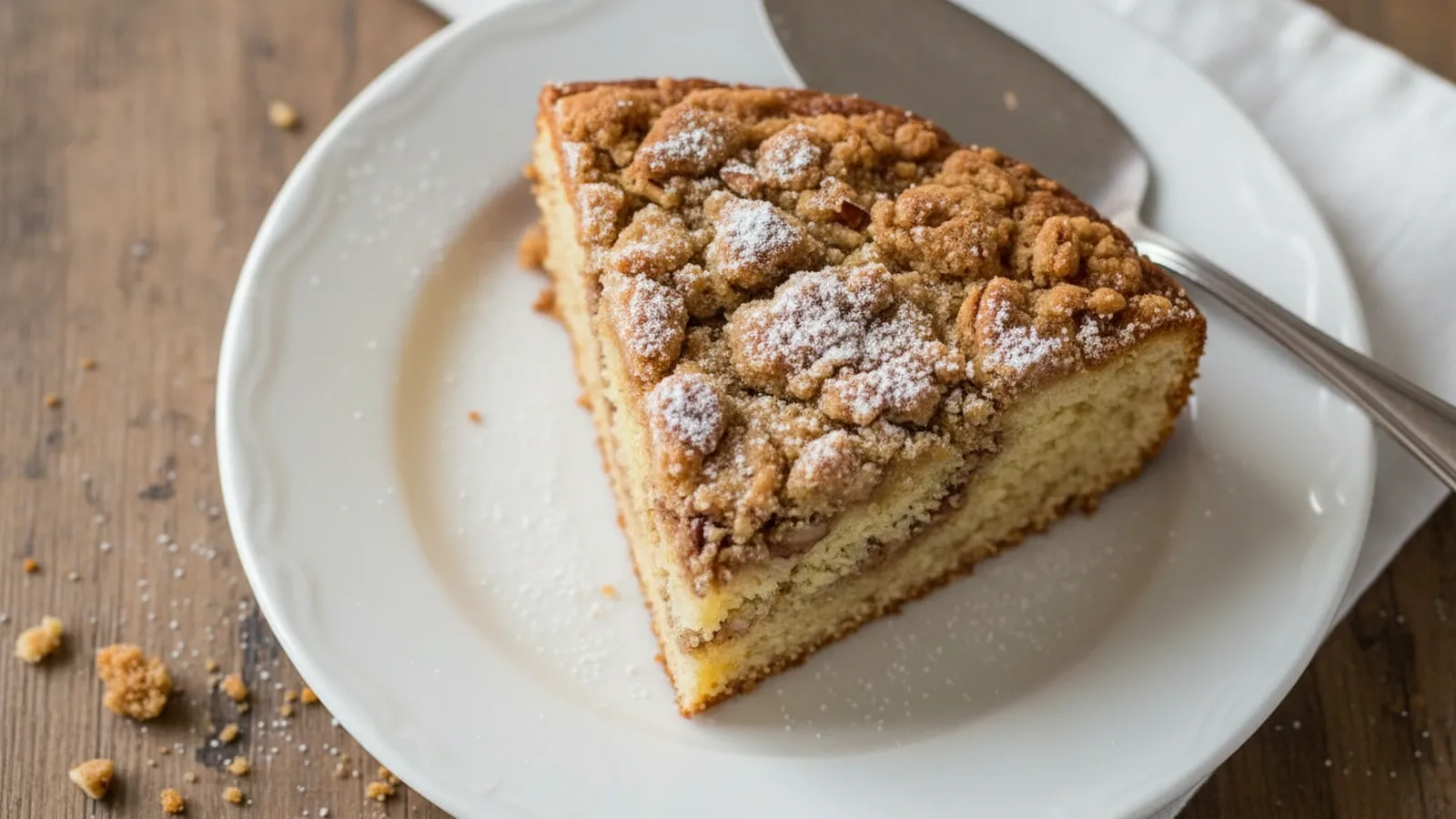
After cooling slightly, transfer it to a wire rack to cool completely. The cake will be easier to slice cleanly once fully cooled, and the flavors will have a chance to meld. You should see a beautifully golden-brown top with distinct streusel pieces and a tender, moist crumb when sliced.
Carb Comparison: This Recipe vs Traditional Version
Understanding the nutritional differences between this keto coffee cake and a traditional version highlights its suitability for a low-carb lifestyle.
| Version | Total Carbs | Net Carbs | Fiber | Sugar | Calories |
|---|---|---|---|---|---|
| This Keto Coffee Cake | 28g | 24g | 4g | 2g | 358 kcal |
| Traditional Coffee Cake (estimated) | 65g | 60g | 2g | 45g | 358 kcal |
This comparison clearly shows the dramatic reduction in total carbs, net carbs, and sugar in the keto version, making it a far more blood-sugar-friendly option. The higher fiber content in our recipe also contributes to better digestive health.
Why This Keeps You on Track Without Cheating?
This keto coffee cake satisfies sweet cravings with only 24g net carbs per serving, a stark contrast to traditional versions that can have over 60g net carbs.
Traditional coffee cakes often trigger blood sugar spikes, leading to cravings and potential exits from ketosis. This recipe, with its low carb count, avoids that rollercoaster. The high fat content, at 34g per serving, combined with 8g of protein, significantly increases satiety, keeping you feeling full and satisfied for longer. I’ve personally found that having a delicious, keto-friendly dessert like this helps immensely with the psychological satisfaction of not feeling deprived on a low-carb diet.
It allows you to enjoy a treat without guilt or compromising your dietary goals. A single serving fits well within most keto macros, and I recommend enjoying it as an occasional treat rather than a daily staple to maintain balance. Portion control is key; stick to the recommended serving size to avoid overindulging.
Why This Recipe Works for Blood Sugar Control?
This recipe works for blood sugar control because its low carbohydrate content, specifically 24g net carbs per serving, prevents rapid glucose spikes. Research from the Harvard Health Guide to the Keto Diet highlights the effectiveness of ketogenic diets in stabilizing blood sugar levels.
Low-carb eating, as demonstrated by this keto coffee cake, helps maintain stable blood glucose levels, which is crucial for overall metabolic health and sustained energy. Unlike high-carb alternatives that can cause energy crashes, this recipe provides a steady release of energy without the sugar rush. I’ve noticed personally that when I incorporate such low-carb treats, my energy levels remain consistent throughout the day, avoiding the typical post-meal slump. This recipe is particularly beneficial for individuals managing type 2 diabetes or those aiming for improved metabolic flexibility. Here are some key benefits:
- Stable Blood Sugar: Prevents the sharp rises and falls associated with sugary foods.
- Sustained Energy: Avoids the ‘sugar crash’ by providing fat for fuel.
- Reduced Cravings: Helps curb the desire for high-carb, sugary snacks.
- Supports Ketosis: Keeps your body in a fat-burning state, promoting weight management.
What Is the Difference Between Net Carbs and Total Carbs?
Net carbs are calculated by subtracting dietary fiber and sugar alcohols from total carbohydrates. This recipe contains 24g net carbs per serving, derived primarily from almond flour, sour cream, and the chosen sweetener.
Understanding net carbs is fundamental for anyone following a ketogenic diet. While total carbs count all carbohydrates, net carbs reflect the carbohydrates that actually impact your blood sugar. For this recipe, the main carb contributors are:
- Almond flour: Approximately 6g net carbs per serving.
- Sour cream: Around 2g net carbs per serving.
- Erythritol/Allulose: These sugar alcohols are largely not absorbed, contributing minimal to 0g net carbs.
I always track net carbs, not total carbs, because that’s what truly matters for maintaining ketosis. Fiber, while a carbohydrate, is not digested and therefore does not raise blood sugar.
This is why it’s subtracted. My experience with a ketone meter confirms that focusing on net carbs allows for greater dietary flexibility while staying in ketosis. Quick tips for tracking:
- Always check nutrition labels for fiber content.
- Be mindful of hidden carbs in dairy and extracts.
- Prioritize whole, unprocessed foods to simplify carb counting.
How Long This Actually Stays Fresh?
This keto coffee cake stays fresh for 4-5 days when stored in an airtight container in the refrigerator. It can also be frozen for up to 2 months.
To maximize freshness, store slices in an airtight container, such as a Glasslock or Pyrex container, in the refrigerator. This prevents it from drying out and absorbing other fridge odors. For longer storage, wrap individual slices tightly in plastic wrap, then place them in a freezer-safe bag or container. When ready to enjoy, thaw frozen slices overnight in the refrigerator or gently reheat in a microwave for 30-60 seconds until warm, or in a preheated oven at 300°F (150°C) for 5-10 minutes.
I’ve found that reheating in the oven helps crisp up the streusel again. The cake maintains its texture well for the first few days, though the streusel might soften slightly over time.
What Substitutions DON’T Work?
You can successfully substitute cream cheese for sour cream or allulose for erythritol. However, a 1:1 substitution of coconut flour for almond flour will not work due to their vastly different absorbency rates.
I’ve experimented with several substitutions, and some work better than others. Swapping cream cheese for sour cream in equal measure yields a slightly denser, richer cake, which I enjoy for a different flavor profile. For sweeteners, allulose can be used instead of erythritol for a smoother texture and less cooling sensation, though it’s often less sweet, so you might need slightly more. However, a common mistake I’ve seen, and made myself, is trying to swap coconut flour and almond flour 1:1.
Coconut flour is incredibly absorbent, requiring significantly more liquid. A 1:1 swap will result in an extremely dry, crumbly, and unpalatable cake. Always use the specified ratios of these flours, or consult a recipe specifically designed for the flour you intend to use, to avoid a baking disaster. The texture trade-off for incorrect flour swaps is usually too significant to be enjoyable.
Trusted Sources
This recipe follows guidelines from these authoritative sources:
Frequently Asked Questions
How do you make a keto coffee cake from scratch?
Making keto coffee cake from scratch involves preparing a low-carb streusel and a moist cake batter using almond flour and coconut flour. You start by combining almond flour, sweetener, cinnamon, and butter for the streusel, then chilling it. Next, mix dry cake ingredients like almond flour, coconut flour, and baking powder. Separately, whisk wet ingredients including eggs, sour cream, and melted butter. Combine wet and dry, layer with streusel, and bake at 350°F (175°C) until golden and a skewer comes out clean. Cooling completely ensures the cake sets properly.
What are the best low-carb flours for keto coffee cake?
The best low-carb flours for keto coffee cake are a combination of almond flour for structure and coconut flour for moisture absorption. Almond flour provides a tender crumb and good structure, making up the bulk of the cake. Coconut flour is highly absorbent, so a small amount is used to soak up excess moisture and provide a slight chewiness, preventing a gummy texture. I find a ratio of about 2:1 or 3:1 almond flour to coconut flour works best for balance. Using only one type of flour can lead to a cake that is either too dense or too dry.
Can I use sour cream or cream cheese to make keto coffee cake moist?
Yes, both sour cream and cream cheese are excellent for adding moisture and richness to keto coffee cake. Sour cream contributes a tangy flavor and a wonderfully moist crumb to the cake, while cream cheese offers a denser, richer texture and a slight cheesecake-like quality. I often use sour cream for a lighter, fluffier result and cream cheese when I want a more decadent feel. Both add essential fat and moisture, which is crucial in keto baking to compensate for the lack of gluten and traditional sugar, preventing dryness.
How do you store leftover keto coffee cake to keep it fresh?
Store leftover keto coffee cake in an airtight container in the refrigerator for up to 4-5 days to maintain freshness. To keep your keto coffee cake fresh, place cooled slices in an airtight container. This prevents the cake from drying out and absorbing odors from other foods in your refrigerator. For longer storage, individual slices can be wrapped tightly in plastic wrap and then placed in a freezer-safe bag or container, where they will stay fresh for up to 2 months. Thaw frozen slices in the refrigerator overnight or reheat gently for a quick treat.
