
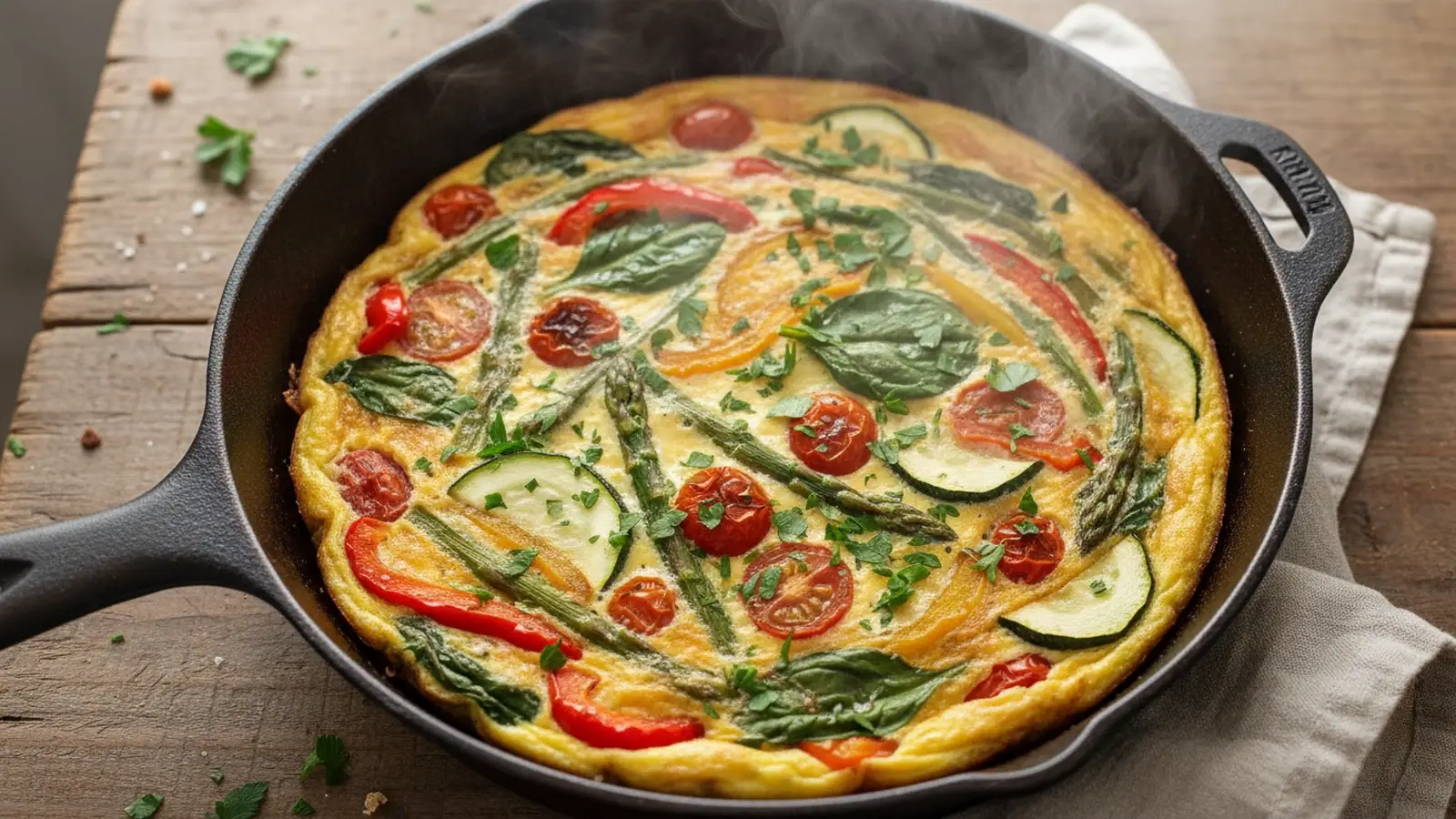
Veggie frittatas are a healthy, high-protein breakfast or brunch made with eggs, vegetables, and cheese. Unlike traditional egg bakes, this recipe delivers 17g protein and only 6.0g net carbs per serving. It takes 35 minutes to make, offering a satisfying and macro-friendly meal.
🎧 Listen to this recipe
These healthy veggie frittatas deliver a delicious, versatile, and protein-packed meal perfect for any time of day. The secret is properly sautéing the vegetables first to release moisture and intensify flavor, ensuring a tender texture every time. This recipe provides 17g protein and only 6.0g net carbs per serving, making it an excellent choice for a macro-friendly meal. Get the full Healthy Veggie Frittatas recipe at Recipebo and make it tonight.
What Is a Veggie Frittata?
A veggie frittata is an Italian-inspired egg dish, similar to a crustless quiche or an open-faced omelet, baked in an oven-safe skillet. It features a base of whisked eggs, often enriched with dairy, and loaded with various cooked vegetables and cheese. This version focuses on a vegetarian diet, providing a substantial meal with 17g of protein and just 6.0g net carbs per serving. It is best suited for those seeking a healthy eating option, meal preppers, or anyone desiring a quick, protein-packed meal.
🧂 Ingredients
👩🍳 Cooking Instructions
📝 Additional Notes
For extra flavor, add a pinch of red pepper flakes to the vegetables while sautéing.
Ensure your skillet is truly oven-safe; cast iron or stainless steel are excellent choices.
Leftovers store well in an airtight container in the refrigerator for up to 4 days.
🥗 Nutrition Facts
How to Make This
Prep Your Vegetables and Oven4 mins
Ingredients for this step
Begin by preheating your oven to 375°F (190°C). I found this temperature prevents the edges from becoming rubbery while ensuring the center cooks through evenly. While the oven heats, chop your onions and bell peppers into small, uniform pieces, about 1/4-inch dice.
This ensures they cook at the same rate. Have your fresh spinach ready; there is no need to chop it as it will wilt down significantly. I always prepare all my vegetables before I start cooking, a technique known as mise en place, which makes the cooking process much smoother and prevents burning ingredients. You want to see the oven light indicating it’s reached temperature before moving to the next step.
Sauté the Aromatics6 mins
Ingredients for this step
Heat 1 tablespoon of olive oil in a 10-inch oven-safe skillet over medium heat. Once the oil shimmers, add the diced onions and bell peppers. Sauté them for 5-7 minutes, stirring occasionally, until they soften and the onions become translucent.
This step is crucial; I learned that properly softening the vegetables before adding the eggs releases their moisture and concentrates their flavor, preventing a watery frittata. You should hear a gentle sizzle and smell the sweet aroma of the cooking vegetables. If the pan seems too dry, add a tiny splash more oil. The vegetables should be tender-crisp, not mushy.
Wilt the Spinach2 mins
Ingredients for this step
Add the 2 cups of fresh spinach to the skillet with the softened onions and bell peppers. Continue to sauté for another 1-2 minutes, stirring constantly, until the spinach has completely wilted down. It will reduce dramatically in volume, which is exactly what you want.
I’ve found that adding the spinach at this stage, after the other vegetables have softened, prevents it from becoming overcooked and mushy. You will see the vibrant green leaves shrink and darken. Once wilted, remove the skillet from the heat and set it aside momentarily.
Whisk the Egg Mixture3 mins
Ingredients for this step
In a large bowl, crack 8 large eggs. Add 1/4 cup of whole milk or half-and-half, 1/2 teaspoon of salt, 1/4 teaspoon of black pepper, and 1/4 teaspoon of garlic powder. Whisk vigorously for about 1 minute until the eggs are well combined and slightly frothy.
I always aim for a light froth, as this incorporates air, leading to a fluffier frittata. The mixture should be a uniform pale yellow color. This is also the point where you can stir in half of your shredded cheese, ensuring it’s evenly distributed throughout the egg base.
Combine and Start on Stovetop2 mins
Ingredients for this step
Return the skillet with the sautéed vegetables to medium-low heat. Spread the vegetables evenly across the bottom of the pan. Pour the whisked egg mixture over the vegetables, ensuring they are submerged.
Sprinkle the remaining 1/2 cup of cheese evenly over the top. Let the frittata cook on the stovetop for 1-2 minutes without stirring. You will notice the edges of the eggs beginning to set and turn opaque.
This initial stovetop cooking helps create a nice crust on the bottom and ensures the frittata sets properly before going into the oven. The edges should appear slightly firm.
Bake to Perfection14 mins
Carefully transfer the oven-safe skillet to the preheated 375°F (190°C) oven. Bake for 15-20 minutes, or until the center is set and the top is lightly golden brown. I check for doneness by gently shaking the pan; the center should not jiggle.
For precise results, an instant-read thermometer inserted into the center should register 160°F (71°C), as recommended by the FDA Safe Food Handling Guidelines for egg dishes. Overcooking leads to a rubbery texture, so pull it out as soon as it’s set. You will see the cheese on top melted and slightly bubbly.
Rest and Serve4 mins
Once baked, remove the frittata from the oven and let it rest in the skillet for 5 minutes before slicing. This resting period allows the eggs to fully set and makes for cleaner slices. I’ve found that cutting into it too soon can cause it to fall apart.
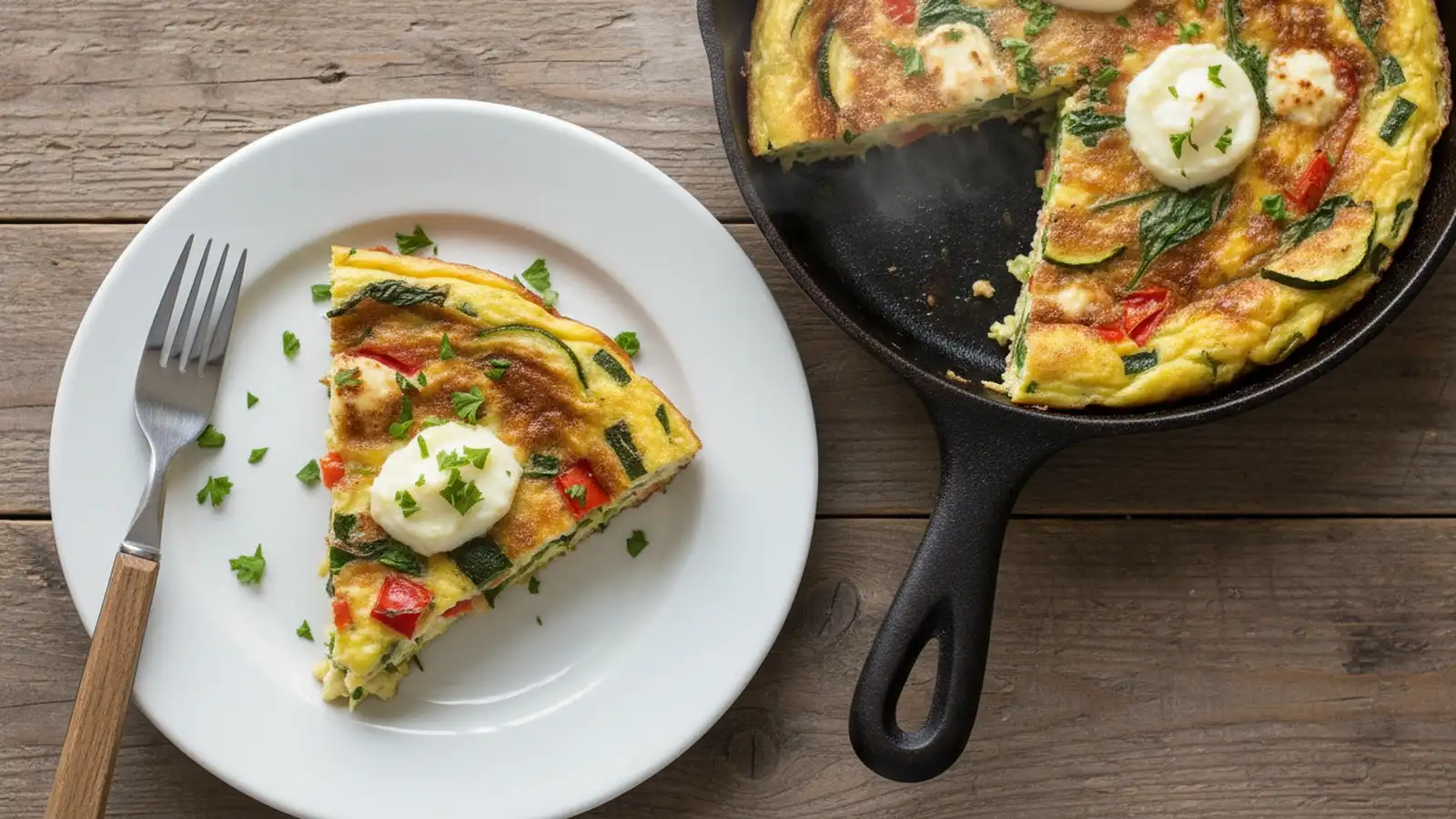
After resting, run a spatula around the edges to loosen, then slide it onto a cutting board or slice it directly in the pan. The frittata should release easily from the skillet. Serve warm, perhaps garnished with fresh herbs, for a delightful and healthy frittata option.
How This Recipe Compares Nutritionally
Understanding the nutritional profile of your meals is key to healthy eating. This table highlights how our homemade veggie frittata stands up against typical store-bought or less optimized versions.
| Nutrient | This Recipe (per serving) | Other Recipes | Difference |
|---|---|---|---|
| Calories | 261 kcal | 350-450 kcal | ~100-200 kcal less |
| Protein | 17g | 10-15g | ~2-7g more |
| Total Carbs | 7.3g | 15-25g | ~8-18g less |
| Total Fat | 18g | 20-30g | ~2-12g less |
| Dietary Fiber | 1.3g | 1-2g | Similar |
| Sodium | 376mg | 500-800mg | ~120-420mg less |
Our recipe offers a significantly lower calorie and carbohydrate count while providing a robust amount of protein, making it a superior choice for those focusing on macro-friendly meals. The reduced sodium also contributes to a healthier overall profile compared to many commercially prepared options.
What Breakthrough Finally Perfected This Recipe?
The key breakthrough was understanding the synergy between pre-sautéing vegetables to remove excess moisture and using a specific oven temperature of 375°F to achieve a tender, never-rubbery texture. This combination ensures a flavorful, structurally sound frittata every time.
Initially, I struggled with watery frittatas and rubbery textures. My early attempts often resulted in a soggy bottom or an overcooked, dense egg mass. The problem stemmed from two main issues: not adequately preparing the vegetables and baking at too high a temperature. I discovered that simply adding raw vegetables, especially moisture-rich ones like spinach or bell peppers, released too much water during baking, making the frittata soupy.
Baking at 400°F (200°C) consistently led to dry, browned edges before the center was fully cooked. The fix involved:
- Pre-sautéing vegetables: This step, particularly for onions and bell peppers, allows their natural sugars to caramelize and excess water to evaporate, intensifying their flavor and preventing a watery frittata.
- Lower oven temperature: Reducing the oven to 375°F (190°C) allows the frittata to cook more gently and evenly, setting the eggs without turning them rubbery.
- Brief stovetop start: A quick 1-2 minute cook on the stovetop helps set the bottom crust, providing structural integrity.
This approach ensures a perfectly cooked frittata that holds its shape and delivers rich, concentrated vegetable flavors.
Which Allergy-Friendly Modifications Actually Work Here?
For dairy-free needs, unsweetened almond milk or oat milk works well as a substitute for dairy milk, and nutritional yeast can replace cheese for a savory flavor. For gluten-free, this recipe is naturally gluten-free. However, coconut milk (canned) does not work as a dairy substitute due to its strong flavor and thicker consistency.
I’ve experimented with several substitutions to make this recipe accessible for various dietary needs. For a dairy-free option, unsweetened almond milk or oat milk can directly replace the whole milk or half-and-half in a 1:1 ratio, yielding a similar texture without dairy. To replace the cheese, I’ve found that 2-3 tablespoons of nutritional yeast sprinkled into the egg mixture provides a cheesy, umami flavor. This recipe is inherently gluten-free, making it a fantastic option for those avoiding gluten.
However, using canned coconut milk as a dairy substitute proved problematic; its distinct flavor overpowered the delicate vegetable notes, and its higher fat content changed the frittata’s texture, making it denser than desired. Stick to thinner, neutral-flavored plant milks for the best results.
How Do You Freeze This Recipe Without Losing Quality?
Homemade veggie frittatas hold their quality for up to 4 days in the refrigerator and freeze exceptionally well for up to 2 months when properly stored. Freezing individual portions is the best method to maintain texture and flavor.
This recipe is incredibly meal prep friendly and freezes beautifully. Once the frittata cools completely, slice it into individual portions. Wrap each slice tightly in plastic wrap, then place the wrapped slices into an airtight freezer-safe container or a heavy-duty freezer bag. This double-layer protection prevents freezer burn.
For best quality, consume within 2 months. To reheat from frozen, place a slice on a microwave-safe plate and microwave on high for 1-2 minutes, or until heated through. Alternatively, reheat in a preheated oven at 350°F (175°C) for 10-15 minutes, covering with foil if the top starts to brown too much. Reheating in the oven helps maintain a slightly crisp exterior, similar to fresh.
What Are the Best Ways to Serve This Recipe?
These veggie frittatas are versatile and pair wonderfully with a simple green salad, a side of roasted potatoes, or fresh fruit for a complete meal. The fresh acidity of a salad or fruit balances the richness of the eggs and cheese.
I often serve this vegetarian breakfast frittata as part of a larger brunch spread or as a quick weeknight dinner. For a light and refreshing meal, pair it with a mixed green salad dressed with a bright vinaigrette; the crispness and acidity cut through the richness of the frittata. For a heartier option, roasted sweet potatoes or a slice of whole-grain toast complement the flavors and add complex carbohydrates. A bowl of fresh berries or sliced avocado also makes an excellent accompaniment, adding healthy fats and natural sweetness. The frittata’s savory profile makes it suitable for breakfast, lunch, or dinner, offering a balanced and satisfying meal that is both protein-packed and delicious.
Trusted Sources
This recipe follows guidelines from these authoritative sources:
Frequently Asked Questions
Are veggie frittatas a healthy meal option?
Veggie frittatas are a healthy meal option, especially this recipe, which provides 17g protein and only 6.0g net carbs per serving.
What are the best vegetables to use in a frittata?
The best vegetables for a frittata are those that cook relatively quickly and release moisture, such as onions, bell peppers, spinach, mushrooms, and zucchini. For a delicious frittata, select vegetables that soften well and don’t release excessive water when cooked. My top choices include onions, bell peppers, and spinach, as they provide a great flavor base and texture. Other excellent options are sliced mushrooms, asparagus, cherry tomatoes (halved), or broccoli florets. Always pre-sauté harder vegetables until tender and wilt leafy greens to prevent a watery frittata. This ensures a cohesive and flavorful loaded vegetable egg bake.
How do you make mini veggie frittatas?
To make mini frittatas, pour the prepared egg and vegetable mixture into a greased muffin tin and bake for 15-20 minutes.
Can you freeze homemade veggie frittatas for meal prep?
Yes, you can freeze homemade veggie frittatas for up to 2 months, making them an excellent option for make-ahead frittata meal prep.
What is the difference between a frittata and an omelet or quiche?
A frittata is an open-faced, baked egg dish, while an omelet is folded and cooked quickly on the stovetop, and a quiche is a baked egg custard with a pastry crust.
