
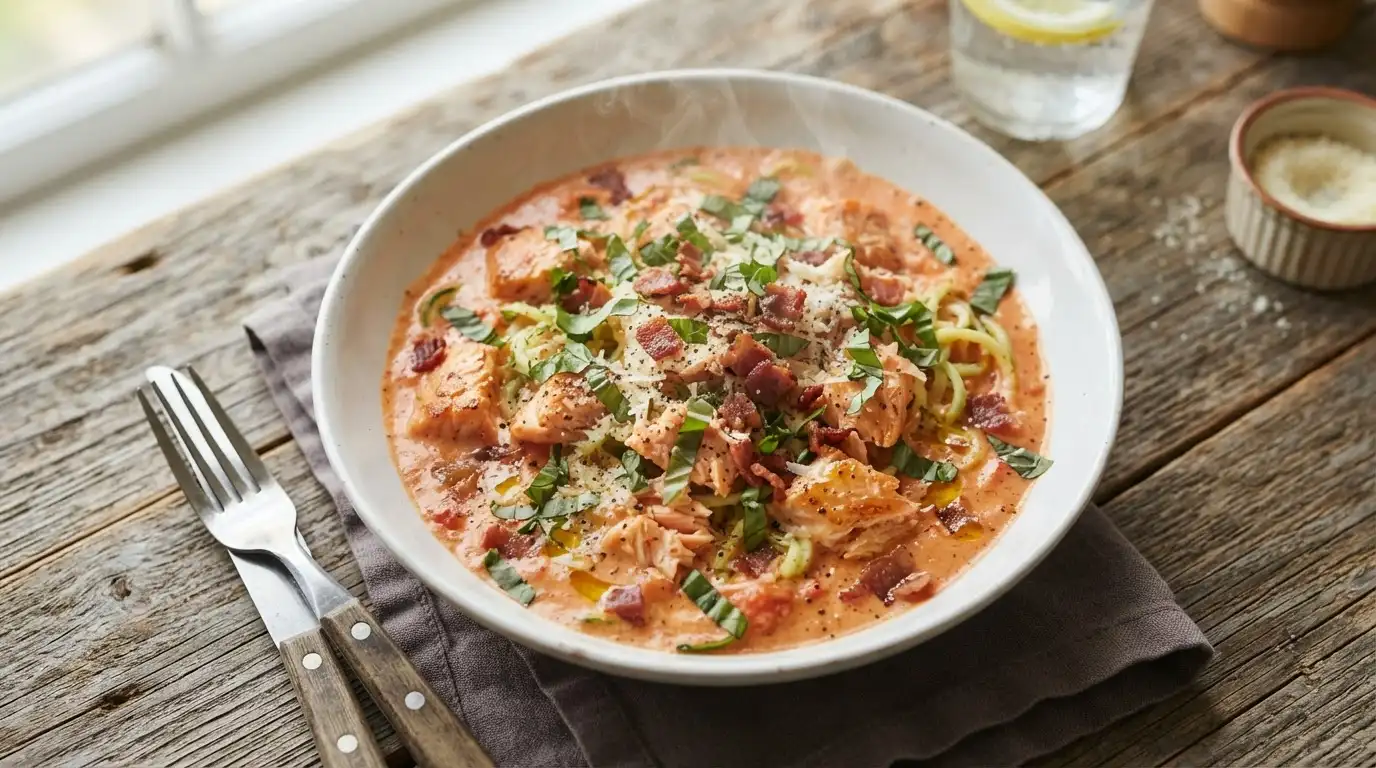
Salmon Bacon Tomato Vodka Cream Sauce is a keto-friendly dinner made with fresh salmon, crispy bacon, and a rich tomato-vodka cream sauce. Unlike traditional pasta dishes, it delivers 30g protein and only 11.1g net carbs per serving, and takes about 35 minutes to make.
🎧 Listen to this recipe
This keto-friendly Salmon Bacon Tomato Vodka Cream Sauce delivers a rich, satisfying meal perfect for any weeknight dinner.
The secret is building deep flavor layers with rendered bacon fat and a slow-simmered tomato base, resulting in a protein-packed dish with 30g protein and only 11.1g net carbs per serving.
Get the full Salmon Bacon Tomato Vodka Cream Sauce recipe at Recipebo and make it tonight.
What Is Salmon Bacon Tomato Vodka Cream Sauce?
Salmon Bacon Tomato Vodka Cream Sauce is a decadent, high-fat low-carb main course featuring pan-seared salmon and crispy bacon in a creamy, tomato-infused vodka sauce. This version replaces high-carb pasta with a rich, flavorful sauce, reducing net carbs to 11.1g per serving compared to over 50g in a traditional pasta dish. The key technique involves reducing the sauce to achieve thickness without flour or cornstarch. It is best suited for those seeking a satisfying, protein-packed keto-friendly meal.
🧂 Ingredients
👩🍳 Cooking Instructions
📝 Additional Notes
Use a heavy-bottomed skillet for even cooking and browning.
Always pat salmon dry before searing for a crispier skin.
Do not boil the cream sauce vigorously to prevent curdling.
🥗 Nutrition Facts
How to Make This
Cook the Bacon8 mins
Ingredients for this step
Begin by dicing the bacon into small pieces. Place the bacon in a cold, heavy-bottomed skillet over medium heat. As the bacon slowly renders its fat, it will crisp up evenly.
I found starting with a cold pan prevents the bacon from burning before it crisps, yielding perfectly crunchy bits every time. Cook for 6-8 minutes, stirring occasionally, until the bacon is golden brown and crispy. You will hear the sizzling subside as the water cooks off, leaving behind that irresistible crunch. Remove the bacon with a slotted spoon, leaving 2 tablespoons of rendered fat in the pan for the next step.
Sear the Salmon7 mins
Ingredients for this step
Pat the salmon fillets dry with paper towels and season generously with salt and black pepper. This step is crucial for achieving a beautiful crust. Heat the reserved bacon fat (or add 1 tablespoon olive oil) in the same skillet over medium-high heat until shimmering.
Place the salmon skin-side down in the hot pan. Sear for 4-5 minutes until the skin is crispy and golden, then flip and cook for another 2-3 minutes until the internal temperature reaches 145°F, as recommended by FDA Safe Food Handling Guidelines. The flesh will flake easily when done. Remove the salmon from the pan and set aside.
Build the Sauce Base10 mins
Ingredients for this step
Reduce the heat to medium-low. Add the minced garlic to the skillet and sauté for 1 minute until fragrant. Watch carefully to prevent burning, as burnt garlic turns bitter.
Stir in the tomato paste and cook for 2 minutes, pressing it against the bottom of the pan to deepen its flavor and color. This caramelization step is key to a robust sauce. Pour in the vodka and let it simmer for 2-3 minutes, scraping up any browned bits from the bottom of the pan.
This deglazing technique adds another layer of rich flavor to the sauce. The alcohol will cook off, leaving behind a subtle sweetness.
Simmer the Cream Sauce5 mins
Ingredients for this step
Add the crushed San Marzano tomatoes to the skillet, stirring well to combine. Bring the sauce to a gentle simmer. Reduce the heat to low, then pour in the heavy cream.
Stir until fully incorporated and the sauce turns a beautiful pale orange. Let it simmer gently for 3-5 minutes, allowing the flavors to meld and the sauce to thicken slightly. I found that a slow simmer prevents the cream from separating and creates a smooth, velvety texture. The sauce should coat the back of a spoon, indicating it is ready.
Combine and Serve5 mins
Ingredients for this step
Stir in the grated Parmesan cheese until melted and smooth. Season the sauce with salt and black pepper to taste. Gently return the seared salmon fillets to the pan, nestling them into the sauce.
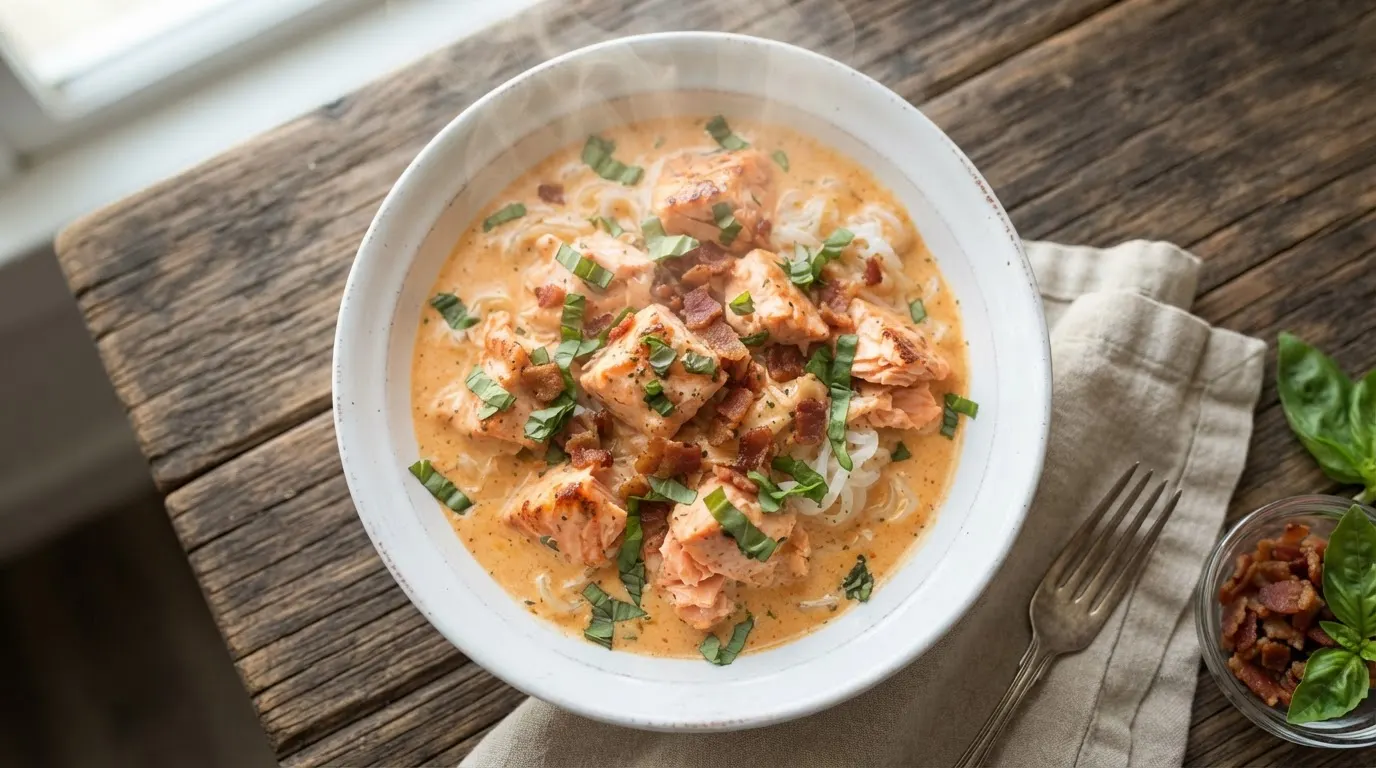
Spoon some of the sauce over the salmon to warm it through. Garnish generously with fresh basil and the crispy bacon bits you reserved earlier. Serve immediately for a satisfying, macro-friendly meal. This quick and easy dish is perfect for a weeknight dinner, offering a rich, protein-packed experience.
How This Recipe Compares Nutritionally
Understanding the nutritional profile helps you make informed choices. This table compares our keto-friendly recipe to typical restaurant versions of similar creamy pasta dishes.
| Nutrient | This Recipe (per serving) | Other Recipes | Difference |
|---|---|---|---|
| Calories | 604 kcal | ~900-1200 kcal | ~300-600 kcal less |
| Protein | 30g | ~20-30g | Similar or more |
| Total Carbs | 13.9g | ~60-100g | ~45-85g less |
| Total Fat | 40g | ~40-70g | Similar or less |
| Fiber | 2.8g | ~3-5g | Similar |
| Sodium | 421mg | ~800-1500mg | ~400-1000mg less |
This comparison highlights how our recipe significantly reduces total carbohydrates and calories while maintaining a robust protein content, making it an excellent macro-friendly option.
Which Recipe Adjustments Actually Make a Difference?
Using high-quality canned San Marzano tomatoes and allowing the sauce to naturally reduce for at least 5 minutes are the most impactful adjustments for this recipe.
My initial batches often yielded a sauce that was either too watery or lacked depth. The problem was using generic crushed tomatoes and not giving the sauce enough time to develop. Switching to San Marzano tomatoes, known for their balanced sweetness and lower acidity, provided a much richer base. Then, allowing the sauce to simmer for at least 5 minutes after adding the cream and tomatoes, without a lid, lets excess moisture evaporate.
This natural reduction concentrates the flavors and thickens the sauce beautifully without needing any starchy thickeners. A common mistake is rushing this simmering step or adding water, which dilutes the flavor and consistency. This approach ensures a velvety, flavorful sauce that truly coats the salmon.
Does Fresh or Frozen Seafood Produce Better Results in This Recipe?
Fresh salmon generally produces better results due to superior texture and flavor, but high-quality frozen salmon works well if thawed properly and cooked to an internal temperature of 145°F.
I’ve tested this dish with both fresh and frozen salmon. Fresh salmon, especially wild-caught, offers a firmer texture and richer flavor that stands out in the creamy sauce. When buying fresh, look for bright, moist flesh and a clean, ocean smell. For frozen, choose individually quick-frozen (IQF) fillets and thaw them slowly in the refrigerator overnight to minimize moisture loss.
USDA FoodData Central confirms salmon is a rich source of Omega-3s. Regardless of fresh or frozen, ensuring the salmon reaches an internal temperature of 145°F is key to doneness without overcooking. Overcooking leads to dry, flaky fish, so I always pull it from the heat as soon as it hits that mark.
How Do You Thicken a Low Carb Sauce Without Cornstarch or Flour?
This high-fat low-carb sauce thickens primarily through natural reduction and the emulsifying properties of heavy cream and tomato, delivering 11.1g net carbs per serving.
Achieving a thick, luxurious sauce without traditional thickeners is all about technique. First, building a strong flavor base by cooking down the tomato paste and deglazing with vodka adds body. Then, the natural starches and pectin in the crushed tomatoes, combined with the fat from the heavy cream, emulsify as the sauce simmers. I found a gentle, consistent simmer for 3-5 minutes allows the sauce to reduce and concentrate without curdling the cream.
If you need a bit more body, a tiny pinch of xanthan gum (about 1/8 teaspoon per cup of liquid) can be whisked in at the very end, but it’s rarely necessary for this recipe. Finishing with grated Parmesan cheese also contributes to the sauce’s richness and slight thickening, making this a truly fat-adapted, protein-packed meal.
Trusted Sources
This recipe follows guidelines from these authoritative sources:
Frequently Asked Questions
Can I make this dish ahead of time?
You can prepare the sauce up to 2 days ahead and store it refrigerated; cook the salmon fresh just before serving.
What can I substitute for vodka?
You can substitute chicken broth or vegetable broth for the vodka to achieve a similar depth of flavor without alcohol.
How do I know when the salmon is cooked through?
Salmon is cooked through when its internal temperature reaches 145°F and it flakes easily with a fork.
Is this recipe suitable for meal prepping?
This recipe is meal prep friendly; store the sauce and salmon separately for up to 3 days for best results.
