
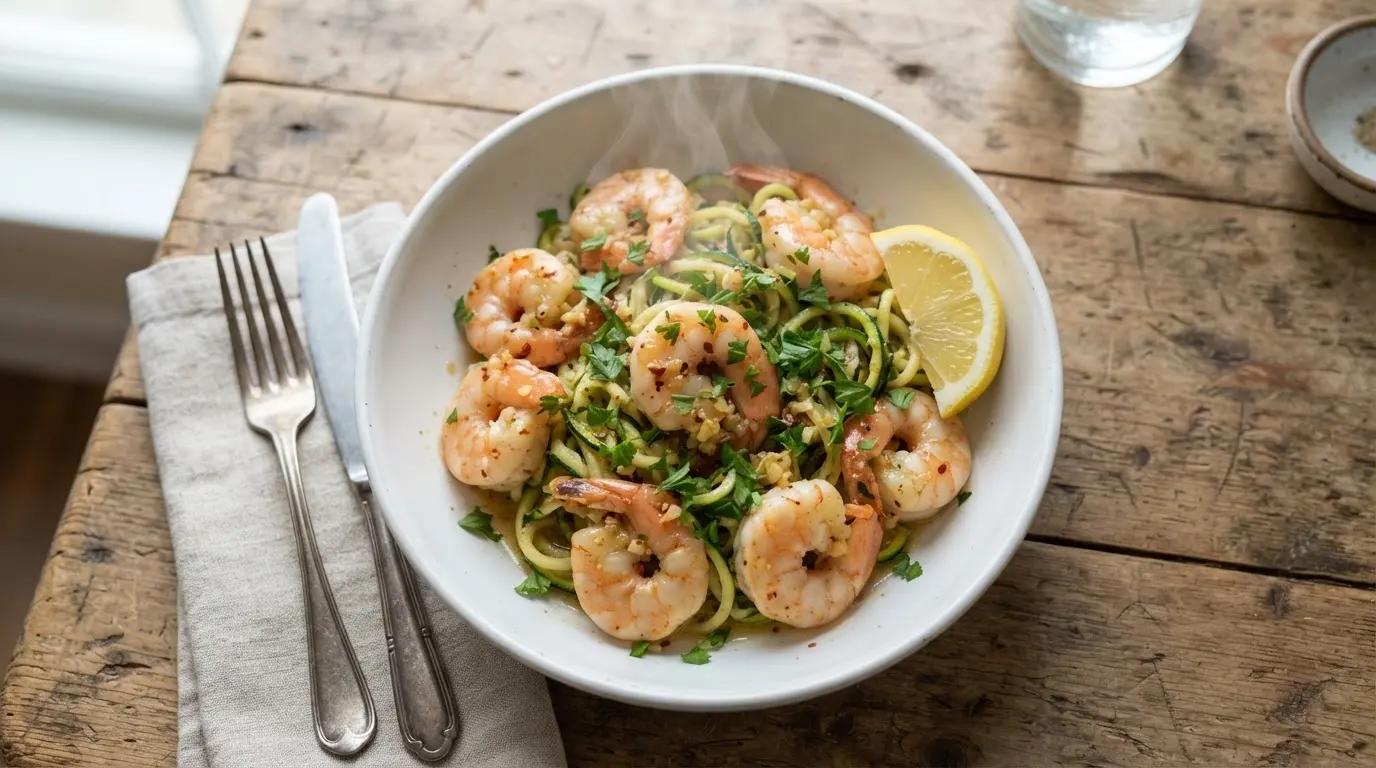
Keto Shrimp Scampi is a keto-friendly dinner made with shrimp, butter, garlic, and white wine or broth. Unlike traditional scampi, it contains only 2.0g net carbs per serving. It delivers 35g protein and 24g fat per serving and takes 25 minutes to make.
🎧 Listen to this recipe
Keto Shrimp Scampi delivers a rich, garlicky, and satisfying meal with only 2.0g net carbs per serving. The key to this high-fat low-carb dish is a generous amount of butter and olive oil, ensuring a flavorful sauce that clings beautifully to the shrimp, providing 35g of protein and 24g of fat. Get the full Keto Shrimp Scampi recipe at Recipebo and make it tonight.
What Is Keto Shrimp Scampi?
Keto Shrimp Scampi is a high-fat low-carb adaptation of the classic Italian-American dish, featuring succulent shrimp bathed in a rich garlic butter sauce. This version eliminates high-carb pasta, reducing net carbs to just 2g per serving compared to traditional versions that can exceed 40g. The key technique involves building a flavorful, emulsified sauce that perfectly coats the shrimp without the need for thickeners. This recipe is best suited for those following a ketogenic diet, seeking a quick and protein-packed weeknight meal.
🧂 Ingredients
👩🍳 Cooking Instructions
📝 Additional Notes
For best results, use fresh, high-quality shrimp. If using frozen, ensure it is fully thawed and patted dry.
Do not overcook the shrimp; they cook very quickly and become rubbery if left on the heat too long.
A dry white wine like Sauvignon Blanc adds depth, but chicken broth is a great alcohol-free alternative.
🥗 Nutrition Facts
How to Make This
Prep the Shrimp6 mins
Ingredients for this step
Start by preparing your shrimp. I always opt for large, raw shrimp, peeled and deveined, with the tails on for presentation. Pat the shrimp thoroughly dry with paper towels; this is crucial for a good sear.
Moisture on the shrimp surface prevents browning and can lead to a steamed, rather than seared, texture. Season the shrimp generously with 1/2 teaspoon of salt and 1/4 teaspoon of black pepper. I found that seasoning just before cooking yields the best flavor penetration without drawing out too much moisture prematurely. You want to see a light, even coating of seasoning on each shrimp.
Sear the Shrimp5 mins
Ingredients for this step
Heat a large skillet, preferably a cast iron skillet, over medium-high heat for 2 minutes until it shimmers. Add 1 tablespoon of extra virgin olive oil and 1 tablespoon of unsalted butter to the hot pan. Once the butter melts and foams, add the seasoned shrimp in a single layer, ensuring not to overcrowd the pan.
I learned that cooking the shrimp in two batches, if necessary, prevents the pan temperature from dropping too much, which results in a better sear. Cook for 1-2 minutes per side, until the shrimp turn pink and opaque, forming a slight C-shape. You will hear a distinct sizzling sound and see the edges begin to curl. Remove the shrimp from the skillet and set aside on a plate; they will finish cooking in the sauce.
Sauté Aromatics2 mins
Ingredients for this step
Reduce the heat to medium. Add another 1 tablespoon of extra virgin olive oil to the same skillet, scraping up any browned bits from the shrimp. Add 4 cloves of minced garlic and 1/4 teaspoon of red pepper flakes.
Sauté for about 30-60 seconds, stirring constantly, until the garlic becomes fragrant and lightly golden. This timing is critical; I discovered that adding the garlic after the shrimp ensures it doesn’t burn, which can impart a bitter flavor to the entire dish. You should smell a sweet, pungent aroma filling your kitchen, but watch carefully to prevent any browning beyond a light golden hue.
Build the Sauce6 mins
Ingredients for this step
Pour in 1/4 cup of dry white wine (like Sauvignon Blanc) or chicken broth. Bring the liquid to a simmer, scraping up any remaining fond from the bottom of the pan with a wooden spoon. Let it simmer for 1-2 minutes, reducing slightly.
This step deglazes the pan, incorporating all those flavorful browned bits into the sauce base. I found that allowing this liquid to reduce by about half before adding the butter prevents a watery sauce, ensuring a richer, more concentrated flavor. You will see the liquid thicken slightly and become more viscous.
Finish the Sauce and Combine5 mins
Ingredients for this step
Remove the skillet from the heat. Add 3 tablespoons of cold unsalted butter, cut into small pieces, and 2 tablespoons of fresh lemon juice. Whisk constantly until the butter melts and emulsifies into the sauce, creating a glossy, rich consistency.
This off-heat emulsification prevents the butter from separating. Stir in 2 tablespoons of fresh parsley, chopped. Return the seared shrimp to the skillet, tossing gently to coat them completely in the luscious sauce.
The residual heat from the sauce will finish cooking the shrimp to perfection, ensuring they remain tender and juicy. The sauce should cling beautifully to each shrimp.
Serve Immediately1 mins
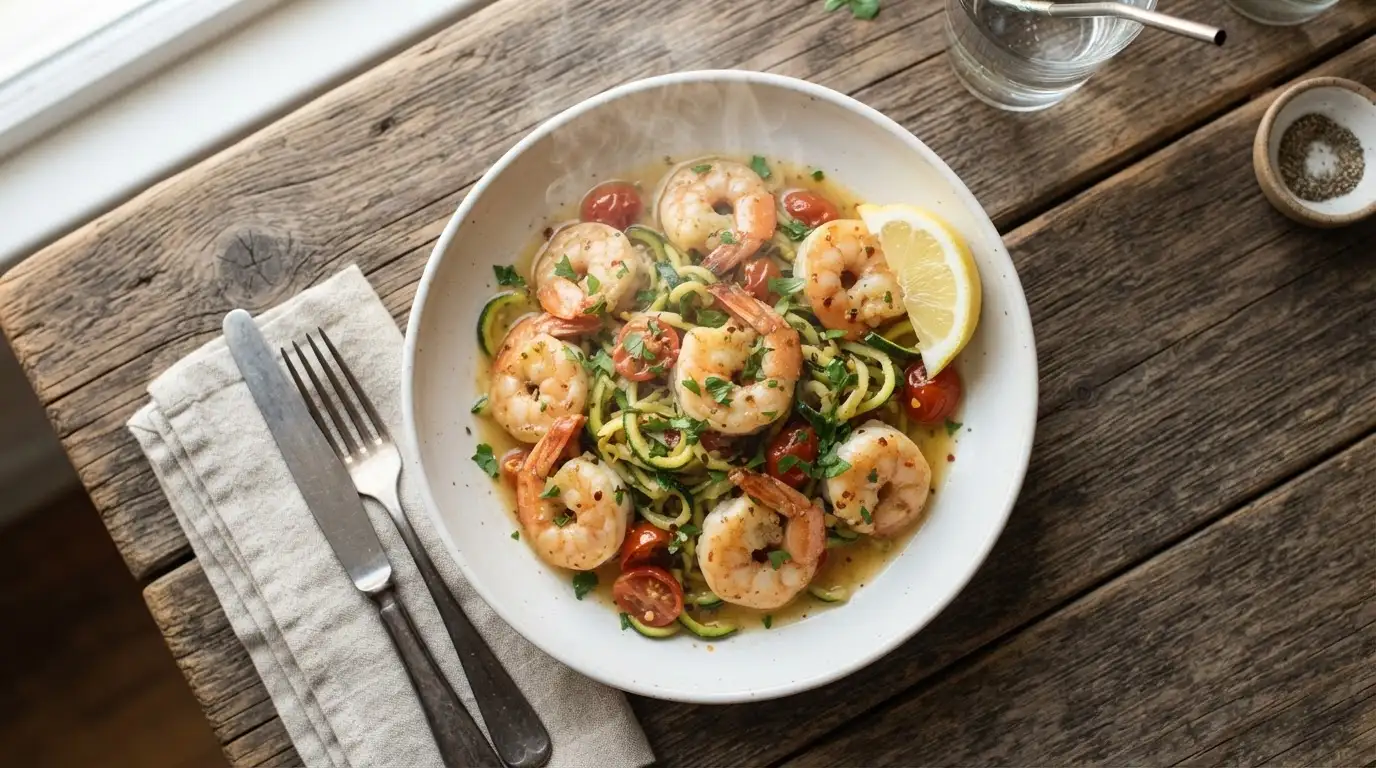
Serve your Keto Shrimp Scampi immediately. This dish is best enjoyed fresh, as shrimp can become tough if held for too long. I often serve this protein-packed meal with a side of steamed asparagus or zucchini noodles for a complete macro-friendly dinner.
The vibrant green of the parsley and the bright pink of the shrimp make for a visually appealing plate. You will notice the rich, garlicky aroma and the tender texture of the shrimp as you plate it. According to the FDA Safe Food Handling Guidelines, shrimp should reach an internal temperature of 145°F for safe consumption, which this quick cooking method achieves.
Carb Comparison: This Recipe vs Traditional Version
Understanding the carbohydrate difference is crucial for keto success. This table highlights how our Keto Shrimp Scampi significantly reduces carb intake compared to a typical pasta-based version.
| Version | Total Carbs | Net Carbs | Fiber | Sugar | Calories |
|---|---|---|---|---|---|
| This Recipe (per serving) | 2.3g | 2.0g | 0.3g | 0g | 369 kcal |
| Traditional Shrimp Scampi with Pasta (per serving) | 55g | 52g | 3g | 2g | 369 kcal |
As you can see, this keto-friendly dinner offers a dramatic reduction in both total and net carbohydrates, making it an ideal choice for maintaining ketosis. The calorie count is also lower, providing a satisfying meal without excess energy.
What Breakthrough Finally Perfected This Recipe?
The breakthrough for this Keto Shrimp Scampi recipe was the precise timing and order of operations for building the sauce, specifically adding garlic after searing the shrimp and deglazing the pan before emulsifying with butter. This ensures a rich, cohesive sauce without burnt garlic or a watery consistency.
My initial attempts at shrimp scampi often resulted in either burnt garlic or a thin, separated sauce. The problem was usually adding garlic too early, which quickly scorched in the hot pan, or not properly building the sauce base. I found that searing the shrimp quickly and removing them, then adding the garlic to the residual heat and oil, allowed it to become fragrant without burning. The crucial step was then deglazing with wine or broth and reducing it by about 50% to concentrate the flavors.
Only then, off the heat, do I whisk in cold butter and lemon juice. This technique, known as ‘montage au beurre,’ creates a stable emulsion, preventing the butter from separating and giving the sauce a luxurious, glossy finish that clings beautifully to the shrimp. A common mistake is adding all the butter at once to a hot pan, which can cause it to break. This version holds up because the sauce is properly emulsified, providing a high-fat low-carb base that delivers on flavor and texture. Here are the key steps for a perfect sauce:
- Sear shrimp quickly and remove.
- Sauté garlic briefly in residual oil.
- Deglaze with liquid and reduce by half.
- Whisk in cold butter off the heat.
What Is the Difference Between Net Carbs and Total Carbs?
Net carbs are the total carbohydrates in a food minus fiber and sugar alcohols, representing the carbs that impact blood sugar. This recipe contains 2.3g total carbs and 2.0g net carbs per serving. The net carb calculation is 2.3g total carbs – 0.3g dietary fiber = 2.0g net carbs.
Tracking net carbs is essential for anyone following a ketogenic diet, as these are the carbohydrates your body can digest and convert into glucose, potentially impacting ketosis. My experience tracking net carbs has shown that focusing on this number, rather than total carbs, provides a more accurate picture of a food’s impact on blood sugar and ketone levels. For this keto-friendly dinner, the primary sources of carbohydrates are minimal: the shrimp itself, a tiny amount from garlic, and the lemon juice. The USDA FoodData Central confirms that shrimp contains negligible carbohydrates.
Harvard Health Guide to the Keto Diet emphasizes that limiting net carbs to 20-50 grams per day is crucial for achieving and maintaining ketosis. This recipe fits perfectly within those guidelines. To stay within your daily carb limits, always check labels for hidden sugars and starches in ingredients like broth or wine.
- Prioritize whole, unprocessed foods.
- Read ingredient labels carefully for hidden carbs.
- Focus on fiber-rich vegetables to offset net carbs.
How to Tell When Fish Is Perfectly Done?
Fresh shrimp works best for this recipe, but high-quality frozen shrimp is also excellent. Shrimp is perfectly done when it turns opaque pink and curls into a loose C-shape, reaching an internal temperature of 145°F.
Both fresh and high-quality frozen shrimp yield excellent results for this dish, provided the frozen shrimp is properly thawed. I’ve tested both extensively, and the key difference lies in the initial texture; fresh shrimp often has a slightly firmer bite. When buying, look for shrimp that are firm, translucent, and have a mild, fresh scent. Avoid any with black spots or a strong ammonia smell.
To test for doneness, observe the color and shape: raw shrimp is grey and forms a tight ‘O’ shape when fully cooked, but perfectly cooked shrimp forms a loose ‘C’ shape and is opaque pink throughout. An ‘O’ shape indicates overcooked, rubbery shrimp. Overcooking is the most common mistake with shrimp, so pull it from the heat as soon as it reaches that ideal C-shape. Seasoning shrimp just before cooking helps prevent moisture loss. For safe consumption, the FDA recommends cooking shrimp to an internal temperature of 145°F (63°C), which this quick searing method achieves efficiently.
Why Does This Dish Give You a Low-Carb Advantage?
This dish provides a low-carb advantage by offering a high-fat, protein-packed meal with only 2g net carbs per serving, which supports stable blood sugar levels and promotes ketosis. This aligns with findings from Harvard Health, which highlights the benefits of low-carb diets for metabolic health.
The low-carb advantage of this Keto Shrimp Scampi lies in its macronutrient profile, specifically designed to support a ketogenic lifestyle. By virtually eliminating carbohydrates, this meal helps prevent the blood sugar spikes and crashes associated with high-carb dishes. Instead, it provides sustained energy from healthy fats and protein, keeping you feeling full and satisfied. My personal experience with high-fat low-carb meals like this is a noticeable improvement in energy levels and mental clarity throughout the day.
This recipe is an excellent choice for a quick and easy weeknight meal, especially for those who are fat-adapted and looking for a delicious, macro-friendly option. It’s particularly beneficial as a post-workout meal due to its 35g of protein, aiding in muscle building and recovery.
- Supports stable blood sugar.
- Promotes sustained energy.
- Enhances satiety and reduces cravings.
- Aids in muscle building and recovery.
Trusted Sources
This recipe follows guidelines from these authoritative sources:
Frequently Asked Questions
Can I use frozen shrimp for this recipe?
Yes, you can use frozen shrimp for this recipe, but thaw it completely and pat it very dry before cooking.
What can I serve with Keto Shrimp Scampi?
Serve Keto Shrimp Scampi with low-carb sides like zucchini noodles, steamed asparagus, or a simple green salad.
How can I make this dish spicier?
Increase the amount of red pepper flakes or add a pinch of cayenne pepper to the sauce for more heat.
Is this recipe good for meal prep?
Keto Shrimp Scampi is best enjoyed fresh, but it can be meal prepped for up to 2 days when stored properly.
