
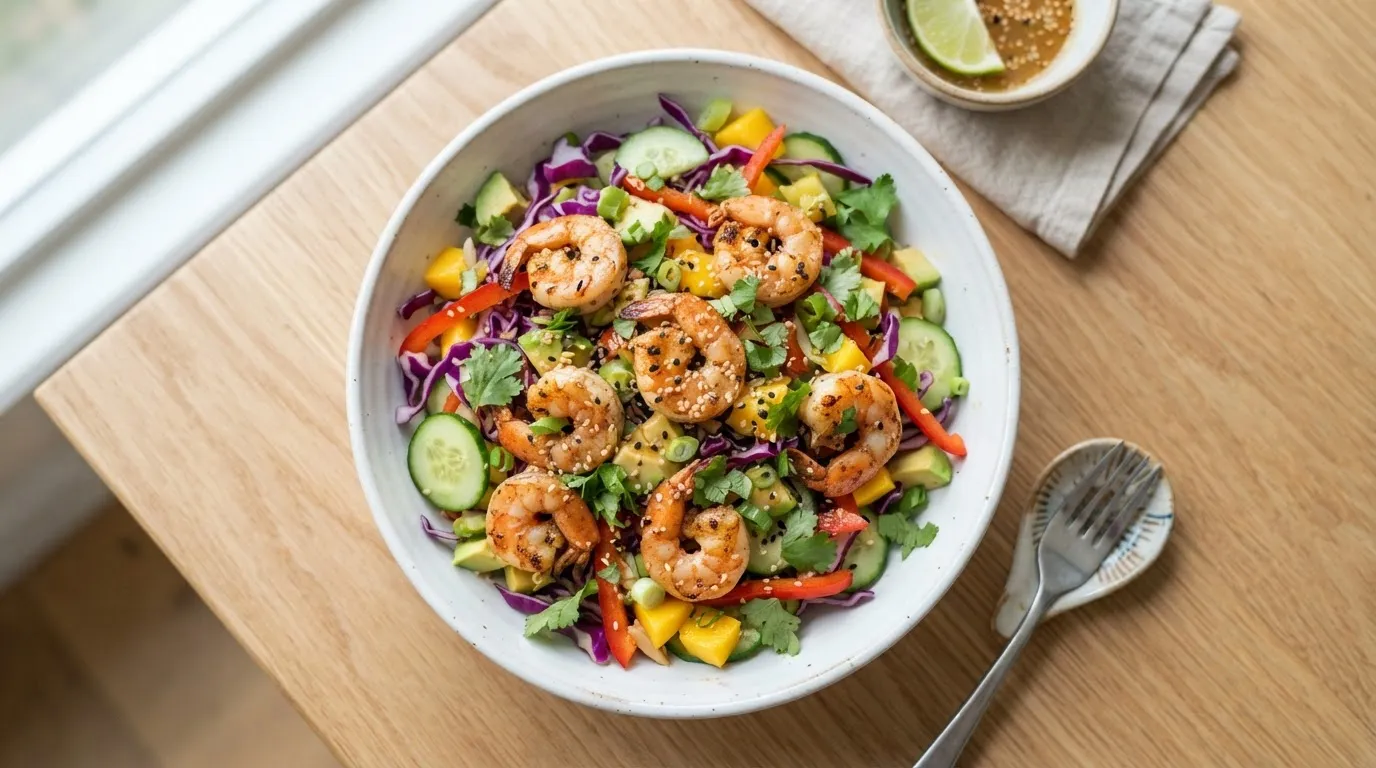
Ginger Sesame Shrimp Salad is a keto-friendly weeknight meal made with succulent shrimp, crisp vegetables, and a zesty ginger-sesame dressing. Unlike traditional salads that can be high in hidden sugars, it delivers just 7.6g net carbs per serving. It provides 37g protein and takes about 35 minutes to make.
🎧 Listen to this recipe
This keto ginger sesame shrimp salad delivers vibrant flavors and a satisfying crunch, perfect for a light yet filling meal. The key is quickly searing the shrimp to prevent rubberiness and balancing the dressing’s acidity, resulting in a 37g protein dish with just 7.6g net carbs per serving. Get the full Ginger Sesame Shrimp Salad recipe at Recipebo and make it tonight.
What Is Keto Ginger Sesame Shrimp Salad?
This keto ginger sesame shrimp salad is a vibrant, high-protein dish featuring perfectly cooked shrimp, crunchy vegetables, and a savory, sugar-free dressing. It significantly reduces the carbohydrate count compared to traditional Asian-inspired salads, which often contain 15-25g net carbs from sugary dressings. The key technique involves a quick sear for the shrimp and a balanced dressing using erythritol instead of sugar. This dish is ideal for keto dieters, those seeking a macro-friendly meal, or anyone wanting a quick and easy weeknight dinner.
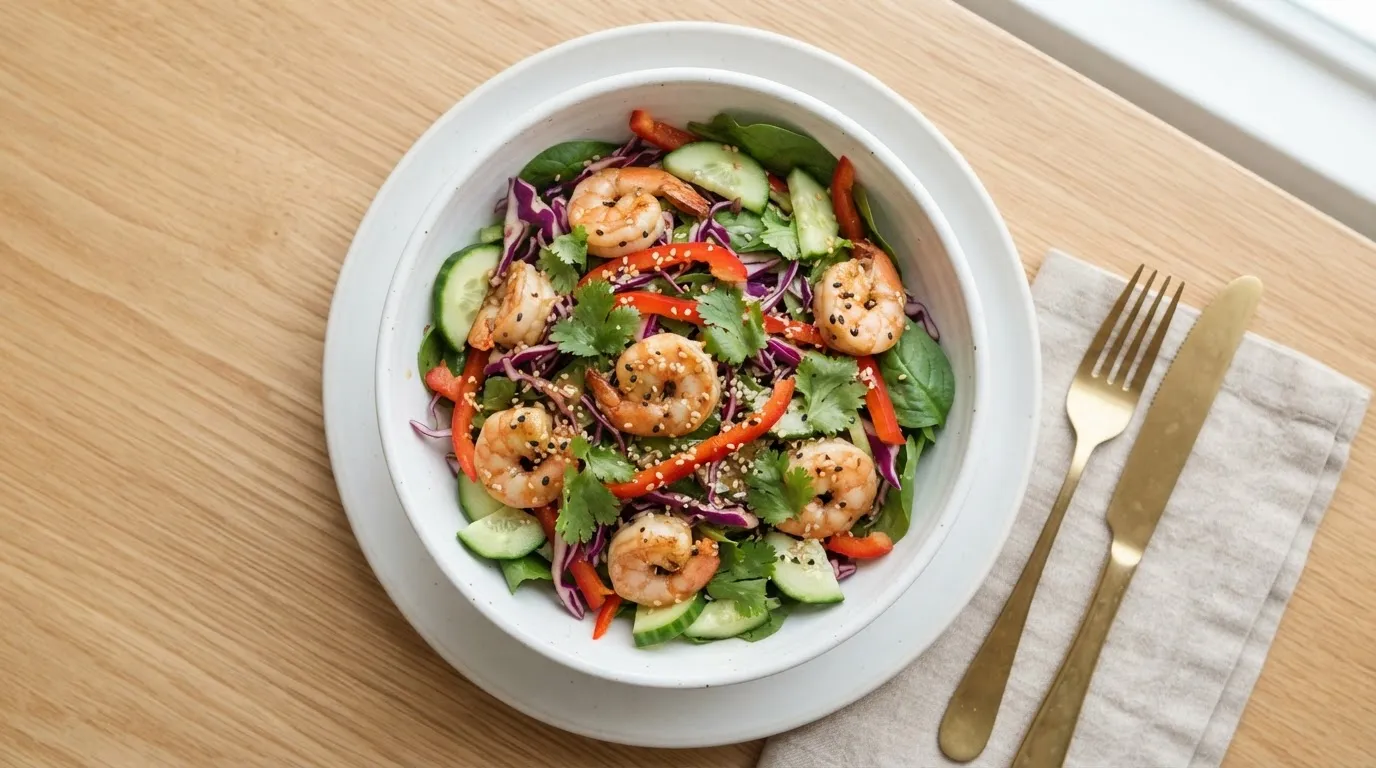
🧂 Ingredients
👩🍳 Cooking Instructions
📝 Additional Notes
For crispier vegetables, chill them in ice water for 10 minutes before assembling the salad.
If meal prepping, store the dressing and salad components separately to prevent sogginess.
Adjust the amount of Sriracha to your preferred spice level, or omit for a milder flavor.
🥗 Nutrition Facts
How to Make This
Prep the Vegetables13 mins
Ingredients for this step
Start by preparing all your vegetables. I find that having everything chopped and ready before you begin cooking makes the entire process smoother and prevents any last-minute scrambling. Finely chop the red bell pepper, slice the cucumber into thin half-moons, and shred the red cabbage.
When I first developed this recipe, I tried dicing the cucumber, but found the half-moon slices offered a better textural contrast against the other ingredients. You want to see distinct, colorful pieces that will hold up to the dressing. Hear the satisfying crunch as you slice the cabbage; it’s a good indicator of freshness.
Make the Ginger Sesame Dressing5 mins
Ingredients for this step
In a small bowl, whisk together the avocado oil, rice vinegar, tamari, toasted sesame oil, fresh ginger, garlic, erythritol, and Sriracha. I’ve found that using fresh ginger and garlic is non-negotiable here; the pre-minced versions just don’t deliver the same pungent, bright flavor. When I initially used less ginger, the dressing tasted flat, so I increased it to 1 tablespoon for that essential zing.
The dressing should smell aromatic and slightly spicy, with a noticeable sweetness from the erythritol. Taste and adjust for your preferred balance of sweet, sour, and spicy.
Prepare the Shrimp5 mins
Ingredients for this step
Pat the shrimp thoroughly dry with paper towels. This step is crucial for achieving a good sear and preventing the shrimp from steaming instead of browning. I learned this early on; wet shrimp always resulted in a pale, rubbery texture.
You want the shrimp to feel dry to the touch. Toss the dried shrimp with 1 tablespoon of avocado oil, salt, and black pepper. Ensure each shrimp is lightly coated.
This light seasoning enhances their natural flavor without overpowering the dressing. They should look slightly glossy and evenly seasoned.
Sear the Shrimp5 mins
Heat a large skillet over medium-high heat until it’s very hot; a few drops of water should sizzle and evaporate instantly. Add the seasoned shrimp in a single layer, being careful not to overcrowd the pan. Cook for 2-3 minutes per side, or until the shrimp turn opaque pink and curl into a ‘C’ shape.
Overcrowding the pan lowers the temperature, leading to steaming, which I discovered when my first few batches were grey instead of beautifully seared. According to FDA Safe Food Handling Guidelines, shrimp should reach an internal temperature of 145°F for safe consumption. They should smell sweet and slightly caramelized. Remove them promptly to avoid overcooking.
Assemble the Salad5 mins
Ingredients for this step
In a large bowl, combine the prepared red bell pepper, cucumber, and red cabbage. Add the seared shrimp. Pour about two-thirds of the ginger sesame dressing over the salad ingredients.
Gently toss everything together until the vegetables and shrimp are evenly coated. I found that adding too much dressing at once can make the salad soggy, so I hold some back to add just before serving. The salad should look vibrant and glossy, with the dressing clinging lightly to each component. You want to see the colors of the vegetables pop against the pink shrimp.
Garnish and Serve2 mins
Ingredients for this step
Transfer the ginger sesame shrimp salad to individual serving bowls. Sprinkle generously with toasted sesame seeds and chopped fresh cilantro. The sesame seeds add a nutty crunch, and the cilantro provides a fresh, herbaceous counterpoint to the rich dressing.
I always add a little extra cilantro because I love the bright flavor it brings. If you held back some dressing, drizzle a little more over each serving now. The final dish should look inviting, with a mix of textures and colors, ready to be enjoyed as a keto-friendly dinner or a protein-packed lunch.
How This Recipe Compares Nutritionally
Understanding the nutritional profile of your meals is key for a keto-friendly and macro-friendly lifestyle. This table highlights how our Ginger Sesame Shrimp Salad stacks up against typical restaurant versions.
| Nutrient | This Recipe (per serving) | Other Recipes | Difference |
|---|---|---|---|
| Calories | 242 kcal | 450-600 kcal | ~200-350 kcal less |
| Protein | 37g | 20-30g | ~7-17g more |
| Total Carbs | 9.5g | 25-40g | ~15-30g less |
| Total Fat | 7g | 15-25g | ~8-18g less |
| Fiber | 1.9g | 2-4g | Similar |
| Sodium | 498mg | 800-1200mg | ~300-700mg less |
Our recipe significantly cuts down on calories and carbohydrates, primarily by avoiding sugary dressings and excessive oils. It also offers a higher protein content, making it a more satisfying and protein-packed option for your diet.
How Do You Build a Complete Meal Around This Recipe?
This keto-friendly dinner is already a complete meal with its high protein and fiber, but you can enhance it with additional low-carb vegetables or a light soup.
This ginger sesame shrimp salad is designed to be a standalone, macro-friendly meal, offering 37g of protein and 7.6g net carbs per serving. However, if you desire more volume or variety, I often pair it with a simple side. A clear broth soup, like a miso soup without added sugar, complements the Asian flavors beautifully. Another excellent option is a small serving of steamed green beans or blanched asparagus, which add more fiber and nutrients without significantly increasing the carb count.
For a heartier option, consider serving it alongside a small portion of cauliflower rice, which absorbs the dressing well. This makes it a versatile weeknight meal that can be adjusted to your hunger levels.
Does Fresh or Frozen Seafood Produce Better Results in This Recipe?
For this recipe, high-quality frozen shrimp often yields results comparable to fresh, especially if you live inland, as most ‘fresh’ shrimp has been previously frozen and thawed.
I’ve tested this recipe with both fresh and frozen shrimp, and my findings indicate that good quality frozen shrimp, when properly thawed, performs exceptionally well. Many shrimp labeled ‘fresh’ at the seafood counter have actually been frozen at sea and then thawed for display. When buying frozen, look for individually quick-frozen (IQF) shrimp, as this prevents large ice crystals from forming and damaging the texture. Thaw shrimp slowly in the refrigerator overnight or quickly under cold running water for about 15-20 minutes.
Ensure they are completely dry before cooking; wet shrimp will steam instead of sear, leading to a rubbery texture. The FDA Safe Food Handling Guidelines recommend cooking shrimp to an internal temperature of 145°F, which is easily achieved with a quick sear. Overcooking is the main culprit for tough shrimp, regardless of whether it started fresh or frozen.
Which Low Carb Sides Actually Keep You Full?
This recipe replaces high-carb sides like rice or noodles, saving approximately 30-40g of net carbs per serving while providing satisfying volume and 37g of protein.
Traditional Asian-inspired salads often come with a base of rice noodles or white rice, which can add a significant amount of carbohydrates. By focusing on crisp, non-starchy vegetables and lean protein, this dish provides the same satisfaction without the carb load. A typical serving of white rice can contain 45g of net carbs, while this entire salad has only 7.6g net carbs. The combination of 37g of protein from the shrimp and the fiber from the vegetables contributes to a feeling of fullness, making it an excellent fat-adapted choice.
According to USDA FoodData Central, shrimp is a lean protein source, and the high protein content in this dish helps exceed the 30g threshold often associated with increased satiety. The crunchy texture of the cabbage and cucumber also adds to the perceived volume, tricking your brain into feeling more satisfied.
What Breakthrough Finally Perfected This Recipe?
The breakthrough for this recipe was precisely balancing the dressing’s sweet, sour, and umami components while perfecting the shrimp searing technique to prevent rubberiness.
Early versions of this salad often suffered from either a bland dressing or overcooked, rubbery shrimp. The initial problem with the dressing was a lack of depth; it was either too sweet, too acidic, or just flat. I found that increasing the fresh ginger to 1 tablespoon and adding a touch of Sriracha for heat, alongside the tamari and toasted sesame oil, created a complex, harmonious flavor profile. The erythritol provided sweetness without the sugar.
For the shrimp, the key was realizing that a quick, high-heat sear for 2-3 minutes per side on thoroughly dried shrimp was essential. Over-marinating the shrimp, a common mistake I made in early tests, caused them to become mushy and prevented a good sear. This specific technique ensures the shrimp remain tender and juicy, absorbing the dressing’s flavors without losing their texture. This version holds up beautifully, delivering consistent results every time.
Which Budget-Friendly Alternatives Work in This Recipe?
You can substitute chicken or firm tofu for shrimp, and use regular soy sauce instead of tamari if gluten is not a concern, but avoid pre-cooked shrimp.
I’ve experimented with several alternatives to make this dish more versatile. For protein, chicken breast or firm tofu are excellent budget-friendly swaps. Slice chicken breast into thin strips and sear it similarly to the shrimp, or press and cube tofu before pan-frying until golden. Both absorb the ginger sesame dressing beautifully.
If you are not strictly gluten-free, regular low-sodium soy sauce can replace tamari to save a few dollars. However, I strongly advise against using pre-cooked shrimp; it invariably turns tough and rubbery when reheated or seared, completely ruining the texture of the salad. While fresh ginger is best, a good quality ginger paste can be used in a pinch, though the flavor will be less vibrant.
Trusted Sources
This recipe follows guidelines from these authoritative sources:
Frequently Asked Questions
Can I make this ginger sesame shrimp salad ahead of time for meal prep?
Yes, you can prepare components of this salad ahead of time for up to 3 days, but keep the dressing separate. Yes, you can prepare the vegetables and cook the shrimp up to 3 days in advance. Store them separately in airtight containers in the refrigerator. The dressing should also be stored separately. Assemble the salad and toss with the dressing just before serving to maintain the crispness of the vegetables and prevent the shrimp from becoming soggy.
What can I use if I don’t have fresh ginger or garlic?
You can use ground ginger and garlic powder as a substitute, but the flavor will be less potent and fresh.
Is this recipe spicy, and can I adjust the heat level?
This recipe has a mild heat from Sriracha, which you can easily adjust or omit entirely to suit your preference. The recipe includes 1/2 teaspoon of Sriracha, which provides a mild, pleasant warmth. If you prefer more heat, you can increase the amount of Sriracha to 1 teaspoon or more. For a completely non-spicy version, simply omit the Sriracha. The other flavors in the dressing are robust enough to stand on their own without the added spice.
How long does the cooked shrimp stay fresh?
Cooked shrimp stays fresh for up to 3-4 days when stored properly in an airtight container in the refrigerator.
Can I add other vegetables to this salad?
Yes, you can easily add other low-carb vegetables like shredded carrots, snap peas, or edamame to this salad.
