
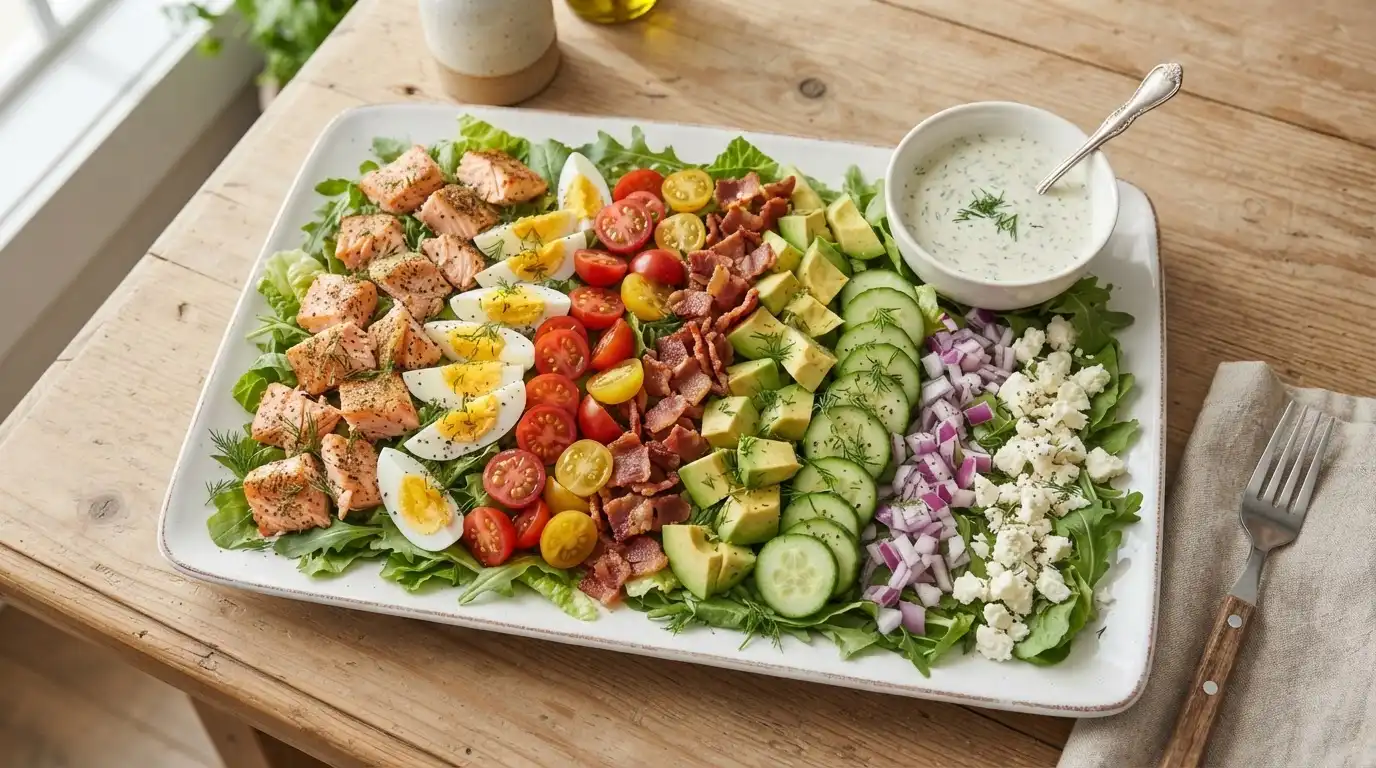
Salmon Cobb Salad is a high-protein, low-carb meal made with flaky salmon, crisp greens, and a creamy Lemon Dill Dressing. Unlike traditional Cobb salads, it features 55g protein and only 7.7g net carbs per serving. It delivers 1057 kcal per serving and takes 35 minutes to make.
🎧 Listen to this recipe
This Salmon Cobb Salad delivers a vibrant, satisfying meal with flaky salmon, crisp vegetables, and a bright, creamy Lemon Dill Dressing. The secret to its success is perfectly cooked salmon, reaching 145°F internal temperature for optimal flakiness, and a dressing that keeps the entire bowl at just 7.7g net carbs. Get the full Salmon Cobb Salad recipe at Recipebo and make it tonight.
What Is Salmon Cobb Salad?
A Salmon Cobb Salad is a vibrant, protein-packed main-course salad that reimagines the classic American Cobb with pan-seared or grilled salmon as its star protein. This version is designed to be a keto-friendly dinner, offering a substantial 55g of protein and only 7.7g net carbs per serving. The key technique involves perfectly cooking the salmon and balancing rich ingredients with a bright, homemade Lemon Dill Dressing. It is best suited for those seeking a satisfying, macro-friendly meal, especially for meal prep.
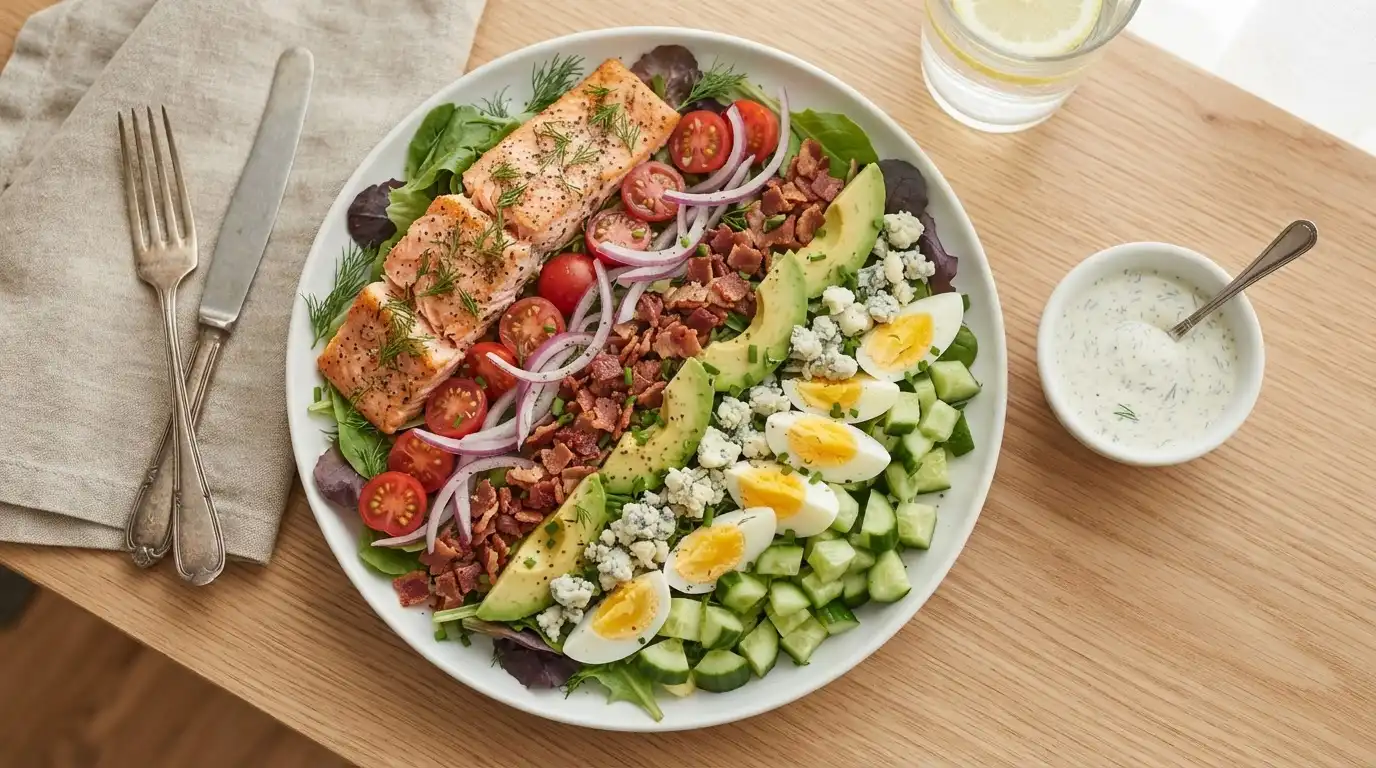
🧂 Ingredients
👩🍳 Cooking Instructions
📝 Additional Notes
For extra crispiness, pat salmon skin very dry before searing.
Soak thinly sliced red onion in ice water for 5 minutes to reduce its sharp bite.
Make the dressing ahead of time for flavors to meld and for quick assembly.
🥗 Nutrition Facts
How to Make This
Prepare the Salad Vegetables and Greens9 mins
Ingredients for this step
Start by washing and thoroughly drying your salad greens. I prefer a mix of crisp romaine and tender butter lettuce for texture, but any sturdy green works well. Chop the lettuce into bite-sized pieces and set aside.
Next, halve the cherry tomatoes and dice the cucumber. For the red onion, slice it very thinly; I find soaking the slices in ice water for 5 minutes removes some of the harsh bite, making it more palatable in a fresh salad. Drain and pat dry before adding to the other vegetables. This initial prep ensures all your fresh components are ready to go, which is crucial for a quick assembly later.
Cook the Bacon and Eggs9 mins
Ingredients for this step
For the bacon, I like to cook it in a skillet over medium heat until it’s perfectly crisp, about 8-10 minutes. Drain it on a paper towel-lined plate and crumble once cooled. For the eggs, place them in a small saucepan and cover with cold water by about an inch.
Bring the water to a rolling boil, then immediately turn off the heat, cover the pan, and let them sit for exactly 9 minutes. This method consistently yields perfectly firm yolks without the gray ring. After 9 minutes, transfer the eggs to an ice bath for at least 5 minutes to stop the cooking process and make them easier to peel. Once cooled, peel and quarter them.
Whisk the Lemon Dill Dressing4 mins
Ingredients for this step
In a small bowl, combine the mayonnaise, fresh lemon juice, Dijon mustard, fresh dill, and a pinch of salt and black pepper. Whisk vigorously until the dressing is completely smooth and emulsified. I’ve found that using fresh dill makes a significant difference in the brightness of this Lemon Dill Dressing compared to dried, which can taste flat.
Taste and adjust seasonings as needed; it should be tangy, creamy, and herbaceous. This dressing is the backbone of the salad’s flavor profile, so take your time to get it right. It should be thick enough to coat the greens without being gloopy.
Sear the Salmon9 mins
Ingredients for this step
Pat the salmon fillets very dry with paper towels; this is key for crispy skin. Season both sides generously with salt and pepper. Heat the olive oil in a large non-stick skillet over medium-high heat until shimmering.
Place the salmon fillets skin-side down in the hot pan. Sear for 4-5 minutes until the skin is golden brown and crisp. Flip the fillets and cook for another 3-5 minutes, or until the internal temperature reaches 145°F at its thickest part, as recommended by the FDA Safe Food Handling Guidelines.
The flesh should flake easily with a fork. Overcooking makes salmon dry, so watch it closely. I use an instant-read thermometer to ensure perfect doneness every time.
Assemble the Salad4 mins
Ingredients for this step
Arrange the mixed greens on a large platter or in individual bowls. This is where the visual appeal of a Cobb Salad truly shines. Artfully arrange the cooked salmon fillets, quartered hard-boiled eggs, crumbled bacon, diced avocado, cherry tomatoes, cucumber, and thinly sliced red onion in distinct rows or sections over the greens.
This presentation makes for a beautiful and inviting dish. Finally, crumble the blue cheese over the top. Drizzle generously with the Lemon Dill Dressing just before serving. The vibrant colors and distinct components make this not just a meal, but a feast for the eyes.
How This Recipe Compares Nutritionally
Understanding the nutritional breakdown of your meals is key for a balanced diet. Here’s how this Salmon Cobb Salad stacks up against typical versions.
| Nutrient | This Recipe (per serving) | Other Recipes | Difference |
|---|---|---|---|
| Calories | 1057 kcal | ~1200-1500 kcal | ~150-450 kcal less |
| Protein | 55g | ~30-40g | ~15-25g more |
| Total Fat | 88g | ~90-120g | Similar or less |
| Total Carbs | 12.1g | ~20-30g | ~8-18g less |
| Dietary Fiber | 4.4g | ~3-5g | Similar |
| Sodium | 726mg | ~800-1200mg | ~70-470mg less |
This comparison highlights that our Salmon Cobb Salad offers a significant protein boost and lower net carbs compared to many traditional or restaurant versions, making it an excellent choice for a macro-friendly meal.
Which Recipe Adjustments Actually Make a Difference?
The most impactful adjustments for this Salmon Cobb Salad recipe are ensuring the salmon reaches an internal temperature of exactly 145°F and using fresh, finely chopped dill in the Lemon Dill Dressing.
My initial attempts at a salmon cobb often resulted in either dry salmon or a dressing that lacked vibrancy. The problem with dry salmon was consistently linked to overcooking; pulling it off the heat at precisely 145°F internal temperature, as measured with an instant-read thermometer, yields perfectly flaky, moist fish every time. For the dressing, I found that using dried dill made the flavor profile fall flat. Switching to fresh dill, finely chopped, provided a bright, herbaceous note that elevated the entire salad.
A common mistake is not patting the salmon dry before searing, which prevents a crispy skin from forming. This version holds up because each component is prepared to its peak, ensuring a harmonious balance of textures and flavors.
- Salmon Temperature: Cooking to 145°F prevents dryness.
- Fresh Dill: Essential for a vibrant, aromatic dressing.
- Dry Salmon Skin: Patting dry ensures crispy skin.
- Ice Bath for Eggs: Stops cooking and aids peeling.
Does Fresh or Frozen Seafood Produce Better Results in This Recipe?
For this Salmon Cobb Salad, fresh salmon generally produces slightly better results due to its firmer texture and often richer flavor, though high-quality frozen salmon can be an excellent alternative if properly thawed.
I’ve tested this recipe with both fresh and frozen salmon. While fresh salmon often has a superior texture and flavor, a good quality frozen fillet, thawed slowly overnight in the refrigerator, performs very well. When buying, look for fresh salmon with bright, clear eyes and firm, moist flesh. For frozen, choose individually vacuum-sealed portions to prevent freezer burn.
According to the FDA, all seafood should be cooked to an internal temperature of 145°F to ensure safety. To prevent overcooking, I always use an instant-read thermometer. Overcooked salmon becomes dry and chalky, losing its delicate flavor. Seasoning with just salt and pepper before searing allows the natural taste of the salmon to shine. Proper handling and quick cooking are key to a delicious outcome, whether fresh or frozen.
What Are the Best Ways to Serve This Recipe?
This Salmon Cobb Salad is a complete meal on its own, but it pairs beautifully with crusty gluten-free bread or a light, crisp white wine like Sauvignon Blanc.
I’ve found this salad to be incredibly satisfying as a main course, especially for a weeknight dinner. If you want to make it a more substantial meal, a slice of warm, crusty gluten-free bread is a perfect accompaniment for soaking up any extra dressing. For a lighter touch, a simple side of roasted asparagus or green beans complements the rich salmon and creamy dressing without overpowering it. A crisp, dry white wine like a Sauvignon Blanc or Pinot Grigio enhances the flavors of the salmon and dill. This dish is perfect for a light lunch, a casual dinner party, or as a healthy salmon salad option for any occasion.
Which Ingredient Swaps Have I Actually Tested in This Recipe?
I’ve successfully swapped blue cheese for feta or goat cheese, and romaine for spinach. However, substituting the fresh dill in the Lemon Dill Dressing with dried dill significantly diminishes the flavor.
I’ve experimented with several ingredient swaps to accommodate different tastes and dietary needs. For the cheese, crumbled feta or goat cheese works wonderfully as an alternative to blue cheese, offering a milder tanginess. For the greens, a mix of baby spinach and arugula can replace romaine for a softer texture and peppery bite. I’ve also tried grilled chicken breast instead of salmon, which makes for a classic Cobb Salad, but then it’s not a salmon cobb!
One swap that consistently failed was using dried dill in the dressing. The flavor was flat and lacked the bright, fresh notes that make the Lemon Dill Dressing so special. Always opt for fresh herbs when they are a star component. These alternatives allow for flexibility without compromising the integrity of the dish.
Which Dressing Makes This Salad Perfectly Keto-Friendly?
The homemade Lemon Dill Dressing is perfectly keto-friendly, contributing only 0.8g net carbs per serving, making it superior to most store-bought options for low-carb eating.
Many popular store-bought Salad Dressing options, even those marketed as ‘healthy,’ contain hidden sugars and unhealthy oils that can quickly derail a keto-friendly dinner. For instance, some commercial ranch dressings can have 2-3g of sugar per tablespoon. My homemade Lemon Dill Dressing uses full-fat mayonnaise (check for avocado oil-based options for the best fats), fresh lemon juice, and dill, ensuring a clean, low-carb profile. According to USDA FoodData Central, a tablespoon of typical store-bought ranch can contain 1.5g net carbs, while our homemade version is negligible.
This control over ingredients is crucial for maintaining a high-fat low-carb meal. I always make a double batch of this dressing and store it in an airtight jar in the refrigerator for up to 5 days for easy meal prep.
Trusted Sources
This recipe follows guidelines from these authoritative sources:
Frequently Asked Questions
How do you make a classic salmon cobb salad?
To make a classic Salmon Cobb Salad, assemble cooked salmon, bacon, hard-boiled eggs, avocado, tomatoes, and blue cheese over mixed greens with a creamy dressing.
What are the essential ingredients for a salmon cobb salad?
Essential ingredients for Salmon Cobb Salad include salmon, bacon, hard-boiled eggs, avocado, tomatoes, blue cheese, mixed greens, and a creamy dressing.
What is the best dressing to serve with salmon cobb salad?
The best dressing for Salmon Cobb Salad is a homemade Lemon Dill Dressing, offering a bright, creamy, and keto-friendly complement to the rich ingredients.
How many calories are in a typical salmon cobb salad?
This Salmon Cobb Salad contains 1057 kcal per serving, providing a substantial and satisfying meal.
Can salmon cobb salad be prepared in advance for meal prep?
Salmon Cobb Salad components can be prepared in advance for meal prep, but assemble the salad just before serving to maintain freshness and texture. Yes, this Salmon Cobb Salad is excellent for meal prep. You can cook the salmon, bacon, and hard-boiled eggs up to 3-4 days in advance and store them separately in airtight containers in the refrigerator. The Lemon Dill Dressing can also be made ahead and stored for up to 5 days. Chop your vegetables, except for the avocado, a day or two before. Dice the avocado just before serving to prevent browning. Assembling the salad right before eating ensures the greens stay crisp and the avocado remains vibrant, making for a fresh and easy healthy salmon salad.
