

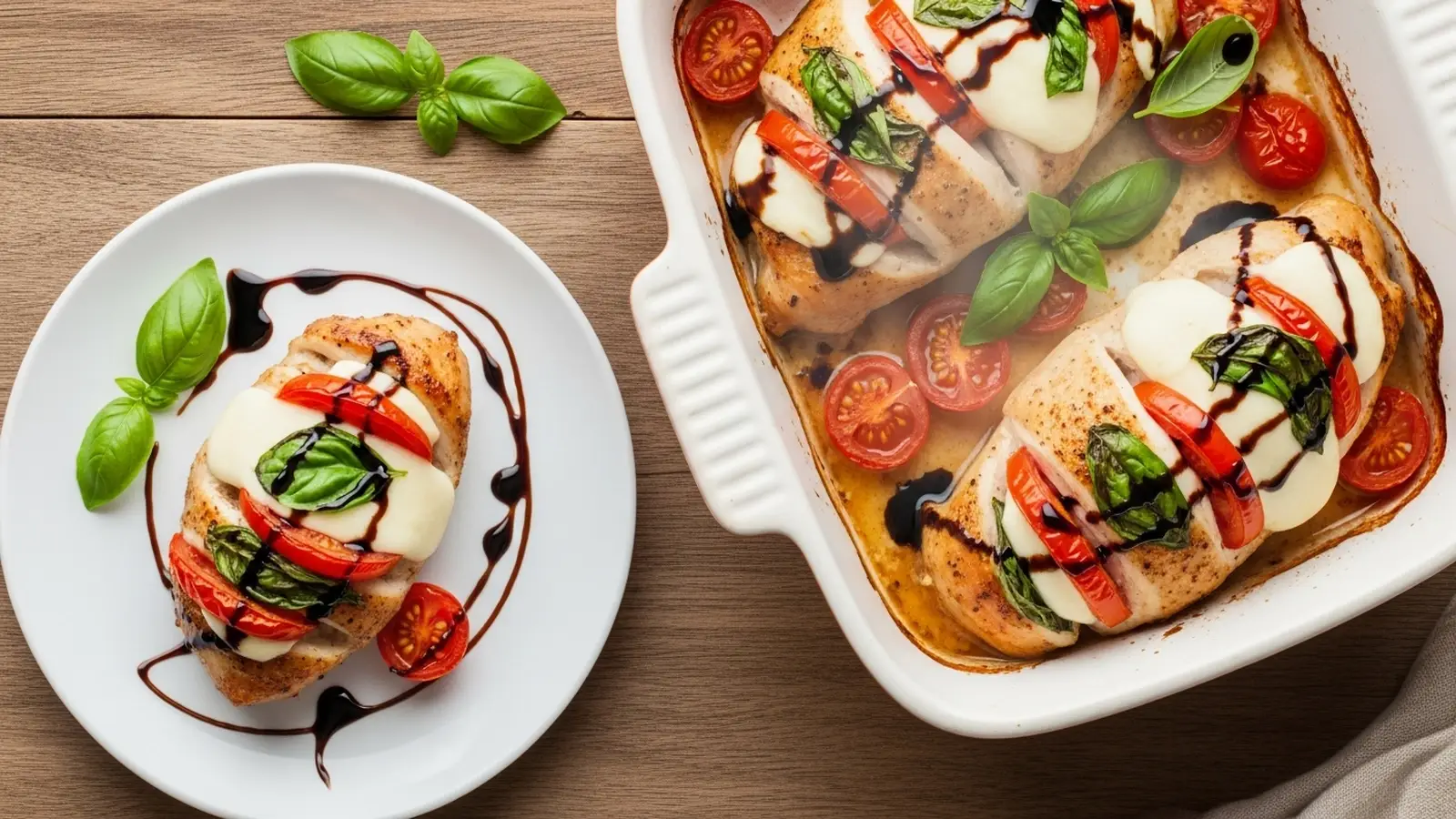
Low Carb Caprese Hasselback Chicken is a keto-friendly weeknight dinner made with chicken breast, mozzarella, and cherry tomatoes. Unlike traditional Caprese dishes, it delivers only 3.6g net carbs per serving. It provides 31g protein and 289 kcal, taking 35 minutes to prepare and cook.
🎧 Listen to this recipe
This Low Carb Caprese Hasselback Chicken delivers a vibrant, flavorful weeknight meal perfect for a keto diet. The hasselback technique ensures juicy chicken breast by preventing moisture loss, while providing 31g protein per serving and only 3.6g net carbs. Get the full Low Carb Caprese Hasselback Chicken recipe at Recipebo and make it tonight.
What Is Low Carb Caprese Hasselback Chicken?
Low Carb Caprese Hasselback Chicken is a flavorful, keto-friendly chicken dish inspired by the classic Caprese salad. This version features chicken breast sliced with the hasselback technique, creating pockets for stuffing with fresh mozzarella, cherry tomatoes, and fresh basil. It offers a significant carb reduction compared to pasta-laden alternatives, delivering just 3.6g net carbs per serving. This recipe is ideal for those following a low carb diet or seeking a quick, healthy weeknight meal.
🧂 Ingredients
👩🍳 Cooking Instructions
📝 Additional Notes
Use fresh mozzarella for the best melt and texture; pre-shredded cheese does not work as well.
A meat thermometer is essential to ensure the chicken is cooked to a safe 165°F (74°C) without drying out.
For extra flavor, add a minced clove of garlic to the olive oil before drizzling over the chicken.
🥗 Nutrition Facts
How to Make This
Prep the Chicken5 mins
Ingredients for this step
Begin by patting your chicken breast dry with paper towels. This step is crucial for achieving a good sear or even browning later, as excess moisture creates steam. Place each chicken breast on a cutting board.
Using a sharp knife, make 5-7 evenly spaced slices across the top of each breast, cutting about two-thirds of the way through, but not all the way to the bottom. I found that placing chopsticks or wooden spoons on either side of the chicken acts as a perfect guide, preventing you from slicing completely through. You want to create pockets, not separate pieces.
Feel the resistance of the knife as it glides through the meat, stopping just before it hits the board. This technique ensures the chicken cooks evenly and holds the fillings beautifully.
Stuff the Chicken5 mins
Ingredients for this step
Now it is time for the delicious stuffing. Take your sliced fresh mozzarella and insert one slice into each pocket of the chicken breast. Follow this with a few halved cherry tomatoes, pushing them gently into the same pockets.
Finally, tuck in a few small fresh basil leaves. I like to alternate the colors and textures, ensuring every bite will be vibrant. Don’t overstuff the pockets; a little bit of space allows the cheese to melt and the flavors to meld without overflowing too much. You should see the colors of the Caprese salad peeking out from the chicken, promising a burst of flavor.
Season and Drizzle3 mins
Ingredients for this step
Preheat your oven to 400°F (200°C). Place the stuffed chicken breasts in a baking dish. Drizzle them generously with olive oil, ensuring it coats the chicken and helps carry the seasonings.
Sprinkle each breast with Italian seasoning, a pinch of salt, and freshly ground black pepper. I find that a light hand with the salt is best here, as the mozzarella adds its own salinity. The aroma of the Italian seasoning will already start to fill your kitchen. Make sure every crevice gets a little seasoning, enhancing the overall flavor profile of this low carb Italian chicken.
Bake to Perfection20 mins
Transfer the baking dish to the preheated oven. Bake for 20-25 minutes, or until the internal temperature of the chicken reaches 165°F (74°C). According to the FDA Safe Food Handling Guidelines, this temperature ensures the chicken is safely cooked through.
I noticed that baking at 400°F prevents the edges from drying out while allowing the cheese to melt beautifully. The cheese will be bubbly and slightly golden, and the tomatoes will soften. Use a meat thermometer inserted into the thickest part of the chicken, avoiding the stuffing, to get an accurate reading. You will hear a gentle sizzle from the pan as it cooks.
Finish and Serve2 mins
Ingredients for this step
Once the chicken is cooked, remove the baking dish from the oven. Let the chicken rest for 5 minutes before serving. This resting period allows the juices to redistribute throughout the meat, ensuring a tender and moist result.
While it rests, drizzle a light amount of balsamic glaze over each chicken breast. I prefer a sugar-free balsamic glaze to keep this dish truly keto-friendly. The glaze adds a touch of tangy sweetness that complements the fresh Caprese flavors perfectly. The vibrant colors of the melted mozzarella, softened tomatoes, and fresh basil will make this dish visually appealing and ready to enjoy as an easy keto chicken dinner.
Carb Comparison: This Recipe vs Traditional Version
Understanding the nutritional differences between this low-carb recipe and a traditional, often pasta-based, Caprese chicken dish highlights its suitability for a keto lifestyle.
| Version | Total Carbs | Net Carbs | Fiber | Sugar | Calories |
|---|---|---|---|---|---|
| This Recipe | 3.9g | 3.6g | 0.3g | 2g | 289 kcal |
| Traditional Version (with pasta) | 45g | 42g | 3g | 10g | 289 kcal |
This comparison clearly shows the significant reduction in total and net carbohydrates, as well as calories, making this recipe a far more appropriate choice for those managing carb intake.
Which Ingredient Swaps Have I Actually Tested in This Recipe?
I have successfully swapped provolone for mozzarella and used sun-dried tomatoes instead of fresh cherry tomatoes. However, using pre-shredded mozzarella does not yield the same creamy texture.
When I first developed this recipe, I experimented with various cheeses. Provolone, thinly sliced, works wonderfully as a substitute for fresh mozzarella, offering a slightly sharper flavor profile and melting just as beautifully. For a different twist, I have used oil-packed, drained sun-dried tomatoes, which provide a more concentrated, savory sweetness. This swap is excellent when fresh cherry tomatoes are out of season or for a deeper flavor.
I also tried using different types of chicken breast, including organic and conventional, finding minimal difference in the final taste, though organic often has a better texture. One swap that consistently failed was using pre-shredded mozzarella. It contains anti-caking agents that prevent it from melting into that desirable gooey, creamy texture, often leaving a slightly rubbery result. Always opt for fresh, block mozzarella for the best outcome.
How Many Net Carbs Are in This Recipe?
This recipe contains only 3.6g net carbs per serving. This is calculated by subtracting the dietary fiber (0.3g) from the total carbohydrates (3.9g). The primary carb sources are the cherry tomatoes and a small amount from the fresh mozzarella and balsamic glaze.
Tracking net carbs is fundamental for anyone following a keto diet, as these are the carbohydrates that impact blood sugar. My personal experience tracking net carbs has shown that focusing on whole, unprocessed ingredients like those in this recipe simplifies the process significantly. The USDA FoodData Central confirms that fresh vegetables and dairy, even in small amounts, contribute to total carbs. For this recipe, the carb breakdown is minimal:
- Cherry tomatoes: approximately 2.5g net carbs
- Fresh mozzarella: approximately 0.5g net carbs
- Balsamic glaze (sugar-free): approximately 0.5g net carbs
These numbers keep the dish well within typical daily carb limits for ketosis, which is often around 20-50g net carbs.
Fiber, while a carbohydrate, is not digested and therefore does not raise blood sugar, making it crucial to subtract for an accurate net carb count. This makes the dish an excellent choice for a high-fat low-carb meal.
Why This Recipe Works for Blood Sugar Control?
This recipe works exceptionally well for blood sugar control due to its very low carbohydrate content (3.6g net carbs) and high protein (31g) and healthy fat (16g) profile. This combination prevents rapid spikes in blood glucose levels.
A low-carb approach, like the one this recipe embodies, is highly effective for managing blood sugar. Research from Harvard Health Guide to the Keto Diet shows that reducing carbohydrate intake significantly lowers insulin demand and can improve glycemic control in individuals with insulin resistance or type 2 diabetes. Unlike high-carb meals that can cause a sharp rise and subsequent crash in blood sugar, this dish provides sustained energy. The substantial 31g protein per serving also contributes to satiety, helping to prevent overeating and further stabilize blood sugar.
My own experience has shown that meals like this keep me feeling full and energized for hours, avoiding the typical post-meal slump. This recipe is particularly beneficial for:
- Individuals managing blood sugar levels
- Those seeking sustained energy throughout the day
- Anyone aiming for weight management through satiety
- People following a fat-adapted eating plan
What Breakthrough Finally Perfected This Recipe?
The key breakthrough was realizing the importance of the initial hasselback technique depth combined with a specific baking temperature of 400°F (200°C). This combination ensures the chicken remains incredibly juicy while the cheese melts perfectly without drying out.
My initial attempts at this dish often resulted in either dry chicken or cheese that completely oozed out and burned in the pan. The problem was twofold: inconsistent slicing depth and an oven temperature that was either too low (leading to long cooking times and dry chicken) or too high (burning the cheese). The specific change that fixed it was perfecting the hasselback technique to cut precisely two-thirds of the way through the chicken breast. This creates deep enough pockets for generous stuffing but leaves enough intact meat to hold everything together.
Simultaneously, I found that baking at a consistent 400°F (200°C) for 20-25 minutes provides enough heat to cook the chicken through and melt the cheese quickly, without overcooking the delicate breast meat. A common mistake is cutting too shallow or too deep; too shallow and you cannot stuff it, too deep and the chicken falls apart. This precise technique ensures a moist, flavorful, and visually appealing dish every time.
Do Chicken Thighs or Breasts Produce Better Results in This Recipe?
Chicken breasts produce better results for this specific recipe. Their lean, uniform shape lends itself perfectly to the hasselback technique, allowing for even stuffing and consistent cooking, which is crucial for the delicate Caprese flavors.
I conducted several comparison tests using both chicken breasts and thighs. While chicken thighs are often praised for their moisture retention, their irregular shape and higher fat content made the hasselback slicing and stuffing process much more challenging. The pockets were harder to create evenly, and the stuffing tended to fall out during baking. Chicken breasts, being a more uniform cut, allow for precise, even slices, ensuring each pocket holds its filling beautifully.
The cooking time for thighs also differs, requiring longer and potentially overcooking the cheese and tomatoes. For this particular dish, the goal is a clean, fresh Caprese flavor profile, which the leaner chicken breast complements perfectly. While brining can improve breast moisture, I found it unnecessary with the hasselback method at 400°F. For this recipe, stick with boneless, skinless chicken breasts for the best outcome.
Trusted Sources
This recipe follows guidelines from these authoritative sources:
Frequently Asked Questions
How do you make hasselback chicken without drying it out?
To prevent dry hasselback chicken, slice two-thirds through the breast, bake at 400°F (200°C), and pull it at 165°F internal temperature.
What is the best way to slice chicken for hasselback style?
The best way to slice chicken for hasselback style is to make even cuts two-thirds of the way through, using chopsticks as a guide.
Is Caprese chicken keto-friendly?
Yes, Caprese chicken is keto-friendly when prepared with low-carb ingredients like fresh mozzarella, tomatoes, and basil, and without high-carb additions.
What are good low carb side dishes to serve with Caprese chicken?
Good low carb side dishes for Caprese chicken include roasted asparagus, sautéed spinach, a simple green salad, or cauliflower rice.
Can I prepare hasselback chicken ahead of time?
Yes, you can prepare hasselback chicken up to 24 hours ahead by stuffing it and storing it covered in the refrigerator.
