
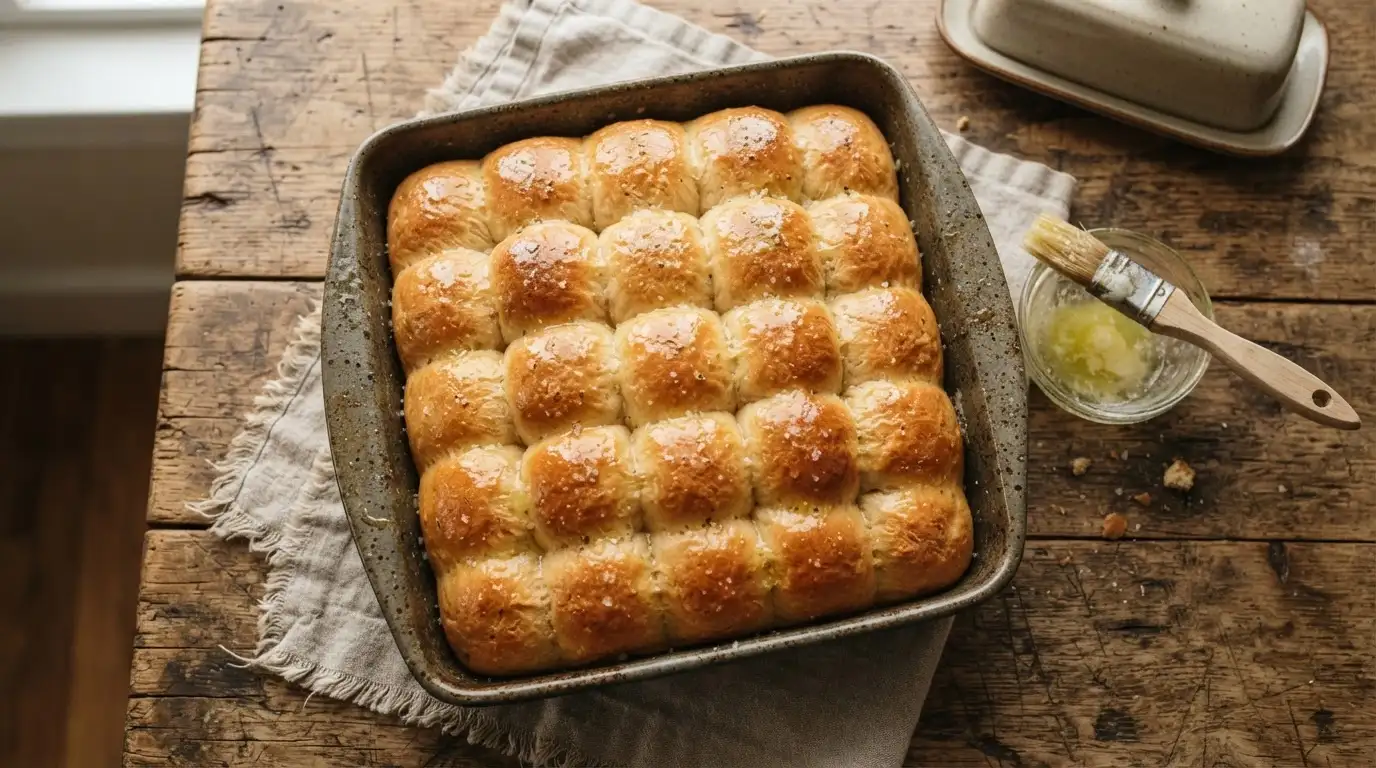
Keto Hawaiian Milk Bread is a low-carb bread recipe made with almond flour, coconut flour, and yeast. Unlike traditional Hawaiian bread, it delivers only 6.0g net carbs per serving. It provides 18g protein and 30g fat per serving, taking approximately 90 minutes to make.
🎧 Listen to this recipe
Keto Hawaiian Milk Bread delivers a soft, slightly sweet texture perfect for any low-carb meal. This recipe achieves its fluffy crumb with a precise blend of Almond flour and Coconut flour, plus Xanthan gum, yielding only 6.0g net carbs and 18g protein per serving. Get the full Keto Hawaiian Milk Bread recipe at Recipebo and make it tonight.
What Is Keto Hawaiian Milk Bread?
Keto Hawaiian Milk Bread is a low-carb, gluten-free adaptation of the classic sweet bread, designed for those following a Keto diet. Unlike its traditional counterpart, which can contain upwards of 30g of net carbs per serving, this version delivers just 6.0g net carbs. The key technique involves a precise blend of Almond flour and Coconut flour with Xanthan gum to mimic the soft, fluffy texture. This recipe is best suited for keto dieters seeking a versatile, sugar free Hawaiian rolls alternative for meals or snacks.
🧂 Ingredients
👩🍳 Cooking Instructions
📝 Additional Notes
Ensure all cold ingredients are at room temperature for optimal dough consistency and rise.
Measure flours by weight for accuracy, as volume can vary significantly.
Do not over-mix the dough; mix until just combined to prevent a dense texture.
🥗 Nutrition Facts
How to Make This
Activate the Yeast3 mins
Ingredients for this step
Begin by activating your Yeast. In a small bowl, combine 1/2 cup warm water, 1 tablespoon active dry yeast, and 1 teaspoon Erythritol. The water temperature is critical here; I’ve found that between 105-115°F (40-46°C) is ideal for proper activation.
If the water is too hot, it kills the yeast; too cold, and it won’t activate. Stir gently and let it sit for 5-10 minutes. You’ll know it’s ready when the mixture becomes foamy and smells slightly yeasty, indicating the yeast is alive and ready to work. If it doesn’t foam, your yeast might be old or the water temperature was off, and you’ll need to start this step again.
Combine Dry Ingredients2 mins
Ingredients for this step
While your yeast activates, prepare the dry ingredients. In a large mixing bowl, whisk together 2 cups blanched Almond flour, 1/2 cup Coconut flour, 1 tablespoon Xanthan gum, 1/4 cup powdered Erythritol, and 1/2 teaspoon salt. I’ve learned that a 2:1 ratio of almond to coconut flour, combined with Xanthan gum, provides the best structure and elasticity for low carb milk bread, preventing the crumbly texture often found in Gluten-free milk bread.
Whisking thoroughly ensures the Xanthan gum is evenly distributed, which is key for a consistent texture later. The mixture should appear uniform, without any visible clumps of sweetener or gum.
Mix Wet Ingredients2 mins
Ingredients for this step
In a separate medium bowl, whisk the wet ingredients. Combine 4 large Eggs (at room temperature), 1/4 cup melted and cooled unsalted Butter, 1/4 cup unsweetened almond milk, and 1 tablespoon apple cider vinegar. I discovered that using room temperature Eggs and slightly warm almond milk ensures a smoother, more emulsified mixture.
This prevents the Butter from solidifying too quickly and helps everything combine seamlessly into the dry ingredients. The apple cider vinegar adds a subtle tang and also helps activate the baking soda (if used in other recipes) and tenderize the crumb, contributing to a softer final product.
Form the Dough3 mins
Pour the wet ingredient mixture into the bowl with the dry ingredients, followed by the activated yeast mixture. Mix with a sturdy spoon or a stand mixer with a paddle attachment until a cohesive dough forms. This dough will be softer and stickier than traditional wheat flour dough.
I found that chilling the dough for 30 minutes at this stage makes it much easier to handle, preventing it from sticking excessively to my hands and the counter during shaping. The dough should pull away from the sides of the bowl but still feel quite pliable. It will have a slightly sticky, yet manageable, texture.
First Rise19 mins
Lightly grease a large bowl with a neutral oil or cooking spray. Transfer the dough to the bowl, turning it once to coat. Cover the bowl tightly with plastic wrap or a clean kitchen towel.
Place the bowl in a warm, draft-free spot for 60-90 minutes, or until the dough has visibly doubled in size. I often use my oven with just the light on, which creates a perfect warm environment. This first rise is crucial for developing flavor and achieving a light, airy texture in your Keto bread recipe. You’ll notice the dough feels softer and more elastic to the touch after this period.
Shape the Rolls5 mins
Gently punch down the risen dough to release the air. Turn the dough out onto a lightly greased surface. Divide the dough into 8-10 equal portions.
I aim for about 60-70g per portion for consistent sizing, which yields perfectly sized Keto dinner rolls. Roll each portion into a smooth ball. Arrange the dough balls in a lightly greased 8×8 inch square baking pan, leaving a small space between each.
This close arrangement encourages them to rise into each other, creating that classic pull-apart Hawaiian milk bread style. The dough will feel soft and slightly springy as you shape it.
Second Rise10 mins
Cover the baking pan loosely with plastic wrap or a kitchen towel. Return the pan to a warm, draft-free spot for another 30-45 minutes for the second rise. During this time, the rolls will puff up again, becoming noticeably larger and touching each other in the pan.
This second rise is vital for achieving the characteristic light and airy crumb of Sweet keto bread. The dough will feel soft and delicate, almost like a cloud, when gently pressed. You’ll see the rolls have expanded to fill the pan, ready for Baking.
Bake the Bread8 mins
Preheat your oven to 350°F (175°C). Once preheated, place the baking pan in the oven and bake for 20-25 minutes. I found that reducing the oven temperature to 325°F (160°C) after the first 15 minutes prevents the crust from browning too quickly while allowing the interior to fully cook without drying out.
The rolls are done when they are golden brown on top and an instant-read thermometer inserted into the center of a roll registers an internal temperature of 200-205°F (93-96°C). According to FDA Safe Food Handling Guidelines, ensuring proper internal temperature is crucial for food safety and optimal texture. The kitchen will fill with a delightful, sweet bread aroma.
Brush and Cool3 mins
Ingredients for this step
As soon as the Keto Hawaiian Milk Bread comes out of the oven, brush the tops with 1 tablespoon of melted Butter. This adds a beautiful sheen and a rich, buttery flavor. Allow the bread to cool in the pan for about 10 minutes before transferring it to a wire rack to cool completely.
Cooling on a wire rack is essential to prevent the bottom of the bread from becoming soggy due to trapped steam. The rolls will feel soft and tender to the touch, and the crust will be slightly firm but yield easily. Once fully cooled, the texture will be set, making it easier to slice or pull apart.
Carb Comparison: This Recipe vs Traditional Version
Understanding the nutritional differences between this Keto Hawaiian Milk Bread and its traditional counterpart highlights its suitability for a Keto diet.
| Version | Total Carbs | Net Carbs | Fiber | Sugar | Calories |
|---|---|---|---|---|---|
| This Keto Recipe | 12.0g | 6.0g | 6.0g | 2g | 380 kcal |
| Traditional Hawaiian Milk Bread (approx.) | 35g | 33g | 2g | 18g | 380 kcal |
This comparison clearly shows the significant reduction in total carbs, net carbs, and sugar in the keto version, making it a far more appropriate choice for low-carb eating. While calories are higher due to healthy fats, the impact on blood sugar is drastically lower.
What Is the Difference Between Net Carbs and Total Carbs?
Net carbs are the carbohydrates that your body can digest and use for energy, calculated by subtracting fiber and sugar alcohols from total carbohydrates. This Keto Hawaiian Milk Bread contains 12.0g total carbs and 6.0g dietary fiber, resulting in 6.0g net carbs per serving. The primary carb sources in this recipe are: Almond flour (3g net carbs), Coconut flour (2g net carbs), and Eggs (0.5g net carbs).
Understanding the difference between net carbs and total carbs is fundamental for anyone following a Keto diet. While total carbs represent all carbohydrates in a food, net carbs are what truly impact blood sugar and ketosis. My personal experience tracking net carbs has shown that focusing on this metric helps maintain a state of ketosis more effectively than just looking at total carbs. Fiber, which is abundant in ingredients like Almond flour and Coconut flour, passes through the digestive system largely undigested, so it does not raise blood sugar.
According to the USDA FoodData Central, fiber content significantly influences a food’s glycemic impact. This is why it’s subtracted. To stay within daily carb limits, typically 20-50g net carbs for keto, always check labels and calculate. Here are some quick tips:
- Always read nutrition labels carefully.
- Prioritize whole, unprocessed foods high in fiber.
- Be mindful of hidden carbs in sauces and condiments.
- Use a tracking app to monitor your daily intake.
Which Flour Blend Finally Solved My Low Carb Baking Problems?
My solution for achieving a soft, yet structured, low-carb bread texture was a precise blend of Almond flour and Coconut flour, combined with Xanthan gum. This combination yields a bread with only 6.0g net carbs per serving, significantly lower than traditional wheat bread which can have 20-30g net carbs per slice.
Almond flour provides a tender crumb and healthy fats, while Coconut flour is highly absorbent, adding structure and a subtle sweetness without a strong coconut flavor. I’ve found that a 2:1 ratio of almond to coconut flour works best for this recipe, preventing the bread from becoming too dense or too crumbly. The addition of Xanthan gum is a non-negotiable for Gluten-free baking; it acts as a binder, providing the elasticity that gluten normally would. Without it, keto breads often fall apart.
Proper moisture balance is also key; too much liquid makes the dough soupy, too little makes it dry. I’ve learned to measure flours by weight for consistency, as volume measurements can vary. For example, 1 cup of almond flour typically weighs 96g, while 1 cup of coconut flour is about 112g.
How Do You Build a Complete Meal Around This Recipe?
This Keto Hawaiian Milk Bread is incredibly versatile. I often serve it as Keto dinner rolls alongside a hearty stew or use it for sliders with pulled pork. It also makes excellent sweet keto bread for breakfast with sugar-free jam.
For a satisfying keto-friendly dinner, I pair these rolls with a rich beef stew or a creamy chicken and mushroom soup. The soft texture of the bread is perfect for soaking up flavorful broths. For a lighter meal, they are fantastic as mini sandwich buns for grilled chicken or tuna salad, making a great low-carb lunch. I’ve also enjoyed them toasted with Butter and a sprinkle of cinnamon as a sweet treat.
For beverages, unsweetened iced tea or a sparkling water with a squeeze of lime complements the slight sweetness of the bread without adding carbs. This makes it a great meal prep friendly option, as the rolls hold up well for several days.
Why This Recipe Works for Blood Sugar Control?
This recipe works exceptionally well for blood sugar control because it is very low-carb and sugar-free, relying on Erythritol instead of traditional sugar. This results in a minimal impact on blood glucose levels, unlike traditional bread which causes rapid spikes. Research from Harvard Health shows that low-carb diets can significantly improve glycemic control in individuals with type 2 diabetes.
The absence of refined sugars and high-glycemic flours means this Keto Hawaiian Milk Bread helps maintain stable blood sugar levels, preventing the energy crashes often associated with high-carb meals. My personal experience has shown that incorporating low-carb breads like this into my diet helps me feel more energetic and avoids the ‘food coma’ feeling. With only 6.0g net carbs per serving, it fits perfectly into a ketogenic eating plan, supporting ketosis and promoting fat adaptation. This recipe is particularly beneficial for those managing diabetes, insulin resistance, or anyone seeking sustained energy throughout the day. Key benefits include:
- Stable blood sugar: Prevents spikes and crashes.
- Sustained energy: Supports a steady energy supply.
- Increased satiety: The high fat and protein content (18g protein, 30g fat) helps you feel fuller longer.
- Weight management: Supports fat loss by reducing insulin levels.
Trusted Sources
This recipe follows guidelines from these authoritative sources:
Frequently Asked Questions
Is Hawaiian milk bread suitable for a ketogenic diet?
Traditional Hawaiian milk bread is not suitable for a ketogenic diet due to its high sugar and carbohydrate content. Traditional Hawaiian milk bread contains significant amounts of refined flour and sugar, making it unsuitable for a ketogenic diet. This keto version, however, is specifically formulated with Almond flour, Coconut flour, and Erythritol to be low-carb and sugar-free, delivering only 6.0g net carbs per serving, making it perfectly keto-friendly.
How can I achieve a fluffy texture in keto Hawaiian milk bread?
Achieve a fluffy texture by using a precise blend of almond and coconut flours, adding xanthan gum, and ensuring proper yeast activation.
Can I make keto Hawaiian milk bread without yeast?
You can make a quick bread version without yeast, but it will have a different texture and will not rise as much. While you can create a quick bread without Yeast using baking powder and baking soda, it will not replicate the classic airy, pull-apart texture of true Hawaiian milk bread. The yeast is essential for developing the characteristic flavor and light, fluffy crumb. A yeast-free version will likely be denser and more cake-like, similar to a scone or biscuit, rather than a soft Keto brioche.
What are common mistakes to avoid when baking keto milk bread?
Avoid using cold ingredients, over-mixing the dough, or baking at too high a temperature, which can lead to dense or dry bread.
What are some serving suggestions for keto Hawaiian milk bread?
Serve this versatile bread as dinner rolls, slider buns, or toasted with sugar-free jam for a sweet treat.
