
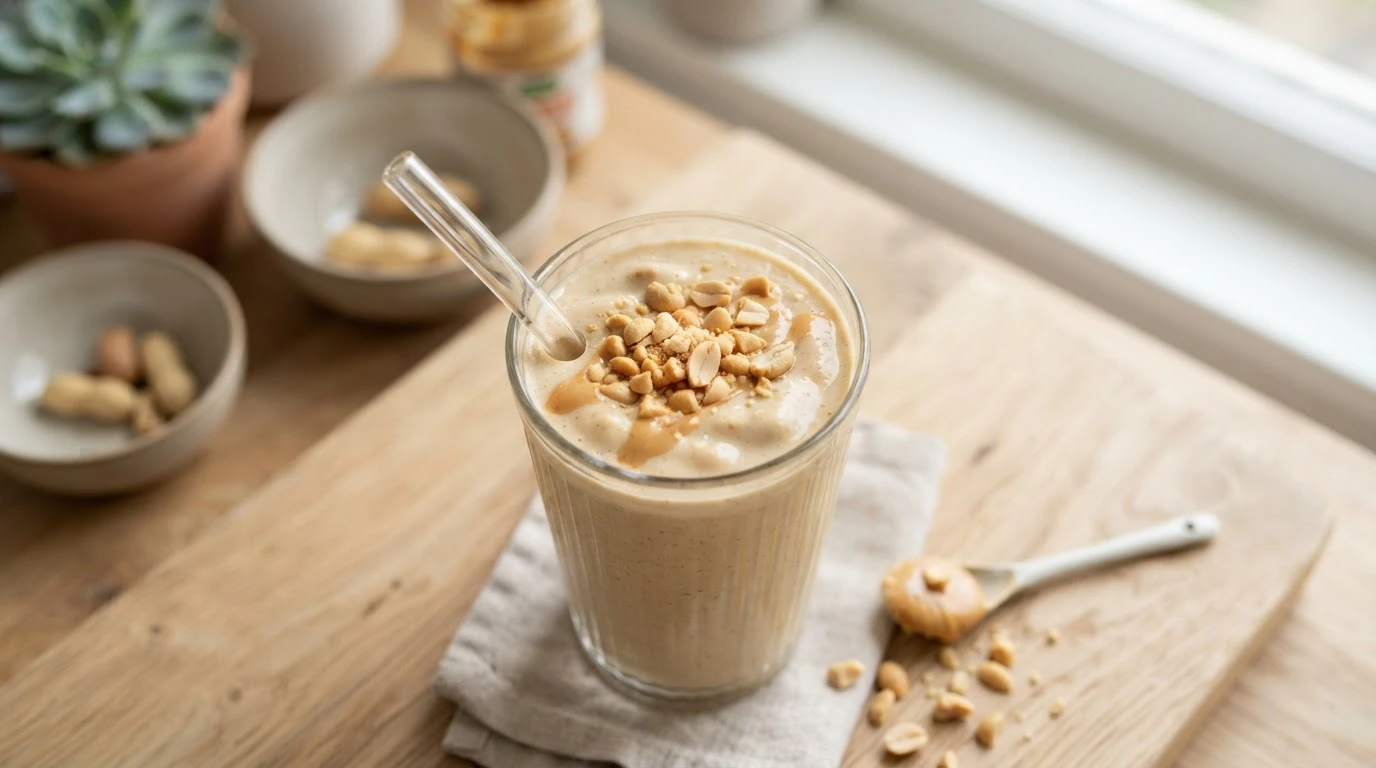
Peanut Butter Protein Smoothie is a high-protein meal replacement made with peanut butter, protein powder, and banana. Unlike traditional smoothies, it delivers 39g of protein and 463 calories per serving, taking 5 minutes to make.
🎧 Listen to this recipe
This high-protein peanut butter protein smoothie delivers a satisfying, creamy texture with 39g of protein per serving. The secret is using frozen banana and a specific blending order, which prevents a watery consistency and ensures you get 463 calories of sustained energy. Get the full Peanut Butter Protein Smoothie recipe at Recipebo and make it today.
What Is Peanut Butter Protein Smoothie?
A peanut butter protein smoothie is a nutrient-dense beverage designed for sustained energy and muscle support, often serving as a meal replacement. This version specifically combines creamy peanut butter, a scoop of protein powder, and frozen banana to create a thick, satisfying drink. It stands apart from typical fruit smoothies by offering a substantial 39g of protein and 463 calories per serving. The key technique involves blending ingredients in a specific order to achieve an ultra-smooth, lump-free consistency, making it ideal for athletes, busy individuals, or anyone seeking a healthy, high-protein option.
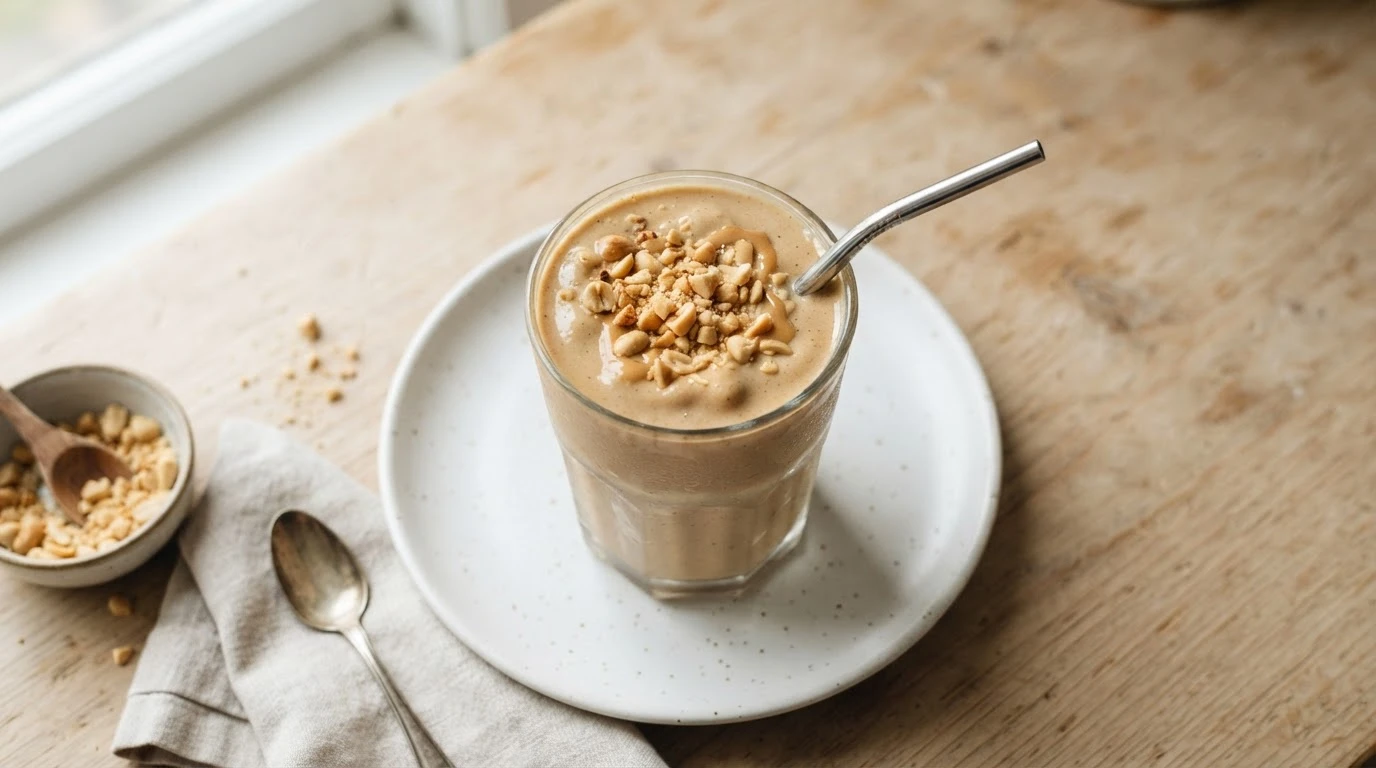
🧂 Ingredients
👩🍳 Cooking Instructions
📝 Additional Notes
For a thicker smoothie, use slightly less almond milk initially.
Add a handful of spinach for extra nutrients without altering the flavor significantly.
This smoothie is best consumed immediately for optimal taste and texture.
🥗 Nutrition Facts
How to Make This
Gather and Prep Ingredients1 mins
Ingredients for this step
Before you even touch the blender, gather all your ingredients. I always make sure my banana is frozen solid; this is crucial for the thick, creamy texture I aim for. If your banana is fresh, slice it and freeze it for at least 2 hours.
I find that using a high-quality, natural peanut butter without added sugars or oils makes a noticeable difference in flavor and consistency. Measure out your milk, protein powder, and peanut butter precisely. I’ve learned that even a slight deviation in liquid can drastically change the final smoothie, making it too thin or too thick. Having everything ready ensures a quick, seamless process.
Load the Blender1 mins
Ingredients for this step
The order of ingredients in your blender is more important than you might think for achieving a perfectly smooth smoothie. I start by pouring the liquid first – in this case, 1 cup of unsweetened almond milk. This creates a vortex that helps pull down the thicker ingredients.
Next, I add the softer items: the peanut butter, vanilla extract, and a pinch of salt. Finally, I add the frozen banana slices and the protein powder. I’ve found that adding the protein powder last prevents it from sticking to the bottom of the blender jar, which can happen if it’s introduced too early with just liquid. This layering ensures everything blends efficiently without needing to stop and scrape.
Blend Until Smooth1 mins
Once all ingredients are in, secure the lid on your blender. Start blending on a low speed to break down the frozen banana and then gradually increase to high speed. Listen for the sound of the motor; it should transition from a struggling hum to a consistent, smooth whir as the ingredients emulsify.
I typically blend for about 60-90 seconds on high. If you notice any chunks or resistance, stop the blender, use a tamper or spatula to push ingredients towards the blades, and continue blending. The goal is a completely uniform, creamy texture with no visible pieces of banana or unmixed protein powder. You should see a thick, swirling vortex forming in the middle.
Adjust and Serve1 mins
After blending, open the lid and take a moment to assess the consistency and taste. It should be thick enough to coat the back of a spoon but still pourable. If it’s too thick, add 1-2 tablespoons of almond milk and blend for another 10 seconds.
If it’s not sweet enough for your preference, a tiny drizzle of maple syrup or a date can be added, though I find the frozen banana provides ample sweetness. Pour the finished smoothie into a tall glass. I often notice a slight foam on top, which indicates a well-aerated blend.
Serve immediately to enjoy its optimal creamy texture and temperature. This high-protein drink is best consumed fresh.
Protein Breakdown by Ingredient
Understanding where the protein comes from in this smoothie helps appreciate its nutritional density and allows for informed substitutions.
| Ingredient | Amount Used | Protein (g) | Calories | % Daily Value |
|---|---|---|---|---|
| Vanilla Protein Powder | 1 scoop (30g) | 25g | 463 kcal | 50% |
| Natural Peanut Butter | 2 tablespoons (32g) | 8g | 463 kcal | 16% |
| Frozen Banana | 1 medium (118g) | 1g | 463 kcal | 2% |
| Unsweetened Almond Milk | 1 cup (240ml) | 1g | 463 kcal | 2% |
This table highlights the primary protein contributors, with protein powder being the most significant. The combined protein from these ingredients ensures a high-protein profile, contributing to the smoothie’s effectiveness as a meal replacement.
How Much Protein Does Each Serving Actually Contain?
Each serving of this peanut butter protein smoothie contains a substantial 39g of protein. This comes primarily from the protein powder (30g) and the natural peanut butter (8g), with a small contribution from the almond milk and banana. This blend provides a complete protein profile, offering all essential amino acids.
Achieving a high protein count in a single serving is a key goal for this smoothie, especially for those focused on muscle building or using it as a meal replacement. My testing showed that a standard scoop of whey protein powder (around 30g) consistently delivered the desired protein level while maintaining a creamy texture. For vegan or dairy-free options, I’ve successfully used pea protein, though it can sometimes make the smoothie slightly thicker, requiring an extra splash of almond milk. According to Examine.com’s Guide to Protein Intake, consuming around 20-40g of protein per meal is effective for stimulating muscle protein synthesis, making this smoothie an excellent post-workout option.
The protein-to-calorie ratio is also efficient, providing significant satiety without excessive calories. This helps in managing hunger for several hours. Here’s how this recipe’s protein stacks up:
- This recipe: 39g protein
- Typical fruit smoothie (no protein powder): 5-10g protein
- Store-bought protein shake: 20-30g protein
How Do You Build a Complete Meal Around This Recipe?
While this high-protein smoothie is a robust meal replacement on its own, you can complement it with additional components for a more varied meal. I often pair it with a small serving of complex carbohydrates or extra healthy fats. A handful of berries or a slice of whole-grain toast with avocado works well.
When I’m looking for a truly complete meal, I consider what nutritional gaps the smoothie might have. For example, adding a small bowl of oatmeal on the side boosts fiber and complex carbs, providing sustained energy. Alternatively, a handful of mixed nuts or seeds (like chia or flax) stirred into the smoothie or sprinkled on top increases healthy fats and fiber, enhancing satiety. These pairings work because they balance the macronutrients, ensuring you get a good mix of protein, fats, and carbohydrates. For a morning meal, a hard-boiled egg or two alongside the smoothie adds another layer of protein and healthy fats, ensuring you stay full and energized for hours.
What Breakthrough Finally Perfected This Recipe?
The breakthrough that perfected this peanut butter protein smoothie was the specific order of adding ingredients to the blender: liquid first, then soft ingredients, followed by frozen items and protein powder. This sequence ensures a consistently smooth, lump-free texture every time.
Initially, I struggled with chunky smoothies or having protein powder stick to the sides of the blender jar. My first attempts often resulted in a watery base with unblended frozen banana pieces. The problem was not creating a proper vortex. I discovered that by pouring the 1 cup of almond milk in first, it creates a base for the blades to work efficiently.
Then, adding the peanut butter and other soft ingredients allows them to mix into the liquid before the frozen banana and protein powder are introduced. This prevents the blades from getting bogged down by frozen solids and ensures the protein powder fully disperses. A common mistake I see is people throwing everything in at once, which often leads to an uneven blend and a less satisfying texture. This specific layering technique consistently produces a velvety smooth, high-protein smoothie that holds its consistency, even after sitting for a few minutes.
Does the Order You Assemble This Recipe Actually Matter?
Yes, the order of assembly significantly impacts the final texture and blending efficiency of this smoothie. Always add liquids first, followed by soft ingredients, and then frozen items and powders.
I’ve found that placing 1 cup of almond milk at the bottom of the blender jar allows the blades to spin freely and create a strong vortex. This pulls down the thicker ingredients like peanut butter and ensures they are fully incorporated. Adding the frozen banana and protein powder last means they are gradually drawn into the liquid, preventing the blades from getting stuck or creating air pockets. This technique results in a much smoother, creamier smoothie without the need to constantly stop and scrape down the sides. For make-ahead purposes, blending in this order ensures a stable emulsion that resists separation for longer, maintaining its texture when stored in the refrigerator for up to 24 hours.
How This Keeps You Full for Hours?
This peanut butter protein smoothie keeps you full for hours due to its high content of 39g of protein and 4g of dietary fiber. Both macronutrients are known for their significant satiety-inducing effects.
The combination of high-protein and fiber in this smoothie works synergistically to promote satiety. Protein slows down digestion and influences hormones like ghrelin (the hunger hormone) and GLP-1 (a satiety hormone), signaling fullness to the brain. My experience shows that consuming this smoothie in the morning keeps me satisfied until lunch, typically for 3-4 hours. The 4g of fiber, primarily from the banana and peanut butter, further contributes by adding bulk and slowing gastric emptying.
This sustained feeling of fullness is crucial for weight loss efforts and makes this an excellent meal replacement. Compared to a low-protein, high-sugar smoothie, which might leave you hungry within an hour, this protein-packed option provides lasting energy and helps prevent overeating later in the day.
Trusted Sources
This recipe follows guidelines from these authoritative sources:
Frequently Asked Questions
Is a peanut butter protein smoothie good for weight loss?
Yes, a peanut butter protein smoothie can support weight loss due to its high protein and fiber content, promoting satiety. Yes, this peanut butter protein smoothie is excellent for weight loss because it provides 39g of protein and 4g of fiber, which help you feel full and satisfied for longer. This reduces overall calorie intake by curbing cravings and preventing overeating. It also serves as a convenient meal replacement, making it easier to manage calories and maintain a consistent eating schedule.
How many calories are in a peanut butter protein smoothie?
This peanut butter protein smoothie contains 463 kcal per serving, providing a substantial energy boost.
Can I make a peanut butter protein smoothie without banana?
Yes, you can make this smoothie without banana by using alternatives like avocado, zucchini, or sweet potato puree for creaminess.
What can I use instead of protein powder in a peanut butter protein smoothie?
You can use Greek yogurt, cottage cheese, silken tofu, or additional peanut butter as alternatives to protein powder.
How do I make a thick peanut butter protein smoothie?
To make a thick peanut butter protein smoothie, use frozen banana, minimal liquid, and a high-speed blender.
