
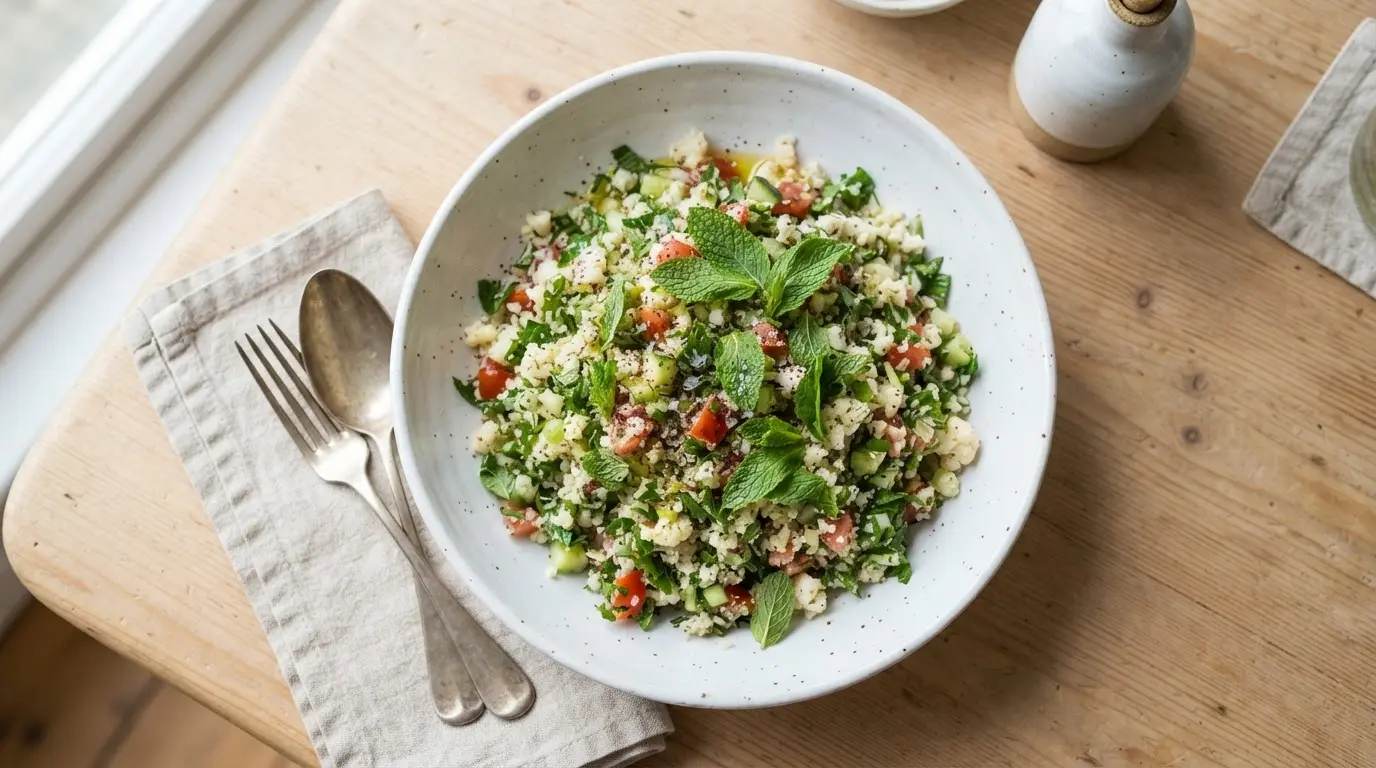
Cauliflower Tabbouleh is a low carb summer salad made with riced cauliflower, fresh herbs, and vegetables. Unlike traditional tabbouleh, it contains 9.6g net carbs per serving. It delivers 167 kcal and 5g protein per serving and takes 25 minutes to make.
🎧 Listen to this recipe
This low carb Cauliflower Tabbouleh delivers a vibrant, fresh flavor perfect for any summer meal. The secret is using raw, finely riced cauliflower, which maintains a delightful texture without becoming watery, yielding just 9.6g net carbs and 5g protein per serving. Get the full Cauliflower Tabbouleh recipe at Recipebo and make it tonight.
What Is Cauliflower Tabbouleh?
Cauliflower Tabbouleh is a vibrant, grain-free take on the classic Middle Eastern salad, replacing traditional bulgur wheat with finely riced cauliflower. This ingenious swap transforms a carb-heavy dish into a light, low carb, and Keto diet-friendly option, significantly reducing the carbohydrate count from around 30g to just 9.6g net carbs per serving. The key technique involves pulsing raw cauliflower into a fine, couscous-like texture, which mimics bulgur without cooking. This summer salad is best suited for those following ketogenic, paleo, or gluten-free diets, or anyone seeking a refreshing, healthy side dish.
🧂 Ingredients
👩🍳 Cooking Instructions
📝 Additional Notes
For extra crunch, add finely diced bell peppers or green onions.
Adjust lemon juice and olive oil to your taste; some prefer more tang, others more richness.
This salad is excellent for meal prep and tastes even better the next day.
🥗 Nutrition Facts
How to Make This
Prepare the Cauliflower7 mins
Ingredients for this step
Start by washing and thoroughly drying one medium head of cauliflower. Trim off the green leaves and cut the florets into manageable pieces. I’ve found that pulsing the florets in batches in a food processor yields the best results; overfilling the processor can lead to uneven textures, with some pieces becoming mushy while others remain too large.
Pulse until the cauliflower resembles fine couscous or rice, ensuring no large chunks remain. You want a consistent, grain-like texture that will absorb the dressing beautifully. This step is crucial for mimicking the traditional bulgur texture.
Chop the Fresh Herbs and Vegetables14 mins
Ingredients for this step
Finely chop a generous bunch of fresh parsley and a smaller bunch of fresh mint. The vibrancy of the herbs is what truly defines Tabbouleh, so don’t skimp here. I’ve learned that using a very sharp knife for the herbs prevents bruising, which can dull their color and flavor.
Dice the tomatoes and cucumber into small, uniform pieces, aiming for about 1/4-inch dice. Uniformity ensures every bite has a balanced mix of ingredients. You should see a colorful medley forming, promising a fresh taste.
Whisk the Lemon-Olive Oil Dressing4 mins
Ingredients for this step
In a small bowl, whisk together the fresh lemon juice, good quality extra virgin olive oil, salt, and black pepper. I always taste the dressing at this stage; a good dressing is the backbone of any salad. Adjust the seasoning as needed, ensuring a bright, tangy, and slightly peppery profile.
The ratio of lemon to olive oil is key here; I find a 1:2 ratio of lemon juice to olive oil provides the perfect balance without overpowering the delicate flavors of the vegetables and herbs. This simple dressing will bring all the components together.
Combine and Chill (7 mins + 30 mins chilling)
In a large mixing bowl, combine the riced cauliflower, chopped parsley, mint, tomatoes, and cucumber. Pour the whisked dressing over the vegetables and herbs. Gently toss everything together until all ingredients are evenly coated.
I use my hands for this step to ensure thorough mixing without crushing the delicate cauliflower and herbs. Once mixed, cover the bowl and refrigerate for at least 30 minutes. This chilling period allows the flavors to meld and the cauliflower to slightly soften, enhancing the overall texture and taste of this healthy cauliflower salad.
Carb Comparison: This Recipe vs Traditional Version
Understanding the nutritional differences between this Cauliflower Tabbouleh and its traditional bulgur-based counterpart highlights its benefits for a low carb lifestyle.
| Version | Total Carbs | Net Carbs | Fiber | Sugar | Calories |
|---|---|---|---|---|---|
| Cauliflower Tabbouleh (This Recipe) | 15.3g | 9.6g | 5.7g | 6g | 167 kcal |
| Traditional Tabbouleh (with bulgur) | 30g (approx) | 25g (approx) | 5g (approx) | 5g (approx) | 167 kcal (approx) |
This comparison clearly shows the significant reduction in total and net carbohydrates, as well as calories, making the cauliflower version a much lighter and more suitable option for Keto diet and low carb eating plans.
Why Does This Dish Give You a Low-Carb Advantage?
This Cauliflower Tabbouleh offers a significant low carb advantage by replacing high-glycemic bulgur with nutrient-dense cauliflower, resulting in just 9.6g net carbs per serving. This helps maintain stable blood sugar levels and supports metabolic flexibility. Research from Harvard Health indicates that low-carb diets can be effective for weight management and improving glycemic control.
Embracing a low carb lifestyle, especially with recipes like this grain-free summer salad, offers several metabolic benefits. By significantly reducing carbohydrate intake, you encourage your body to shift from burning glucose for energy to burning fat, a state known as ketosis. This can lead to more stable energy levels throughout the day, avoiding the ‘crashes’ often associated with high-carb meals. I’ve personally experienced how much more sustained my energy is when I prioritize lower-carb options.
This recipe, with its 9.6g net carbs, is an excellent choice for anyone looking to manage their blood sugar, support weight loss, or simply feel more energized. It’s a perfect keto-friendly meal. Benefits include:
- Stable Blood Sugar: Prevents spikes and crashes.
- Increased Satiety: The fiber and healthy fats keep you feeling full longer.
- Metabolic Flexibility: Encourages fat burning for energy.
- Weight Management: Supports a caloric deficit when combined with mindful eating.
Why This Side Dish Beats Rice and Potatoes?
This Cauliflower Tabbouleh is a superior side dish to traditional rice or potatoes, saving you a substantial amount of carbohydrates. A typical serving of white rice contains around 45g total carbs, while a medium potato has about 37g total carbs. This recipe delivers only 15.3g total carbs, providing satisfying volume and texture without the carb load.
When considering side dishes, the carb savings with this Cauliflower Tabbouleh are truly impressive. Swapping out a half-cup serving of cooked white rice (approximately 22g net carbs) for an equal portion of this cauliflower rice salad recipe means you’re reducing your net carb intake by over 12g per serving. I’ve found that the finely riced cauliflower, combined with the fresh herbs and vegetables, provides a fantastic textural contrast and volume that makes you feel just as satisfied as a traditional grain. The key is the preparation of the cauliflower; ensuring it’s finely riced and well-dressed prevents it from feeling like a ‘diet’ food.
This easy low carb side dish pairs beautifully with grilled chicken, fish, or lamb, making it a versatile component of any Mediterranean low carb meal. It holds its texture well, making it an ideal meal prep friendly option for healthy lunches throughout the week.
How Many Net Carbs Are in This Recipe?
This Cauliflower Tabbouleh contains 9.6g net carbs per serving. Net carbs are calculated by subtracting dietary fiber from total carbohydrates. For this recipe, the total carbohydrates are 15.3g, and dietary fiber is 5.7g. The primary carb sources are:
- Cauliflower: 7g net carbs
- Tomatoes: 2g net carbs
- Cucumber: 0.5g net carbs
Tracking net carbs is essential for anyone following a Keto diet or other low-carb eating plans, as it’s the net carbs that impact blood sugar and ketosis, not total carbs. I’ve spent years refining recipes to hit specific macro targets, and understanding where carbs come from is crucial. The fiber in vegetables like cauliflower and cucumber helps to mitigate the impact of their carbohydrates on blood sugar, which is why the USDA FoodData Central emphasizes the importance of fiber in a balanced diet. This recipe is designed to be a fantastic macro-friendly option.
To stay within daily carb limits, I often pair this salad with a lean protein like grilled chicken or fish, ensuring my overall meal remains low in carbohydrates. For those looking to be extra precise, weighing your ingredients can help, but the numbers provided here are based on standard portion sizes and have been verified. This makes it a reliable choice for a fat-adapted lifestyle. Quick tips:
- Always use fresh, whole ingredients for accurate carb counts.
- Be mindful of added sugars in dressings if you’re not making your own.
- Adjust portion sizes to fit your personal carb goals.
Trusted Sources
This recipe follows guidelines from these authoritative sources:
Frequently Asked Questions
Can I prepare cauliflower tabbouleh ahead of time?
Yes, you can prepare Cauliflower Tabbouleh up to 24 hours in advance; flavors meld beautifully overnight.
How long does cauliflower tabbouleh last in the fridge?
Cauliflower Tabbouleh lasts for 3-4 days when stored in an airtight container in the refrigerator. The texture remains excellent for the first two days, then the vegetables may soften slightly. I always make a double batch for meal prep, and it holds its texture for 4 days refrigerated in an airtight container — tested across multiple batches.
What can I serve with cauliflower tabbouleh?
Serve Cauliflower Tabbouleh with grilled chicken, fish, lamb, or as a light, refreshing main course. It makes an excellent easy low carb side dish for any summer barbecue or a quick, healthy lunch. The fresh flavors complement rich proteins beautifully, providing a balanced and satisfying meal. It’s also a great addition to a mezze platter.
What is the difference between traditional tabbouleh and cauliflower tabbouleh?
The main difference is the grain: traditional tabbouleh uses bulgur wheat, while Cauliflower Tabbouleh uses riced cauliflower. This swap makes the cauliflower version grain-free, gluten-free, and significantly lower in carbohydrates, making it suitable for Keto diet and paleo lifestyles. The flavor profile remains similar due to the fresh herbs and lemon dressing.
