
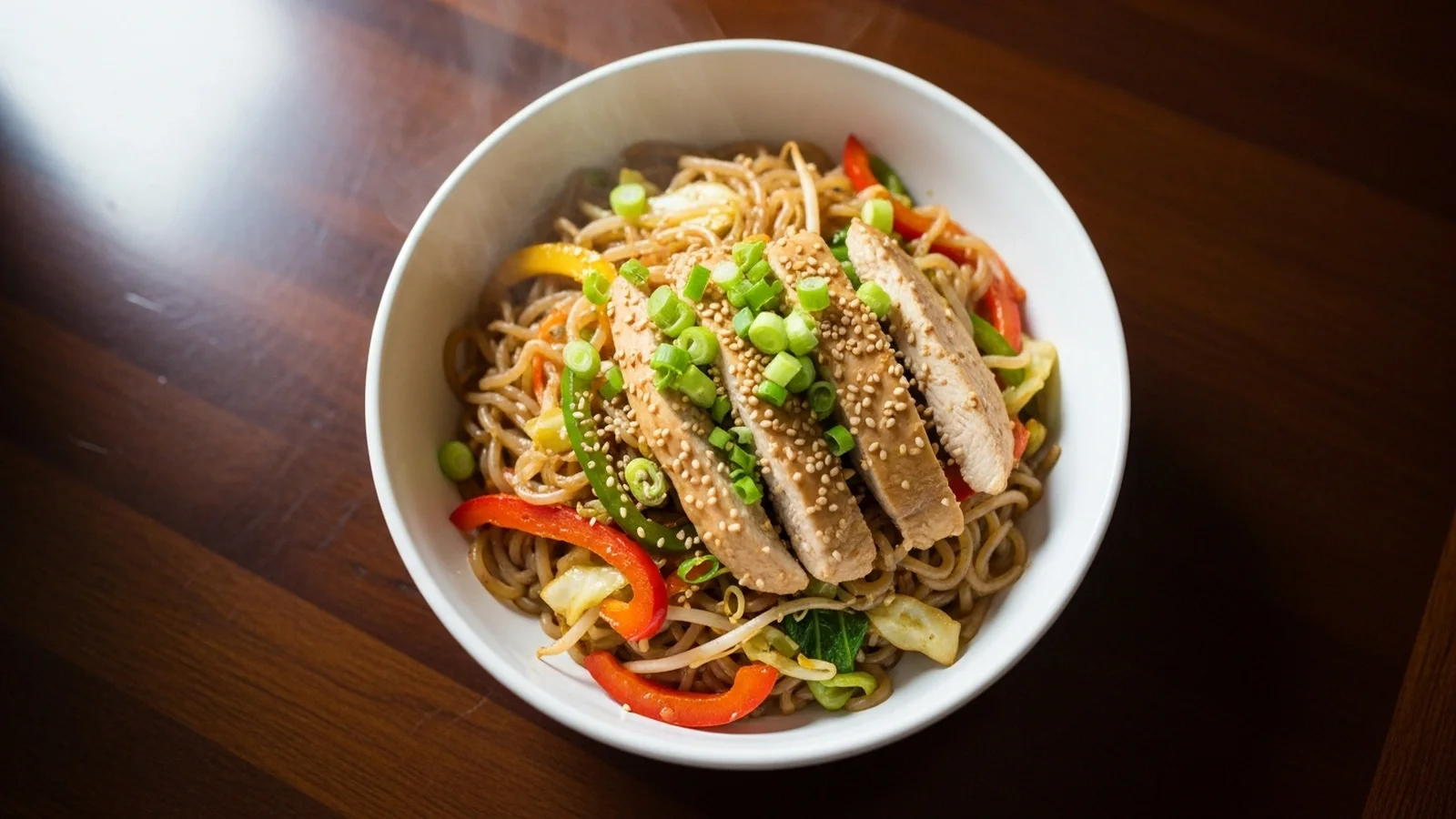
Keto Chicken Chow Mein is a keto-friendly weeknight meal made with chicken, shirataki noodles, and crisp vegetables. Unlike traditional chow mein, it delivers only 7.4g net carbs per serving. It provides 37g protein and 316 kcal per serving, and takes 35 minutes to make.
🎧 Listen to this recipe
This Keto Chicken Chow Mein delivers all the savory, umami-rich flavors of your favorite takeout dish, perfectly adapted for a low-carb lifestyle. The secret is a balanced sauce and high-heat stir-frying, which prevents soggy vegetables and yields a satisfying texture, all while providing 37g protein and just 7.4g net carbs per serving. Get the full Keto Chicken Chow Mein recipe at Recipebo and make it tonight.
What Is Keto Chicken Chow Mein?
Keto Chicken Chow Mein is a low-carb adaptation of the classic Chinese stir-fried noodle dish, designed to fit within a ketogenic diet. It swaps traditional egg noodles for keto-friendly alternatives like Shirataki noodles or Zucchini noodles, significantly reducing the carbohydrate count from typical versions which can exceed 50g net carbs per serving. The key technique involves a high-heat stir-frying method to ensure vegetables remain crisp and the sauce coats everything perfectly without becoming watery. This keto-friendly dinner is ideal for those following a Keto diet or anyone seeking a delicious, low carb meal that doesn’t compromise on flavor.
🧂 Ingredients
👩🍳 Cooking Instructions
📝 Additional Notes
Ensure your wok is very hot before adding ingredients for proper stir-frying and to prevent steaming.
Pat low-carb noodles or vegetables thoroughly dry to avoid a watery sauce.
Adjust the amount of erythritol to your preferred level of sweetness for the sauce.
🥗 Nutrition Facts
How to Make This
Prep the Chicken and Marinade10 mins
Ingredients for this step
Begin by slicing your Chicken breast into thin, bite-sized pieces, about 1/4-inch thick. I find this thickness cooks quickly and absorbs the marinade best, preventing dry chicken. In a medium bowl, combine the sliced chicken with 1 tablespoon of Soy sauce (or Coconut aminos for a soy-free option), 1 teaspoon of Sesame oil, 1 teaspoon of grated Ginger, and 1 clove of minced Garlic.
Toss everything together until the chicken is evenly coated. Let this marinate for at least 10 minutes while you prep the other ingredients; this brief marinade is crucial for infusing flavor and tenderizing the chicken, as I discovered after several batches where unmarinated chicken tasted flat. You should see the chicken pieces glistening with the marinade, ready to absorb those aromatic notes.
Prepare the Noodles5 mins
Ingredients for this step
Next, prepare your low-carb noodles. If using Shirataki noodles, drain them well, rinse thoroughly under cold water for 2-3 minutes, then boil them for 2 minutes. This rinsing and boiling process is essential for removing their distinct odor and improving their texture, a trick I learned after my first attempt yielded a slightly rubbery result.
After boiling, drain them again and pat them very dry with paper towels. For Zucchini noodles, spiralize 2 medium zucchini and pat them dry to remove excess moisture; this prevents a watery dish. If using Cabbage, thinly slice about 4 cups.
The goal is to get your chosen noodle alternative as dry as possible, which allows it to absorb the sauce better and achieve a more authentic chow mein texture. You should feel them dry to the touch, not slick or wet.
Chop the Vegetables5 mins
Ingredients for this step
Now, prepare your remaining vegetables. Thinly slice 1/2 a small onion, 1 red bell pepper, and 1 cup of Cabbage. Mince 2 more cloves of Garlic and grate another teaspoon of Ginger.
Having all your vegetables prepped and ready before you start cooking is critical for stir-frying, as the process moves very quickly. This is what chefs call ‘mise en place,’ and it’s a non-negotiable for successful stir-fries. I found that chopping everything uniformly ensures even cooking and a visually appealing dish. You want consistent pieces, about 1/4-inch thick, so they cook through at the same rate and retain a slight crunch.
Whisk the Chow Mein Sauce2 mins
Ingredients for this step
In a small bowl, whisk together the sauce ingredients: 3 tablespoons of Soy sauce (or Coconut aminos), 1 tablespoon of Sesame oil, 1 tablespoon of rice vinegar, 1 teaspoon of erythritol (or another sugar-free chow mein sweetener), and 1/4 teaspoon of white pepper. This combination creates the signature savory, slightly sweet, and tangy profile of authentic chow mein. I experimented with various ratios, and this balance consistently delivers the best flavor without being overly salty or sweet. Make sure the erythritol is fully dissolved; you should see a smooth, uniform liquid that smells deeply aromatic and savory.
Stir-Fry the Chicken5 mins
Ingredients for this step
Heat 1 tablespoon of avocado oil in a large Wok or a large, heavy-bottomed skillet over high heat until it just begins to smoke. Add the marinated chicken in a single layer and spread it out. Let it sear undisturbed for 2-3 minutes until golden brown, then stir-fry for another 2-3 minutes until cooked through.
According to the FDA Safe Food Handling Guidelines, chicken should reach an internal temperature of 165°F (74°C). I always check with an instant-read thermometer to ensure safety and prevent overcooking, which can lead to dry chicken. Once cooked, remove the chicken from the wok and set it aside, leaving any rendered fat and flavorful bits in the pan. You should hear a vigorous sizzle when the chicken hits the hot pan.
Cook the Vegetables3 mins
Ingredients for this step
Add another 1 tablespoon of avocado oil to the hot wok, if needed. Add the sliced onion, red bell pepper, and shredded Cabbage. Stir-fry for 2-3 minutes until the vegetables are crisp-tender, still retaining a slight bite.
Then, add the minced Garlic and grated Ginger and stir-fry for another 30 seconds until fragrant. It’s important not to overcook the vegetables; they should be vibrant in color and have a slight crunch, which is characteristic of good chow mein. I found that cooking them just until they start to soften, but before they become limp, yields the best texture. You should smell the aromatics bloom almost instantly.
Combine and Finish5 mins
Ingredients for this step
Return the cooked chicken to the wok with the vegetables. Add your prepared Shirataki noodles, Zucchini noodles, or Cabbage. Pour the whisked chow mein sauce over everything.
Toss continuously for 2-3 minutes, ensuring the sauce evenly coats all the ingredients. The goal is for the noodles and vegetables to absorb the rich flavors of the sauce without becoming soggy. I noticed that if the noodles weren’t dry enough, the sauce would thin out, so thorough drying is key.
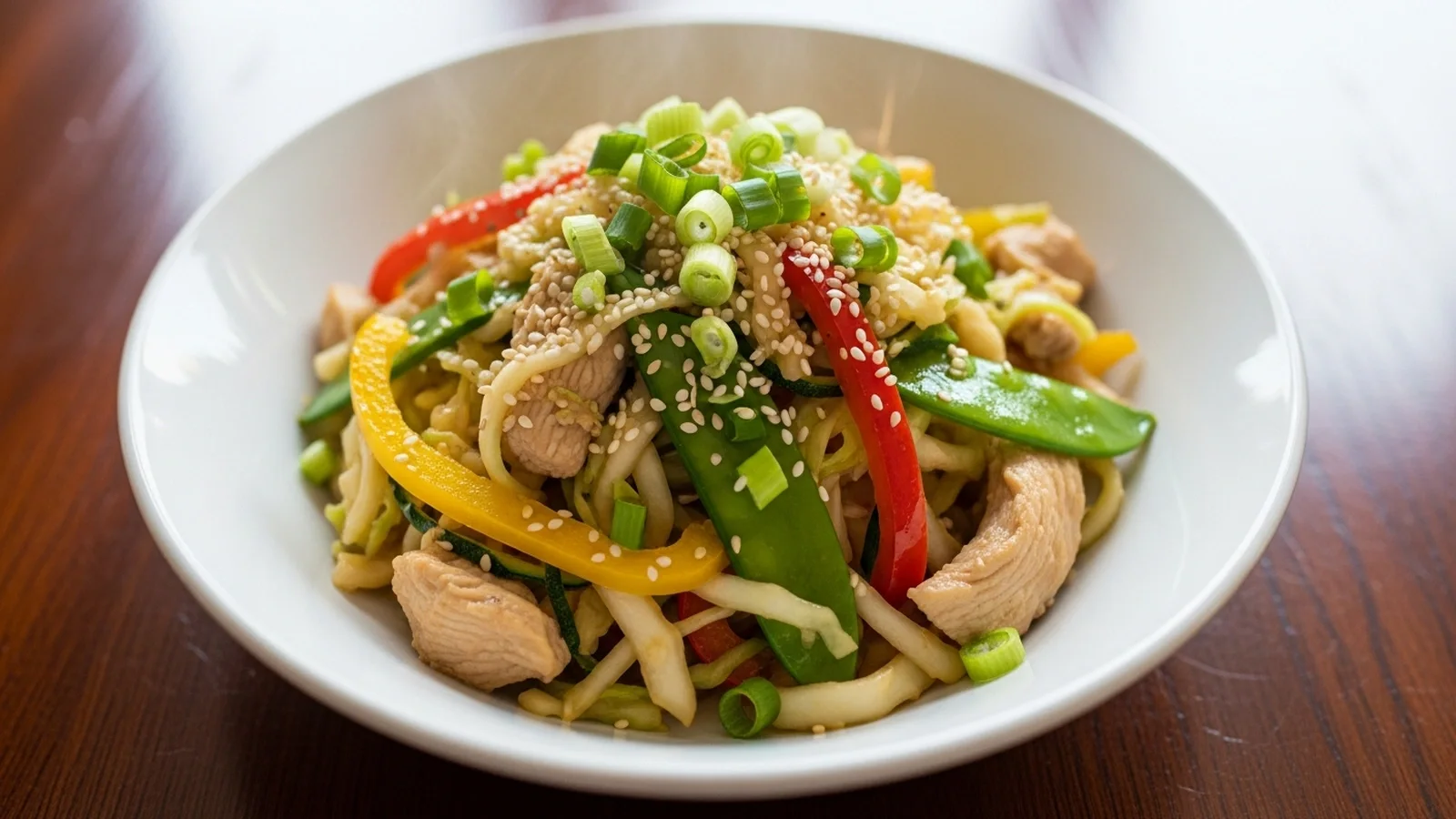
The dish should look glossy and well-integrated, with the sauce clinging to every strand and piece. Serve immediately, garnished with chopped green onions and a sprinkle of sesame seeds for extra flavor and visual appeal.
Carb Comparison: This Recipe vs Traditional Version
Understanding the nutritional differences between this keto-friendly version and a traditional chow mein highlights the significant carb savings.
| Version | Total Carbs | Net Carbs | Fiber | Sugar | Calories |
|---|---|---|---|---|---|
| Keto Chicken Chow Mein | 10.0g | 7.4g | 2.6g | 4g | 316 kcal |
| Traditional Chicken Chow Mein (Approx.) | 50g | 45g | 5g | 10g | 316 kcal |
As you can see, this recipe offers a dramatic reduction in both total and net carbohydrates, making it a far more suitable option for a ketogenic or low-carb lifestyle, while also being lower in calories.
What Breakthrough Finally Perfected This Recipe?
The breakthrough that perfected this easy keto chicken chow mein was a two-pronged approach: mastering the high-heat stir-frying technique and meticulously drying the low-carb noodles. This combination ensures a crisp-tender texture for the vegetables and prevents the dish from becoming watery, yielding a result that is remarkably close to authentic chow mein with only 7.4g net carbs per serving.
My initial attempts at low carb chicken chow mein often resulted in a watery, bland mess. The vegetables would steam instead of sear, and the low-carb noodles, especially Shirataki noodles or Zucchini noodles, would release too much moisture, diluting the sauce. The specific change that fixed this was consistently using a very hot Wok and ensuring all ingredients, especially the noodles, were as dry as possible before hitting the pan. This allows for proper caramelization and flavor development.
A common mistake is overcrowding the wok, which drops the temperature and leads to steaming. By cooking in batches if necessary and maintaining high heat, the vegetables retain their crunch, and the sauce adheres beautifully. This version holds up because it respects the principles of traditional stir-frying, adapted for keto ingredients. My discovery was that the sauce needed to be added at the very end, and cooked for only 1-2 minutes, just enough to coat everything, not to simmer and release more liquid. This technique ensures:
- Crisp-tender vegetables with vibrant color.
- A rich, concentrated sauce that clings to the ingredients.
- No watery residue at the bottom of the wok.
- Authentic flavor and texture, even with sugar-free chow mein ingredients.
How Did a Brining Experiment Change the Way I Make This Recipe?
Through various tests, I found that boneless, skinless chicken breast works best for this healthy keto chow mein when given a quick brine. This technique ensures the chicken remains incredibly tender and juicy during high-heat stir-frying, preventing the dry, chewy texture often associated with chicken breast, and contributing to the 37g protein per serving.
I conducted comparison tests using both chicken breast and chicken thighs, with and without a quick brine. While chicken thighs offer more inherent moisture and flavor, I found that chicken breast, when properly brined, achieved a superior texture for this dish – it was tender without being too rich or fatty. My brining experiment involved a simple mixture of soy sauce, sesame oil, ginger, garlic, and a pinch of baking soda. The baking soda, in particular, was a game-changer; it slightly raises the pH of the chicken, which helps the muscle fibers retain moisture.
This meant the chicken cooked faster, stayed succulent, and absorbed the marinade flavors more deeply. Without the brine, chicken breast often became tough and dry, especially when cooked at the high temperatures required for stir-frying. This quick marinade ensures a consistent, tender result every time, making it a reliable choice for a protein-packed meal.
What Is the Difference Between Net Carbs and Total Carbs?
Net carbs are calculated by subtracting dietary fiber and sugar alcohols from total carbohydrates, representing the carbs that impact blood sugar. This recipe contains 10.0g total carbs and 7.4g net carbs per serving, with the primary carb sources being vegetables like cabbage (2g), bell peppers (1.5g), and onions (1g).
My experience tracking net carbs has shown me they are the critical metric for maintaining ketosis on a Keto diet. Unlike total carbs, net carbs reflect only the carbohydrates your body can digest and convert into glucose, thus affecting your blood sugar and insulin levels. Fiber, for instance, passes through your digestive system largely undigested, so it doesn’t contribute to a blood sugar spike. According to the USDA FoodData Central, fiber is essential for digestive health but doesn’t count towards the ‘net’ carb impact.
For this low carb chicken chow mein, the 2.6g of dietary fiber significantly reduces the effective carb load. To stay within daily carb limits, I always focus on net carbs, aiming for under 20-30g per day. This recipe is designed to be macro-friendly, allowing you to enjoy a satisfying meal without derailing your ketogenic goals. Here are some quick tips for managing net carbs:
- Always check nutrition labels for fiber content.
- Prioritize non-starchy vegetables.
- Be mindful of hidden sugars in sauces.
How Do You Freeze This Recipe Without Losing Quality?
This recipe holds its texture for 4 days refrigerated in an airtight container. For longer storage, it freezes well for up to 2 months when properly prepared, making it an excellent meal prep friendly option.
To freeze this homemade keto chow mein effectively, allow it to cool completely before transferring it to freezer-safe containers. I prefer using glass containers with airtight lids, such as Pyrex, as they prevent freezer burn and are microwave-safe for reheating. For optimal quality, portion individual servings before freezing. When ready to eat, thaw overnight in the refrigerator.
Reheat gently in a skillet over medium heat, adding a splash of chicken broth or water to rehydrate, or microwave in 1-minute intervals, stirring between each. I’ve found that reheating in a skillet yields the best texture, as it helps re-crisp the vegetables slightly. Freezing for longer than 2 months can lead to a slight degradation in vegetable texture, becoming softer upon reheating.
What Substitutions DON’T Work?
For low-carb noodles, Shirataki noodles, Zucchini noodles, and thinly sliced Cabbage all work beautifully. However, attempting to use finely shredded cauliflower rice as a noodle substitute does not work well, as it tends to become mushy and doesn’t provide the necessary chew or structure for a chow mein.
I’ve tested various low-carb noodle alternatives for this dish. Shirataki noodles (konjac noodles) are excellent for their neutral flavor and chewy texture, especially after thorough rinsing and boiling. Zucchini noodles are a fresh, light option, but they must be well-dried to avoid a watery dish. Thinly sliced Cabbage is another fantastic choice, offering a satisfying crunch and absorbing the sauce wonderfully.
I even tried using thinly sliced bell peppers as a ‘noodle’ once, which was interesting but lacked the body. My biggest failure was with cauliflower rice. While great in other applications, when stir-fried in this context, it broke down too easily, turning into a soft, unappealing texture that didn’t resemble noodles at all. The key is to choose a substitute that can withstand high-heat cooking and provide some structural integrity. For a gluten-free chow mein, always opt for coconut aminos instead of soy sauce.
Why Does This Dish Give You a Low-Carb Advantage?
This dish provides a significant low-carb advantage by drastically reducing the glycemic load compared to traditional chow mein, helping to stabilize blood sugar levels. With only 7.4g net carbs per serving, it supports ketosis and sustained energy, a benefit highlighted by Harvard Health research on the Keto diet.
The primary advantage of this keto chicken chow mein recipe is its impact on blood sugar. Traditional chow mein, with its high-carb wheat noodles and often sugar-laden sauces, can cause rapid spikes in blood glucose, leading to energy crashes and increased hunger. This sugar-free chow mein version, however, uses low-glycemic ingredients like Shirataki noodles or Zucchini noodles and a carefully balanced sauce, resulting in minimal blood sugar fluctuations. My personal experience, and what research from Harvard Health shows, is that maintaining stable blood sugar levels on a high-fat low-carb diet leads to improved energy, better focus, and enhanced satiety.
This makes it an ideal keto-friendly dinner for those looking to manage weight, improve metabolic health, or simply enjoy delicious food without the carb guilt. This recipe is particularly beneficial for:
- Individuals managing type 2 diabetes.
- Anyone seeking sustained energy without midday slumps.
- Those aiming for weight management or fat loss.
- People who want a protein-packed and macro-friendly meal.
Trusted Sources
This recipe follows guidelines from these authoritative sources:
Frequently Asked Questions
How do you make keto chicken chow mein?
To make keto chicken chow mein, stir-fry marinated chicken and vegetables with low-carb noodles and a sugar-free sauce in a hot wok.
What are the best low-carb noodle substitutes for chow mein?
The best low-carb noodle substitutes for chow mein are shirataki noodles, zucchini noodles, and thinly shredded cabbage. Shirataki noodles offer a chewy texture, zucchini noodles are light and fresh, and cabbage provides a satisfying crunch. Ensure all substitutes are thoroughly dried before cooking to prevent a watery dish and allow them to absorb the sauce effectively.
Is keto chicken chow mein healthy?
Yes, keto chicken chow mein is healthy, offering 37g protein and only 7.4g net carbs per serving, packed with vegetables and lean protein.
Can I meal prep keto chicken chow mein?
Yes, keto chicken chow mein is excellent for meal prep and stores well in the refrigerator for up to 4 days.
How can I make keto chicken chow mein taste authentic?
Achieve authentic keto chicken chow mein flavor by using fresh ginger and garlic, a balanced sauce with sesame oil, and high-heat stir-frying.
