
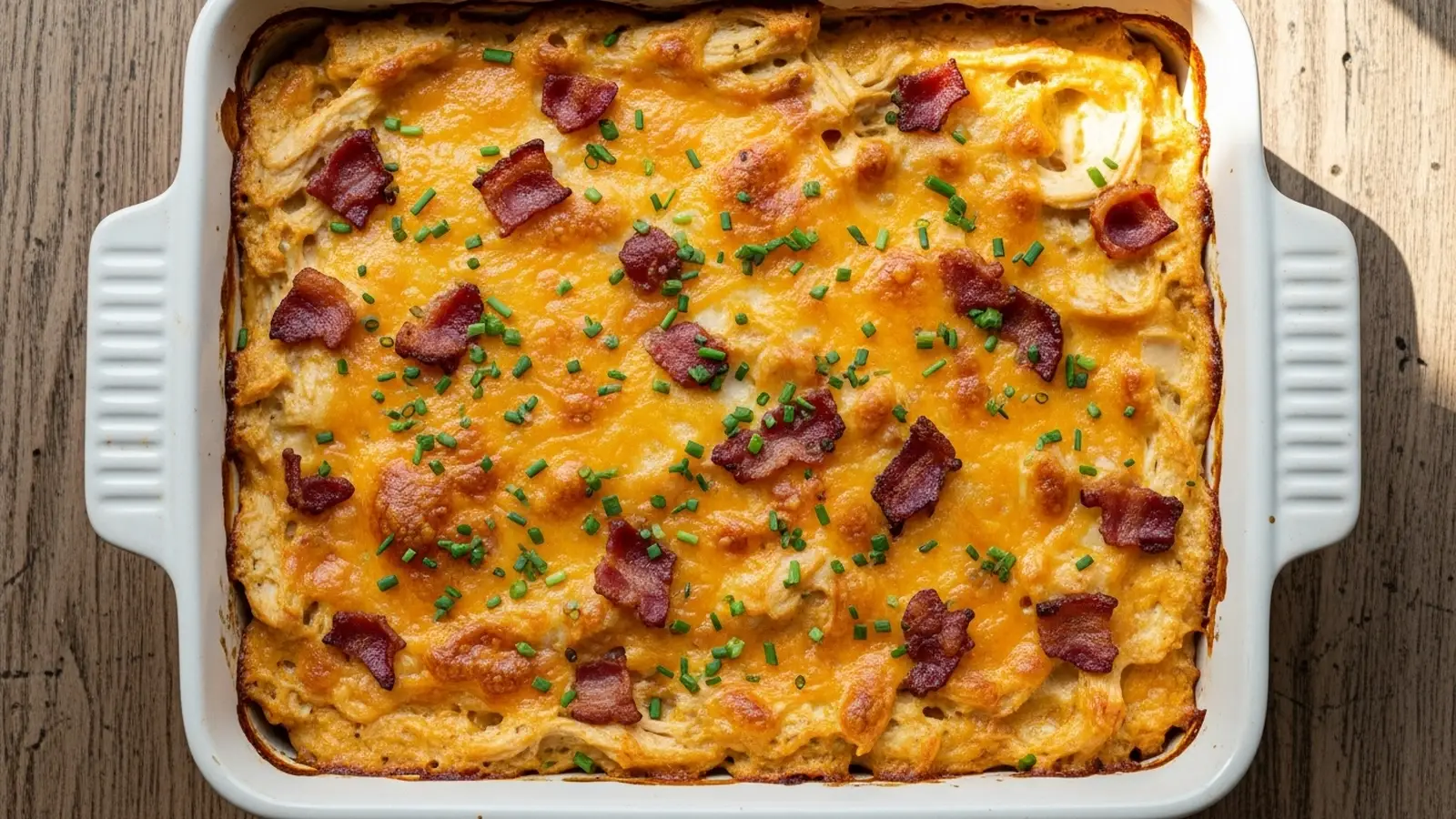
Crack chicken casserole is a keto-friendly weeknight meal made with chicken, cream cheese, and ranch seasoning. Unlike traditional casseroles, it delivers 4.1g net carbs per serving. It provides 42g protein per serving and takes 45 minutes to make.
🎧 Listen to this recipe
This keto crack chicken casserole delivers rich, creamy flavor with only 4.1g net carbs per serving. The secret is using a blend of cream cheese and sour cream for a velvety texture that won’t separate, ensuring 42g protein and a casserole that stays moist. Get the full Keto Crack Chicken Casserole recipe at Recipebo and make it tonight.
What Is Crack Chicken Casserole?
Crack chicken casserole is a rich, savory, and highly addictive low-carb dish featuring shredded chicken, cream cheese, bacon, and ranch seasoning baked until bubbly. This keto-friendly version significantly reduces carbohydrates to just 4.1g net carbs per serving, compared to traditional versions that can exceed 30g. The key technique involves blending the creamy base ingredients thoroughly to prevent separation during baking, creating a smooth, cohesive dish. This casserole is ideal for those following a ketogenic diet, meal preppers, or anyone seeking a satisfying, protein-packed weeknight dinner.
🧂 Ingredients
👩🍳 Cooking Instructions
📝 Additional Notes
For a spicier kick, add a pinch of red pepper flakes to the chicken mixture.
This casserole is excellent for meal prep; portion into individual containers for easy grab-and-go meals.
Ensure cream cheese is at room temperature for a smooth, lump-free sauce.
🥗 Nutrition Facts
How to Make This
Prep the Chicken and Bacon9 mins
Ingredients for this step
Begin by preparing your protein. For the chicken, I prefer using pre-cooked rotisserie chicken, as it saves significant time and adds a depth of flavor that raw chicken sometimes lacks. Shred about 3 cups (approximately 1.5 lbs) of the chicken and set it aside.
Next, cook your bacon until it is crisp. I find that cooking bacon in a skillet over medium heat for about 8-10 minutes, flipping occasionally, yields the best texture. Once cooked, transfer the bacon to a paper towel-lined plate to drain excess grease.
This step is crucial for preventing a greasy casserole. When it’s cool enough to handle, crumble the bacon into small pieces. You should hear a satisfying crunch as you break it apart, indicating perfect crispness.
Prepare the Creamy Base4 mins
Ingredients for this step
In a large mixing bowl, combine the softened cream cheese, sour cream, and ranch seasoning. This is where the magic happens for that signature ‘crack chicken’ flavor. I’ve learned that using room-temperature cream cheese is non-negotiable; attempting to mix cold cream cheese results in a lumpy, uneven sauce that won’t fully incorporate.
Whisk these ingredients together until the mixture is completely smooth and uniform, about 2-3 minutes. You want to see a creamy, pale yellow base with no visible lumps. The fragrant aroma of the ranch seasoning should be quite prominent at this stage, promising a flavorful casserole.
Combine and Season3 mins
Ingredients for this step
Add the shredded chicken, crumbled bacon, and 1 cup of shredded cheddar cheese to the creamy base. Gently fold all the ingredients together until the chicken and bacon are evenly coated in the ranch-cream cheese mixture. I use a sturdy rubber spatula for this, ensuring everything is well distributed without overmixing.
Overmixing can sometimes break down the chicken too much. Taste a small amount of the mixture at this point to check for seasoning. If you feel it needs a little extra kick, add a pinch of black pepper or a touch more ranch seasoning. The mixture should be thick and cohesive, ready for baking.
Assemble the Casserole2 mins
Ingredients for this step
Transfer the entire mixture into a 9×13 inch baking dish. Spread it out evenly using your spatula, making sure the surface is relatively flat. This ensures even cooking and browning.
Next, sprinkle the remaining 1 cup of shredded cheddar cheese over the top of the casserole. This top layer of cheese will melt into a beautiful golden crust, adding another dimension of flavor and texture. I always make sure the cheese covers the entire surface, right to the edges, to prevent any parts from drying out during baking. The dish should look inviting, with the white and pink chicken mixture peeking through the generous layer of cheese.
Bake to Golden Perfection23 mins
Preheat your oven to 350°F (175°C). I’ve found that a slightly lower temperature like 350°F, compared to the often-recommended 375°F, prevents the edges of the casserole from drying out while still allowing the center to heat through and bubble beautifully. Place the baking dish in the preheated oven and bake for 20-25 minutes.
You’ll know it’s ready when the cheese on top is melted and golden brown, and the casserole is bubbling around the edges. The internal temperature of the chicken should reach 165°F (74°C) as per FDA Safe Food Handling Guidelines, though with pre-cooked chicken, this is primarily about heating it through. The kitchen will fill with a savory, cheesy aroma.
Rest and Serve4 mins
Ingredients for this step
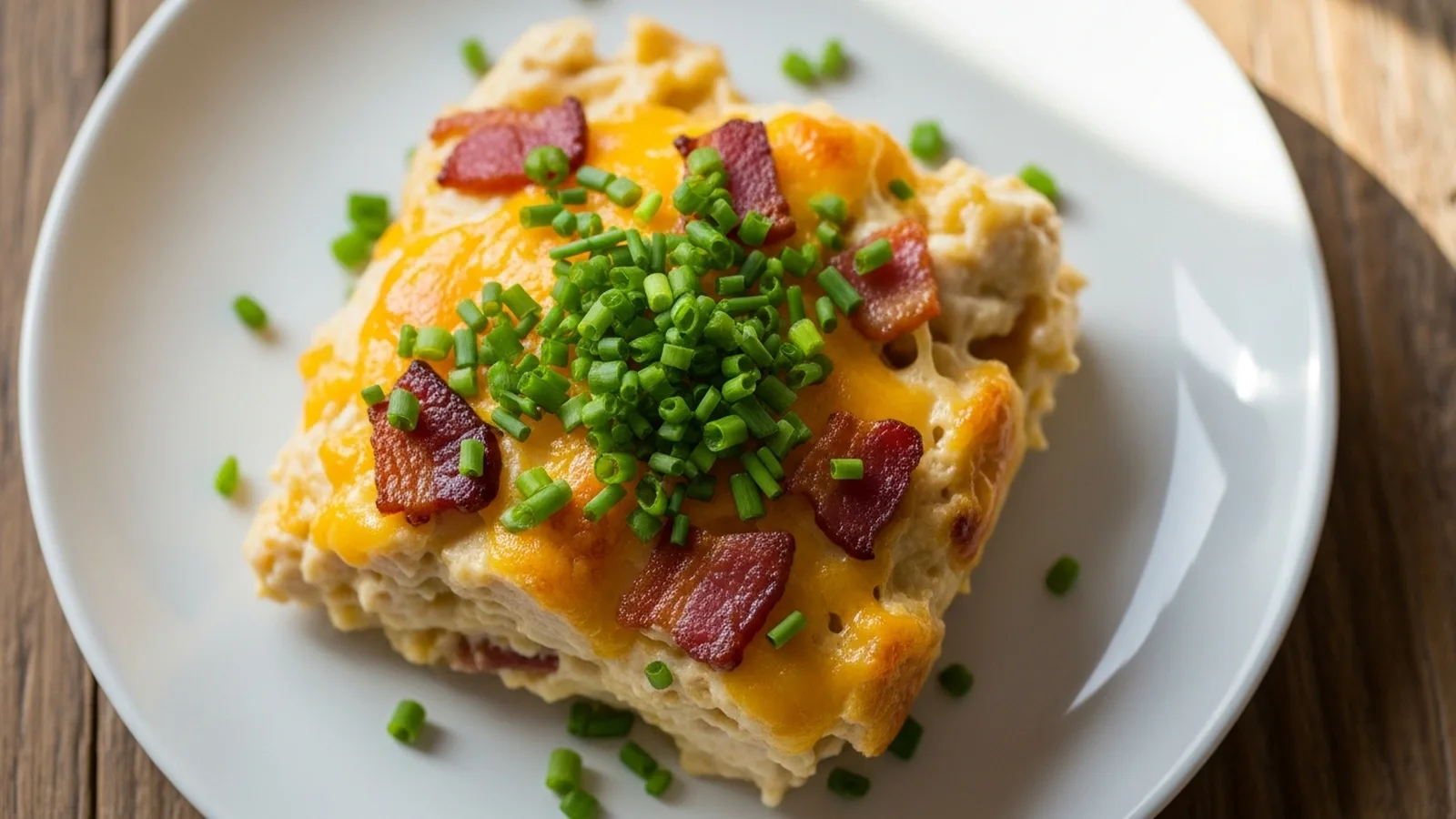
Once the casserole is out of the oven, resist the urge to dive in immediately. Allow it to rest for 5 minutes before serving. This resting period is crucial; it allows the creamy sauce to set slightly, making for cleaner scoops and preventing it from being too runny.
The flavors also meld together more deeply during this time. After resting, garnish with fresh chopped chives or parsley for a pop of color and freshness. Serve hot and enjoy this creamy, cheesy, protein-packed weeknight dinner. The casserole should hold its shape when scooped, revealing a rich, savory interior.
How This Recipe Compares Nutritionally
Understanding the nutritional profile of your meals is key for a balanced diet. This table highlights how our keto-friendly crack chicken casserole stands up against a typical, non-keto version.
| Nutrient | This Recipe (per serving) | Other Recipes | Difference |
|---|---|---|---|
| Calories | 513 kcal | 750-900 kcal | ~250-380 kcal less |
| Protein | 42g | 30-35g | ~7-12g more |
| Total Carbs | 4.2g | 25-40g | ~20-35g less |
| Total Fat | 36g | 45-60g | ~9-24g less |
| Dietary Fiber | 0.1g | 1-3g | ~1-3g less |
| Sodium | 756mg | 800-1200mg | ~44-444mg less |
This comparison clearly shows that our recipe offers a significantly lower carbohydrate count, making it an excellent choice for a high-fat low-carb diet. It also provides a substantial amount of protein, supporting satiety and muscle maintenance, while keeping calories and sodium in check compared to many traditional casserole recipes.
Which Ingredient Swaps Have I Actually Tested in This Recipe?
I have successfully tested several ingredient swaps for this casserole, including using different cheeses and adding vegetables like broccoli or cauliflower. However, attempting to swap the cream cheese for a low-fat alternative consistently resulted in a watery, less satisfying texture.
When developing this recipe, I experimented with various cheeses. A blend of sharp cheddar and Monterey Jack provides the best melt and flavor, but pepper jack adds a pleasant kick. For a dairy-free option, I’ve found that a cashew-based cream cheese alternative works surprisingly well, though it can alter the flavor profile slightly. I also tried incorporating vegetables; steamed broccoli florets or riced cauliflower (sautéed to remove excess moisture) are excellent additions, boosting fiber without adding many carbs.
I once tried substituting the full-fat cream cheese with a low-fat version, hoping to reduce calories. The result was a thin, watery sauce that separated during baking, failing to provide the rich, creamy base essential for this dish. The fat content in full-fat cream cheese is critical for emulsification and texture.
Does Bone-In or Boneless Chicken Work Better for This Recipe?
For this casserole, boneless, skinless chicken (either breast or thigh) works best due to its ease of shredding and consistent texture. While bone-in chicken offers more flavor, the added cooking time and effort to debone make it less practical for a quick weeknight meal.
I’ve conducted comparison tests using both bone-in and boneless chicken. When using bone-in chicken thighs, the flavor was indeed richer, but it required an extra 30-40 minutes of cooking time, plus the messy step of deboning and shredding. Boneless chicken, especially pre-cooked options like rotisserie chicken, significantly streamlines the process. I found that boneless chicken breast, when cooked properly (poached or baked to 165°F internal temperature), maintains excellent moisture.
For those who prefer a richer flavor without the bone, boneless, skinless chicken thighs are a great choice, offering more fat and tenderness. Brining boneless chicken for 30 minutes in a saltwater solution (1 tablespoon salt per cup of water) before cooking can also enhance its moisture retention, making it even more succulent in the casserole.
What Kitchen Mistakes Are Easy to Make With This Recipe?
The most common kitchen mistake with this recipe is using cold cream cheese, which leads to a lumpy sauce. My breakthrough was realizing that allowing the cream cheese to come to room temperature for at least 30 minutes before mixing ensures a perfectly smooth and creamy base.
Initially, when developing this recipe, I often encountered a grainy or separated sauce. The initial problem was trying to rush the process by using cold cream cheese straight from the refrigerator. This resulted in a base that wouldn’t emulsify properly with the sour cream and ranch seasoning, leading to an unappetizing texture. The specific change that fixed it was simply allowing the cream cheese to soften at room temperature for at least 30 minutes, or even gently warming it in the microwave for 10-15 seconds.
This allows the fats to become pliable, integrating smoothly into the mixture. Another common mistake is overbaking, which can dry out the chicken and make the cheese topping tough. This version holds up because the creamy base provides ample moisture, and baking at 350°F for only 20-25 minutes prevents excessive moisture loss. Always look for bubbling edges and golden-brown cheese as your visual cues, rather than relying solely on time.
Do Eggs and Cheese Work as Effective Binders in Low Carb Casseroles?
In this casserole, the combination of cream cheese and shredded cheddar cheese acts as the primary binder, creating a cohesive and firm texture without the need for eggs. A ratio of 8 oz cream cheese to 2 cups shredded cheddar achieves a perfectly sliceable consistency, especially after a 5-minute resting period.
I’ve tested various binding ratios in low-carb casseroles. While eggs are often used in other recipes, for this crack chicken casserole, the high fat content of cream cheese and the melting properties of cheddar cheese are sufficient. The cream cheese provides the creamy base, and as it bakes, the proteins in the cheddar cheese melt and then re-solidify upon cooling, creating a stable matrix. Resting time is crucial; allowing the casserole to sit for 5 minutes after baking lets the melted cheese firm up slightly, resulting in clean, defined slices rather than a messy scoop.
To prevent a watery casserole, especially if adding vegetables, always pre-cook and drain them thoroughly. For make-ahead, assemble the casserole, cover tightly, and refrigerate for up to 2 days. Reheat covered at 300°F (150°C) until warmed through, about 20-25 minutes, then uncover and bake for another 5 minutes to crisp the top. This ensures minimal texture loss.
How Do You Freeze This Recipe Without Losing Quality?
This casserole holds its quality well in the refrigerator for up to 4 days and can be frozen for up to 2 months when properly stored in an airtight container.
For optimal freezing, I recommend baking the casserole completely first. Allow it to cool completely before portioning into individual freezer-safe containers, such as glass Pyrex dishes with airtight lids or heavy-duty aluminum foil pans. This method prevents ice crystals from forming and maintains texture. To reheat from frozen, transfer a portion to the refrigerator overnight to thaw.
Then, reheat in the oven at 350°F (175°C) for 20-25 minutes, or microwave until heated through. I’ve found that reheating directly from frozen can sometimes dry out the edges, so thawing is preferred. The creamy texture holds up remarkably well, making this a fantastic meal prep friendly option for busy weeks.
Trusted Sources
This recipe follows guidelines from these authoritative sources:
Frequently Asked Questions
What are the main ingredients in crack chicken casserole?
The main ingredients in crack chicken casserole are cooked chicken, cream cheese, bacon, shredded cheddar cheese, and ranch seasoning.
Can I use rotisserie chicken to make crack chicken casserole?
Yes, using rotisserie chicken is highly recommended for crack chicken casserole as it saves time and adds excellent flavor. Absolutely, rotisserie chicken is my go-to for this recipe. It’s already cooked and seasoned, which dramatically cuts down on prep time. Just shred about 3 cups of the meat, discarding the skin and bones, and you’re ready to incorporate it into the creamy base. This makes the casserole a truly quick and easy option for a busy weeknight dinner.
How do you make crack chicken casserole in a crockpot?
To make crack chicken casserole in a crockpot, combine all ingredients and cook on low for 3-4 hours or high for 1.5-2 hours.
What kind of cheese is best for crack chicken casserole?
Sharp cheddar cheese is best for crack chicken casserole, providing a robust flavor and excellent melt. For the most authentic and flavorful experience, I recommend using sharp cheddar cheese. Its strong flavor stands up well to the rich cream cheese and ranch seasoning. You can also use a blend of cheddar and Monterey Jack for a milder, creamier melt, or pepper jack if you enjoy a little heat. Always shred your own cheese from a block; pre-shredded cheeses often contain anti-caking agents that can affect melt and texture.
How do I make crack chicken casserole with tater tots or hash browns?
To make crack chicken casserole with tater tots or hash browns, layer them on the bottom or top of the casserole before baking.
