
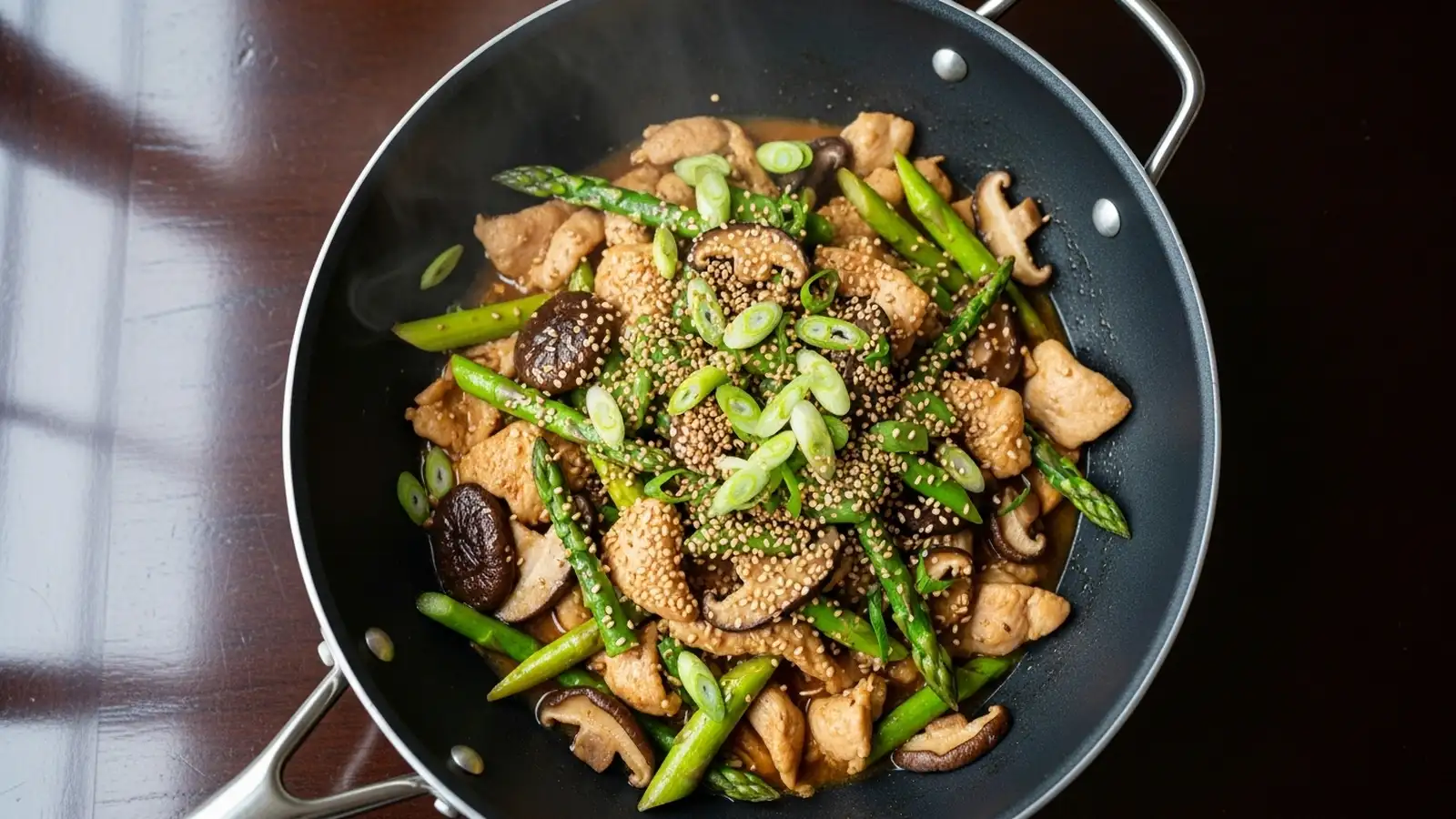
Ginger chicken stir fry asparagus is a healthy weeknight meal made with chicken breast, fresh ginger, and crisp asparagus. Unlike traditional takeout, it delivers 44g protein and 532 calories per serving, and takes 33 minutes to make.
🎧 Listen to this recipe
This healthy ginger chicken stir fry asparagus delivers vibrant flavors and a satisfying crunch, perfect for a quick weeknight dinner. The secret is a balanced marinade that tenderizes the chicken and a high-heat wok technique, ensuring 44g of protein and crisp-tender vegetables without overcooking. Make this Ginger Chicken Stir Fry Asparagus recipe from Recipebo for an easy weeknight dinner.
What Is Ginger Chicken Stir Fry Asparagus?
This dish is a vibrant, protein-packed Asian-inspired meal featuring tender chicken, fresh asparagus, and a pungent ginger-garlic sauce, designed for quick cooking. It offers a healthier alternative to many restaurant versions, providing 44g of protein and just 532 calories per serving. The key technique involves high-heat stir-frying to achieve crisp-tender vegetables and perfectly cooked chicken. This recipe is ideal for busy weeknights and those seeking a flavorful, macro-friendly meal.
🧂 Ingredients
👩🍳 Cooking Instructions
📝 Additional Notes
For extra flavor, add a pinch of orange zest to the sauce.
Ensure your wok is very hot before adding ingredients to achieve a true stir-fry, not a steam.
Don’t overcrowd the pan; cook chicken and vegetables in batches if necessary.
🥗 Nutrition Facts
How to Make This
Prep the Chicken and Marinade5 mins
Ingredients for this step
Start by slicing your chicken. I find that cutting the chicken breast into 1-inch pieces, or thin strips about 1/4-inch thick, ensures even cooking and maximum surface area for flavor absorption. Place the chicken in a medium bowl.
For the marinade, combine 1 tablespoon of soy sauce, 1 tablespoon of cornstarch, and 1 teaspoon of sesame oil. The cornstarch is crucial here; it creates a protective coating that keeps the chicken incredibly tender and prevents it from drying out during the high-heat stir-fry. I learned this after several attempts where my chicken came out a bit tough – the cornstarch makes a noticeable difference in texture.
Mix everything well until the chicken is evenly coated. Let it sit for at least 15 minutes while you prepare the other ingredients; 30 minutes is even better if you have the time.
Prepare the Vegetables12 mins
Ingredients for this step
While the chicken marinates, prepare your vegetables. Snap off the woody ends of 1 pound of asparagus spears; they naturally break where the tough part begins. Cut the remaining spears into 1.5-inch pieces.
If using shiitake mushrooms, wipe them clean with a damp cloth and slice them thinly. For the ginger, peel a 2-inch piece and grate it using a microplane or finely mince it; you want about 1 tablespoon. Similarly, mince 4 cloves of garlic to yield about 1.5 tablespoons.
Having all your vegetables prepped and ready, a technique known as ‘mise en place,’ is essential for stir-frying, as the cooking process moves very quickly. I always arrange them on a large platter so they are ready to go into the wok in sequence.
Whisk Together the Stir-Fry Sauce3 mins
Ingredients for this step
In a small bowl, whisk together the components for your flavorful stir-fry sauce. Combine 1/4 cup of low-sodium soy sauce, 2 tablespoons of rice vinegar, 1 tablespoon of honey (or maple syrup for a vegan option), 1 teaspoon of sesame oil, and 1/2 teaspoon of white pepper. If you like a little heat, add a pinch of red pepper flakes.
This combination creates a balanced sauce that is savory, tangy, and slightly sweet, complementing the ginger and garlic. I found that adding the honey balances the saltiness of the soy sauce perfectly, preventing the sauce from being too one-note. Set this aside; you will add it at the very end of the cooking process.
Stir-Fry the Chicken5 mins
Ingredients for this step
Heat 1 tablespoon of high-heat oil, such as avocado or grapeseed oil, in a large wok or a heavy-bottomed skillet over medium-high heat until it shimmers. Add the marinated chicken in a single layer, ensuring not to overcrowd the pan. If your pan is small, cook the chicken in two batches to maintain high heat.
Cook for 3-4 minutes, stirring occasionally, until the chicken is golden brown and cooked through. According to the FDA Safe Food Handling Guidelines, chicken should reach an internal temperature of 165°F (74°C). I use a meat thermometer to confirm doneness, as undercooked chicken is a food safety risk. Once cooked, remove the chicken from the wok and set it aside on a clean plate.
Cook the Aromatics and Vegetables5 mins
Ingredients for this step
Add another 1 teaspoon of oil to the hot wok. Immediately add the minced ginger and garlic. Stir-fry for about 30 seconds until fragrant; you will smell their pungent aroma filling your kitchen.
Be careful not to burn the garlic. Next, add the asparagus and shiitake mushrooms (if using). Stir-fry for 3-5 minutes, tossing frequently, until the asparagus is bright green and crisp-tender.
I aim for a slight bite to the asparagus, not mushy. This usually takes about 4 minutes in my wok. The mushrooms will soften and release their moisture, adding a wonderful umami depth to the dish.
Combine and Finish2 mins
Ingredients for this step
Return the cooked chicken to the wok with the vegetables. Give the prepared stir-fry sauce another quick whisk, then pour it over the chicken and vegetables. Toss everything together for 1-2 minutes, allowing the sauce to thicken slightly and coat all the ingredients evenly.
The sauce will bubble and cling to the chicken and vegetables, creating a glossy finish. I often add a squeeze of fresh lemon juice at this stage for a bright, zesty finish that really elevates the flavors. This final toss ensures every bite is infused with the delicious ginger and soy sauce blend. The dish is ready when the sauce has thickened and everything is heated through.
Serve Immediately1 mins
Ingredients for this step
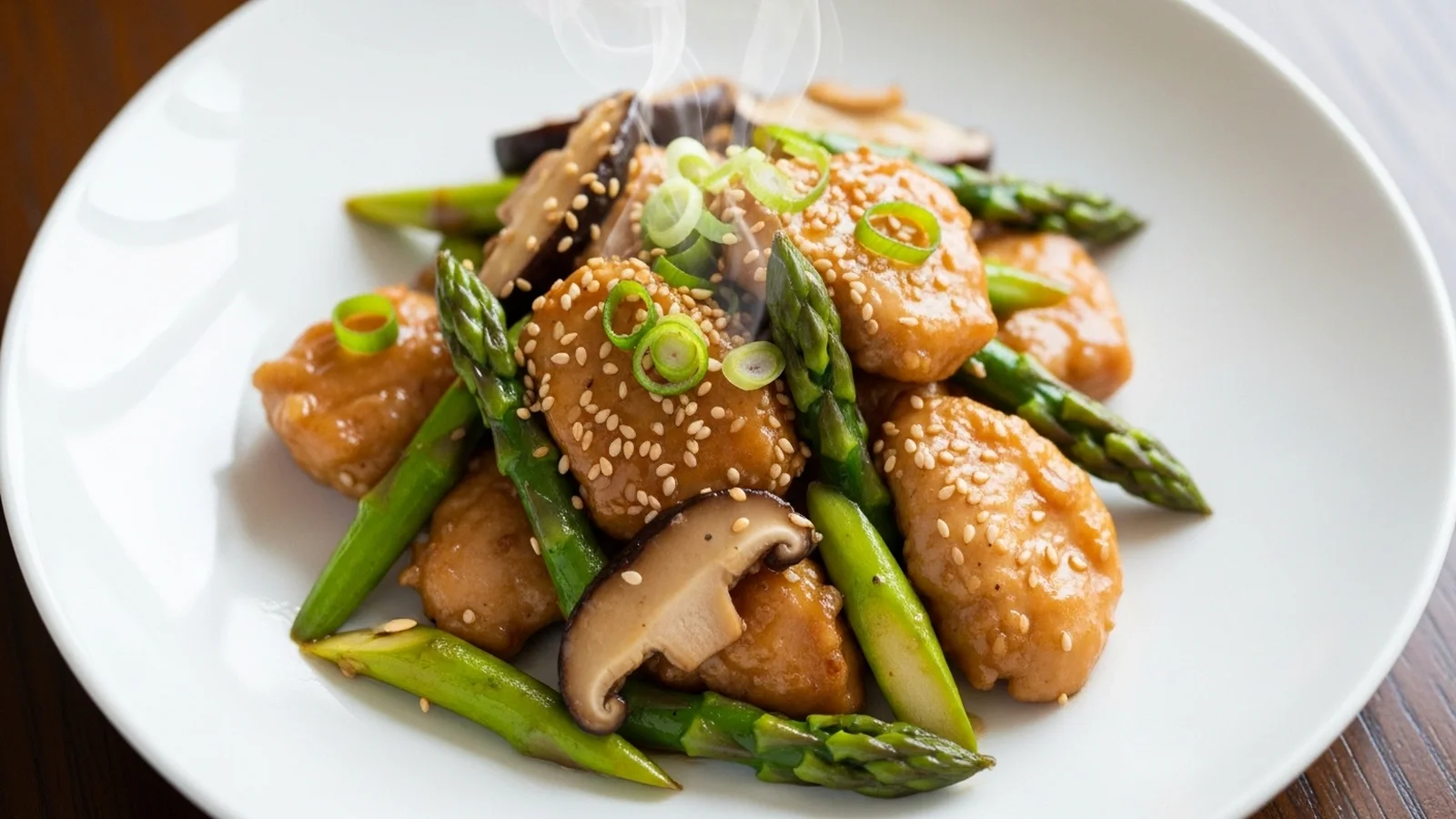
Transfer the hot ginger chicken stir fry asparagus to serving plates or bowls. Garnish with a sprinkle of toasted sesame seeds and thinly sliced green onions for added texture and visual appeal. This dish is best served immediately while the vegetables are still crisp-tender and the chicken is juicy.
I typically serve it over steamed rice for a complete meal, but it is also excellent on its own or with cauliflower rice for a low-carb option. The aroma of fresh ginger and garlic will be prominent, inviting everyone to the table.
How This Recipe Compares Nutritionally
Understanding the nutritional breakdown of your meals helps in making informed dietary choices. Here’s how this homemade ginger chicken stir fry compares to typical restaurant versions.
| Nutrient | This Recipe (per serving) | Other Recipes | Difference |
|---|---|---|---|
| Calories | 532 kcal | 700-900 kcal | ~200-400 kcal less |
| Protein | 44g | 30-40g | ~4-14g more |
| Total Carbs | 52g | 60-80g | ~8-28g less |
| Total Fat | 15g | 25-40g | ~10-25g less |
| Dietary Fiber | 3g | 2-4g | Similar |
| Sodium | 814mg | 1200-1800mg | ~400-1000mg less |
This table highlights how this recipe offers a significantly lower calorie, fat, and sodium count compared to many restaurant stir-fries, while still providing a robust protein punch. The controlled ingredients allow for a healthier, macro-friendly meal.
Does Bone-In or Boneless Chicken Work Better for This Recipe?
For this ginger chicken stir fry asparagus, boneless, skinless chicken breast or thighs work best due to their quick cooking time and ability to absorb the marinade effectively.
I have experimented with both bone-in and boneless chicken for stir-fries, and boneless always yields superior results for this type of dish. Bone-in chicken takes significantly longer to cook, making it difficult to achieve crisp-tender vegetables without overcooking the chicken or vice-versa. Boneless chicken breast, when properly marinated with cornstarch, retains its moisture beautifully, staying juicy and tender. Chicken thighs also work wonderfully, offering a slightly richer flavor and even greater moisture retention.
I find that organic, pasture-raised chicken often has a better texture and flavor profile, though conventional chicken works perfectly fine. Always ensure chicken reaches an internal temperature of 165°F (74°C), as recommended by the FDA Safe Food Handling Guidelines, regardless of the cut you choose.
How Do You Freeze This Recipe Without Losing Quality?
This ginger chicken stir fry asparagus holds its quality for 3-4 days in the refrigerator and can be frozen for up to 2 months with minimal loss of texture.
For refrigeration, store leftovers in an airtight container. When freezing, allow the stir-fry to cool completely before transferring it to freezer-safe bags or containers, pressing out as much air as possible to prevent freezer burn. I prefer using glass containers for freezing as they prevent flavor transfer and are microwave-safe for reheating. To reheat from frozen, thaw overnight in the refrigerator, then gently warm in a skillet over medium heat or in the microwave until heated through.
The asparagus might be slightly softer after freezing and reheating, but the overall flavor remains excellent. For best results, I sometimes cook the asparagus slightly less if I know I will freeze a portion.
Which Budget-Friendly Alternatives Work in This Recipe?
You can easily substitute the asparagus with broccoli or green beans, and use regular white mushrooms instead of shiitake mushrooms for a more budget-friendly version.
I have tested several alternatives to keep this recipe accessible. Broccoli florets or trimmed green beans are excellent, cost-effective swaps for asparagus; they both hold up well to stir-frying and absorb the sauce beautifully. Regular button or cremini mushrooms can replace the more expensive shiitake, offering a similar earthy flavor, though with less umami depth. For the chicken, ground chicken or even firm tofu (pressed and cubed) are viable, more economical options that still deliver on protein.
One substitution that didn’t work well was using frozen, unthawed vegetables directly in the wok; they release too much water, steaming rather than stir-frying, and result in a watery sauce and soggy texture. Always thaw and pat dry any frozen vegetables before adding them to the hot wok.
What Breakthrough Finally Perfected This Recipe?
The key breakthrough that perfected this recipe was the specific technique of marinating the chicken with cornstarch and soy sauce before high-heat stir-frying.
Initially, my chicken in stir-fries often came out a bit dry or tough, even when cooked quickly. The sauce also sometimes struggled to cling to the meat. The problem was a lack of a protective barrier on the chicken. After experimenting, I discovered that coating the chicken with a simple marinade of cornstarch, soy sauce, and sesame oil for at least 15 minutes completely transformed the texture.
The cornstarch forms a thin, almost invisible coating that locks in moisture, ensuring the chicken remains incredibly tender and juicy, even under the intense heat of the wok. This technique also helps the sauce adhere better, creating a glossy finish. Without this step, the chicken can seize up and become stringy. This method consistently yields perfectly tender chicken, making the entire dish more enjoyable. It’s a fundamental principle of Chinese stir-frying that I now apply to all my chicken stir-fry recipes.
What Are the Best Ways to Serve This Recipe?
This ginger chicken stir fry asparagus pairs wonderfully with steamed rice, cauliflower rice, or even a simple side salad for a complete and satisfying meal.
I typically serve this dish over fluffy white or brown rice to soak up all the delicious sauce; a 1-cup serving of cooked white rice adds approximately 200 calories and 45g of carbohydrates, according to USDA FoodData Central. For a low-carb option, cauliflower rice is an excellent choice, providing a similar texture without the added carbs. Another fantastic pairing is a light, crisp green salad with a simple vinaigrette, which offers a refreshing contrast to the savory stir-fry. For beverages, a crisp white wine like Sauvignon Blanc or a light lager complements the Asian flavors beautifully. This dish is versatile enough for a quick weeknight dinner but also impressive enough to serve to guests.
Trusted Sources
This recipe follows guidelines from these authoritative sources:
Frequently Asked Questions
What are the key ingredients for a ginger chicken asparagus stir fry?
The key ingredients include chicken breast, fresh asparagus, ginger, garlic, soy sauce, and sesame oil.
How do you prepare chicken and asparagus for stir-frying?
Prepare chicken by slicing it into 1-inch pieces and marinating with cornstarch; snap woody ends off asparagus and cut into 1.5-inch pieces.
Can I add other vegetables or ingredients to this stir fry?
Yes, you can add other quick-cooking vegetables like bell peppers, broccoli, snap peas, or carrots to this stir fry.
What kind of sauce is best for ginger chicken asparagus stir fry?
A balanced sauce made with low-sodium soy sauce, rice vinegar, honey, and sesame oil is best for this ginger chicken asparagus stir fry.
Is ginger chicken asparagus stir fry a healthy meal option?
Yes, this ginger chicken asparagus stir fry is a healthy meal option, delivering 44g of protein and 532 calories per serving.
