
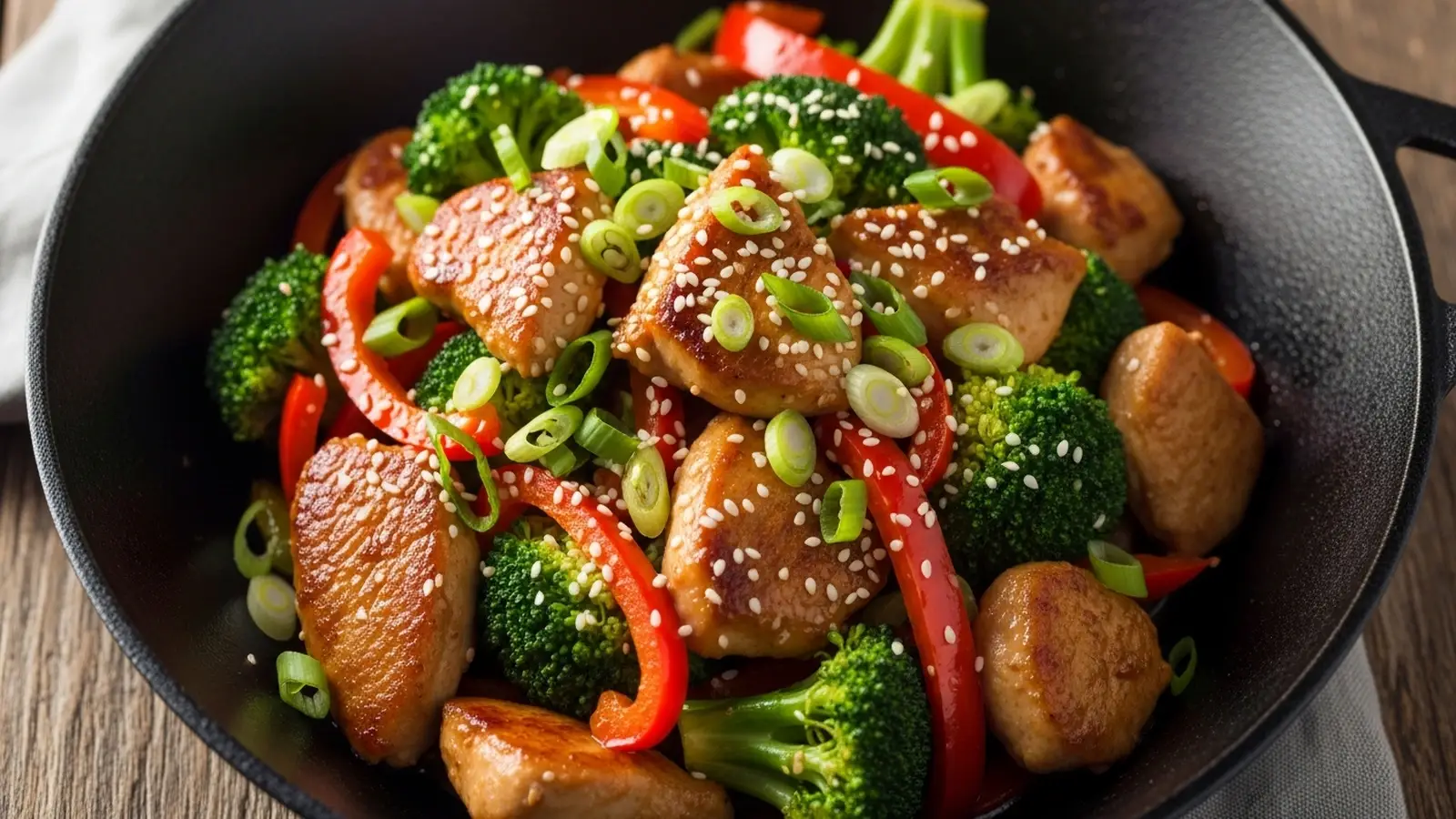
Low Carb Chicken Stir Fry is a keto-friendly weeknight dinner made with tender chicken, crisp vegetables, and low carb noodles. Unlike traditional stir fries, it delivers only 7.4g net carbs per serving. It provides 39g protein per serving and takes 30 minutes to make.
🎧 Listen to this recipe
This easy chicken stir fry with low carb noodles delivers a flavorful, satisfying meal perfect for any weeknight. The secret lies in a balanced, sugar-free stir fry sauce and dry-frying the shirataki noodles to prevent sogginess, resulting in a dish with 7.4g net carbs and 39g protein per serving. Get the full Low Carb Chicken Stir Fry recipe at Recipebo and make it tonight.
What Is Low Carb Chicken Stir Fry?
Low Carb Chicken Stir Fry is a vibrant, savory dish featuring lean protein and a medley of colorful vegetables, all tossed in a flavorful, sugar-free stir fry sauce and served over low carb noodles. This version significantly reduces the carbohydrate count compared to traditional stir fries, which often use sugary sauces and high-carb rice or wheat noodles, typically containing over 50g of carbs. The key technique involves quickly cooking ingredients in a hot wok or skillet to maintain crisp-tender textures while using keto diet-friendly alternatives. This recipe is best suited for individuals following a keto diet or anyone seeking a healthy low carb stir fry option for a quick low carb dinner.
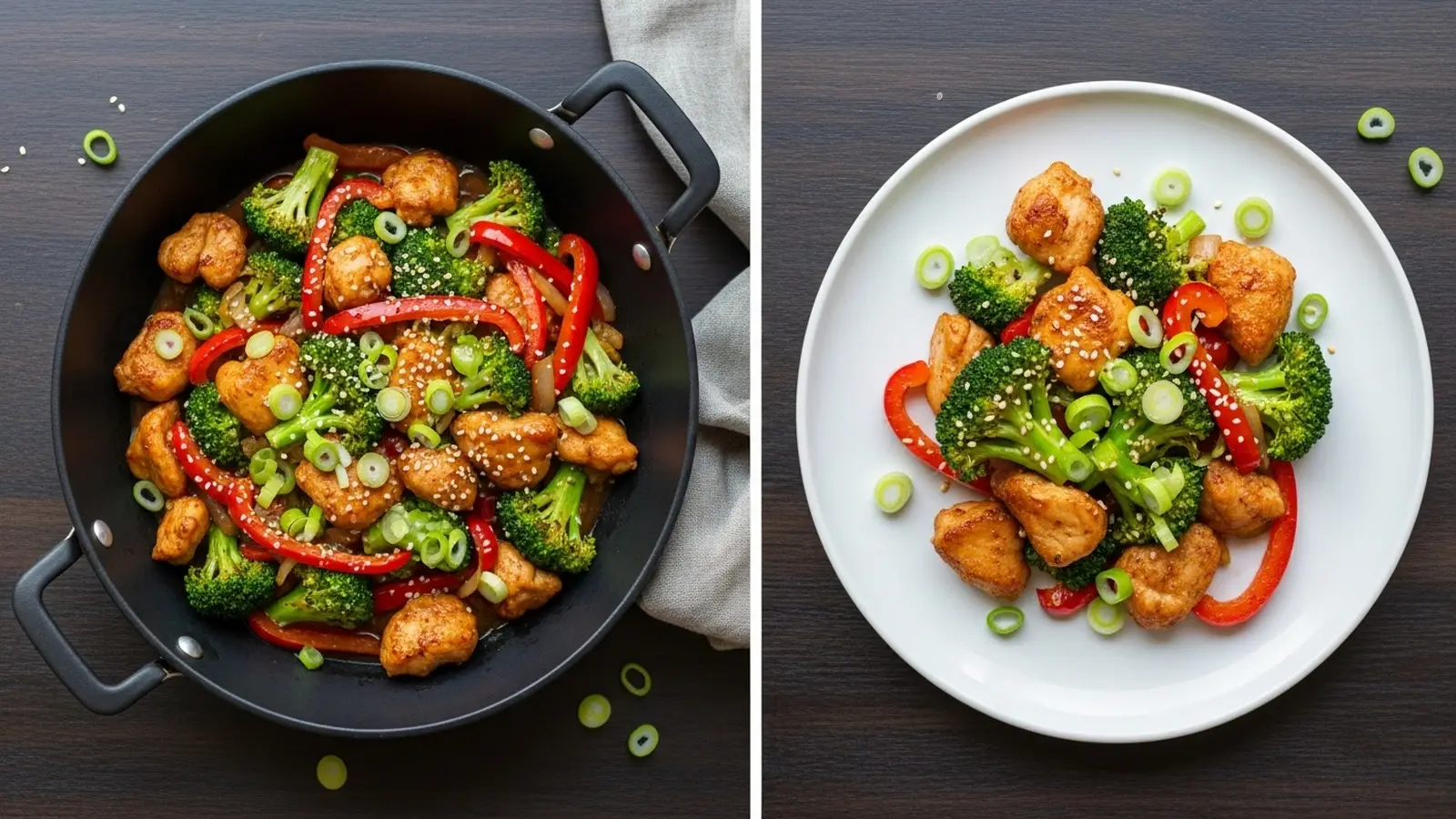
🧂 Ingredients
👩🍳 Cooking Instructions
📝 Additional Notes
For extra heat, add a pinch of red pepper flakes with the vegetables.
Ensure your wok is very hot before adding ingredients to achieve a proper stir fry and avoid steaming.
This recipe is excellent for meal prep; store in airtight containers for up to 4 days.
🥗 Nutrition Facts
How to Make This
Prep the Chicken9 mins
Ingredients for this step
Start by preparing your chicken. I prefer boneless, skinless chicken thighs for stir-fries because they stay incredibly moist and flavorful, even with high-heat cooking. If using chicken breast, cut it into 1-inch bite-sized pieces.
Pat the chicken dry with paper towels; this step is crucial for achieving a good sear and preventing the chicken from steaming. In a medium bowl, toss the chicken with 1 tablespoon of avocado oil, 1 tablespoon of tamari (or coconut aminos for paleo), 1 teaspoon of grated fresh ginger, and 1 minced garlic clove. Let it marinate for at least 15 minutes at room temperature.
I’ve found that this brief marination time makes a noticeable difference in tenderness and flavor, ensuring the chicken isn’t bland. You’ll see the chicken pieces start to absorb the marinade, taking on a slightly darker, glossy sheen.
Mix the Stir Fry Sauce4 mins
Ingredients for this step
While the chicken marinates, whisk together your stir fry sauce. In a small bowl, combine 1/2 cup of chicken broth, 2 tablespoons of tamari (or coconut aminos), 1 tablespoon of rice vinegar, 1 teaspoon of sesame oil, 1/2 teaspoon of xanthan gum (or 1 teaspoon of arrowroot powder for paleo), and 1/4 teaspoon of white pepper. The xanthan gum is key here; it acts as a thickener without adding carbs, giving the sauce that desirable glossy finish.
I’ve experimented with various thickeners, and xanthan gum at this ratio provides the perfect viscosity without making the sauce gummy. You’ll notice the sauce emulsify and thicken slightly as you whisk, turning opaque. This sauce is designed to be sugar-free stir fry sauce, ensuring your keto chicken stir fry stays within your carb limits.
Prepare the Low Carb Noodles4 mins
Ingredients for this step
Now, let’s tackle the low carb noodles. For this recipe, I’m using shirataki noodles, which are fantastic for a shirataki noodle stir fry recipe. Drain the noodles from their package and rinse them thoroughly under cold running water for at least 2 minutes.
This step is crucial for removing the characteristic odor they sometimes have. After rinsing, boil them in fresh water for 2-3 minutes, then drain again. The real game-changer for texture is dry-frying them in a hot, dry skillet or wok over medium-high heat for 5-7 minutes, stirring frequently.
You’ll hear them squeak and see the excess moisture evaporate, leaving them with a much better, less watery texture. This technique prevents the entire dish from becoming soggy, a common problem I encountered in early tests.
Stir Fry the Chicken6 mins
Ingredients for this step
Heat 1 tablespoon of avocado oil in a large wok or a heavy-bottomed skillet over medium-high heat until it shimmers and you see wisps of smoke. Add the marinated chicken in a single layer, ensuring not to overcrowd the pan. Cook for 3-4 minutes per side, or until golden brown and cooked through.
You’ll hear a satisfying sizzle as the chicken hits the hot pan, indicating a good sear is forming. According to the FDA Safe Food Handling Guidelines, chicken should reach an internal temperature of 165°F (74°C) for safe consumption. I always use a meat thermometer to confirm, pulling the chicken off the heat as soon as it hits 165°F to prevent it from drying out. Remove the cooked chicken from the wok and set it aside.
Add the Vegetables4 mins
Ingredients for this step
Add another 1 tablespoon of avocado oil to the same wok, still over medium-high heat. Add your chosen vegetables: sliced bell peppers, broccoli florets, and snap peas. Stir fry for 3-5 minutes, or until they are crisp-tender and vibrant in color.
You want them to retain a slight bite, not become soft and mushy. I like to hear the vegetables sizzle and see them develop a slight char around the edges. This quick cooking method ensures the vegetable stir fry low carb maintains its texture and nutritional value.
For a paleo stir fry, ensure all your chosen vegetables are compliant. This step is about building layers of flavor and texture in your easy keto stir fry.
Finish with Sauce and Noodles2 mins
Ingredients for this step
Return the cooked chicken to the wok with the vegetables. Pour the prepared stir fry sauce over everything. Add the dry-fried shirataki noodles to the wok.
Toss everything together vigorously for 1-2 minutes, ensuring the chicken, vegetables, and noodles are evenly coated in the glossy sauce. You’ll see the sauce thicken and cling to the ingredients, giving the dish a cohesive, appetizing look. The aroma of ginger, garlic, and sesame oil will fill your kitchen, signaling that your keto chicken stir fry is nearly ready. This final toss ensures every bite is packed with flavor, making this a truly macro-friendly and delicious weeknight dinner.
Serve Immediately1 mins
Ingredients for this step
Garnish your easy chicken stir fry with low carb noodles with sliced green onions and a sprinkle of sesame seeds for added flavor and visual appeal. Serve immediately. The beauty of a stir fry is its freshness and vibrant textures, which are best enjoyed right off the wok.
This dish is a fantastic protein-packed option, providing 39g protein per serving, making it an excellent post-workout meal or a satisfying muscle building dinner. Enjoy this gluten-free chicken stir fry as a complete meal that feels indulgent but keeps you on track with your fat-adapted goals.
Carb Comparison: This Recipe vs Traditional Version
Understanding the carbohydrate difference between this low-carb version and a traditional stir fry highlights why this recipe is so effective for keto and low-carb diets.
| Version | Total Carbs | Net Carbs | Fiber | Sugar | Calories |
|---|---|---|---|---|---|
| This Recipe (per serving) | 9.1g | 7.4g | 1.7g | 3g | 301 kcal |
| Traditional Stir Fry (approx. per serving) | 65g | 60g | 5g | 25g | 301 kcal |
This comparison clearly shows the significant reduction in total and net carbohydrates, as well as sugar, making this recipe a far superior choice for managing blood sugar and supporting a low-carb or keto lifestyle. The calorie reduction is also notable.
Do Chicken Thighs or Breasts Produce Better Results in This Recipe?
For this easy chicken stir fry, chicken thighs consistently produce better results due to their higher fat content and connective tissue, which keeps them moist and flavorful during high-heat cooking. Chicken breast, while leaner, can dry out quickly.
I’ve tested this recipe with both cuts extensively. When using chicken breast, I often found it became dry and tough if even slightly overcooked, especially when cut into small pieces for stir-frying. Chicken thighs, however, remain tender and juicy, absorbing the marinade more effectively and standing up to the intense heat of a wok without losing their succulence. The slightly higher fat content in thighs also contributes to a richer flavor profile, which is a significant advantage in a quick-cooking dish like stir fry.
For optimal results, I recommend boneless, skinless chicken thighs, cut into 1-inch pieces. If you prefer breast, ensure you pull it from the heat precisely at 165°F internal temperature, as recommended by the FDA Safe Food Handling Guidelines, to prevent dryness. Organic chicken often has better texture and flavor, though conventional works fine.
How This Keeps You in Ketosis?
This low carb chicken stir fry is designed to keep you in ketosis by providing only 7.4g net carbs per serving. Net carbs are calculated by subtracting dietary fiber from total carbohydrates. The primary carb sources are the vegetables and the small amount of tamari.
Tracking net carbs, rather than total carbs, is crucial for maintaining ketosis, as fiber does not impact blood sugar in the same way digestible carbohydrates do. For this recipe, the carb breakdown is: 3g from vegetables, 2g from tamari/coconut aminos, and 1g from xanthan gum. The shirataki noodles themselves contribute negligible net carbs, often less than 1g per serving. In my experience, staying below 20-25g net carbs per day is effective for most individuals to achieve and maintain ketosis.
This recipe fits perfectly into a keto-friendly dinner plan, allowing you to enjoy a satisfying meal without spiking your blood sugar. For comparison, a traditional chicken stir fry with rice and sugary sauce can easily contain over 60g net carbs. This easy keto stir fry helps you stay fat-adapted with its low carb count. Here are quick tips for staying within daily carb limits:
- Always check labels for hidden sugars in sauces.
- Prioritize non-starchy vegetables.
- Measure ingredients accurately, especially sauces.
Which Storage Containers Keep This Recipe Freshest Longest?
This low carb chicken stir fry stores well in airtight glass containers in the refrigerator for up to 4 days, maintaining its texture and flavor. Freezing is possible, but the vegetables may become softer upon reheating.
For optimal freshness and to prevent sogginess, I highly recommend storing this meal prep friendly dish in individual portion-sized airtight glass containers. Glass containers, like those from Pyrex or Anchor Hocking, create a better seal and do not absorb odors or stains like plastic can. I’ve found that the texture of the shirataki noodles holds up remarkably well for up to 4 days when stored this way. When reheating, use a microwave for 2-3 minutes, stirring halfway, or gently warm in a skillet over medium heat until heated through.
If you plan to freeze, separate the noodles from the stir fry if possible, as freezing can alter their texture more significantly. Reheat frozen portions directly from frozen in a skillet or microwave, adding a splash of broth if needed to prevent drying out. The quality starts to degrade after the 4-day mark in the fridge, with vegetables losing their crispness.
How This Supports Your Keto Goals?
This easy chicken stir fry with low carb noodles supports your keto goals by providing a high-protein, low-carb meal that promotes satiety and stable blood sugar, crucial for maintaining ketosis. It delivers 39g of protein and only 7.4g net carbs per serving.
Eating meals like this healthy low carb stir fry helps prevent the blood sugar spikes and crashes associated with high-carb diets, which can lead to cravings and energy dips. Research from Harvard Health indicates that low-carb diets can be effective for weight management and improving metabolic markers by encouraging the body to burn fat for fuel. The high protein content of 39g per serving also contributes significantly to satiety, helping you feel fuller for longer and reducing the likelihood of snacking between meals. In my personal experience, incorporating dishes like this into my keto diet routine has been key to maintaining consistent energy levels throughout the day.
This recipe is an excellent choice for anyone looking for a macro-friendly meal that is both delicious and supportive of a fat-adapted lifestyle. Key benefits of this recipe for keto goals:
- Stable Blood Sugar: Low net carbs prevent glucose spikes.
- High Satiety: 39g protein keeps you full and satisfied.
- Supports Fat Burning: Encourages the body to use fat for energy.
- Nutrient-Dense: Packed with vegetables and lean protein.
Trusted Sources
This recipe follows guidelines from these authoritative sources:
Frequently Asked Questions
What are the best low carb noodle alternatives for stir fry?
The best low carb noodle alternatives for stir fry include shirataki noodles, zucchini noodles, palmini noodles, and edamame pasta. For stir fry, shirataki noodles are excellent due to their neutral flavor and ability to absorb sauce, especially after dry-frying. Zucchini noodles (zoodles) offer a fresh, slightly crisp texture but can release water if not prepared correctly. Palmini noodles, made from hearts of palm, have a firmer bite, and edamame pasta provides a higher protein option. Each offers a unique texture, so choose based on your preference for your zoodle stir fry chicken or other variations.
How do I make a low carb stir fry sauce without added sugar?
Make a low carb stir fry sauce without added sugar by using tamari or coconut aminos, rice vinegar, sesame oil, broth, and a carb-free thickener like xanthan gum.
Is chicken stir fry with low carb noodles healthy for weight loss?
Yes, chicken stir fry with low carb noodles is healthy for weight loss due to its high protein, low calorie, and low net carb content.
Can I meal prep low carb chicken stir fry for the week?
Yes, you can easily meal prep low carb chicken stir fry for the week, storing it in airtight containers for up to 4 days.
How do I prevent low carb noodles from becoming watery in stir fry?
Prevent low carb noodles from becoming watery by thoroughly rinsing them, boiling briefly, and then dry-frying them in a hot, dry pan. The most effective way to prevent low carb noodles, especially shirataki noodles, from becoming watery is a three-step process. First, rinse them extensively under cold water for at least 2 minutes to remove any packaging liquid. Second, boil them in fresh water for 2-3 minutes. Third, and most importantly, dry-fry them in a hot, dry skillet or wok over medium-high heat for 5-7 minutes until all visible moisture has evaporated. This technique significantly improves their texture and ensures they absorb the stir fry sauce instead of releasing water into your dish.
