
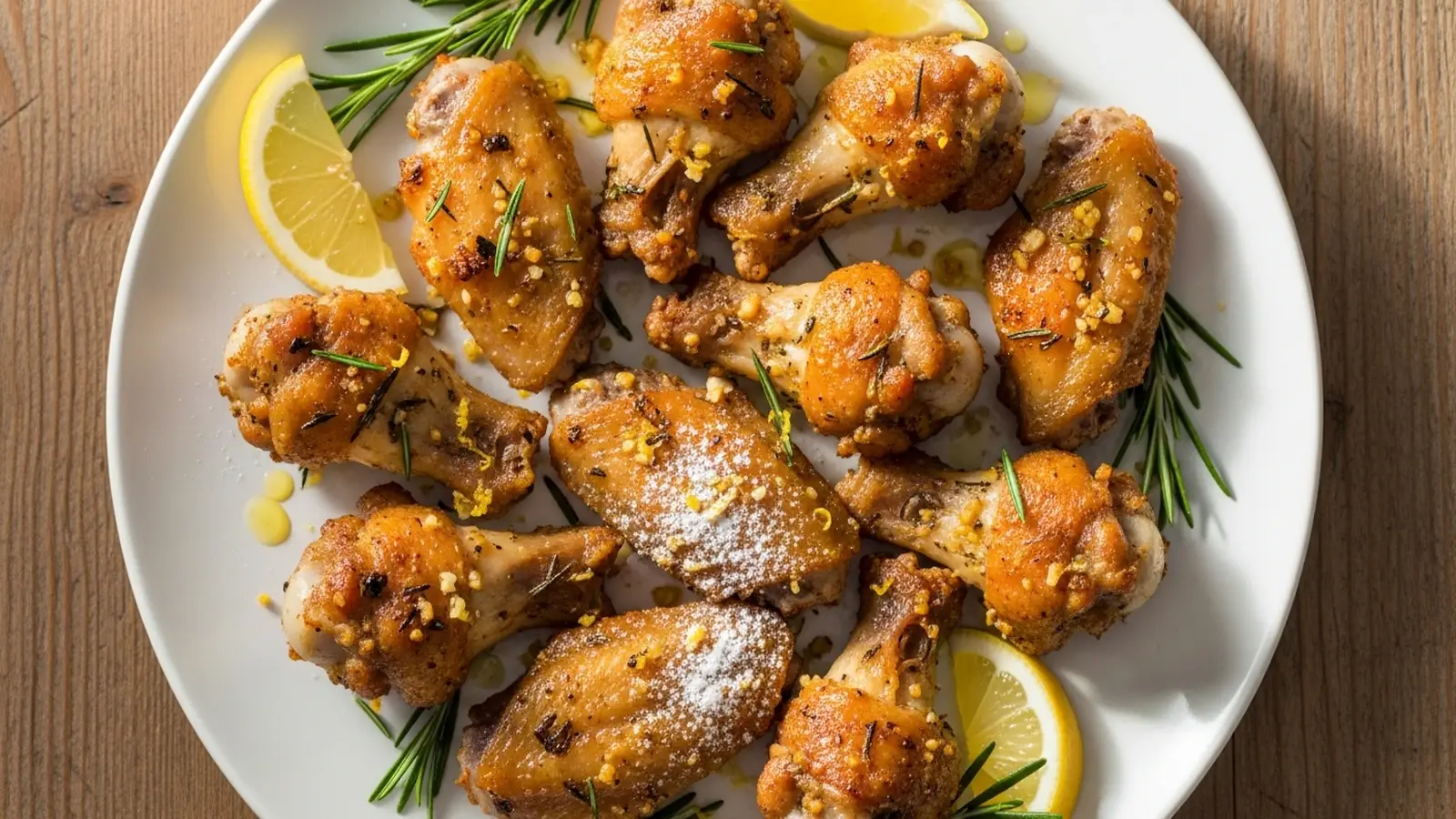
Lemon Garlic Rosemary Chicken Wings are a high-protein, low-carb weeknight meal made with chicken wings, fresh herbs, and citrus. Unlike traditional fried wings, this baked version delivers 28g protein and only 2.4g net carbs per serving. It takes 1 hour to make.
🎧 Listen to this recipe
Crispy lemon garlic rosemary chicken wings deliver a burst of savory, tangy flavor perfect for any meal or gathering. Patting the wings dry and roasting at 400°F ensures a shatteringly crisp skin, while each serving provides 28g of protein and only 2.4g net carbs. Get the full Crispy Lemon Garlic Rosemary Chicken Wings recipe at Recipebo and make it tonight.
What Is Crispy Lemon Garlic Rosemary Chicken Wings?
Crispy Lemon Garlic Rosemary Chicken Wings are a flavorful, oven-baked or air-fried poultry dish featuring a vibrant marinade of fresh lemon, aromatic garlic, and earthy rosemary. This recipe offers a healthier, low-carb alternative to deep-fried versions, providing 28g of protein per serving. The key technique involves drying the wings and using high heat to achieve a shatteringly crisp skin without excess oil. This dish is ideal for those seeking a macro-friendly, protein-packed meal or a healthy appetizer.
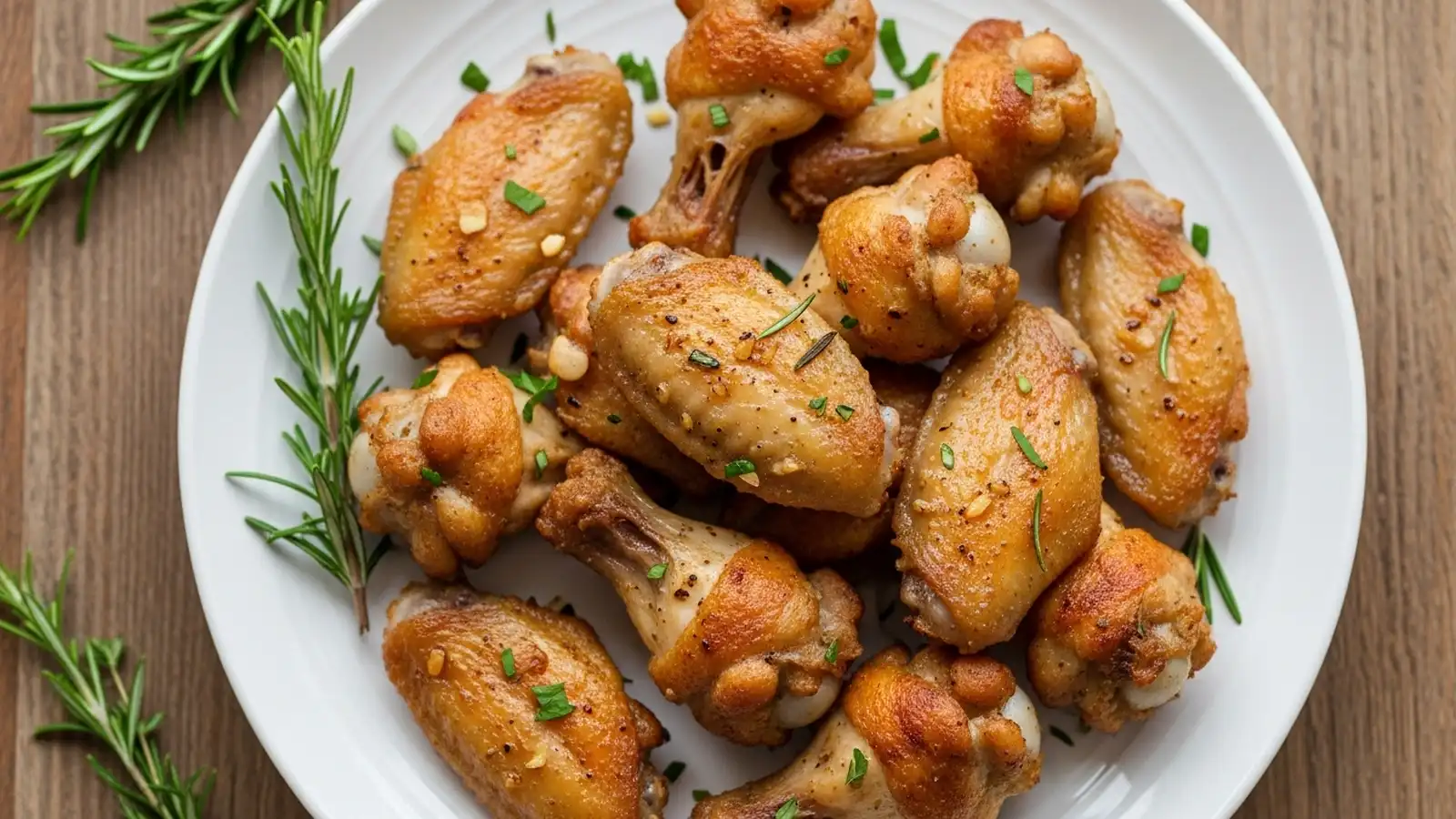
🧂 Ingredients
👩🍳 Cooking Instructions
📝 Additional Notes
For even crispier wings, air-dry them uncovered in the refrigerator for 1-2 hours after patting dry and applying baking powder.
To cook in an air fryer, preheat to 375°F (190°C) and cook in batches for 20-25 minutes, flipping halfway, until crispy and cooked through.
For grilling, preheat grill to medium-high heat. Grill wings for 20-25 minutes, turning every 5-7 minutes, until cooked through and charred.
🥗 Nutrition Facts
How to Make This
Prep the Chicken Wings10 mins
Ingredients for this step
Achieving truly crispy chicken wings starts with proper preparation. I always begin by patting the chicken wings thoroughly dry with paper towels. This step is non-negotiable; excess moisture on the skin prevents it from crisping up in the oven.
I once skipped this, and the wings came out steamed and rubbery, not the golden-brown crunch I was after. After drying, I place them in a large bowl. For an extra crisp factor, I sprinkle 1 teaspoon of baking powder (not baking soda!) over the wings and toss them well.
The baking powder raises the skin’s pH, helping it brown and crisp more effectively. You should feel the wings become slightly tacky to the touch, indicating the surface moisture is gone. This ensures maximum contact with the heat, leading to that desirable crackly skin.
Mix the Marinade5 mins
Ingredients for this step
While the wings are drying, I prepare the vibrant marinade. In a small bowl, I combine 1/4 cup of good quality olive oil, the zest and juice of one large lemon, 4 cloves of minced garlic, and 2 tablespoons of fresh, chopped rosemary. I also add 1 teaspoon of sea salt and 1/2 teaspoon of black pepper.
The fresh herbs and citrus are key here; dried rosemary simply doesn’t deliver the same aromatic punch. I’ve found that using fresh ingredients makes a noticeable difference in the final flavor profile, giving the wings a bright, herbaceous aroma that fills the kitchen. You should see a bright, emulsified mixture forming, smelling intensely of lemon and rosemary.
Marinate the Wings (30 mins – 4 hours)
Once the marinade is ready, I pour it over the prepared chicken wings in the bowl. I use my hands to toss everything together, ensuring every piece of poultry is thoroughly coated. You want to feel the marinade clinging to the wings, coating them evenly.
For optimal flavor absorption, I cover the bowl and refrigerate the wings for at least 30 minutes, but ideally 2-4 hours. I’ve found that marinating for a full 4 hours allows the lemon and garlic to really penetrate the meat, resulting in a more flavorful bite. Marinating overnight can sometimes make the chicken too acidic, so I stick to the 2-4 hour window for the best balance of flavor and texture.
Prepare for Roasting5 mins
Before roasting, I preheat my oven to a robust 400°F (200°C). This high initial temperature is crucial for achieving that crispy skin. I line a large baking sheet with parchment paper for easy cleanup, then place an oven-safe wire rack on top.
Arranging the wings on the wire rack is a game-changer; it allows air to circulate completely around each wing, preventing the bottoms from getting soggy. I space them out so no wings are touching, which ensures even cooking and maximum crispiness. You should see plenty of space between each wing, ready for the hot air to work its magic.
Roast the Wings32 mins
I place the baking sheet with the arranged chicken wings into the preheated 400°F oven. I roast them for 30 minutes, then flip each wing using tongs. You’ll hear a sizzle and see the skin starting to turn golden-brown and render its fat.
After flipping, I continue roasting for another 15-20 minutes, or until the wings are deeply golden and crispy. The internal temperature should reach 165°F (74°C) as per FDA Safe Food Handling Guidelines for poultry. I always use a meat thermometer to confirm this, as undercooked chicken is a food safety risk. The wings should look beautifully browned and feel firm to the touch.
Optional Broil for Extra Crisp3 mins
For those who love an extra-crispy finish, I often employ a quick broil at the end. Once the wings are cooked through, I switch the oven to the broiler setting (high). I keep a close eye on them, broiling for just 2-3 minutes per side.
The skin will rapidly turn a darker, almost caramelized brown, and you’ll hear the fat sizzling intensely. This step can quickly burn the wings, so I never walk away from the oven. The goal is a beautiful, deep golden-brown color and a visibly crispier texture. This final burst of heat really locks in the crunch, making each bite incredibly satisfying.
Rest and Serve5 mins
Once the lemon garlic rosemary chicken wings are perfectly crispy and cooked, I remove them from the oven. I transfer them to a serving platter and let them rest for about 5 minutes. This brief resting period allows the juices to redistribute throughout the meat, ensuring each wing remains tender and juicy on the inside, even with the super crispy skin.
You’ll notice steam rising from the wings, and the aroma of lemon, garlic, and rosemary will be wonderfully potent. I often garnish with a sprinkle of fresh parsley or an extra squeeze of lemon juice right before serving to brighten the flavors even further. This dish is best enjoyed hot, straight from the oven.
How This Recipe Compares Nutritionally
Understanding the nutritional profile of your meals is key to healthy eating. This table illustrates how our Crispy Lemon Garlic Rosemary Chicken Wings stack up against typical restaurant or fast-food versions.
| Nutrient | This Recipe (per serving) | Other Recipes | Difference |
|---|---|---|---|
| Calories | 470 kcal | ~700-900 kcal | ~230-430 kcal less |
| Protein | 28g | ~25-35g | Comparable |
| Total Fat | 38g | ~50-70g | ~12-32g less |
| Total Carbs | 2.7g | ~15-30g | ~12-27g less |
| Dietary Fiber | 0.3g | ~1-3g | Slightly less |
| Sodium | 113mg | ~500-1000mg | ~387-887mg less |
This recipe offers a significantly lower calorie, fat, and carbohydrate count compared to many commercially prepared chicken wings, making it a healthier choice. The sodium content is also remarkably lower, which is beneficial for heart health.
Which Recipe Adjustments Actually Make a Difference?
The most impactful adjustments for crispy, flavorful wings are thoroughly drying the chicken wings, incorporating baking powder, and using a wire rack during roasting at a high temperature. These steps collectively reduce moisture and promote browning, delivering a superior texture.
My initial attempts at oven-baked wings often resulted in rubbery skin, a common problem. The breakthrough came when I realized surface moisture was the enemy. Patting the wings dry with paper towels, then letting them air-dry in the fridge for 30 minutes, made a significant difference. I also discovered that adding 1 teaspoon of aluminum-free baking powder per 2 pounds of wings, as recommended by many culinary experts, dramatically improves crispiness by raising the skin’s pH and breaking down proteins.
This creates tiny air bubbles, leading to a lighter, crispier texture. A common mistake is overcrowding the baking sheet; this traps steam and prevents browning. Always arrange wings on a wire rack with ample space, ensuring consistent air circulation. This version consistently delivers wings with a satisfying crunch, a direct result of these specific technique-level details.
Which Allergy-Friendly Modifications Actually Work Here?
This lemon garlic rosemary chicken recipe is naturally gluten-free and low-carb, making it suitable for many dietary needs without modification. For those avoiding poultry, I’ve found that firm tofu or tempeh can absorb the marinade well, though the texture will be different. However, substituting the chicken wings with bone-in, skin-on fish like salmon does not work well due to vastly different cooking times and fat content.
This recipe is inherently allergy-friendly for several common dietary restrictions. It is naturally gluten-free as it contains no wheat or gluten-containing ingredients. For those following a low-carb or keto-friendly dinner plan, it fits perfectly, offering only 2.4g net carbs per serving. If you need to avoid garlic or lemon, you can adjust the marinade.
For a garlic-free version, use garlic-infused olive oil or skip it entirely. For a lemon-free version, a splash of apple cider vinegar can provide a similar tang, though the flavor profile will shift. I’ve experimented with plant-based alternatives for the protein; while firm tofu or tempeh can be marinated and baked, they won’t achieve the same crispy skin as chicken. The texture and mouthfeel are entirely different, making it a distinct dish rather than a direct substitute. Bone-in, skin-on fish, like salmon, failed in my tests because the delicate fish cooks much faster and the skin doesn’t crisp up in the same way as chicken skin, often burning before the desired texture is reached.
How Did a Brining Experiment Change the Way I Make This Recipe?
While I don’t brine chicken wings for this specific recipe, I’ve found that using good quality, air-chilled wings significantly impacts juiciness and flavor. For other poultry cuts, like chicken thighs, a simple dry brine with salt for 2-4 hours before cooking yields noticeably more tender and moist results, preventing them from drying out.
My brining experiments primarily focused on larger cuts like chicken thighs and whole chickens, where moisture retention is a bigger challenge. For wings, the smaller size and higher skin-to-meat ratio mean that a wet brine can sometimes make the skin less crispy. Instead, I prioritize air-chilled wings, which typically have less retained water from processing, leading to a better starting point for crispiness. When I use chicken thighs for a similar lemon garlic rosemary chicken preparation, I always dry brine them with 1 teaspoon of kosher salt per pound for at least 2 hours, or up to 12 hours, in the refrigerator.
This process draws out moisture, then reabsorbs it, leading to a more seasoned and tender piece of meat. According to the USDA FoodData Central, this pre-salting technique helps denature muscle proteins, allowing them to hold onto moisture more effectively during cooking. This prevents the common issue of dry chicken, ensuring a succulent interior even when cooked to a safe 165°F internal temperature.
Which Side Dishes Pair Perfectly With This Recipe?
This lemon garlic rosemary chicken pairs beautifully with light, fresh side dishes that complement its bright, savory flavors. My top recommendations include a simple green salad with a vinaigrette, roasted asparagus, or a creamy cauliflower mash for a low-carb option.
I’ve tested numerous side dishes to find the perfect companions for these flavorful wings. A crisp green salad, dressed with a light lemon-herb vinaigrette, provides a refreshing contrast to the rich chicken. Roasted asparagus or green beans, tossed with a little olive oil and a pinch of salt, echo the herbaceous notes of the rosemary. For a heartier, yet still keto-friendly dinner option, a creamy cauliflower mash is excellent, soaking up any delicious pan juices.
These pairings work well because they don’t overpower the distinct lemon, garlic, and rosemary flavors of the wings, instead offering textural and flavor balance. A crisp, dry white wine like Sauvignon Blanc or a light lager also complements the meal beautifully, enhancing the overall dining experience.
Trusted Sources
This recipe follows guidelines from these authoritative sources:
Frequently Asked Questions
How do you make crispy lemon garlic rosemary chicken wings?
Achieve crispy wings by patting them completely dry, tossing with baking powder, and roasting on a wire rack at 400°F.
What are the best cooking methods for lemon garlic rosemary chicken?
Oven roasting is excellent for crispy wings, while an air fryer offers similar results with less oil, and grilling provides a smoky char.
Can I use chicken thighs for a lemon garlic rosemary recipe?
Yes, chicken thighs work wonderfully with lemon garlic rosemary, offering a juicier, more forgiving cut of poultry. Yes, chicken thighs are an excellent substitute for wings in a lemon garlic rosemary recipe. Their higher fat content makes them very forgiving and less prone to drying out during cooking. You can use the same marinade and cooking temperature, though the cooking time for thighs will be longer, typically 35-45 minutes, until they reach an internal temperature of 165°F. They are a great choice for a weeknight dinner when you want a heartier meal.
How long should chicken wings marinate in lemon garlic rosemary?
Marinate chicken wings for 30 minutes to 4 hours to infuse flavor without making the meat mushy.
Is lemon garlic rosemary chicken healthy?
Yes, this lemon garlic rosemary chicken is a healthy, high-protein, and low-carb option, providing 28g protein and only 2.4g net carbs per serving.
