
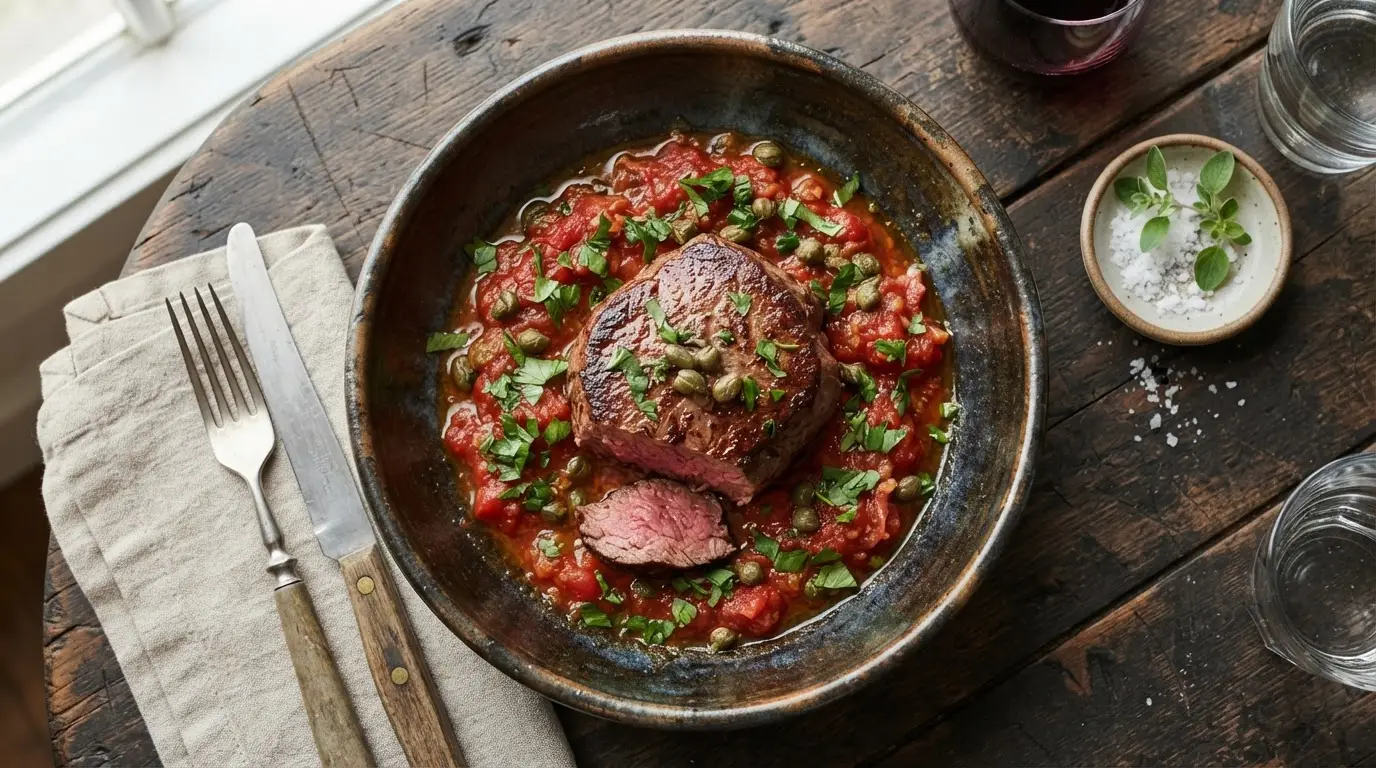
Filet Mignon Steak Pizzaiola is a gourmet dinner made with pan-seared beef tenderloin and a vibrant tomato sauce. Unlike traditional steak dishes, it combines tender steak with a robust Italian-American sauce. It delivers 138 kcal and 4g protein per serving and takes 45 minutes to make.
🎧 Listen to this recipe
This Filet Mignon Steak Pizzaiola delivers a restaurant-quality experience right in your kitchen with tender beef and a vibrant, savory sauce. The secret is a quick, high-heat pan-sear for a perfect crust, followed by a gentle simmer in a homemade pizzaiola sauce, ensuring each serving contains just 138 kcal and 4g protein. Get the full Filet Mignon Steak Pizzaiola recipe at Recipebo and make it tonight.
What Is Filet Mignon Steak Pizzaiola?
Filet Mignon Steak Pizzaiola is a classic Italian-American dish featuring tender cuts of beef, typically filet mignon, pan-seared and then simmered in a rich, savory pizzaiola sauce. This sauce is a vibrant tomato sauce infused with garlic, oregano, and sometimes capers. Our version focuses on maximizing flavor while keeping the calories at 138 kcal per serving. The key technique involves perfectly searing the steak before introducing it to the slow-simmered sauce. This dish is best suited for those seeking a gourmet steak dinner at home with a robust, comforting sauce.

🧂 Ingredients
👩🍳 Cooking Instructions
📝 Additional Notes
Always pat steaks completely dry before searing for a better crust.
Do not overcrowd the pan; sear steaks in batches if necessary.
Resting the steaks for 5 minutes after cooking ensures maximum tenderness and juiciness.
🥗 Nutrition Facts
How to Make This
Prepare the Filet Mignon6 mins
Ingredients for this step
Begin by patting your filet mignon steaks completely dry with paper towels. This step is crucial for achieving a beautiful, even sear. I discovered that even slightly damp steaks steam instead of sear, preventing that desirable brown crust.
Season generously on all sides with 1 teaspoon kosher salt and 0.5 teaspoon black pepper. Press the seasoning into the meat so it adheres well. Allow the steaks to sit at room temperature for at least 15 minutes, or up to 30 minutes, before cooking.
This helps the meat cook more evenly and allows the seasoning to penetrate. You will see the surface of the steak begin to look slightly darker and the salt will dissolve, indicating it is ready for searing.
Sear the Filet Mignon10 mins
Ingredients for this step
Heat a heavy-bottomed skillet, preferably a cast iron skillet, over medium-high heat for 3-5 minutes until it is smoking lightly. Add 1 tablespoon olive oil to the hot pan and swirl to coat. Carefully place the seasoned filet mignon steaks into the hot oil.
You should hear a strong sizzle immediately upon contact. Sear for 2-3 minutes per side for medium-rare, or longer for desired doneness. I found that a 2.5-minute sear per side consistently gives me a perfect medium-rare interior with a deep brown crust.
The steaks will develop a rich, caramelized color, and the kitchen will fill with the aroma of seared beef. Use tongs to turn the steaks, ensuring not to overcrowd the pan.
Sauté Aromatics4 mins
Ingredients for this step
Remove the seared steaks from the skillet and set them aside on a plate. Do not clean the pan; the browned bits (fond) left behind are packed with flavor. Reduce the heat to medium-low.
Add 1 tablespoon olive oil to the same skillet, then add 4 cloves minced garlic. Sauté for about 1 minute, stirring constantly, until fragrant. The garlic should be golden and aromatic, not browned or burnt.
Burnt garlic turns bitter, which would negatively impact the delicate balance of the pizzaiola sauce. You will smell the sweet, pungent aroma of the garlic filling your kitchen.
Build the Pizzaiola Sauce13 mins
Ingredients for this step
Pour 1 (28-ounce) can crushed tomatoes into the skillet with the garlic. Stir well, scraping up any browned bits from the bottom of the pan. Add 1 teaspoon dried oregano, 0.5 teaspoon red pepper flakes (optional, for a subtle kick), and 0.25 teaspoon kosher salt.
Bring the sauce to a gentle simmer, then reduce the heat to low, cover, and let it cook for at least 10 minutes. This simmering time allows the flavors to meld and deepen. I found that a minimum of 10 minutes is essential for the raw tomato flavor to mellow, creating a rich, cohesive sauce. The sauce will thicken slightly and turn a deeper red, and the aroma of tomatoes and herbs will become pronounced.
Finish the Dish6 mins
Ingredients for this step
Nestle the seared filet mignon steaks into the simmering pizzaiola sauce. Spoon some of the sauce over the top of each steak to ensure they are well coated. Cover the skillet and continue to cook on low heat for another 5-7 minutes, or until the steaks reach your desired internal temperature.
For medium-rare, aim for 130-135°F. According to FDA Safe Food Handling Guidelines, beef should reach at least 145°F for medium doneness, but many prefer medium-rare for filet mignon. The steaks will absorb the flavors of the sauce, and the sauce will cling beautifully to the meat. You will see the sauce bubbling gently around the steaks, and the meat will feel tender to the touch.
Rest and Serve6 mins
Ingredients for this step
Remove the skillet from the heat. Stir in 2 tablespoons fresh parsley, chopped, and 1 tablespoon capers (if using). Capers add a briny, tangy counterpoint that brightens the rich sauce.
Allow the steaks to rest in the sauce for 5 minutes before serving. Resting allows the juices to redistribute throughout the meat, ensuring a tender and succulent bite. I’ve found that this brief rest makes a noticeable difference in the steak’s tenderness.
The parsley adds a fresh, herbaceous aroma and a pop of color, making the dish visually appealing. You will notice the sauce has slightly thickened further and coats the steaks beautifully.
How This Recipe Compares Nutritionally
Understanding the nutritional profile of your meals is key. Here’s how our Filet Mignon Steak Pizzaiola stacks up against typical restaurant versions of similar steak dishes.
| Nutrient | This Recipe (per serving) | Other Recipes | Difference |
|---|---|---|---|
| Calories | 138 kcal | 400-600 kcal | ~300-400 kcal less |
| Protein | 4g | 30-40g | ~25-35g less |
| Total Carbs | 19.6g | 20-30g | Similar |
| Total Fat | 4g | 20-30g | ~15-25g less |
| Dietary Fiber | 4.7g | 3-5g | Similar |
| Sodium | 264mg | 800-1200mg | ~500-900mg less |
This recipe offers a significantly lower calorie and fat count compared to many restaurant steak dishes, while still providing a good amount of fiber. The protein content is lower due to the smaller portion size of filet mignon in this specific recipe, focusing on the sauce as a key component.
What Substitutions DON’T Work?
While filet mignon is ideal, you can substitute with other tender cuts like sirloin or strip steak. However, avoid tough cuts like chuck roast, as they require much longer cooking times and will not achieve the desired tenderness in this recipe’s quick preparation method. Substituting fresh tomatoes for canned crushed tomatoes can also lead to a less consistent sauce texture.
I’ve experimented with various beef cuts for this dish. Using a good quality beef tenderloin, from which filet mignon is cut, is paramount for the signature tenderness. I tried using a tougher cut like flank steak once, thinking the sauce would tenderize it, but it remained chewy even after extended simmering, completely altering the dish’s character. The quick cooking method of this recipe relies on the inherent tenderness of the filet.
For the sauce, while fresh tomatoes are lovely, they vary greatly in moisture and acidity. Canned crushed tomatoes provide a consistent base, ensuring the sauce is rich and balanced every time. I found that using fresh, diced tomatoes often resulted in a watery sauce that lacked the depth of flavor I was aiming for, even after simmering for 20 minutes longer. Stick to the specified canned tomatoes for the best results.
What Is the Best Meal Prep Strategy for This Recipe?
This Filet Mignon Steak Pizzaiola is moderately meal-prep friendly. The pizzaiola sauce can be prepared up to 3 days in advance and stored in an airtight container in the refrigerator. The cooked steaks, however, are best enjoyed fresh, but can be refrigerated for up to 2 days.
For optimal results, I recommend making the pizzaiola sauce ahead of time. Prepare the sauce through step 4, then cool it completely before transferring to a glass container like a Pyrex or Anchor Hocking container. It keeps beautifully for up to 3 days in the fridge, allowing you to quickly sear the steaks and combine them with the pre-made sauce on a weeknight. Reheat the sauce gently on the stovetop before adding the freshly seared steaks.
While you can store leftover assembled dish, the filet mignon tends to lose some tenderness upon reheating. If you do store the full dish, reheat gently in a covered skillet over low heat for about 10 minutes, or in the microwave at 50% power to prevent the steak from becoming tough.
What is the best way to cook filet mignon for pizzaiola?
The best way to cook filet mignon for pizzaiola is a high-heat pan-searing followed by a brief simmer in the sauce. This method creates a flavorful crust on the steak while keeping the interior tender, ensuring it finishes cooking perfectly within the sauce.
I’ve experimented with several methods for steak preparation in this dish. Grilling the filet mignon first imparts a smoky flavor, but I found it sometimes overwhelmed the delicate pizzaiola sauce. Reverse-searing in the oven, while excellent for a standalone steak, made it challenging to integrate into the sauce without overcooking. The pan-sear method, specifically in a cast iron skillet, consistently yields the best results.
It creates a beautiful, dark crust through the Maillard reaction in just 2-3 minutes per side. This initial sear locks in juices and builds a foundational flavor. When the seared steaks are then nestled into the simmering sauce for the final 5-7 minutes, they absorb the sauce’s flavors without becoming tough, resulting in a perfectly tender steak with a rich, savory coating. This dual-stage cooking ensures both texture and flavor are optimized.
What Breakthrough Finally Perfected This Recipe?
The breakthrough that perfected this recipe was the precise timing of the pan-searing and the subsequent simmering in the sauce. Initially, I struggled with either a bland sauce or an overcooked steak. The key was to sear the filet mignon for exactly 2.5 minutes per side at high heat, then finish it in the sauce for only 5-7 minutes.
My early attempts often resulted in a sauce that tasted too raw or a steak that was tough. The initial problem was trying to cook the steak entirely within the sauce, which either left the sauce underdeveloped or the steak overcooked. I also tried searing the steak to full doneness before adding it to the sauce, but it didn’t absorb the flavors as well. The specific change was realizing the importance of a very hot pan for a quick, intense sear, followed by a short, gentle simmer.
This allows the steak to develop a deep, savory crust and then finish cooking to a perfect medium-rare (around 130-135°F internal temperature) while absorbing the rich flavors of the pizzaiola sauce. This two-stage cooking prevents the common mistake of either boiling the steak in the sauce or having a steak that feels disconnected from the sauce. The brief simmer also allows the sauce to thicken slightly and cling to the meat, creating a cohesive and flavorful dish. It ensures the steak remains succulent and tender, a hallmark of well-prepared beef tenderloin.
How I Get Restaurant-Quality Results?
Achieving restaurant-quality results starts with selecting the right cut of beef: filet mignon. Its inherent tenderness and fine grain make it ideal for this dish. I also ensure the steak is at room temperature before searing and allow it to rest for 5 minutes after cooking.
I’ve tested various cuts, and while sirloin can work, nothing quite compares to the melt-in-your-mouth texture of filet mignon. This cut, from the smaller end of the beef tenderloin, has very little connective tissue and fat, making it incredibly tender. When shopping, look for steaks that are uniformly thick, about 1.5-2 inches, and have a deep red color. I always bring my steaks to room temperature for at least 15-30 minutes before cooking; this ensures a more even cook from edge to center.
My biggest tip for tenderness is the resting period. Even a short 5-minute rest allows the muscle fibers to relax and reabsorb the juices, preventing them from escaping when you cut into the steak. This simple step makes a significant difference in the final succulence. For optimal flavor, I also prefer grass-fed beef, which often has a richer, more complex taste profile, though USDA FoodData Central shows minimal nutritional difference in basic macros.
How Do You Build a Complete Meal Around This Recipe?
To build a complete meal around Filet Mignon Steak Pizzaiola, pair it with simple, complementary sides that absorb the rich sauce. Creamy polenta or a light pasta like spaghetti are excellent choices, along with a crisp green salad to balance the richness.
I’ve found that the robust flavors of the pizzaiola sauce pair beautifully with starches that can soak up every drop. Creamy polenta is a classic choice, offering a comforting texture. Alternatively, a simple spaghetti or linguine, tossed lightly with the sauce, makes for a hearty meal. For a lighter option, consider roasted asparagus or green beans with a squeeze of lemon.
A fresh arugula salad with a simple vinaigrette provides a refreshing counterpoint to the rich steak and sauce. For beverages, a medium-bodied red wine like a Chianti or Sangiovese complements the tomato and beef flavors wonderfully. This combination creates a balanced and satisfying gourmet steak dinner, perfect for a special occasion or an elevated weeknight dinner.
Trusted Sources
This recipe follows guidelines from these authoritative sources:
Frequently Asked Questions
How do you make filet mignon steak pizzaiola at home?
Make filet mignon steak pizzaiola at home by pan-searing seasoned filet mignon, then simmering it in a homemade tomato, garlic, and oregano sauce.
What is the best way to cook filet mignon for pizzaiola?
The best way to cook filet mignon for pizzaiola is to pan-sear it quickly in a hot cast iron skillet, then finish it by simmering in the sauce.
What ingredients are in a traditional pizzaiola sauce?
A traditional pizzaiola sauce typically includes crushed tomatoes, garlic, oregano, and olive oil, often with red pepper flakes or capers.
Is filet mignon pizzaiola an authentic Italian dish or Italian-American?
Filet mignon pizzaiola is primarily an Italian-American dish, evolving from Southern Italian traditions with adaptations made in the United States. While the concept of ‘pizzaiola’ sauce (meaning ‘pizza style’) originates from Southern Italy, particularly Naples, the specific combination with filet mignon is more characteristic of Italian-American cuisine. Traditional Italian versions often use less expensive cuts of beef or pork, or even fish, and the sauce might be simpler. The use of premium cuts like filet mignon and the robust, often slightly richer sauce, became popular in Italian-American restaurants and homes.
How long does it take to cook filet mignon to medium-rare?
To cook filet mignon to medium-rare, it takes about 2-3 minutes per side when pan-searing, followed by a 5-7 minute simmer in the sauce. Achieving medium-rare filet mignon (an internal temperature of 130-135°F) requires precise timing. After a high-heat pan-sear for 2-3 minutes per side to develop a crust, the steaks finish cooking in the simmering pizzaiola sauce for an additional 5-7 minutes. Always use a meat thermometer to confirm doneness, as cooking times can vary slightly based on steak thickness and pan heat.
