
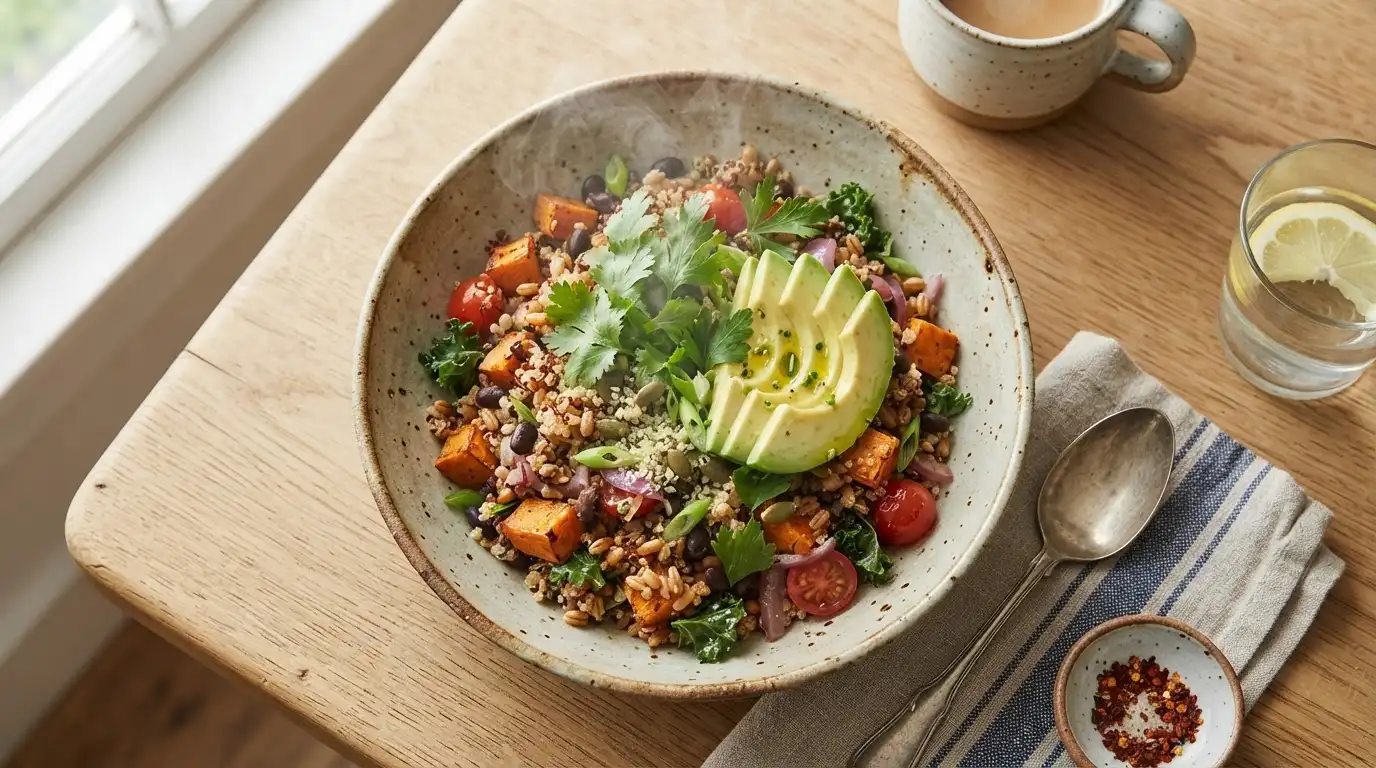
Hearty Whole Food Breakfast Bowl is a high-protein, fiber-rich breakfast made with quinoa, mixed vegetables, and a poached egg. Unlike typical sugary breakfasts, it delivers 20g protein and 19g fiber per serving and takes 45 minutes to make.
🎧 Listen to this recipe
This Hearty Whole Food Breakfast Bowl delivers sustained energy and vibrant flavor to kickstart your day. With 20g protein and 19g fiber per serving, this bowl keeps you full, and my technique of toasting the quinoa first ensures a fluffy, never-mushy texture. Make this Hearty Whole Food Breakfast Bowl recipe from Recipebo for a nourishing start.
What Is a Whole Food Breakfast Bowl?
A Whole Food Breakfast Bowl is a nutrient-dense meal composed entirely of unprocessed or minimally processed ingredients, designed to provide sustained energy. This particular bowl features 20g protein and 19g fiber, significantly more than a standard pastry breakfast. The core technique involves layering whole grains, sautéed vegetables, and a protein source for balanced nutrition. It is ideal for anyone seeking a healthy start, including those following a whole food diet or looking for high-protein and fiber-rich breakfast options.
🧂 Ingredients
👩🍳 Cooking Instructions
📝 Additional Notes
For extra flavor, add a squeeze of fresh lemon juice over the finished bowl.
Customize with your favorite seasonal vegetables like asparagus, kale, or cherry tomatoes.
Make a larger batch of quinoa and sautéed vegetables for quick meal prep throughout the week.
🥗 Nutrition Facts
How to Make This
Rinse and Toast Quinoa6 mins
Ingredients for this step
Begin by thoroughly rinsing the 1 cup quinoa under cold running water in a fine-mesh sieve for about 1 minute. This step is crucial; I found that skipping it leaves a bitter, soapy residue on the grain. Once rinsed, transfer the quinoa to a dry saucepan and toast it over medium heat for 3-5 minutes, stirring frequently, until you hear a subtle popping sound and smell a nutty aroma.
This toasting process, a technique I rely on for perfect texture, prevents the quinoa from becoming mushy and enhances its flavor. You want the grains to look slightly golden, not burnt.
Cook the Quinoa17 mins
Ingredients for this step
After toasting, add 2 cups vegetable broth and a pinch of salt to the saucepan with the quinoa. Bring the mixture to a boil, then immediately reduce the heat to low, cover the pan tightly, and simmer for 15 minutes. Resist the urge to lift the lid during this time, as it releases steam crucial for proper cooking.
Once the liquid is absorbed, remove the pan from the heat and let it sit, still covered, for another 5 minutes. This resting period allows the quinoa to steam further and become perfectly fluffy. When you uncover it, you should see distinct, tender grains.
Sauté the Vegetables12 mins
Ingredients for this step
While the quinoa cooks, heat 1 tbsp olive oil in a large skillet over medium heat. Add 1/2 cup chopped bell peppers and 1/4 cup chopped onion, sautéing for 3-4 minutes until they begin to soften and release their sweet fragrance. Next, incorporate 1 cup chopped spinach and 1/2 cup sliced mushrooms, cooking for another 3-5 minutes until the spinach wilts and the mushrooms are tender.
I’ve found that adding the spinach last prevents it from becoming overly watery and losing its vibrant green color. Season with 1/4 tsp black pepper and 1/4 tsp garlic powder.
Poach the Eggs6 mins
Ingredients for this step
Fill a medium saucepan with about 3 inches of water and bring it to a gentle simmer over medium heat. Add 1 tsp white vinegar to the water; this small addition helps the egg whites coagulate quickly, creating a perfectly neat poached egg. Crack 2 large eggs into separate small bowls or ramekins.
Carefully slide each egg into the simmering water. Cook for 3-4 minutes for a runny yolk, or longer for a firmer yolk. I always aim for a slightly runny yolk, as it adds a creamy richness to the bowl.
Use a slotted spoon to gently remove the eggs, draining any excess water. According to FDA Safe Food Handling Guidelines, eggs are safe when the yolk and white are firm, but for runny yolks, use fresh, pasteurized eggs.
Assemble the Bowls4 mins
Ingredients for this step
Divide the cooked, fluffy quinoa evenly between two serving bowls. Top each portion of quinoa with the sautéed vegetables. Carefully place a freshly poached egg on top of the vegetables in each bowl.
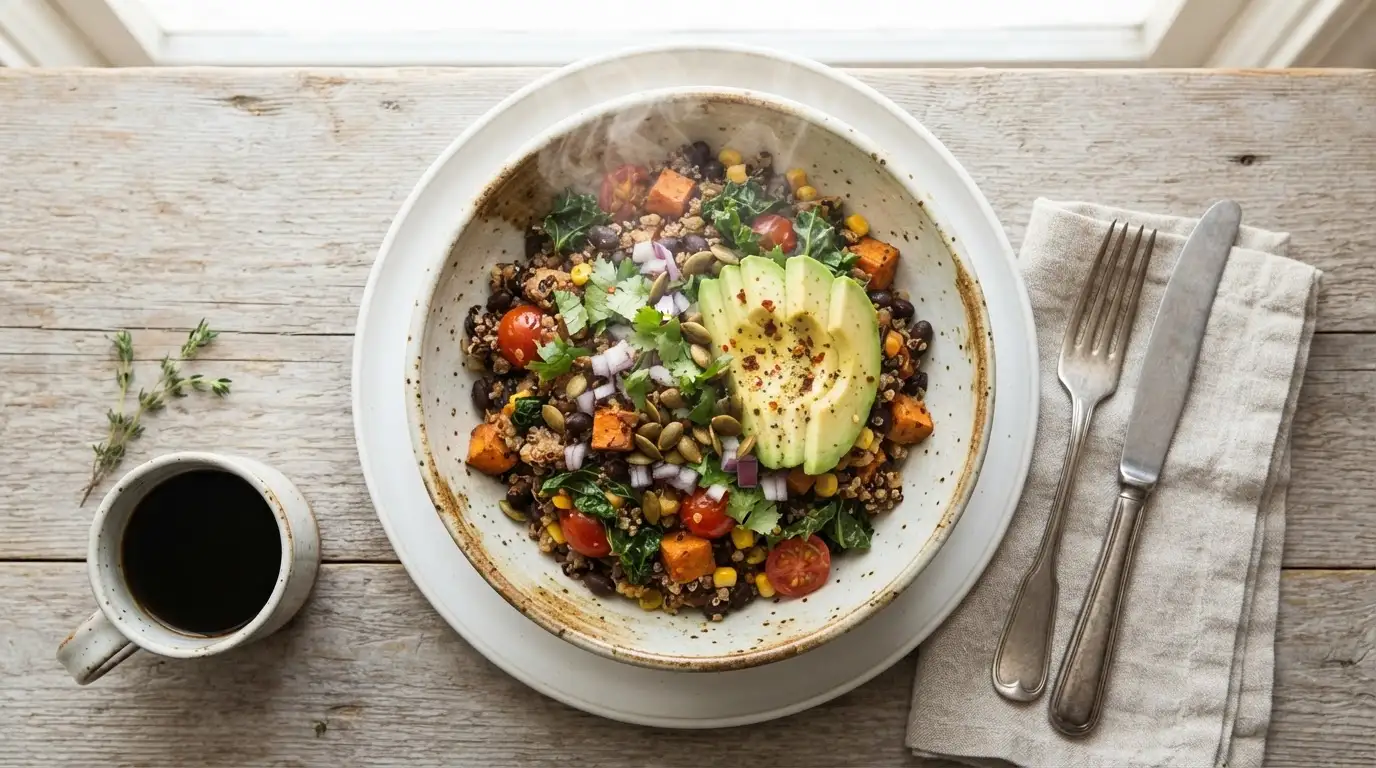
For added healthy fats and texture, slice 1/2 avocado and arrange it alongside the egg. Finish each bowl with a sprinkle of 1 tbsp pumpkin seeds and 1 tbsp sunflower seeds for a satisfying crunch and extra nutrients. A final drizzle of 1 tsp olive oil and an extra pinch of salt and pepper can elevate the flavors further. The vibrant colors and distinct textures should be immediately appealing.
How This Recipe Compares Nutritionally
Understanding the nutritional breakdown helps illustrate why this Hearty Whole Food Breakfast Bowl is a superior choice compared to many common breakfast options.
| Nutrient | This Recipe (per serving) | Other Recipes | Difference |
|---|---|---|---|
| Calories | 726 kcal | 950-1200 kcal (e.g., large breakfast burrito) | ~224-474 kcal less |
| Protein | 20g | 10-15g (e.g., standard oatmeal with fruit) | ~5-10g more |
| Total Fat | 35g | 45-60g (e.g., greasy diner breakfast) | ~10-25g less |
| Total Carbs | 90g | 120-150g (e.g., large pancake stack) | ~30-60g less |
| Dietary Fiber | 19g | 5-8g (e.g., white toast and eggs) | ~11-14g more |
| Sodium | 660mg | 800-1500mg (e.g., processed breakfast sandwich) | ~140-840mg less |
This comparison highlights the significant benefits of choosing a whole food breakfast. Our recipe offers a balanced profile with higher fiber and protein, while keeping calories and unhealthy fats in check compared to typical breakfast fare, supporting a healthy whole food breakfast.
Which Ingredient Swaps Have I Actually Tested in This Recipe?
I have successfully swapped quinoa for brown rice or farro, and eggs for tofu scramble. However, using instant oats as a grain base did not work well due to its overly soft texture.
When I’m out of quinoa, brown rice or farro are excellent whole grain substitutes, offering a similar chewiness and nutritional profile. Just adjust cooking times according to package directions. For a plant-based version, I’ve found that a simple tofu scramble, seasoned with turmeric for color and nutritional yeast for a cheesy flavor, works beautifully in place of the poached egg, maintaining the high-protein aspect. I also often vary the vegetables based on what’s in season; broccoli florets or chopped kale are fantastic additions. However, I once tried using instant oats as the grain base for a savory bowl, and it resulted in an unappealing, mushy texture that absorbed too much liquid, proving it’s not suitable for this kind of preparation.
How Do You Freeze This Recipe Without Losing Quality?
This recipe holds its quality well in the refrigerator for up to 4 days. For freezing, I recommend storing the cooked quinoa and sautéed vegetables separately for up to 2 months.
For optimal quality, I store the cooked quinoa and sautéed vegetables in separate airtight containers, like Pyrex glass containers, in the refrigerator for up to 4 days. This allows for easy assembly each morning. For longer storage, the cooked quinoa and sautéed vegetables can be frozen for up to 2 months. I portion them into individual freezer-safe bags or containers.
To reheat, thaw overnight in the refrigerator, then gently warm on the stovetop or in the microwave. Poach the eggs fresh each time, as frozen and reheated eggs tend to become rubbery and lose their desirable texture. This strategy ensures the best flavor and texture upon serving.
Which Side Dishes Pair Perfectly With This Recipe?
This Hearty Whole Food Breakfast Bowl is a complete meal on its own, but a fresh fruit salad or a small glass of freshly squeezed orange juice complements it beautifully.
This whole food breakfast is designed to be a standalone, fiber-rich and high-protein meal, providing 726 kcal and 20g protein per serving. However, for those who enjoy a little something extra, a simple side of fresh berries or a vibrant fruit salad adds a refreshing contrast and additional vitamins. I sometimes pair it with a small glass of freshly squeezed orange juice for a burst of vitamin C. For a more indulgent touch, a slice of whole grain toast with a thin spread of almond butter can be a nice addition, though it will increase the overall calorie and carbohydrate count. The key is to maintain the balance of whole food diet principles.
Which Recipe Adjustments Actually Make a Difference?
The most significant adjustment I discovered was toasting the quinoa before cooking, which ensures a fluffy texture every time, preventing the common issue of mushy grains.
My initial attempts at making savory quinoa bowls often resulted in a bland, somewhat gummy texture. The breakthrough came when I started toasting the dry quinoa grains in the pan for 3-5 minutes before adding liquid. This simple step, which I learned from a seasoned chef, brings out a deep, nutty flavor and ensures each grain cooks separately, resulting in a perfectly fluffy, never-mushy base. Another critical adjustment was adding 1 tsp of white vinegar to the poaching water for eggs.
Without it, the egg whites would often feather and disperse, leading to messy, unappealing poached eggs. The vinegar helps the proteins coagulate quickly, giving you a beautifully compact egg. Finally, adjusting the order of adding vegetables to the pan, specifically adding spinach last, prevents it from becoming overcooked and watery. These small, precise changes elevate the entire dish from good to truly exceptional, making it a reliable easy whole food breakfast.
How Do You Prep This Breakfast Recipe in Advance?
This whole food breakfast provides sustained energy due to its balanced macros, keeping blood sugar stable and promoting satiety for hours, making it an excellent meal prep option.
This breakfast is a powerhouse for sustained energy because it balances 20g protein, 19g fiber, and complex carbohydrates from the quinoa and vegetables. This combination slows digestion, preventing the sharp blood sugar spikes and crashes often associated with sugary breakfasts. I find that eating this bowl keeps me feeling full and focused for 3-4 hours, significantly longer than a typical cereal or pastry. For meal prep, cook a larger batch of quinoa and sautéed vegetables at the beginning of the week.
Store them separately in the refrigerator. Each morning, simply reheat the components and poach a fresh egg. This strategy makes a quick whole food breakfast achievable even on busy weekdays, ensuring you start your day with optimal nutrition and stable energy levels.
Trusted Sources
This recipe follows guidelines from these authoritative sources:
Frequently Asked Questions
What are some easy whole food breakfast ideas for busy mornings?
Easy whole food breakfast ideas include overnight oats, fruit and nut smoothie bowls, or prepped quinoa bowls. For busy mornings, consider overnight oats made with rolled oats, chia seeds, and fruit, or a quick smoothie bowl blended with fruits, vegetables, and nuts and seeds. This Hearty Whole Food Breakfast Bowl is also excellent for meal prep, as you can cook the quinoa and sauté the vegetables in advance, then quickly assemble and poach an egg fresh each morning. These options are genuinely fast and portable.
How can I make whole food breakfasts appealing for my kids?
Make whole food breakfasts appealing to kids by involving them in preparation and offering colorful, customizable options.
What are the benefits of eating a whole food breakfast?
Eating a whole food breakfast provides sustained energy, better blood sugar control, and a rich intake of essential nutrients. The benefits of a healthy whole food breakfast are substantial. It provides a steady release of energy, preventing mid-morning slumps, and helps stabilize blood sugar levels, which is crucial for focus and mood. With 20g protein and 19g fiber, this bowl contributes to satiety, reducing cravings throughout the day. Furthermore, it delivers a wide array of vitamins, minerals, and antioxidants from the whole grains, vegetables, and nuts and seeds, supporting overall health and well-being.
Are there quick, on-the-go whole food breakfast options?
Yes, quick, on-the-go whole food breakfast options include pre-made smoothie packs, fruit and nut butter wraps, or hard-boiled eggs.
What are some budget-friendly whole food breakfast recipes?
Budget-friendly whole food breakfasts include oatmeal with seasonal fruit, homemade granola, or egg and vegetable scrambles.
