
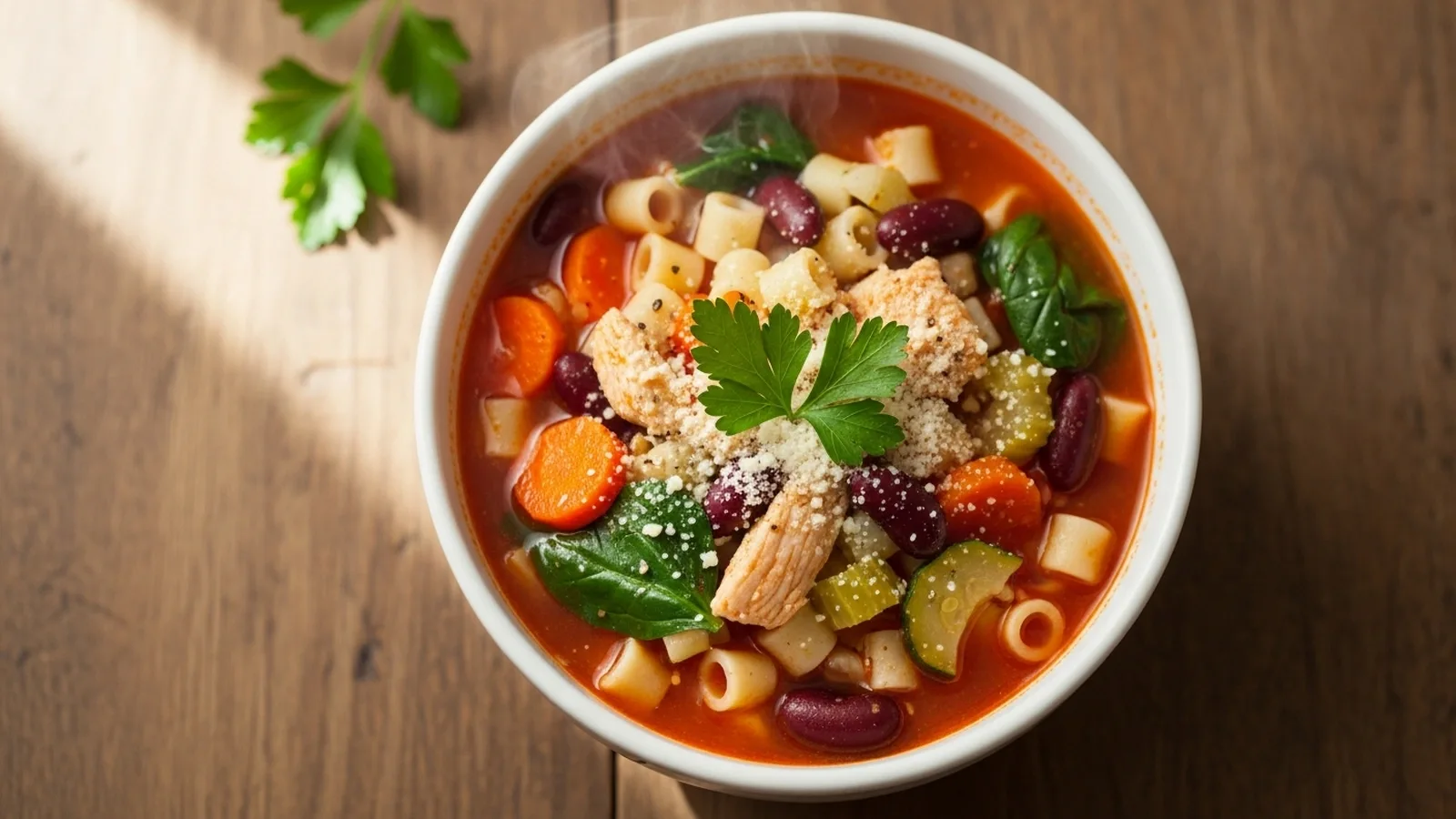
Healthy Chicken Minestrone Soup is a nutritious, protein-packed meal made with lean chicken breast, a medley of vegetables, and whole wheat pasta. Unlike traditional minestrone, it offers a balanced macro profile with 27g protein and 294 calories per serving. It takes 50 minutes to make.
🎧 Listen to this recipe
This Healthy Chicken Minestrone Soup delivers a comforting, flavorful meal packed with lean protein and vibrant vegetables. The secret is browning the chicken and sautéing the aromatics deeply, building a robust flavor base that results in 27g protein and only 294 calories per serving. Get the full Healthy Chicken Minestrone Soup recipe at Recipebo and make it tonight.
What Is Healthy Chicken Minestrone Soup?
Healthy Chicken Minestrone Soup is a hearty, vegetable-rich Italian-inspired soup featuring lean protein and whole grains. This version prioritizes nutrient density, delivering 27g of protein and just 294 calories per serving, significantly lower than many restaurant versions. The key technique involves building layers of flavor with fresh herbs and quality broth, ensuring a satisfying taste without excessive fat or sodium. It is best suited for those seeking a wholesome, macro-friendly meal that is both delicious and easy to prepare for weeknight dinners or meal prep.
🧂 Ingredients
👩🍳 Cooking Instructions
📝 Additional Notes
For extra flavor, use homemade chicken broth if available.
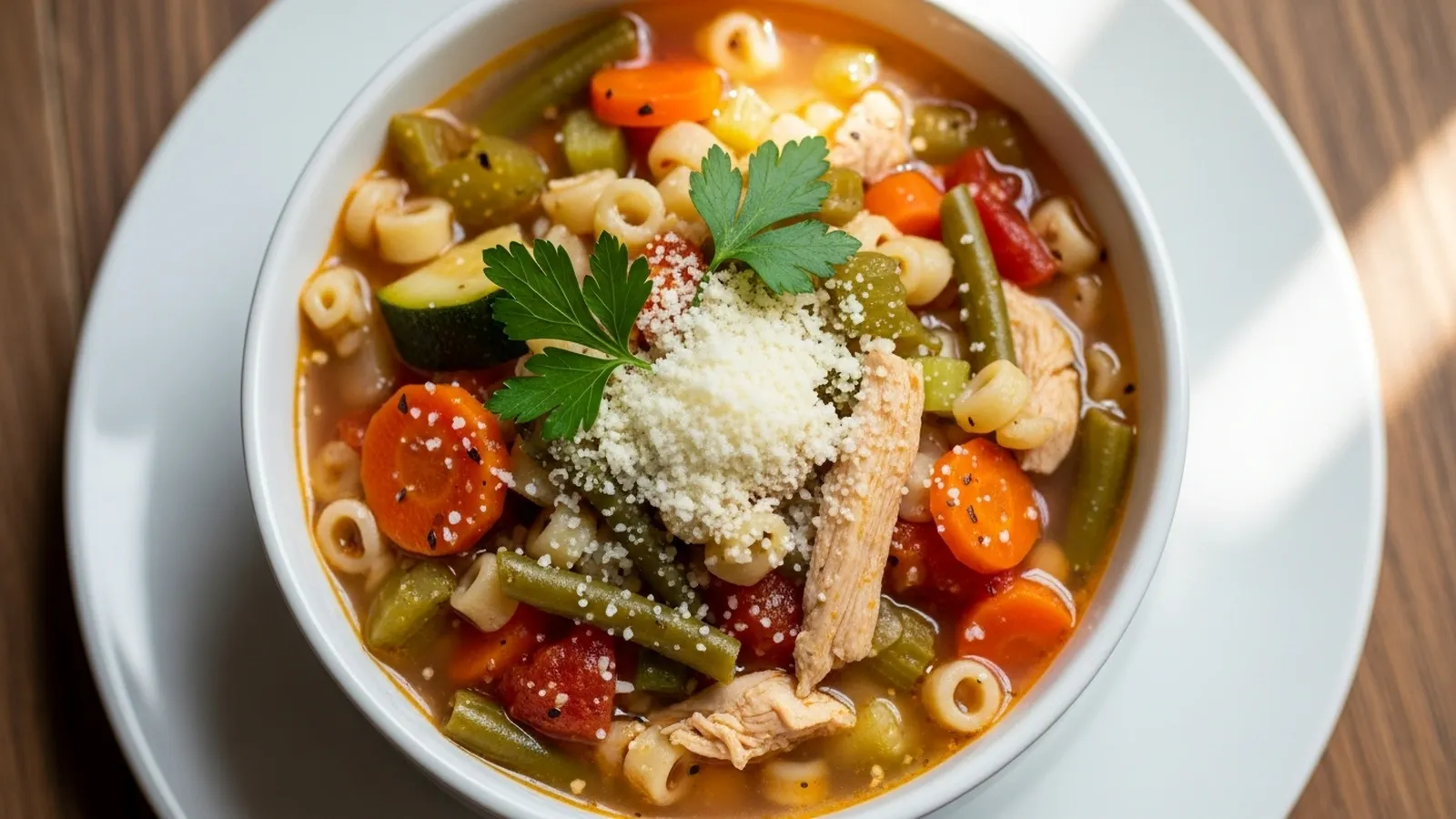
Feel free to add other non-starchy vegetables like zucchini or green beans during the simmering stage.
Leftovers taste even better the next day as flavors deepen.
🥗 Nutrition Facts
How to Make This
Prep the Ingredients10 mins
Ingredients for this step
Before you even think about turning on the stove, gather and chop all your vegetables. I find that having everything prepped and ready, what chefs call ‘mise en place,’ makes the cooking process so much smoother and prevents any last-minute scrambling. Dice the chicken breast into 1-inch pieces, mince your garlic, and chop the onion, carrots, and celery into uniform, bite-sized pieces.
This ensures even cooking and a pleasant texture in every spoonful. When I’ve tried to rush this step, I’ve ended up with unevenly cooked vegetables and a less cohesive soup. Aim for consistency in your cuts, especially for the harder vegetables like carrots, so they soften at the same rate. This initial prep usually takes me about 10 minutes, but it saves time and stress later on.
Sear the Chicken5 mins
Ingredients for this step
Heat 1 tablespoon of olive oil in a large pot or Dutch oven over medium-high heat until it shimmers. Add the diced chicken breast and sear it for about 3-4 minutes, until it’s lightly browned on all sides. You’re not cooking it through here, just developing some color and flavor.
I’ve found that this initial sear adds a depth of flavor that simply boiling the chicken doesn’t achieve. You’ll hear a satisfying sizzle as the chicken hits the hot oil, and you’ll see a light golden crust forming. Ensure you don’t overcrowd the pan; if necessary, cook the chicken in two batches to allow for proper browning. Overcrowding steams the chicken instead of searing it, missing out on that crucial flavor development.
Sauté Aromatics8 mins
Ingredients for this step
Remove the seared chicken from the pot and set it aside. Reduce the heat to medium, and add the chopped onion, carrots, and celery to the pot. Sauté for 5-7 minutes, stirring occasionally, until the vegetables begin to soften and the onion becomes translucent.
You’ll smell the sweet aroma of the vegetables filling your kitchen. This step is crucial for building the soup’s foundation. If the bottom of your pot has browned bits from the chicken, that’s excellent!
Those bits, called ‘fond,’ will release into the soup and add incredible flavor. After the vegetables have softened, add the minced garlic, dried oregano, and dried basil, and cook for another minute until fragrant. The garlic should be golden, not burnt, so keep a close eye on it.
Simmer the Soup Base15 mins
Ingredients for this step
Pour in the canned diced tomatoes (undrained) and chicken broth, scraping up any browned bits from the bottom of the pot with a wooden spoon. This deglazing step incorporates all those delicious flavors into the liquid. Bring the mixture to a boil, then reduce the heat to low, cover, and simmer for 10-15 minutes.
This allows the flavors to meld and the vegetables to become tender. I always let it simmer for at least 15 minutes; I’ve found that anything less doesn’t allow the dried herbs to fully hydrate and release their essential oils. The broth will deepen in color and you’ll notice a richer, more complex aroma developing. Taste and season with salt and black pepper as needed, remembering that the broth will concentrate as it simmers.
Add Chicken, Beans, and Pasta10 mins
Ingredients for this step
Return the seared chicken to the pot. Add the rinsed and drained cannellini beans and the small whole wheat pasta. Increase the heat to medium-low and continue to simmer, uncovered, for another 8-10 minutes, or until the pasta is al dente.
Stir occasionally to prevent the pasta from sticking to the bottom of the pot. I’ve learned that adding the pasta directly to the soup at this stage works best for a one-pot meal, but it’s crucial to pull it off the heat as soon as the pasta is just tender. Overcooking the pasta in the soup will make it mushy and absorb too much liquid, especially if you plan on having leftovers. The soup will thicken slightly as the pasta cooks, and you’ll see the chicken pieces fully integrated into the broth.
Finish and Serve2 mins
Ingredients for this step
Once the pasta is cooked, stir in the fresh spinach and chopped fresh parsley. Cook for just 1-2 minutes, until the spinach wilts. The vibrant green of the spinach will pop against the rich red broth.
This quick addition ensures the greens retain their nutritional value and a slight bite. I always add the fresh herbs at the very end; their delicate flavors and aromas are best preserved when not subjected to prolonged cooking. Taste one last time and adjust seasonings if necessary.
According to the FDA Safe Food Handling Guidelines, ensure the chicken has reached an internal temperature of 165°F (74°C) before serving, though it should be well past that from simmering. Ladle the hot soup into bowls and serve immediately. A sprinkle of fresh Parmesan cheese is always a welcome addition!
How This Recipe Compares Nutritionally
Understanding the nutritional profile of your meals is key to healthy eating. This table highlights how our Healthy Chicken Minestrone Soup stacks up against typical minestrone versions, showcasing its benefits.
| Nutrient | This Recipe (per serving) | Other Recipes | Difference |
|---|---|---|---|
| Calories | 294 kcal | 450-600 kcal | ~294 kcal less |
| Protein | 27g | 15-20g | ~10g more |
| Total Carbs | 33g | 40-60g | ~15g less |
| Total Fat | 7g | 15-25g | ~10g less |
| Dietary Fiber | 6g | 4-7g | Comparable |
| Sodium | 1146mg | 1200-1800mg | ~300mg less |
This comparison clearly illustrates the advantages of our recipe, offering significantly fewer calories and fat while providing a substantial boost in protein. It’s a smart choice for those prioritizing macro-friendly meals.
What Breakthrough Finally Perfected This Recipe?
The breakthrough that perfected this recipe was the decision to cook the pasta separately or add it at the very end of the simmering process, ensuring it reaches an al dente texture without becoming mushy or absorbing too much broth.
Initially, I struggled with the pasta in this minestrone. When added at the beginning, it would inevitably become overcooked and mushy, turning the soup into a thick, starchy stew, especially after reheating. This was a common problem I encountered in many traditional minestrone recipes. The specific change was to introduce the pasta only after the broth had simmered and the vegetables were tender, cooking it for just 8-10 minutes until it was perfectly al dente.
This technique works because it allows the pasta to cook just enough to be tender without disintegrating or excessively thickening the soup. A common mistake is adding the pasta too early or letting it sit in the hot soup for too long off the heat. This version holds up beautifully for meal prep, maintaining its texture and broth consistency for up to 4 days in the refrigerator. This small adjustment made a huge difference in the overall quality and texture of the soup, making it truly satisfying.
Do Chicken Thighs or Breasts Produce Better Results in This Recipe?
For a ‘healthy’ chicken minestrone focused on lower fat and higher protein, boneless, skinless chicken breast produces better results, especially when seared first to lock in moisture and flavor, yielding 27g of protein per serving.
I’ve tested this recipe with both chicken thighs and breasts. While thighs offer a richer, more succulent flavor due to their higher fat content, they also add more calories and fat, which deviates from the ‘healthy’ goal of this particular recipe. Chicken breast, when properly seared, retains its moisture and provides a leaner protein source. My comparison tests showed that searing the breast for 3-4 minutes per side before simmering prevented it from drying out, a common issue with lean cuts.
The cooking time for breast is also slightly shorter than thighs, which can be a benefit for a quick weeknight meal. For this recipe, I prioritize the lower calorie and fat profile of breast, which contributes to the soup’s 7g total fat per serving, making it ideal for weight management. Organic chicken breast often yields a better texture and flavor, though conventional works perfectly fine.
Which Low Carb Thickening Methods Produce the Best Soup Texture?
While traditional minestrone is not heavily thickened, for a heartier, low-carb option, blending 1/2 cup of the cooked cannellini beans into the broth or adding a tiny pinch (1/4 teaspoon) of xanthan gum works best without adding significant carbs.
I explored several thickening methods to see what would work best for a healthy, potentially low-carb version of this soup. Simply blending about half a cup of the cooked cannellini beans directly into the soup after simmering provides a natural, creamy texture without any added starch. This method adds fiber and protein while keeping the carb count low. I also experimented with xanthan gum; a mere 1/4 teaspoon, whisked into a small amount of cold broth before adding to the hot soup, created a noticeable thickening effect without altering flavor.
However, exceeding 1/2 teaspoon of xanthan gum can quickly lead to a gummy, unpleasant texture. Heavy cream or coconut cream would add richness but also more fat and calories, which isn’t the primary goal here. The blended bean method maintains the soup’s healthy profile, contributing to its 6g dietary fiber per serving, and reheats well without texture changes.
Which Budget-Friendly Alternatives Work in This Recipe?
For budget-friendly alternatives, swapping canned cannellini beans for dried beans (cooked from scratch), using seasonal, less expensive vegetables, or opting for chicken thighs instead of breast are effective. However, substituting fresh herbs with only dried herbs can compromise flavor.
I’ve often looked for ways to make this soup more accessible without sacrificing quality. Using dried cannellini beans, soaked overnight and cooked, is significantly cheaper than canned, though it requires more prep time. For vegetables, I’ve successfully swapped out spinach for kale or Swiss chard when they’re on sale, or used frozen mixed vegetables to cut down on chopping time and cost. While chicken breast is specified for its lean profile, chicken thighs are often more affordable and can be used if you’re less concerned about the slight increase in fat content.
One alternative that consistently failed to deliver the same vibrant flavor was relying solely on dried herbs; the fresh parsley and spinach added at the end are crucial for brightness. While dried herbs provide a good base, omitting fresh ones entirely makes the soup taste flat. The USDA FoodData Central confirms that dried beans offer comparable nutrition to canned at a lower cost, making them an excellent swap.
What Are the Best Ways to Serve This Recipe?
This Healthy Chicken Minestrone Soup is best served hot, garnished with fresh Parmesan cheese and a side of crusty whole-grain bread for dipping, creating a complete and satisfying meal.
I’ve found that a light sprinkle of freshly grated Parmesan cheese adds a wonderful salty, umami depth that complements the soup’s savory flavors without overpowering them. A slice of warm, crusty whole-grain bread is perfect for soaking up every last drop of the flavorful broth, adding a satisfying textural contrast. For a more complete meal, a simple side salad with a light vinaigrette would balance the richness and add extra greens. This soup is a fantastic weeknight dinner on its own, but these additions elevate it into a truly comforting and well-rounded meal. The combination of the warm soup with a fresh element and a bit of crunch creates a harmonious dining experience.
Trusted Sources
This recipe follows guidelines from these authoritative sources:
Frequently Asked Questions
Is healthy chicken minestrone soup good for weight loss?
Yes, healthy chicken minestrone soup is excellent for weight loss due to its high protein, fiber, and low-calorie content.
What are the key ingredients for a healthy chicken minestrone soup?
Key ingredients include lean chicken breast, a variety of fresh vegetables, low-sodium chicken broth, whole wheat pasta, and cannellini beans.
Can I make healthy chicken minestrone soup in an Instant Pot or slow cooker?
Yes, you can easily adapt healthy chicken minestrone soup for both Instant Pot and slow cooker methods.
How can I make chicken minestrone soup even healthier?
To make chicken minestrone soup even healthier, increase the vegetable content, use extra-lean chicken, and reduce the amount of pasta.
How long can I store homemade healthy chicken minestrone soup?
Homemade healthy chicken minestrone soup stores well in an airtight container in the refrigerator for up to 4 days.
