

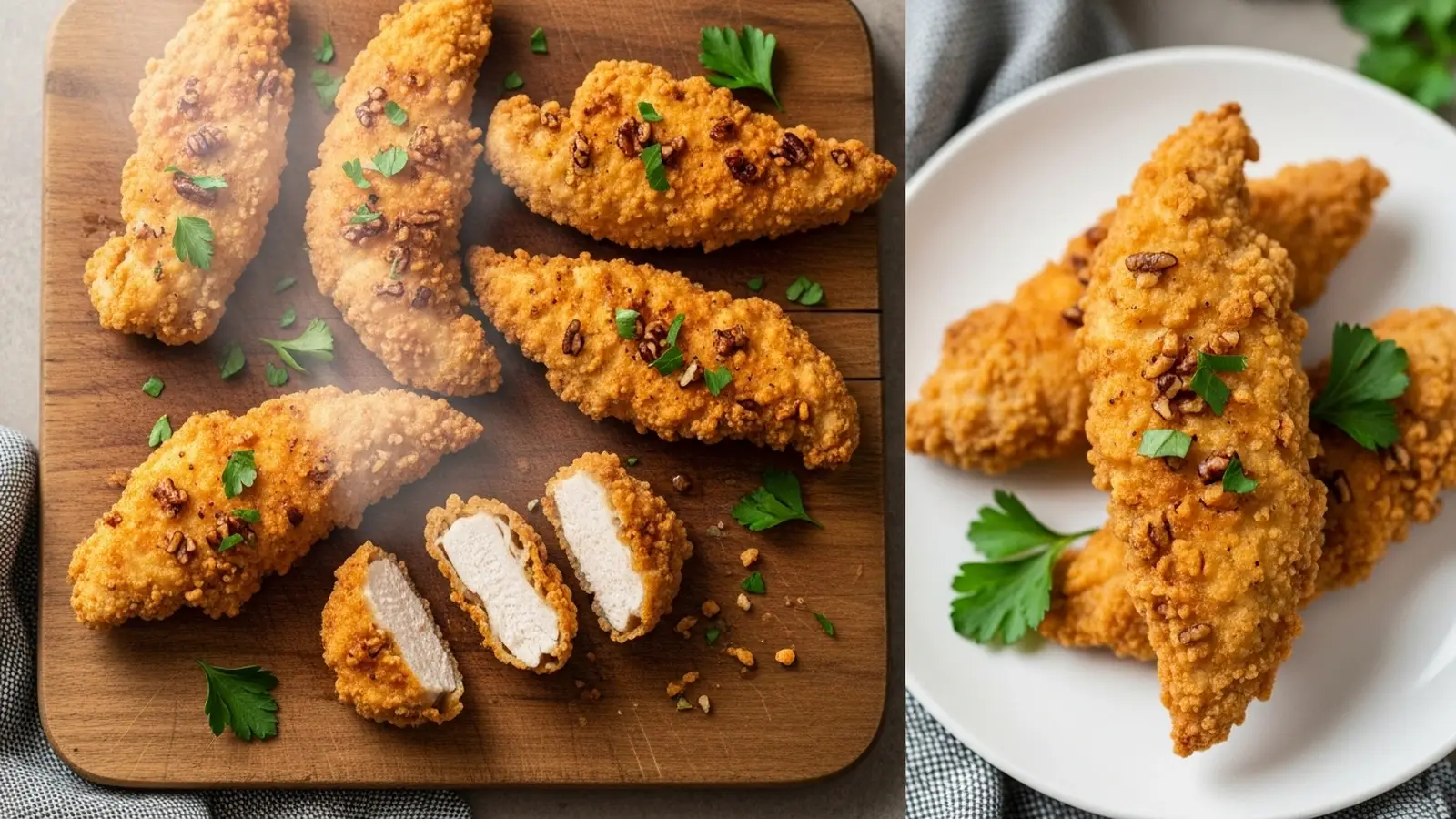
Pecan Dijon Chicken Tenders are a protein-packed dinner recipe made with chicken, pecans, and Dijon mustard. Unlike traditional fried tenders, this version delivers 42g protein per serving and 11.6g net carbs, taking 35 minutes to make.
🎧 Listen to this recipe
This protein-packed dinner recipe delivers crispy, flavorful pecan dijon chicken tenders perfect for a weeknight meal. The secret is a finely ground pecan and breadcrumbs crust, ensuring a satisfying crunch while providing 42g protein and only 11.6g net carbs per serving. Get the full Pecan Dijon Chicken Tenders recipe at Recipebo and make it tonight.
What Are Pecan Dijon Chicken Tenders?
Pecan Dijon Chicken Tenders are a dinner recipe featuring lean chicken tenderloins coated in a flavorful crust of finely ground pecan and breadcrumbs, seasoned with Dijon mustard and a hint of honey. This version offers a healthier, often low-carb and gluten-free adaptable alternative to traditional fried chicken, providing 42g protein per serving. The unique coating ensures a satisfying crunch, making it an ideal weeknight dinner for those seeking a protein-packed meal without excessive carbohydrates.
🧂 Ingredients
👩🍳 Cooking Instructions
📝 Additional Notes
For a gluten-free option, substitute almond flour for breadcrumbs in the pecan crust.
Ensure chicken tenders are patted very dry before coating for best adhesion of the crust.
Use a meat thermometer to confirm chicken reaches 165°F (74°C) for food safety.
🥗 Nutrition Facts
How to Make This
Prep the Pecan Crust3 mins
Ingredients for this step
Start by preparing your flavorful crust. In a food processor, combine the pecans, breadcrumbs (or almond flour for a gluten-free option), paprika, garlic powder, salt, and black pepper. Pulse until the mixture forms a coarse, sandy texture.
I found that over-processing the pecans turns them into butter, which prevents a truly crispy coating, so aim for distinct, small pieces. The aroma of the spices and pecans should be quite inviting at this stage, hinting at the flavor to come. Transfer this mixture to a shallow dish, ready for dredging.
Whisk the Dijon Marinade2 mins
Ingredients for this step
Next, prepare the tangy Dijon mustard marinade that will infuse the chicken with flavor and act as a crucial binder. In a medium bowl, whisk together the Dijon mustard, honey, and olive oil until thoroughly combined and smooth. I prefer using a robust, grainy Dijon for a more pronounced flavor, but any quality Dijon works beautifully here.
The mixture should be thick enough to coat a spoon, but still pourable. This marinade is key for both flavor and ensuring the pecan crust adheres perfectly to the chicken tenders.
Prepare the Egg Wash1 mins
Ingredients for this step
For the second layer of adhesion, you need a simple egg wash. Crack two large eggs into a separate shallow dish and whisk them vigorously with a fork until the yolks and whites are fully incorporated and slightly frothy. I have found that using room-temperature eggs creates a smoother, more uniform wash that coats the chicken more effectively than cold eggs. This step is vital for creating a sticky surface that will firmly hold the pecan crust, preventing it from falling off during cooking.
Coat the Chicken Tenders6 mins
Ingredients for this step
Now it is time to coat your chicken tenders. Pat the chicken dry with paper towels; this is a critical step I always take to ensure maximum adhesion of the coating. First, dip each tender into the Dijon marinade, ensuring it is fully coated, letting any excess drip off.
Next, transfer the marinated tender to the egg wash, allowing it to be fully submerged. Finally, dredge the tender in the pecan crust mixture, pressing firmly on all sides to ensure a thick, even layer. You should see a generous, textured coating. Place the coated tenders on a clean plate or baking sheet as you work.
Bake for Crispy Perfection11 mins
For a baked chicken tenders with pecans option, preheat your oven to 400°F (200°C). Place a wire rack on a baking sheet and lightly spray it with cooking oil. Arrange the coated chicken tenders in a single layer on the rack, ensuring they do not touch.
This allows air to circulate around each piece, promoting even cooking and crispiness. Bake for 18-22 minutes, or until the internal temperature reaches 165°F (74°C), as recommended by FDA Safe Food Handling Guidelines. My oven typically takes 20 minutes for perfectly golden-brown tenders that are juicy inside and crispy outside. You will hear a slight sizzle and see the crust turn a deep golden color.
Pan-Fry for Golden Crunch9 mins
Ingredients for this step
If you prefer pan-fried chicken tenders, heat 2 tablespoons of olive oil in a large skillet over medium-high heat until shimmering. Carefully place the coated chicken tenders in the hot oil, ensuring not to overcrowd the pan; cook in batches if necessary. Overcrowding lowers the oil temperature and leads to steaming instead of frying, resulting in less crispy chicken.
Cook for 4-6 minutes per side, or until golden brown and the internal temperature reaches 165°F (74°C). I look for a rich, deep golden crust and listen for a consistent sizzle. The aroma of toasted pecans and cooked chicken will fill your kitchen. Transfer cooked tenders to a plate lined with paper towels to drain any excess oil.
Rest and Serve3 mins
Once cooked, whether baked or pan-fried, it is crucial to let the pecan dijon chicken tenders rest for 5 minutes before serving. Transfer them to a clean cutting board or serving platter. This resting period allows the juices within the chicken to redistribute, ensuring every bite is moist and tender.
Skipping this step often results in drier chicken, as the juices escape when cut too soon. You will notice the tenders feel firm to the touch but still yield slightly when pressed. Serve them warm and enjoy the satisfying crunch and rich flavor.
How This Recipe Compares Nutritionally
Understanding the nutritional profile helps you make informed dietary choices. This table compares our Pecan Dijon Chicken Tenders to typical restaurant or standard homemade versions.
| Nutrient | This Recipe (per serving) | Other Recipes | Difference |
|---|---|---|---|
| Calories | 369 kcal | 600-800 kcal | ~230-430 kcal less |
| Protein | 42g | 25-35g | ~7-17g more |
| Total Carbs | 12.7g | 30-50g | ~17-37g less |
| Total Fat | 17g | 35-50g | ~18-33g less |
| Dietary Fiber | 1.1g | 2-4g | ~1-3g less |
| Sodium | 328mg | 800-1200mg | ~470-870mg less |
This comparison highlights the significant reduction in calories, total carbs, and fat, while offering a higher protein content compared to many commercially prepared or traditional breaded chicken tenders. This makes it a more macro-friendly and healthy chicken tenders option.
Which Recipe Adjustments Actually Make a Difference?
The most impactful adjustment for these pecan dijon chicken tenders is the double-dredging technique, using the Dijon mustard marinade as a primary binder before the egg wash and pecan crust. This ensures the coating adheres firmly, preventing it from falling off during cooking, and contributes to a superior crispiness.
When I first started developing this recipe, a common issue was the breading failing to stick, or becoming soggy. My initial attempts involved just an egg wash, but the pecan mixture, especially when using almond flour for a gluten-free option, often struggled to adhere. The breakthrough came when I realized the Dijon mustard marinade, with its inherent stickiness from the honey, could serve as an excellent first layer. It acts as a powerful adhesive, creating a robust foundation for the egg wash and then the pecan crust.
This method significantly improved the coating’s integrity, ensuring a consistently crispy texture. A common mistake is skipping this marinade step or using a watery marinade, which results in a loose, crumbly crust. This double-layer approach ensures the coating stays put, even for pan-fried chicken tenders, delivering a satisfying crunch every time. This recipe holds up because of these layered binders, giving you:
- Superior Adhesion: The marinade creates a tacky surface.
- Enhanced Flavor: Dijon and honey infuse directly into the chicken.
- Consistent Crispiness: A firm base for the pecan crust to develop.
What Are the Best Ways to Serve This Recipe?
These pecan dijon chicken tenders pair beautifully with fresh, vibrant sides that complement their rich flavor and crispy texture. My top recommendations include roasted asparagus, a light quinoa salad, or sweet potato fries for a comforting meal.
I have tested these tenders with various accompaniments, and a few stand out. Roasted asparagus, tossed simply with olive oil and lemon, offers a bright, slightly bitter counterpoint that cuts through the richness of the pecans. A fresh quinoa salad with cherry tomatoes, cucumber, and a light vinaigrette provides a refreshing, hearty balance. For a more indulgent, yet still balanced option, sweet potato fries add a touch of sweetness and another layer of texture.
For beverages, a crisp Sauvignon Blanc or a light-bodied pilsner complements the Dijon notes. These tenders make an excellent dinner recipe, perfect for a casual weeknight meal or even a relaxed weekend gathering. They are also fantastic as a protein-packed component in a larger meal prep bowl.
Which Storage Containers Keep This Recipe Freshest Longest?
These pecan dijon chicken tenders maintain their quality for up to 4 days when stored in an airtight container in the refrigerator. For longer storage, they can be frozen for up to 2 months if properly prepared.
For optimal freshness in the refrigerator, I always use glass containers with airtight lids. They prevent odors from permeating and help maintain the chicken’s texture better than plastic. When storing, allow the tenders to cool completely before sealing them to prevent condensation, which can make the crust soggy. For freezing, arrange cooled tenders in a single layer on a baking sheet and flash freeze for an hour until solid.
Then, transfer them to a freezer-safe bag or container, separating layers with parchment paper. To reheat, I recommend baking them in a preheated oven at 375°F (190°C) for 10-15 minutes (from refrigerated) or 20-25 minutes (from frozen) until heated through and crispy again. This method brings back most of their original crispiness, unlike microwave reheating which often results in a softer crust.
Why Chicken Tenders Are Ideal for This Recipe?
Chicken tenders are ideal for this recipe because their smaller, uniform size ensures quick, even cooking and excellent moisture retention, making them less prone to drying out compared to larger cuts like whole chicken breasts.
I have experimented with various cuts, and chicken tenders consistently deliver the best results for this dish. Their natural, pre-portioned size means minimal prep work and a faster cooking time, which is perfect for an easy chicken dinner idea. Unlike a full chicken breast, which can dry out if not cooked precisely, tenders remain incredibly juicy due to their smaller mass and quick cooking. While chicken thighs offer more fat and flavor, their irregular shape and longer cooking time can make achieving a uniformly crispy crust more challenging.
Tenders also provide a fantastic surface area for the pecan crust to adhere, maximizing that satisfying crunch. This makes them a superior choice for a crispy chicken tenders recipe where both texture and juiciness are paramount.
Which Budget-Friendly Alternatives Work in This Recipe?
For the pecan crust, walnuts or a mix of oats and sunflower seeds are excellent budget-friendly alternatives that maintain a similar texture and flavor profile. For the breading, panko breadcrumbs can replace standard ones, and for a low-carb option, a blend of almond flour and coconut flour works well.
I have tested several substitutions to make this recipe more accessible or to cater to different dietary needs. When pecans are expensive, finely chopped walnuts provide a similar earthy, rich flavor and crunch. For a nut-free option, a blend of rolled oats and sunflower seeds, pulsed in a food processor, creates a surprisingly effective and delicious crust. For the breading, if you are not strictly gluten-free, panko breadcrumbs offer an even crispier texture than regular breadcrumbs.
For a low-carb variation, I found a 2:1 ratio of almond flour to coconut flour works best, as too much coconut flour can make the crust too dry and crumbly. An alternative that did not work well was using only cornflakes for the crust; it became too hard and sharp, lacking the nuanced flavor of pecans. These alternatives allow for flexibility without compromising the core elements of a nut-crusted chicken.
Trusted Sources
This recipe follows guidelines from these authoritative sources:
Frequently Asked Questions
How do you make pecan dijon chicken tenders crispy?
Achieve crispiness by finely grinding pecans, using a double-dredging technique, and baking on a wire rack or pan-frying in hot oil.
What are the best side dishes to serve with pecan dijon chicken tenders?
Serve pecan dijon chicken tenders with roasted asparagus, a fresh quinoa salad, or sweet potato fries for a balanced meal.
Can I bake pecan dijon chicken tenders instead of frying them?
Yes, you can bake pecan dijon chicken tenders at 400°F (200°C) for 18-22 minutes on a wire rack for a crispy result.
How do I prevent the pecan breading from falling off the chicken?
Prevent breading from falling off by patting chicken dry, using a sticky Dijon marinade as a first layer, followed by an egg wash, and pressing the pecan crust firmly.
Are pecan dijon chicken tenders healthy?
Yes, these pecan dijon chicken tenders are healthy, providing 42g protein and only 11.6g net carbs per serving with 369 kcal.
