
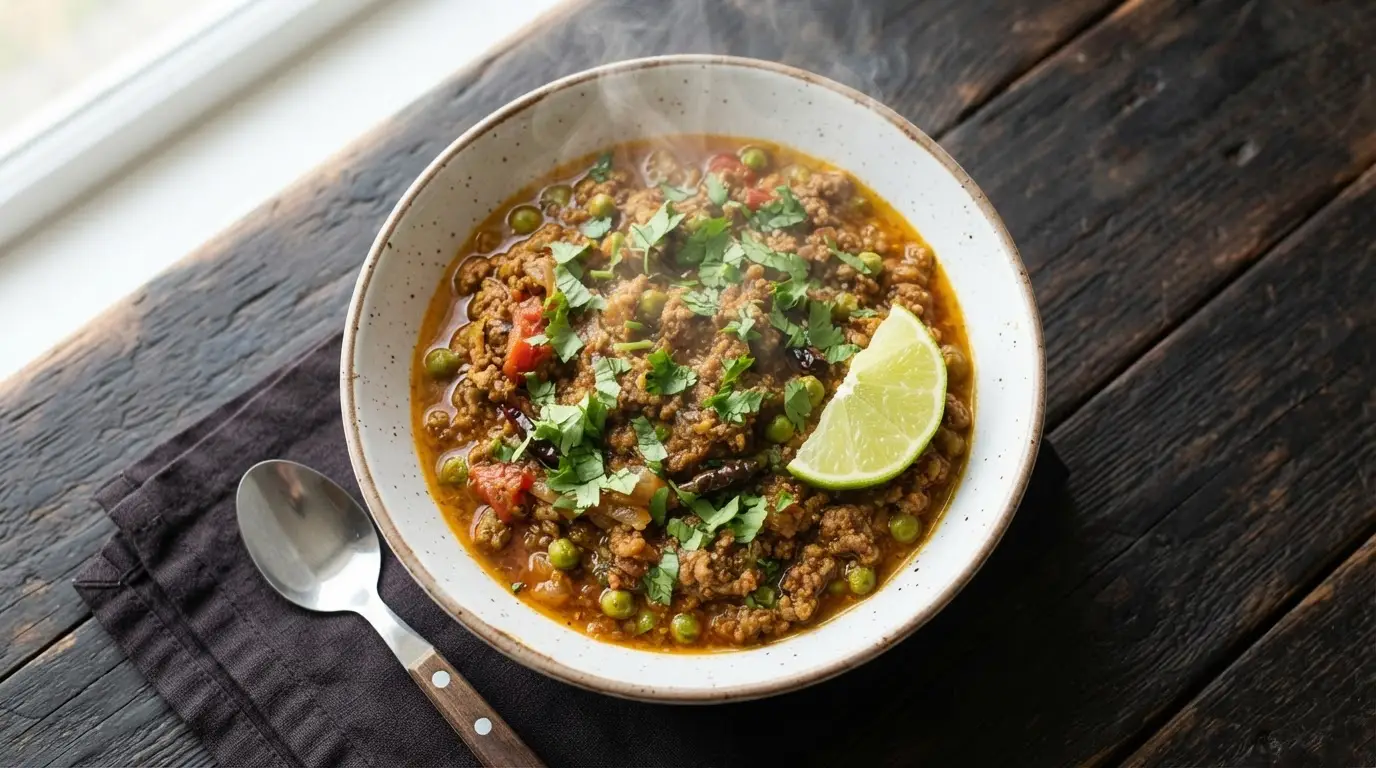
Keto Keema Curry is a low-carb weeknight dinner made with ground meat, aromatic spices, and coconut milk. Unlike traditional keema, it uses no potatoes or peas, reducing net carbs to 12.3g per serving. It delivers 32g protein and takes 40 minutes to make.
🎧 Listen to this recipe
This keto keema curry delivers a rich, aromatic, and satisfying Indian-inspired meal that fits perfectly into a low-carb lifestyle. The secret is blooming the spices in hot oil before adding the ground meat, which intensifies their flavor and ensures a deeply savory curry with 32g protein and only 12.3g net carbs per serving. Get the full Keto Keema Curry recipe at Recipebo and make it tonight.
What Is Keto Keema Curry?
Keema curry, or kheema, is a traditional South Asian dish featuring minced or ground meat cooked with fragrant spices, often including peas and potatoes. This keto version adapts the classic by omitting high-carb vegetables, making it suitable for a low-carb diet. The key technique involves building layers of flavor with fresh aromatics and a rich, creamy coconut milk base. This recipe is best suited for keto dieters seeking a flavorful, protein-packed meal with only 12.3g net carbs and 32g protein per serving.
🧂 Ingredients
👩🍳 Cooking Instructions
📝 Additional Notes
For best flavor, use fresh ginger and garlic. Pre-minced versions often lack the intensity needed.
Don’t skip blooming the spices; this step is crucial for developing a deep, authentic flavor.
Adjust the cayenne pepper to your preferred spice level. A squeeze of fresh lime juice at the end brightens the dish.
🥗 Nutrition Facts
How to Make This
Prepare Aromatics and Spices7 mins
Ingredients for this step
Begin by finely dicing your onion, mincing the fresh ginger, and crushing the garlic cloves. I find that using a microplane for ginger yields a paste that melts seamlessly into the curry, preventing any fibrous bits. Measure out all your dry spices-cumin, coriander, turmeric, garam masala, and cayenne pepper-into a small bowl.
Having everything prepped and ready, a technique known as mise en place, ensures a smooth cooking process. You will notice the pungent, fresh aroma of the ginger and garlic as you prepare them, signaling the flavor foundation for your curry. My initial batches were sometimes unevenly spiced; I learned that measuring all spices beforehand and adding them together prevents any single spice from dominating. This step sets the stage for a truly aromatic dish.
Brown the Ground Meat11 mins
Ingredients for this step
Heat the avocado oil in a large, heavy-bottomed skillet or Dutch oven over medium-high heat until shimmering. Add the diced onion and cook until softened and translucent, about 3-4 minutes, stirring occasionally. Next, add the minced ginger and garlic, cooking for another minute until fragrant; you will smell their sweet, pungent aroma filling your kitchen.
Push the aromatics to one side of the pan, then add the ground meat, breaking it up with a spoon. Brown the meat thoroughly, ensuring no pink remains, which typically takes 5-7 minutes. According to FDA Safe Food Handling Guidelines, ground meat should reach an internal temperature of 160°F (71°C) for safe consumption.
I found that browning the meat well before adding liquids prevents a watery sauce and locks in savory flavors. The meat should be nicely caramelized in spots.
Bloom Spices and Simmer19 mins
Ingredients for this step
Once the meat is browned, drain any excess fat if desired, then sprinkle all the measured dry spices over the meat and aromatics. Stir well to coat everything, cooking for 1 minute until the spices are fragrant; you will notice a deeper, richer aroma as they toast. This step, known as ‘blooming’ the spices, is crucial for developing their full flavor profile, a cornerstone of authentic Indian cuisine.
Pour in the diced tomatoes and full-fat coconut milk, stirring to combine. Bring the mixture to a gentle simmer, then reduce the heat to low, cover, and cook for 10-12 minutes. I discovered that a longer, slower simmer allows the flavors to meld beautifully, creating a more cohesive curry. The sauce should thicken slightly and the meat will absorb the rich spice blend.
Finish and Garnish3 mins
Ingredients for this step
Remove the lid and stir in the fresh cilantro. Cook for another minute to allow the cilantro to wilt slightly and release its fresh, herbaceous notes into the curry. Taste and adjust seasonings as needed; I often add a pinch more salt or a squeeze of lime juice to brighten the flavors at this stage.
The curry should be thick, rich, and deeply fragrant, with the vibrant green of the cilantro contrasting against the reddish-brown sauce. This final touch of fresh herbs not only adds visual appeal but also a burst of freshness that cuts through the richness of the curry. My early attempts sometimes lacked this brightness, and I found that a generous amount of fresh cilantro at the end makes all the difference.
Carb Comparison: This Recipe vs Traditional Version
Comparing this keto keema curry to a traditional version highlights the significant reduction in carbohydrates, making it a superior choice for those following a low-carb diet.
| Version | Total Carbs | Net Carbs | Fiber | Sugar | Calories |
|---|---|---|---|---|---|
| This Keto Keema Curry | 16.8g | 12.3g | 4.5g | 8g | 626 kcal |
| Traditional Keema Curry (with potatoes & peas) | 45g (approx) | 38g (approx) | 7g (approx) | 12g (approx) | 626 kcal (approx) |
This comparison clearly shows that by omitting high-carb ingredients like potatoes and peas, our keto version drastically reduces net carbs, making it suitable for ketosis without sacrificing flavor or satiety.
What Breakthrough Finally Perfected This Recipe?
The key breakthrough for this keto keema curry was discovering the precise timing for blooming the dry spices in hot oil after sautéing the aromatics but before adding liquids. This technique ensures a deep, complex flavor profile without any raw spice notes, which was a common issue in earlier versions.
My initial attempts at keto keema curry often resulted in a sauce that tasted flat or had a slightly raw, powdery spice flavor. The problem was that I was adding the spices too late, or not giving them enough direct heat to release their aromatic compounds. By introducing the dry spices to the hot oil and sautéed onions, ginger, and garlic for a brief 60 seconds before adding the tomatoes and coconut milk, the spices ‘bloom.’ This process toasts them, intensifying their natural oils and creating a much more robust and authentic flavor base. A common mistake is adding spices directly to a liquid, which prevents them from fully developing their flavor. This specific timing ensures the curry is rich, fragrant, and perfectly balanced, holding up beautifully as a satisfying keto-friendly dinner.
Why This Recipe Works for Blood Sugar Control?
This recipe is highly effective for blood sugar control due to its low net carbohydrate content of just 12.3g per serving and high protein. Research from Harvard Health Guide to the Keto Diet indicates that reducing carbohydrate intake significantly helps stabilize blood glucose levels and can improve insulin sensitivity.
Traditional keema often includes high-carb ingredients like potatoes and peas, which can cause significant blood sugar spikes. This keto version eliminates those ingredients, focusing instead on nutrient-dense ground meat and healthy fats from coconut milk. The combination of 32g protein and 48g fat per serving promotes satiety, reducing the likelihood of overeating or snacking on carb-heavy foods. I’ve personally noticed sustained energy levels throughout the day when incorporating meals like this into my diet, avoiding the energy crashes associated with high-carb meals.
This recipe is particularly beneficial for individuals managing diabetes, those with insulin resistance, or anyone looking to maintain stable energy. It’s an excellent high-fat low-carb option that supports a fat-adapted metabolism. Benefits include:
- Reduced blood sugar spikes: Eliminates high-glycemic ingredients.
- Increased satiety: High protein and fat keep you full longer.
- Stable energy levels: Avoids carb-induced energy crashes.
- Improved insulin sensitivity: Supports overall metabolic health.
How Do You Freeze This Recipe Without Losing Quality?
This keto keema curry stores exceptionally well in the refrigerator for up to 4 days. For longer storage, it freezes beautifully for up to 3 months when properly prepared, maintaining its rich flavor and texture.
To freeze, allow the curry to cool completely to room temperature within 2 hours of cooking. Portion it into individual airtight, freezer-safe containers, such as glass containers from Pyrex or heavy-duty freezer bags, removing as much air as possible to prevent freezer burn. When ready to reheat, thaw overnight in the refrigerator. Reheat gently on the stovetop over medium-low heat, stirring occasionally, until it reaches an internal temperature of 165°F (74°C), according to FDA guidelines.
You can also microwave individual portions, stirring halfway through. The texture of the ground meat and the creaminess of the coconut milk sauce hold up very well, making this an ideal meal prep friendly recipe.
Where Does Every Net Carb in This Recipe Come From?
This keto keema curry contains 12.3g net carbs per serving, calculated by subtracting the 4.5g dietary fiber from the total 16.8g carbohydrates. The primary sources of net carbs are the diced tomatoes and onions, with smaller contributions from the coconut milk and spices.
Understanding where net carbs originate is crucial for maintaining ketosis. While the ground meat itself is virtually carb-free, ingredients like vegetables and dairy can add up. For this recipe, the diced tomatoes contribute approximately 6g net carbs per serving, and the onion adds about 4g net carbs. The remaining carbs come from the full-fat coconut milk and the various spices, which individually contribute small amounts but collectively add to the total.
My experience tracking net carbs has shown that even seemingly innocent ingredients can impact daily totals, so precise measurement is key. According to USDA FoodData Central, a medium onion contains roughly 10g total carbs, with 2g fiber. This recipe’s carb count is well within typical daily limits for a ketogenic diet, which often ranges from 20-50g net carbs. To stay within your daily carb limits, always check labels for hidden sugars in canned goods. Key carb sources per serving:
- Diced Tomatoes: ~6g net carbs
- Onion: ~4g net carbs
- Coconut Milk & Spices: ~2.3g net carbs
Trusted Sources
This recipe follows guidelines from these authoritative sources:
Frequently Asked Questions
What are some common side dishes for keto keema curry?
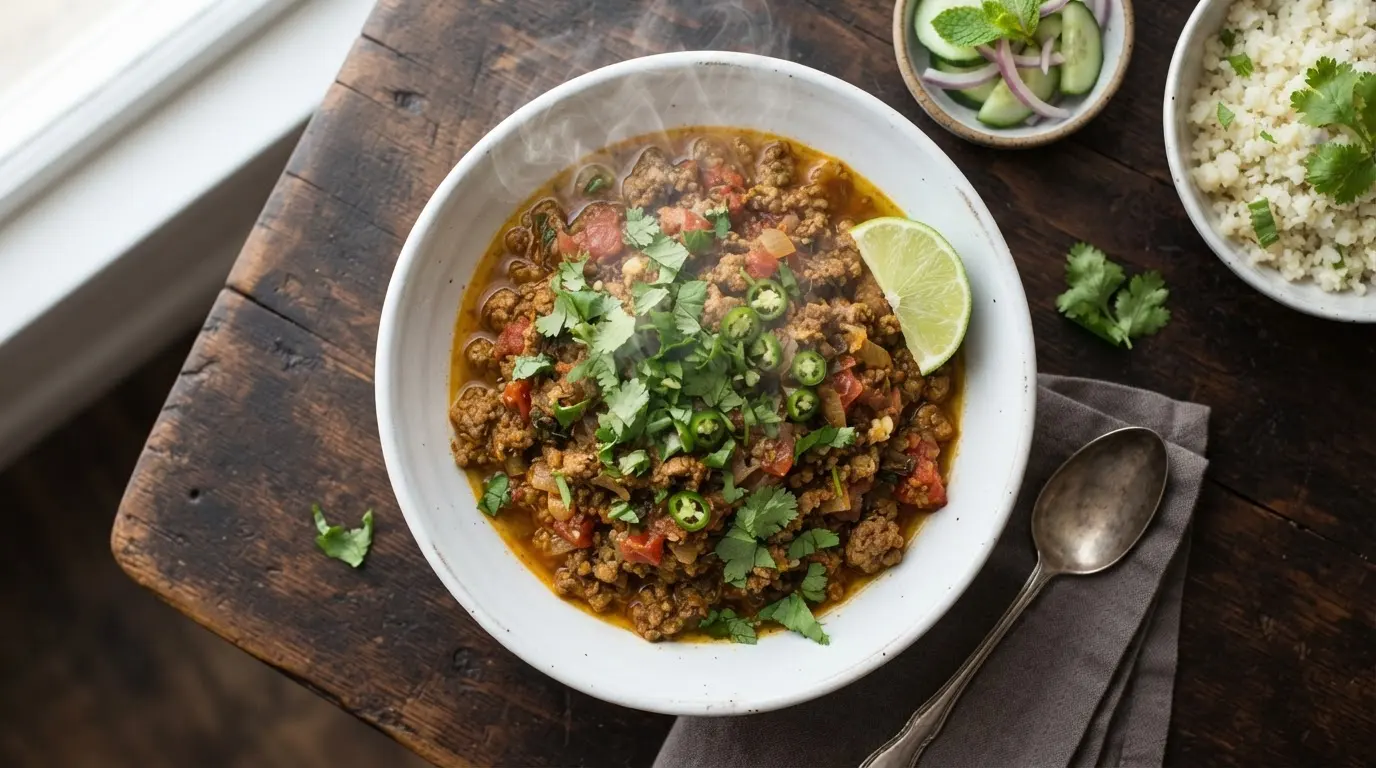
Keto keema curry pairs well with cauliflower rice, steamed green beans, or a simple side salad for a complete low-carb meal.
Can I use ground chicken or turkey for keto keema?
Yes, you can absolutely use ground chicken or turkey as a leaner alternative to ground beef or lamb in this keto keema recipe. Using ground chicken or turkey works well for this keto keema, creating a lighter version while still delivering excellent flavor. Adjust the cooking time slightly, as leaner meats cook faster. You might need to add an extra tablespoon of avocado oil to ensure the spices bloom properly and the curry retains its richness, as chicken and turkey have less natural fat.
How can I make this keema curry spicier?
To make this keema curry spicier, increase the amount of cayenne pepper or add a fresh chopped green chili with the ginger and garlic.
Is this keto keema curry dairy-free?
Yes, this keto keema curry recipe is naturally dairy-free, using full-fat coconut milk for its creamy texture and richness. This recipe is indeed dairy-free, making it suitable for those with dairy sensitivities or allergies. The full-fat coconut milk provides a luxurious, creamy base without any dairy products. It also contributes healthy fats, which are essential for a ketogenic diet. Ensure your garam masala blend does not contain any hidden dairy ingredients, though this is rare.
What are the essential ingredients for a low-carb keema curry?
Essential ingredients for a low-carb keema curry include ground meat, fresh ginger and garlic, a blend of Indian spices, diced tomatoes, and full-fat coconut milk.
