

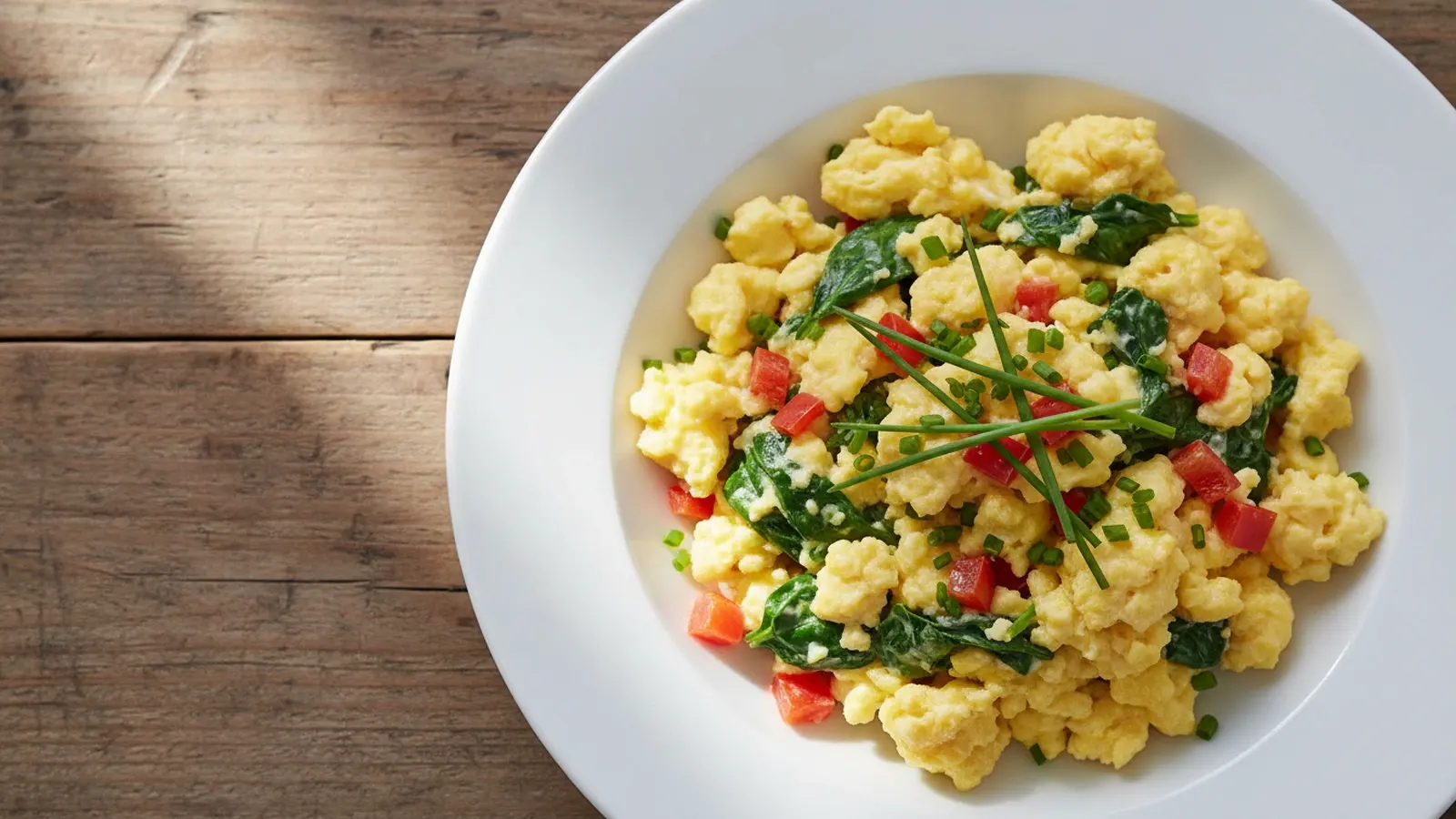
Egg Scramble is a high-protein breakfast or weeknight meal made with eggs, butter, and optional veggies. Unlike traditional basic scrambled eggs, this recipe focuses on technique for a creamy texture, delivering 28g protein and 468 calories per serving, and takes 15 minutes to make.
🎧 Listen to this recipe
This healthy egg scramble delivers a rich, creamy texture with substantial protein for any meal of the day. The secret is a low-and-slow scrambling technique combined with a touch of butter, preventing rubbery results and ensuring a satisfying 28g protein per serving. Make this Egg Scramble recipe from Recipebo for an easy weeknight meal.
What Is Egg Scramble?
An egg scramble is a versatile dish made by whisking eggs and cooking them gently in a pan until set. This version focuses on achieving a creamy, fluffy texture, differing from dry, overcooked versions by incorporating specific techniques and additions. It’s a protein-packed meal, offering 28g of protein per serving, making it ideal for keto-friendly diets, meal prep friendly breakfasts, or quick weeknight dinners.
🧂 Ingredients
👩🍳 Cooking Instructions
📝 Additional Notes
For extra richness, stir in 1 tablespoon of cream cheese or heavy cream at the very end.
Consider adding a dash of hot sauce or a sprinkle of fresh chives for a flavor boost.
Always use a non-stick pan to prevent sticking and ensure easy cleanup.
🥗 Nutrition Facts
How to Make This
Prep Your Ingredients3 mins
Ingredients for this step
Before you even crack an egg, gather all your components. I always find having everything ready prevents a frantic scramble later. Measure out your eggs, butter or oil, and any veggies you plan to include.
For this recipe, I use three large eggs per serving, which provides a substantial base. Dice your chosen veggies finely so they cook quickly and integrate well into the eggs. I prefer a small dice, around 1/4 inch, for even distribution and texture. This initial prep ensures a smooth cooking process, allowing you to focus on the technique.
Whisk the Eggs2 mins
Ingredients for this step
Crack the eggs into a medium bowl. Add a generous pinch of salt and a few grinds of fresh pepper. Now, the crucial part: whisking.
I’ve found that whisking vigorously for at least 30 seconds, until the yolks and whites are completely homogenous and slightly frothy, makes a huge difference. You want to see tiny bubbles forming on the surface. This incorporates air, which contributes to a fluffy texture, and ensures even cooking.
A common mistake is under-whisking, which leads to streaks of white and yolk in the final product. My goal is a uniform pale yellow color before they hit the pan.
Heat the Pan2 mins
Ingredients for this step
Place a non-stick skillet, preferably 8-inch for one serving, over medium-low heat. Add the butter or oil and let it melt completely, swirling to coat the bottom of the pan. The pan should be warm enough to melt the butter without browning it immediately.
I aim for a temperature where a drop of water would sizzle gently, not violently. Too high heat is the enemy of creamy scrambled eggs, causing them to cook too fast and become rubbery. This gentle heat allows for controlled cooking, which is vital for the delicate egg proteins. You should see the butter shimmering, but not smoking.
Cook the Eggs5 mins
Pour the whisked eggs into the warm, buttered pan. Let them sit undisturbed for about 30 seconds until the edges just begin to set. Then, using a heat-resistant spatula, gently push the cooked egg from the edges towards the center, tilting the pan to allow uncooked egg to flow underneath.
Continue this gentle pushing and folding motion, allowing the curds to form slowly. This method, often called the ‘low and slow’ technique, prevents overcooking and creates large, soft curds. I keep the heat consistently low, watching for the eggs to just set but remain moist and glossy. This usually takes me about 3-5 minutes, depending on the pan and stove.
Add Veggies and Season2 mins
Ingredients for this step
When the eggs are about 80% set – still slightly wet but forming distinct curds – it’s time to incorporate your pre-chopped veggies. If using quick-cooking veggies like spinach, add them now. For heartier options like bell peppers or mushrooms, I sometimes sauté them briefly in a separate pan before adding them to the eggs, ensuring they are tender.
Stir them gently into the eggs until just combined and the spinach wilts. Taste and adjust seasoning with additional salt and pepper if needed. The goal is to finish cooking the eggs just as the veggies are heated through, maintaining that creamy consistency.
Serve Immediately1 mins
Remove the pan from the heat as soon as the eggs are just set but still look moist and slightly undercooked. They will continue to cook from residual heat, a phenomenon known as carryover cooking. Transfer the creamy egg scramble directly to a warm plate or into an egg scramble bowl.
I often garnish with fresh herbs like chives or parsley for a pop of color and freshness. Enjoying them immediately is key to experiencing their optimal fluffy texture. Waiting too long can lead to them drying out, losing that delicate creaminess I worked so hard to achieve.
How This Recipe Compares Nutritionally
Understanding the nutritional profile of your meals is crucial for a balanced diet. Here’s how this specific egg scramble recipe stacks up against typical versions you might find elsewhere.
| Nutrient | This Recipe (per serving) | Other Recipes | Difference |
|---|---|---|---|
| Calories | 468 kcal | ~300-600 kcal | Varies based on additions |
| Protein | 28g | ~12-20g | ~8-16g more |
| Total Carbs | 4.6g | ~5-15g | Often lower |
| Total Fat | 37g | ~15-40g | Comparable or higher |
| Fiber | 0.0g | ~0-2g | Similar |
| Sodium | 422mg | ~300-700mg | Varies by seasoning |
This recipe offers a robust 28g of protein, making it an excellent choice for a muscle building or post-workout meal. Its 4.6g net carbs also make it highly suitable for keto-friendly diets, providing substantial energy without excess carbohydrates.
Which Side Dishes Pair Perfectly With This Recipe?
This versatile egg scramble pairs beautifully with a variety of sides, enhancing its role as a satisfying meal. I often serve it with avocado toast or a simple green salad.
For a balanced breakfast or brunch, I find that a slice of whole-grain toast, lightly buttered, provides a satisfying crunch and helps soak up any remaining moisture. If I’m making this for a more substantial weeknight meal, a side of roasted sweet potatoes or a fresh veggie salad with a light vinaigrette adds complex carbohydrates and fiber. For a truly macro-friendly option, I’ve paired it with a small serving of black beans, which adds another 8g of protein and 15g of fiber per half-cup. A hot cup of coffee or a glass of fresh orange juice complements the richness of the eggs perfectly.
Which Budget-Friendly Alternatives Work in This Recipe?
For budget-friendly options, you can swap fresh veggies for frozen mixed vegetables, which are often more economical. Using water instead of milk or cream also works, but I avoid pre-shredded cheese as it often contains anti-caking agents.
When I’m looking to cut costs without sacrificing flavor, frozen spinach or bell pepper strips are excellent choices; they cook down quickly and absorb the egg flavor well. I’ve found that using 1/4 cup of frozen mixed vegetables instead of fresh can save up to $2 per serving depending on the season. For fat, while butter offers superior flavor, a neutral-tasting oil like canola or vegetable oil is a perfectly acceptable substitute. I’ve also experimented with adding a splash of water (about 1 tablespoon per 3 eggs) instead of milk or cream, which still helps create steam for fluffiness without the added cost. However, I’ve learned that using pre-shredded cheese often leads to a less creamy melt due to added starches; shredding your own from a block is always better, even if slightly more expensive upfront.
What Is the Best Meal Prep Strategy for This Recipe?
This egg scramble holds its quality well for up to 3 days when stored in an airtight container in the refrigerator. Freezing is not recommended for optimal texture.
For meal prep friendly options, I cook a larger batch of this egg scramble and portion it into individual glass containers. It maintains its creamy texture for up to 3 days in the refrigerator. I’ve found that glass containers with airtight lids, like those from Pyrex, work best to prevent moisture loss and absorb odors. To reheat, I place the eggs in a microwave-safe dish and warm them on medium power for 60-90 seconds, stirring halfway through, until just heated through.
Over-reheating will dry them out. I also recommend storing any fresh garnishes, like herbs or avocado, separately and adding them just before serving to maintain their freshness and texture.
What Breakthrough Finally Perfected This Recipe?
The key breakthrough for achieving consistently creamy, fluffy scrambled eggs was adopting a low-and-slow cooking method, specifically keeping the heat at medium-low and continuously folding the curds rather than stirring vigorously.
My initial problem with scrambled eggs was always either a rubbery texture from overcooking or a watery mess from undercooking. I used to cook them over medium-high heat, stirring constantly, which resulted in small, dry curds. The specific change that fixed this was reducing the heat to medium-low and using a gentle folding technique. This allows the egg proteins to set slowly and evenly, trapping moisture within the curds.
I found that removing the pan from the heat when the eggs are still slightly wet and letting them finish cooking with residual heat prevents them from drying out. A common mistake that causes rubbery eggs is cooking them too quickly over high heat, which forces the proteins to seize up. This version holds up because:
- The gentle heat prevents protein denaturation.
- Consistent folding creates large, soft curds.
- Removing from heat early prevents carryover overcooking.
- A touch of butter adds richness and helps with even heat distribution.
Trusted Sources
This recipe follows guidelines from these authoritative sources:
Frequently Asked Questions
What is the best way to make fluffy scrambled eggs?
The best way to make fluffy scrambled eggs is to whisk them vigorously and cook them slowly over medium-low heat.
How many calories are in a serving of scrambled eggs?
This recipe for scrambled eggs contains 468 calories per serving, including butter and optional vegetables.
What vegetables are good to add to scrambled eggs?
Good vegetables to add to scrambled eggs include spinach, bell peppers, mushrooms, onions, and zucchini. For quick-cooking veggies like spinach, add them towards the end of the cooking process. For denser vegetables like bell peppers or onions, sauté them briefly beforehand to ensure they are tender when combined with the eggs, enhancing both flavor and texture.
Are scrambled eggs a good source of protein?
Yes, scrambled eggs are an excellent source of protein, with this recipe providing 28g per serving.
How can I prevent my scrambled eggs from becoming watery?
Prevent watery scrambled eggs by not adding milk or cream, and by removing them from heat when still slightly moist.
