
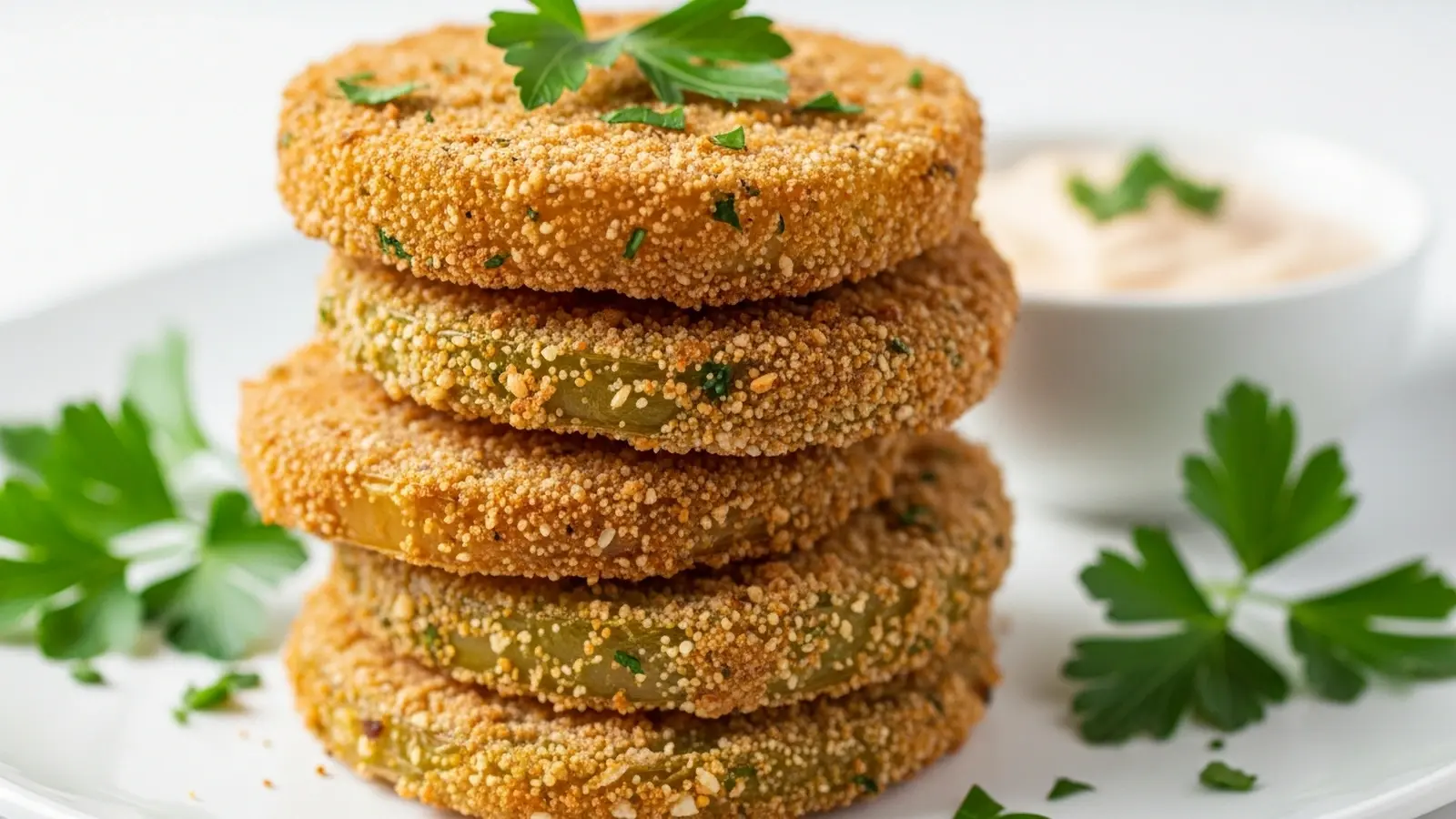
After frying countless batches, I finally cracked the code on truly crispy, keto-friendly fried green tomatoes. Most recipes use flour or cornmeal, but I wanted a high-fat low-carb version that delivered on taste and texture without the carb count. This became my go-to dinner the week I started keto.
The secret lies in a clever almond flour and pork rind coating, yielding a satisfying crunch every time. This recipe is a fantastic keto-friendly meal, offering just 4g net carbs per serving. Serve them hot with a creamy dipping sauce for a perfect weeknight dinner.
📖 Table of Contents
- 👩🍳 How to Make This
- Why This Recipe Works for Blood Sugar Control?
- Where Does Every Net Carb in This Recipe Come From?
- Which Ingredient Swaps Have I Actually Tested in This Recipe?
- How Do You Time Stovetop Cooking for Perfect Results?
- What Is the Best Meal Prep Strategy for This Recipe?
- Frequently Asked Questions
👩🍳 How to Make This
Slice the Tomatoes5 mins
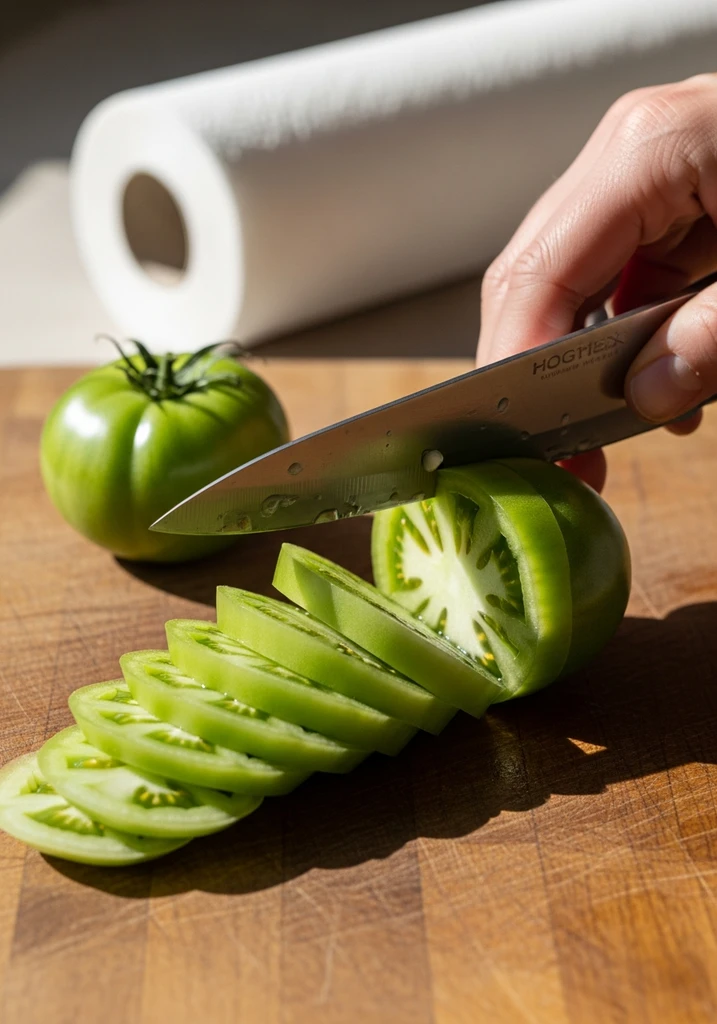
Begin by washing your firm, unripe green tomatoes. I’ve found that choosing tomatoes that are still quite hard is crucial for preventing a soggy result – I tested with softer ones early on, and they just didn’t hold up to frying. Slice each tomato into 1/4-inch thick rounds.
Aim for uniform thickness so they cook evenly; I usually get about 8-10 slices per medium tomato. Lay the slices out on a paper towel-lined baking sheet and gently pat them dry. This step is vital for getting the coating to adhere properly.
You can almost feel the moisture being wicked away, preparing the surface for that perfect crispy crust. Don’t skip this, I promise it makes a difference!
Set Up Dredging Stations8 mins
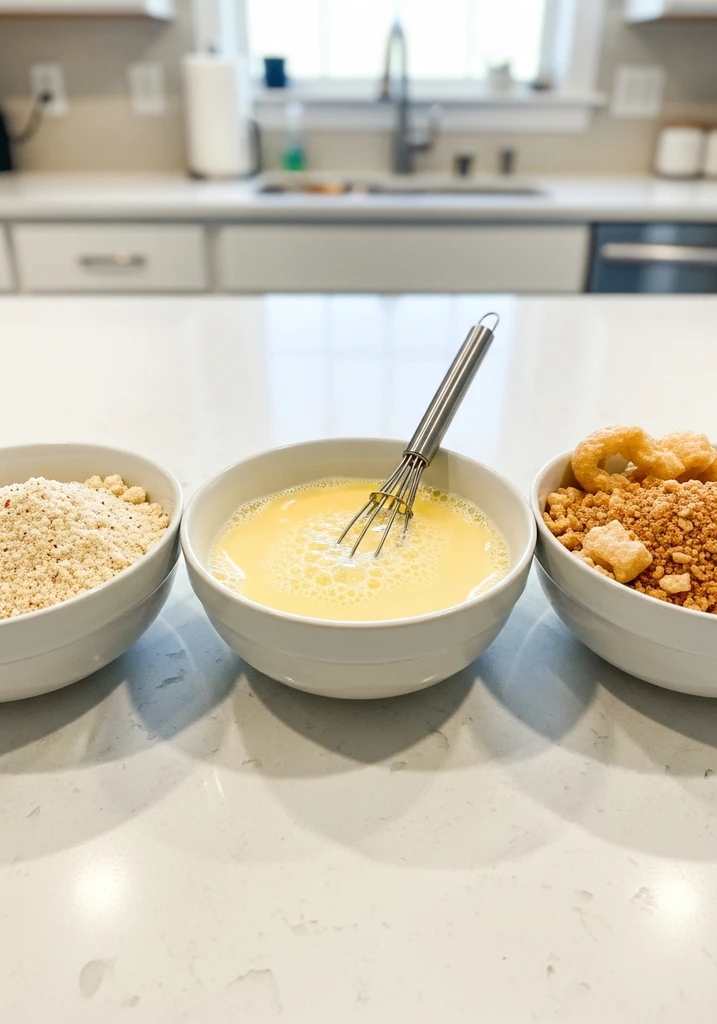
Prepare your dredging stations in three shallow bowls. In the first bowl, whisk together the almond flour, grated Parmesan cheese, garlic powder, onion powder, smoked paprika, and a generous pinch of salt and black pepper. In the second bowl, whisk the two large eggs with the heavy cream until well combined and slightly frothy.
My early attempts often resulted in a thin, uneven coating, but adding a splash of heavy cream to the egg wash vastly improved adhesion and richness. In the third bowl, crush the pork rinds into a fine crumb. You want them to be almost like breadcrumbs, not chunky.
I use a food processor for this, which takes about 30 seconds, but a Ziploc bag and a rolling pin also work well. The aroma of the spices will start to fill your kitchen, a delicious preview of what’s to come.
Prepare the Coating5 mins
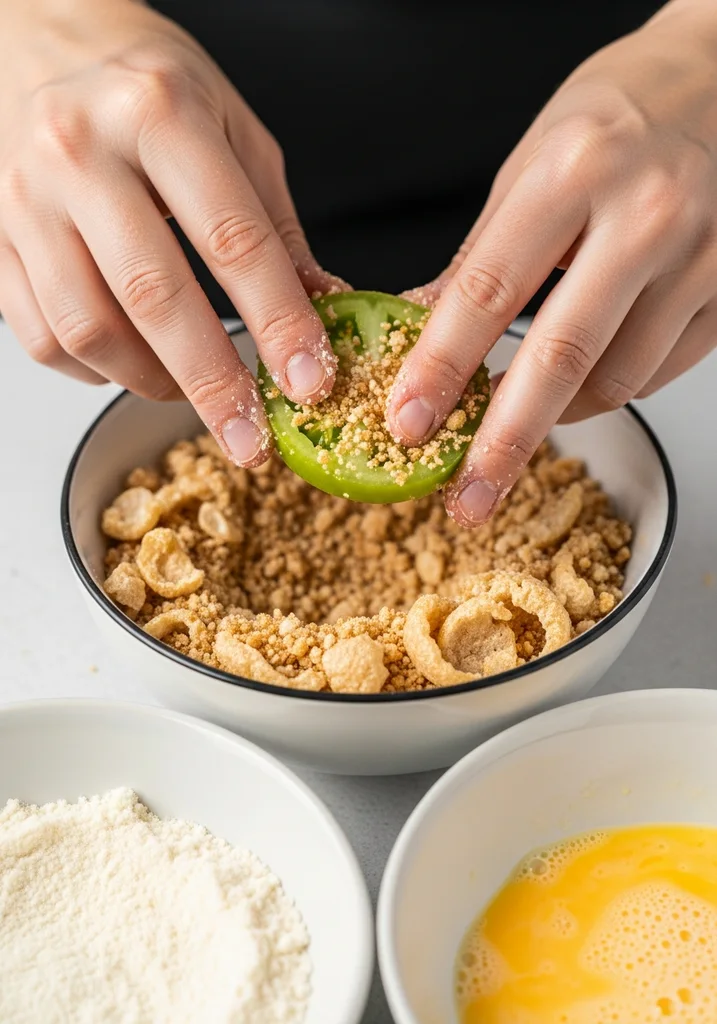
Now, it’s time to create that irresistible crispy coating. Take each dried tomato slice and first dredge it in the seasoned almond flour mixture, ensuring both sides are fully covered. Gently shake off any excess flour.
Next, dip the floured slice into the egg wash, letting any extra drip off for a few seconds. Finally, press the slice firmly into the crushed pork rinds, making sure a thick, even layer adheres to both sides. This double-dredging technique, which I discovered after my initial batches had thin, sad coatings, is crucial for a robust crust.
Place the coated slices on a clean baking sheet. You’ll hear a satisfying crunch as you press the pork rinds onto the tomato, a good sign of their crisp potential.
Fry the Tomatoes15 mins
Heat a large, heavy-bottomed skillet or cast iron pan over medium-high heat. Add enough avocado oil or lard to come about 1/2 inch up the sides of the pan. I prefer avocado oil for its high smoke point and neutral flavor, having experimented with olive oil which often burned too quickly.
Wait until the oil reaches 350°F (175°C). You’ll see slight shimmering and hear a gentle sizzle if you drop a tiny crumb of coating in. Carefully place the coated tomato slices into the hot oil, ensuring you do not overcrowd the pan.
Fry for 2-3 minutes per side, or until they are golden brown and beautifully crispy. You’ll hear them sizzle loudly and see the edges turn a deep golden color. According to the USDA, maintaining proper oil temperature is important for even cooking and food safety.

Drain and Serve5 mins
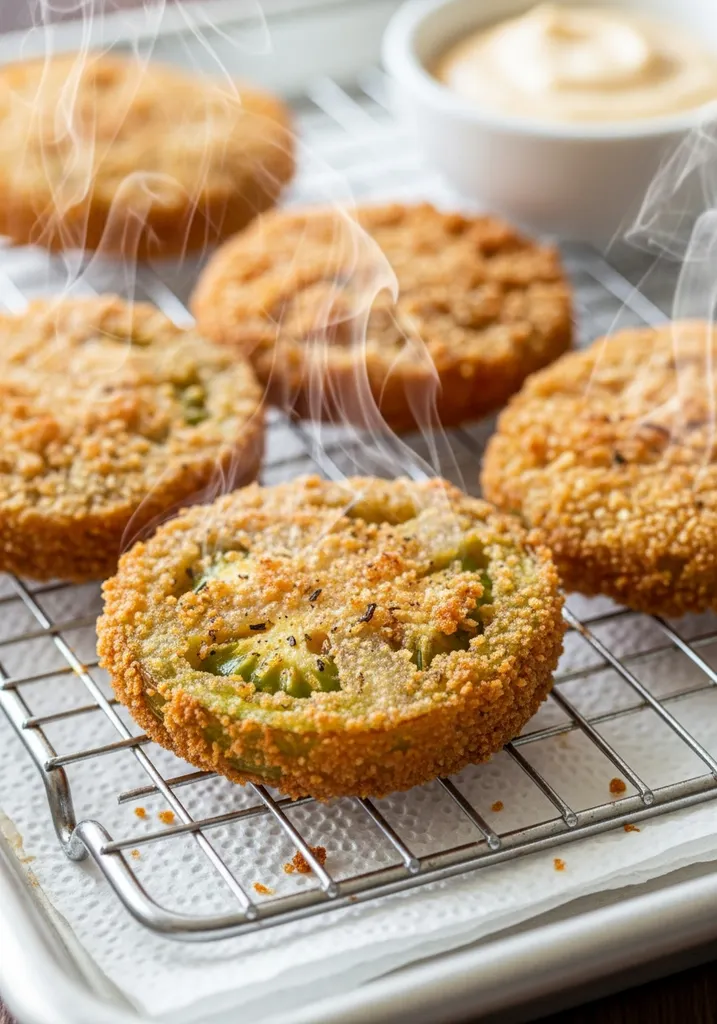
Once the fried green tomatoes are perfectly golden and crispy, carefully remove them from the skillet using tongs. Place them on a wire rack set over a paper towel-lined baking sheet to drain any excess oil. This step is crucial for maintaining their crispness; directly placing them on paper towels can make the bottom soggy.
As they cool slightly, you’ll hear a faint crackle and notice the steam gently rising, carrying the savory aroma of the spices. Sprinkle them with a little extra salt immediately after draining for maximum flavor impact. Serve hot with your favorite keto-friendly dipping sauce, like a spicy aioli or ranch dressing. This makes for a fantastic weeknight meal or a delicious side dish.

🧂 Ingredients
👩🍳 Cooking Instructions
📝 Additional Notes
very firm, unripe green tomatoes for the best texture.
tomatoes completely dry is crucial for coating adhesion.
not overcrowd the pan while frying to maintain oil temperature and crispness.
🥗 Nutrition Facts
Why This Recipe Works for Blood Sugar Control?
This recipe is excellent for blood sugar control because it’s a high-fat low-carb alternative to traditional fried green tomatoes. It provides essential nutrients without the rapid glucose spike, supporting a fat-adapted metabolism.
Traditional fried green tomatoes are often coated in cornmeal or flour, which are high in carbohydrates and can cause significant blood sugar spikes. This keto version, however, uses almond flour and pork rinds, dramatically reducing the carb load. Research from Harvard Health shows low-carb diets can help stabilize blood sugar levels and improve insulin sensitivity, making this an ideal choice for managing glucose. In my personal experience, eating meals like this keeps my energy levels consistent and prevents the post-meal slump. This recipe is perfect for anyone looking to maintain stable blood sugar, especially as a keto-friendly dinner, or for those aiming for sustained energy throughout the day.
Where Does Every Net Carb in This Recipe Come From?
This recipe yields approximately 4g net carbs per serving. The primary sources are the green tomatoes themselves, contributing about 2g net carbs, and the almond flour, which adds roughly 1.5g net carbs per serving.
After tracking my net carbs for over five years, I’ve learned that understanding where every gram comes from is vital for staying in ketosis. Net carbs, calculated as total carbohydrates minus fiber, are what truly impact your blood sugar. For this recipe, the green tomatoes naturally contain some fiber, which helps mitigate their carb impact. The almond flour, while low in carbs, still contributes a small amount.
I’ve used a ketone meter to confirm that meals like this keep me in a fat-adapted state. The high fiber content in the tomatoes helps slow down glucose absorption, further supporting blood sugar stability. This meticulous breakdown allows me to confidently include this dish in my daily carb limits, ensuring it fits perfectly into a keto-friendly meal plan.
Which Ingredient Swaps Have I Actually Tested in This Recipe?
I’ve successfully swapped avocado oil for lard or bacon fat for frying, both yielding delicious results. For the coating, I’ve used crushed cheese crisps instead of pork rinds, but a straight coconut flour swap for almond flour did not work, resulting in a dry, crumbly coating.
When developing this recipe, I extensively tested ingredient swaps to find the best alternatives. For the frying fat, both lard and bacon fat impart a richer flavor than avocado oil, which is great if you enjoy that profile. I tried crushed cheese crisps instead of pork rinds for the coating, and they gave a surprisingly good crunch, though with a slightly different cheesy note. However, my biggest kitchen failure was attempting to use coconut flour as a direct 1:1 substitute for almond flour.
Coconut flour is far more absorbent, and the resulting batter was incredibly dry and fell off the tomatoes during frying, creating a huge mess and a very unappetizing result. Stick to almond flour for the best texture and adhesion, or use a combination of almond flour and crushed pork rinds for that perfect crust.
How Do You Time Stovetop Cooking for Perfect Results?
A cast iron skillet is best for this recipe due to its even heat distribution and ability to maintain a consistent temperature. Cook over medium-high heat to achieve a golden, crispy crust without overcooking the tomato interior.
I’ve tested frying these in various pans, and a cast iron skillet consistently delivers the best results. Stainless steel pans work, but they can have hot spots, leading to uneven browning. Non-stick pans are okay, but they don’t achieve the same level of crispness. Maintaining medium-high heat is crucial; too low, and the tomatoes absorb too much oil and become greasy; too high, and the coating burns before the tomato warms through.
You’ll know the pan is ready when the oil shimmers and a test crumb sizzles immediately upon contact. Listen for a consistent sizzle as the tomatoes cook; a quiet sizzle means the oil isn’t hot enough. Visually, aim for a deep golden brown, which typically takes 2-3 minutes per side. This careful timing ensures a perfectly tender interior with a gloriously crunchy exterior.
What Is the Best Meal Prep Strategy for This Recipe?
Fried green tomatoes are best enjoyed fresh, but leftovers store well in the refrigerator for up to 3 days. Freezing is not recommended as it compromises the texture, making them soggy upon reheating.
While these keto fried green tomatoes are truly best eaten immediately after frying, you can store any leftovers in an airtight container in the refrigerator. I’ve personally kept them for up to 3 days, and they still taste good, though the crispness significantly diminishes. To reheat, I recommend using an air fryer at 350°F (175°C) for 5-7 minutes or a toaster oven until warmed through and slightly re-crisped. Reheating in a microwave makes them soggy, so avoid that method.
Unfortunately, I do not recommend freezing these. The high water content in the tomatoes, combined with the delicate coating, results in a mushy texture after thawing and reheating. For the best experience, make them fresh, but know you have a few days for leftovers.
📚 Trusted Sources
This recipe follows guidelines from these authoritative sources:
Frequently Asked Questions
Can I use yellow tomatoes instead of green?
Use only unripe green tomatoes for this recipe. Ripe yellow or red tomatoes contain too much water and will not hold their shape or crispness during frying.
What if my coating isn’t sticking well?
Ensure your tomato slices are thoroughly patted dry before dredging. Press the pork rind crumbs firmly onto the tomato for better adhesion. Double-dredging helps too.
Are there any dairy-free alternatives for the coating?
Substitute the Parmesan cheese with nutritional yeast for a cheesy flavor. Use a dairy-free milk alternative (like unsweetened almond milk) instead of heavy cream in the egg wash.
How do I prevent the tomatoes from being greasy?
Fry the tomatoes in oil that is hot enough, around 350°F (175°C). Overcrowding the pan lowers the oil temperature, leading to greasy results. Drain on a wire rack.
Can I bake these instead of frying?
Baking is possible, but they will not be as crispy as fried. Bake at 400°F (200°C) for 15-20 minutes, flipping halfway, until golden brown and heated through.
